
Letter tracing skills Normal Letter Recognition Worksheets for Ages 4-9
3 filtered results
Difficulty Level
Grade
Age
-
From - To
Subject
Activity
Standards
Enhance your child's literacy journey with our "Letter Tracing Skills Normal Letter Recognition Worksheets," designed specifically for ages 4-9. These engaging worksheets offer a fun and interactive way for young learners to develop essential letter recognition and tracing abilities. By tracing letters, children improve their fine motor skills while reinforcing their knowledge of the alphabet. Our easy-to-follow activities capture their attention, making learning enjoyable and effective. Whether at home or in the classroom, these worksheets provide a perfect foundation for reading and writing confidence. Unlock your child’s potential today with our thoughtfully crafted resources that foster a love for learning and creativity!
Favorites
With answer key
Interactive
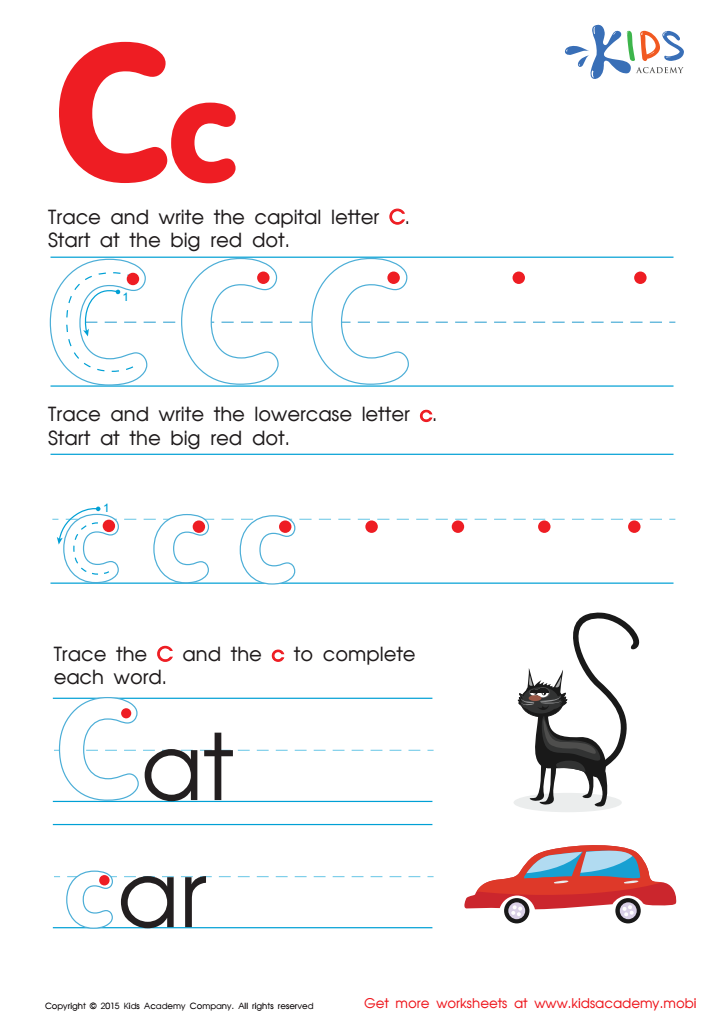
Letter C Tracing Page
Trace and write the letter 'C'! Put the pencil at the red dot then follow the lines – the capital letter first then the lowercase one. Cats love it and so will you! Get more free printables to practice tracing and writing.
Letter C Tracing Page
Worksheet
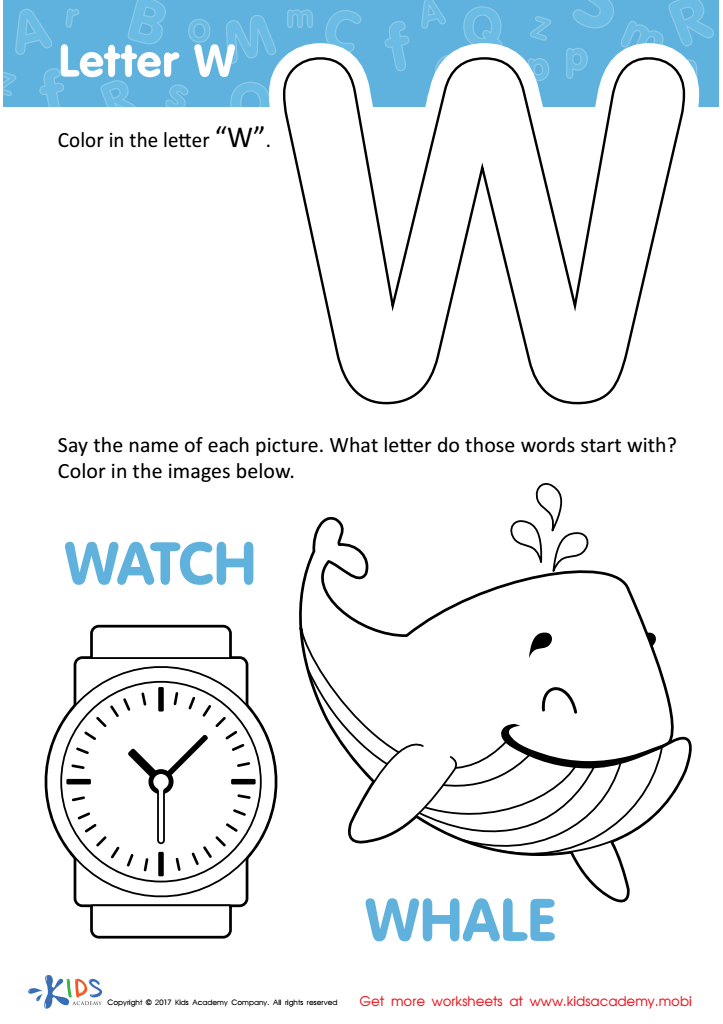
Letter W Coloring Sheet
Let your child have fun with this letter "W" coloring page! They can use their imagination to color the whale and discover the letter and its sound. Give them a helping hand to make it a whale of a time!
Download (PDF)
 Assign to My Students
Assign to My Students
Letter W Coloring Sheet
Worksheet
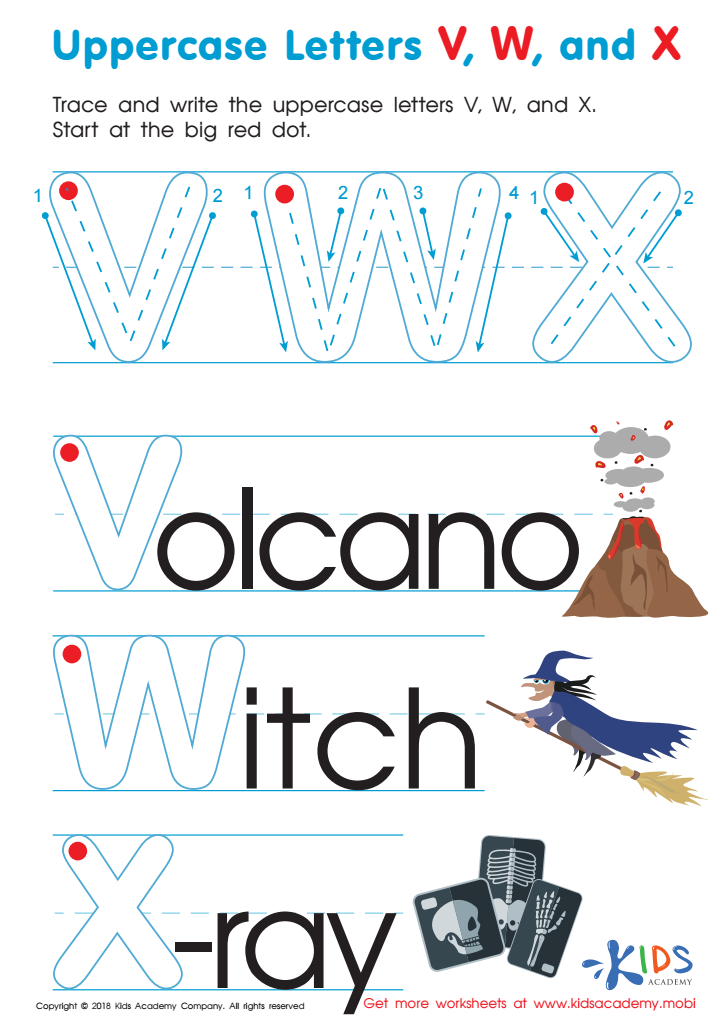
Uppercase Letters V, W, and X Worksheet
This worksheet is perfect for kids struggling to write uppercase letters V, W, and X. Warm up their brains first by having them name words starting with these letters. Then, help them trace and write each letter from the big red dot. With your assistance, they will quickly sharpen their writing skills.
Uppercase Letters V, W, and X Worksheet
Worksheet
Join Kids Academy for Free
Who is primarily going to use this learning content?








Letter tracing skills and normal letter recognition are crucial for children aged 4-9 as they lay the foundation for literacy and communication. Mastering letter recognition is the initial step towards reading and writing proficiency. Children who can identify letters are more likely to succeed in phonics and early reading, which directly impacts their future academic outcomes.
Letter tracing activities enhance fine motor skills, essential for developing handwriting abilities. The repetitive nature of tracing helps children build muscle memory, further aiding their dexterity and hand-eye coordination. Moreover, engaging in letter tracing can foster concentration and persistence, as children learn to focus on the task at hand.
Additionally, recognizing letters is linked to vocabulary acquisition. When children can identify letters, they begin to associate them with sounds, leading to improved phonemic awareness. This is vital as it allows for sound blending, essential for early reading.
Teachers and parents play a critical role in this developmental stage by providing ample opportunities for practice and reinforcement through fun and interactive activities. By caring about letter tracing and recognition, adults can support children in becoming confident readers and writers, which serves as a durable foundation for lifelong learning and comprehension skills.








