Lowercase letter writing Normal Letter Recognition Worksheets for Ages 4-9
3 filtered results
-
From - To
Discover our engaging Lowercase Letter Writing and Normal Letter Recognition Worksheets, tailored for children ages 4-9. These beautifully designed worksheets help young learners master the art of writing lowercase letters, enhancing their handwriting skills and letter recognition. With a variety of fun activities, your child will enjoy tracing, practicing, and identifying lowercase letters in different contexts, promoting both literacy and fine motor skills. Perfect for classrooms and at-home learning, these resources encourage early writing proficiency in a stress-free and enjoyable manner. Give your child the tools they need to succeed with our expertly crafted, age-appropriate materials today!
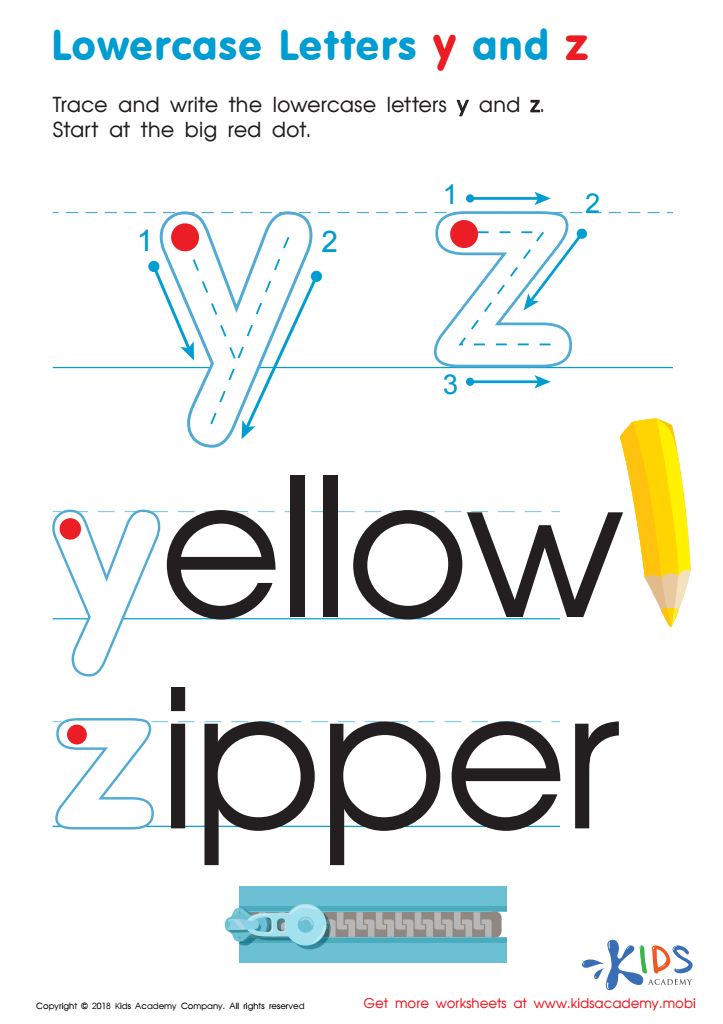
Lowercase Letters y z Worksheet
 Assign to My Students
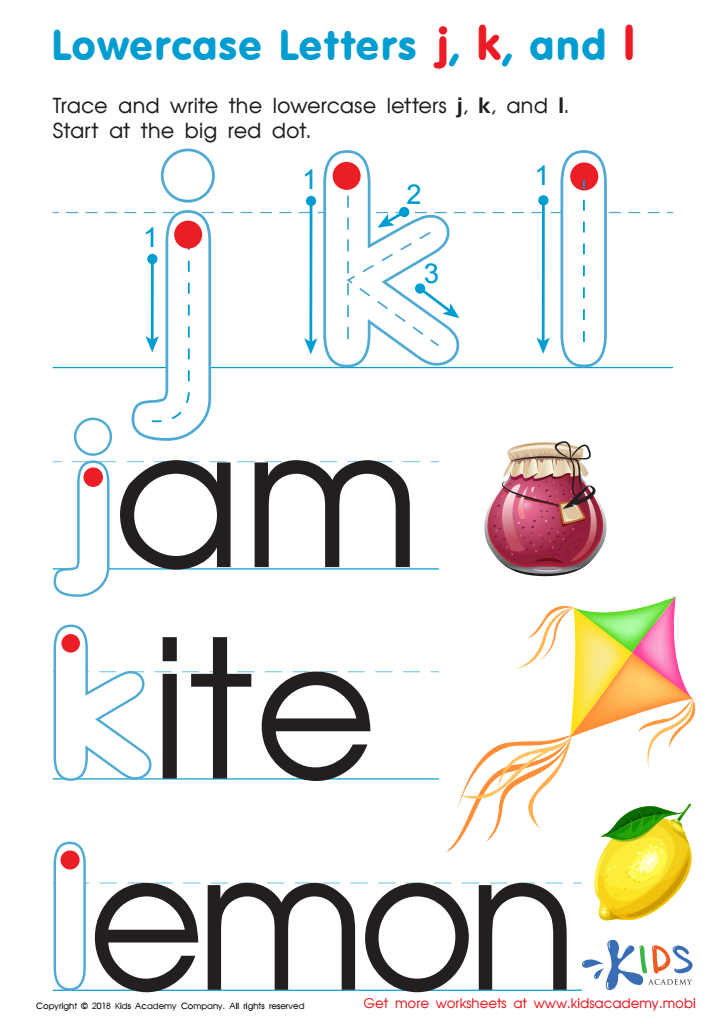
Lowercase Letters j k l Worksheet
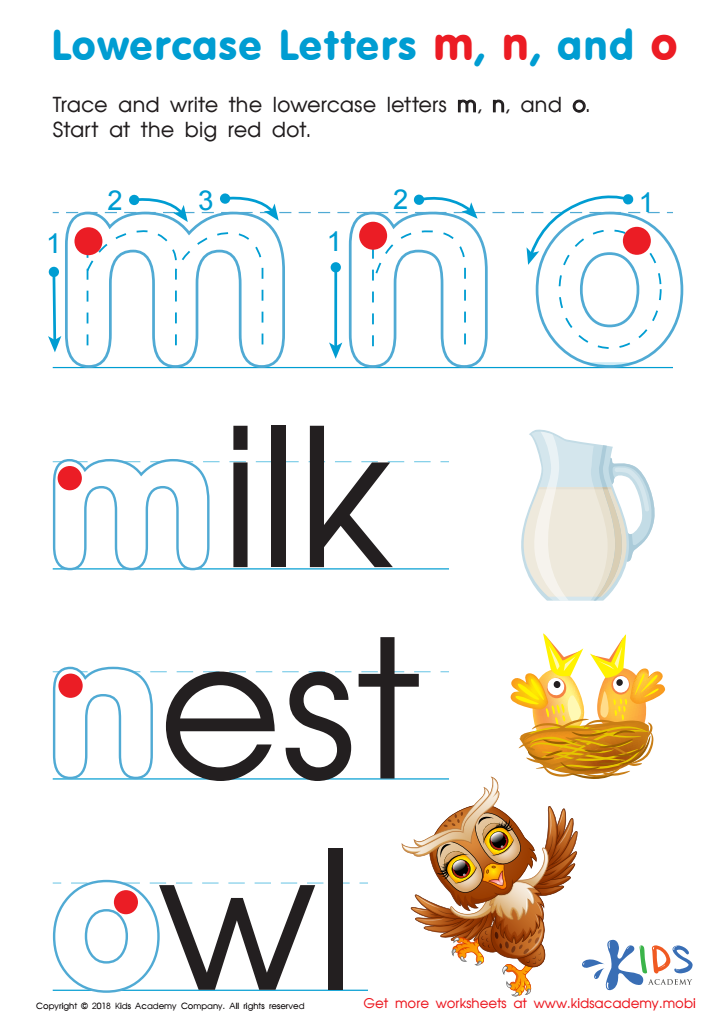
Lowercase Letters m n o Worksheet








Lowercase letter writing and normal letter recognition are critical components of literacy development for children aged 4-9. Understanding lowercase letters is essential, as they are used far more frequently than uppercase letters in everyday writing and reading. When children learn to recognize and write lowercase letters, they build the foundation for effective communication skills.
Parents and teachers should care about this developmental milestone because it fosters cognitive growth and boosts self-esteem. Mastering lowercase letters enhances children's ability to read and write independently, facilitating academic success in later years. Recognizing these letters helps children decipher words quickly, improving their fluency, comprehension, and overall love for reading.
Furthermore, lowercase letter writing emphasizes fine motor skills development, as children practice hand-eye coordination and grip strength. This skill not only aids in writing but can influence other areas of learning, such as mathematics, where writing numbers clearly is vital.
By prioritizing lowercase letter recognition and writing, parents and teachers help nurture children’s love for language, promoting lifelong learning and literacy development. Engaging children in fun, interactive activities related to lowercase letters also create shared experiences and foster a supportive learning environment. This foundational skill will serve them well throughout their educational journey.








