Visual discrimination Normal Letter Recognition Worksheets for Ages 4-9
4 filtered results
-
From - To
Boost your child’s reading and writing skills with our engaging Visual Discrimination Normal Letter Recognition Worksheets designed specifically for ages 4-9. These printable resources from Kids Academy focus on honing children's ability to identify and distinguish letters, fostering essential early literacy skills. Featuring a variety of fun and interactive exercises, our worksheets make learning enjoyable and effective. By practicing visual discrimination, children enhance their ability to recognize letters and improve their reading accuracy. Each worksheet is carefully crafted to support your child's learning journey, ensuring lasting academic benefits. Keep your kids ahead in their educational journey with our expertly created worksheets!
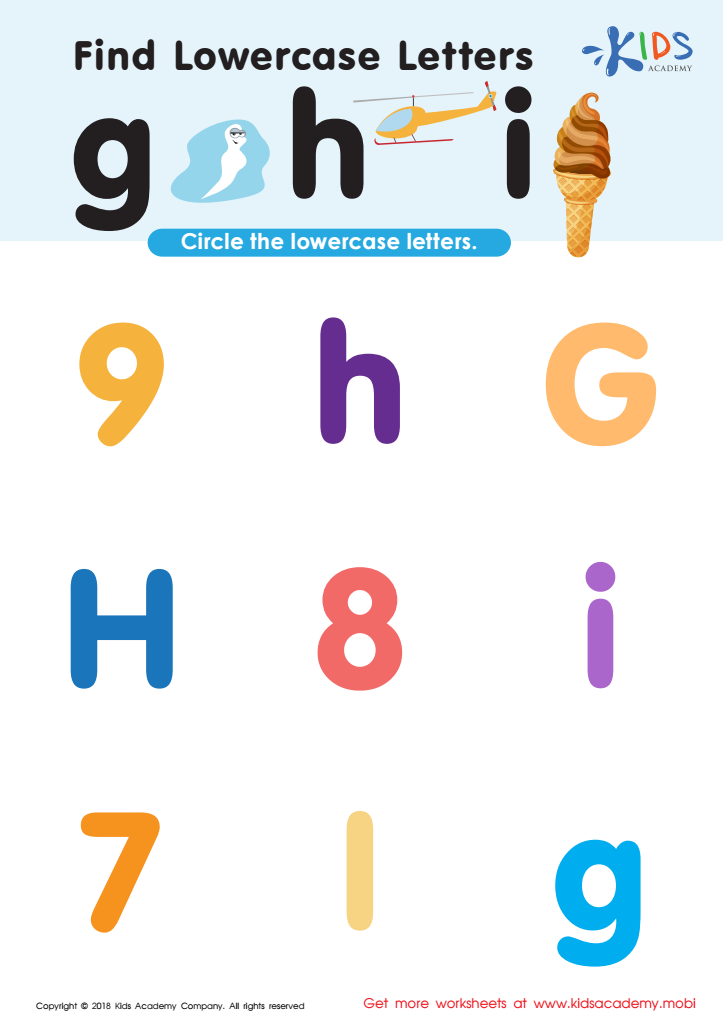
Find Lowercase Letters g h i Worksheet
 Assign to My Students
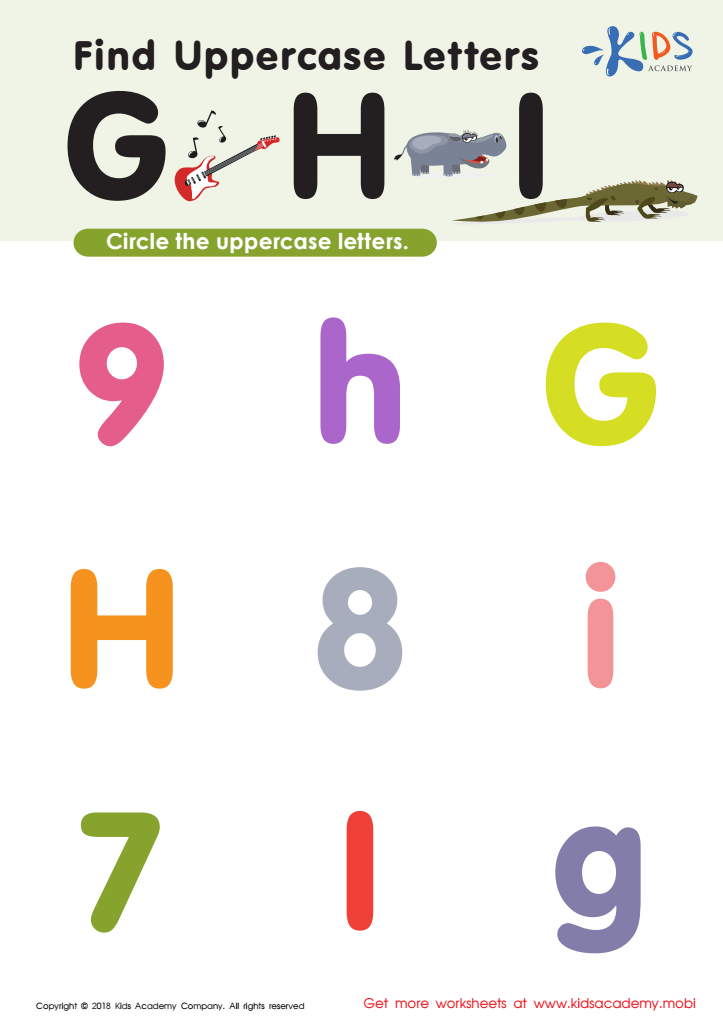
Find Uppercase Letters G, H, and I Worksheet
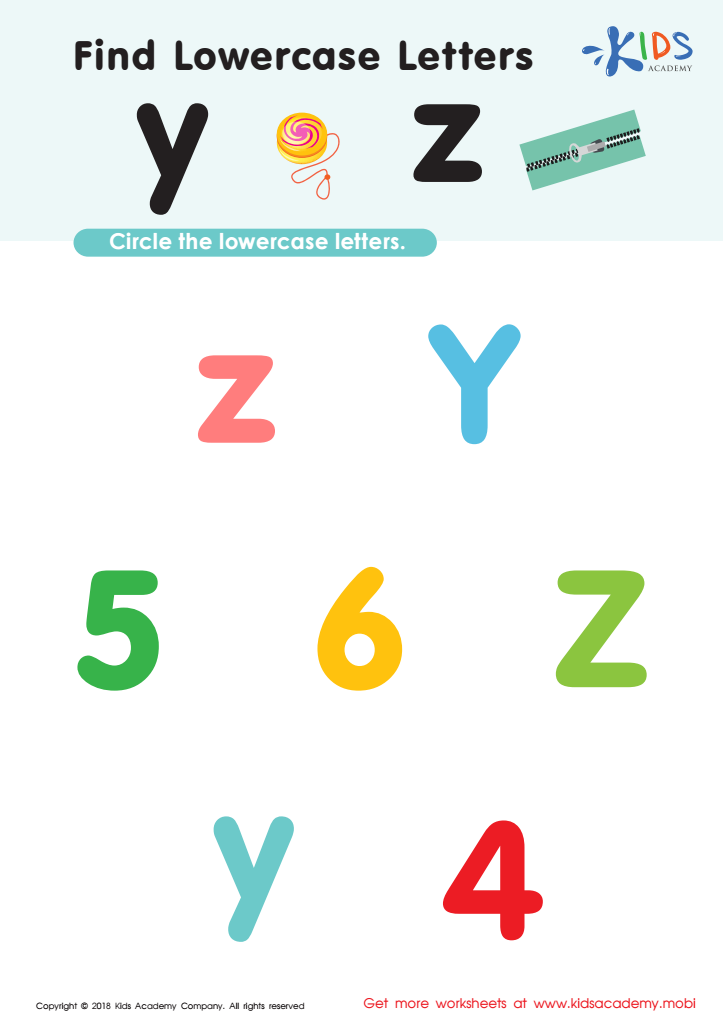
Find Lowercase Letters y z Worksheet
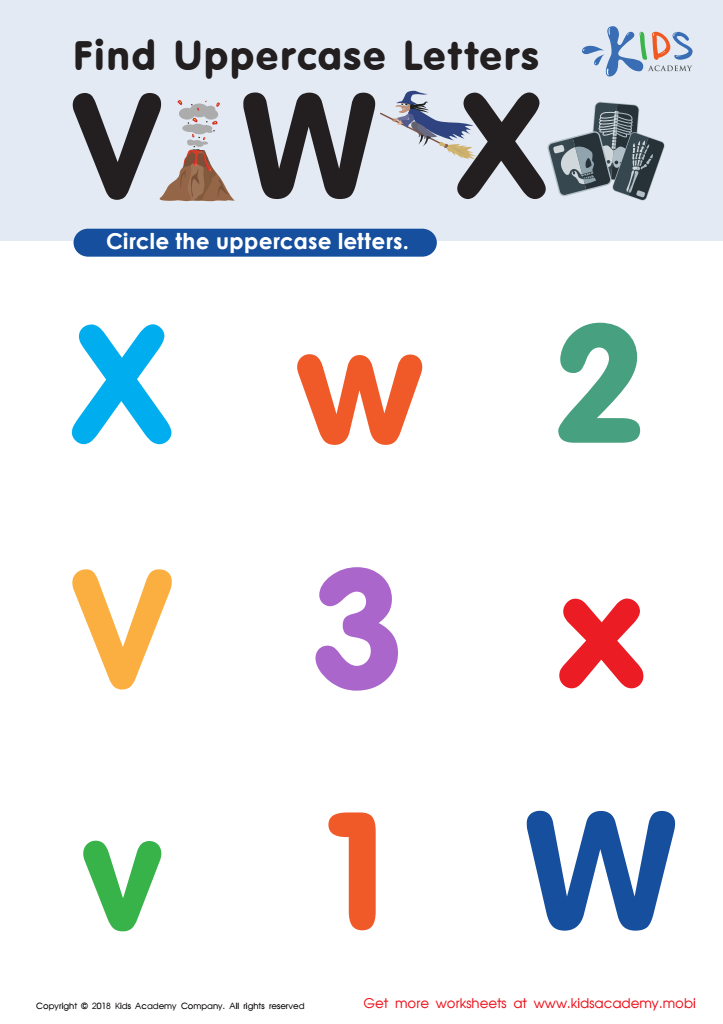
Find Uppercase Letters V, W, X Worksheet








Visual discrimination and normal letter recognition are foundational skills vital for young learners' reading and writing development. Between the ages of 4 and 9, children's brains are highly receptive to learning, making this an essential period for acquiring these skills.
Visual discrimination, the ability to notice and distinguish differences and similarities among objects, shapes, and symbols, is critical for letter recognition. For instance, discerning between 'b' and 'd' or 'p' and 'q' depends on strong visual discrimination skills. This competency enables children to decode words accurately, fostering reading fluency and comprehension, which are key to academic success.
Parents and teachers should prioritize these skills as they underpin the ability to read. Difficulties in visual discrimination can lead to challenges in letter recognition, resulting in reading struggles, lower self-esteem, and frustrations that may affect a child's overall attitude toward learning.
Furthermore, early interventions are efficient because young brains are more adaptable. Activities such as puzzles, alphabet games, and reading practice can enhance children's visual discrimination skills, laying a solid foundation for their educational journey. By nurturing these abilities, parents and teachers pave the way for confident, proficient readers who are equipped to handle more complex literacy tasks in the future.








