Vocabulary expansion Normal Letter Recognition Worksheets for Ages 4-9
3 filtered results
-
From - To
Enhance your child's vocabulary and letter recognition skills with our engaging Vocabulary Expansion Normal Letter Recognition Worksheets designed for ages 4-9. These interactive worksheets provide a fun and stimulating way for young learners to explore letters while enriching their language skills. Each worksheet combines visual aids and creative exercises that promote early literacy development. Your child will enjoy identifying letters, connecting them to words, and expanding their vocabulary through various activities. Perfect for homeschooling or classroom use, these worksheets offer a structured approach to learning that keeps children motivated and eager to explore the alphabet. Start their literacy journey today!
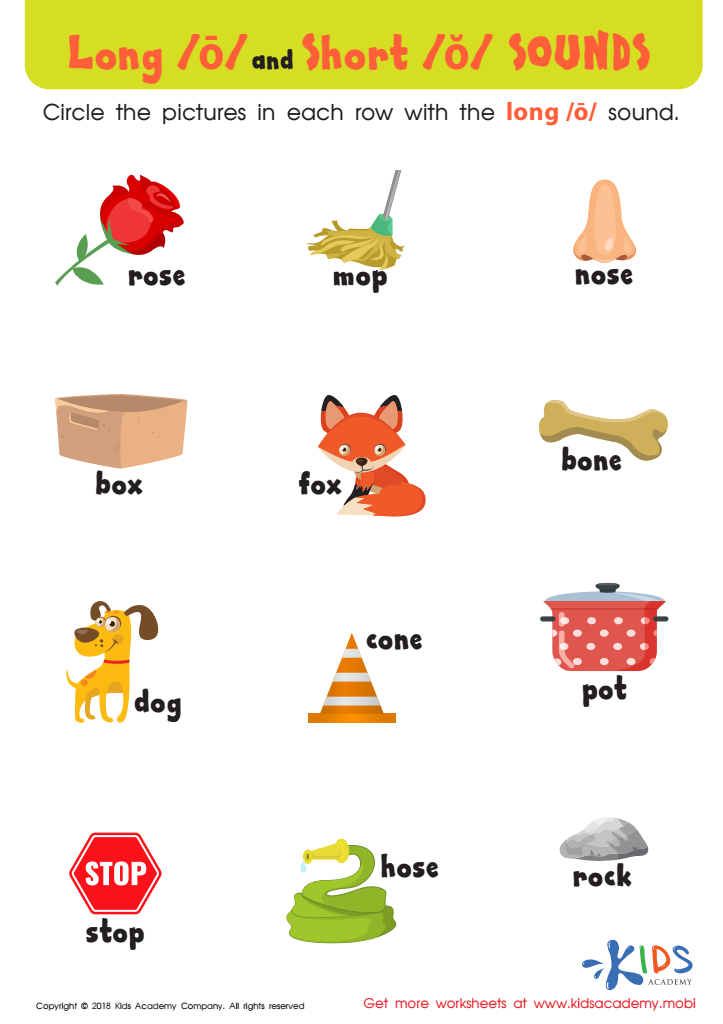
Reading: Long O and Short O Sounds Worksheet
 Assign to My Students
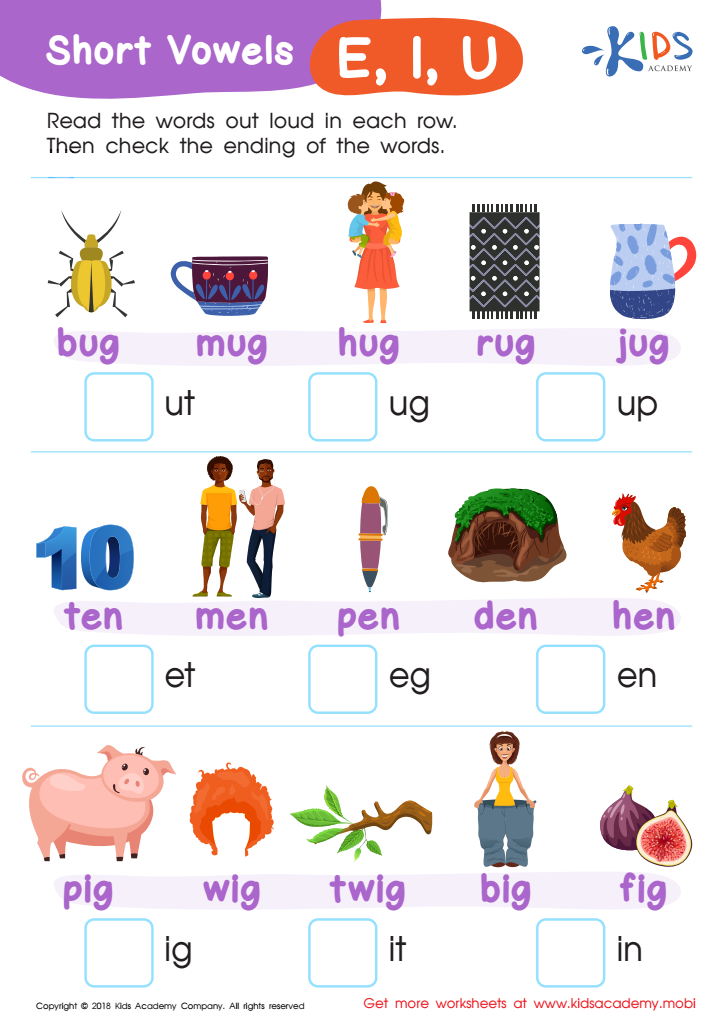
Short Vowels /e/, /i/, and /u/ Worksheet
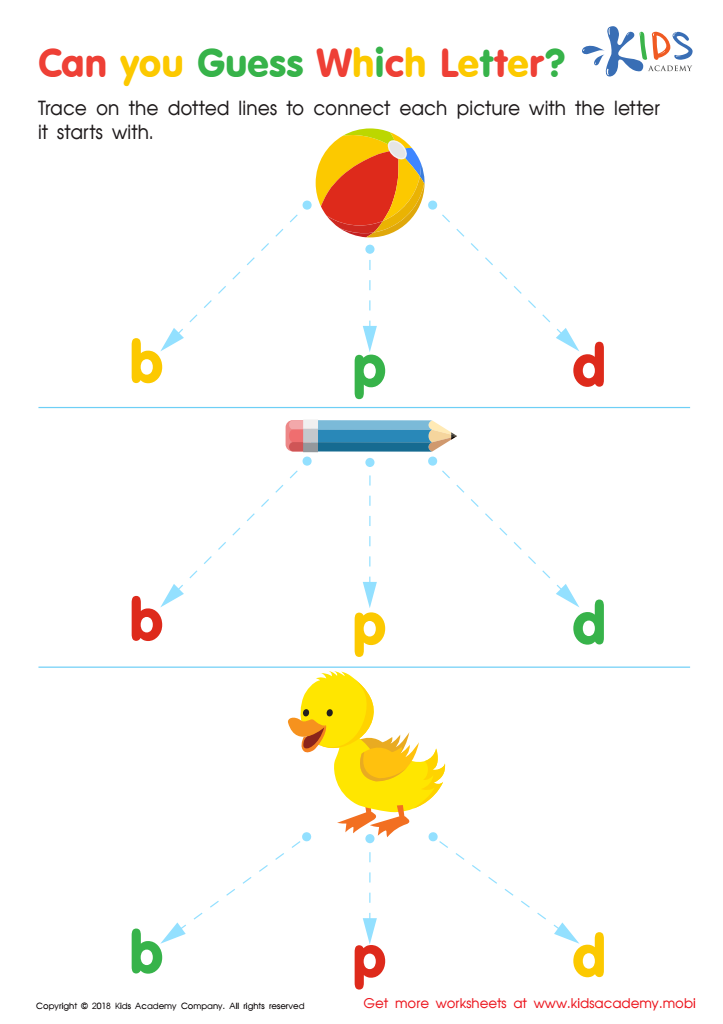
Can you Guess Which Letter? Worksheet








Vocabulary expansion and normal letter recognition are crucial for children aged 4-9 as they serve as foundational pillars for literacy development. During these formative years, children's brains are highly receptive to language and learning, making it an ideal time to enrich their vocabularies. A robust vocabulary enhances reading comprehension, writing skills, and overall communication, which are essential for academic success.
Furthermore, normal letter recognition—the ability to identify and understand the alphabet—plays an integral role in early reading and writing. Mastery of letter recognition helps children decode words, making the transition from letter sounds to word formation smoother. By fostering these skills, parents and teachers can boost children’s self-confidence and motivation in learning.
Moreover, a rich vocabulary empowers children to express themselves more precisely and engagingly, fostering critical thinking and creativity. As they encounter new ideas, inquisitiveness and exploration are encouraged, laying the groundwork for lifelong learning.
In summary, investing time in vocabulary expansion and letter recognition can significantly impact a child's educational journey, paving the way for a successful academic future and equipping them with important communication skills for life. Parents and educators play a vital role in this early stage, making their involvement essential.








