Vocabulary enhancement Normal Letter Sounds Worksheets for Ages 4-9
4 filtered results
-
From - To
Enhance your child's vocabulary with our engaging Normal Letter Sounds Worksheets designed for ages 4-9. These colorful, interactive worksheets help young learners grasp the sounds of each letter, developing essential phonics skills while expanding their word knowledge. Each activity provides fun and educational exercises that focus on both individual letter sounds and their combinations. Perfect for early readers, our worksheets promote confidence and a love for reading through playful, hands-on learning. Watch your child thrive as they master the building blocks of language and enhance their vocabulary. Discover these excellent resources to support your child's literacy journey.
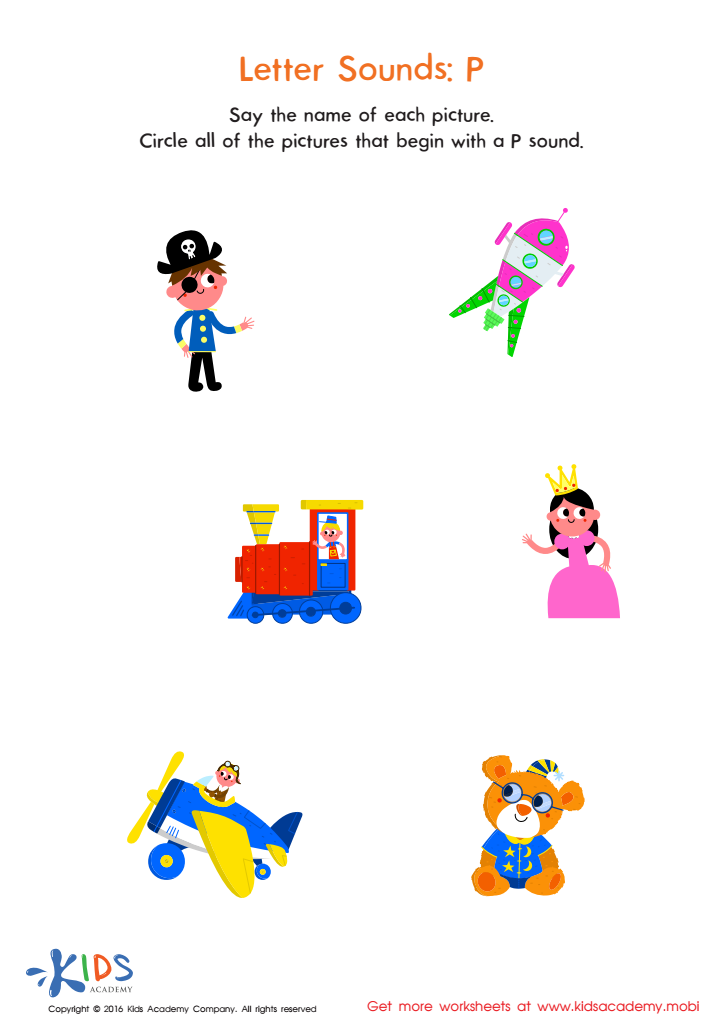
Letter P Sound Worksheet
 Assign to My Students
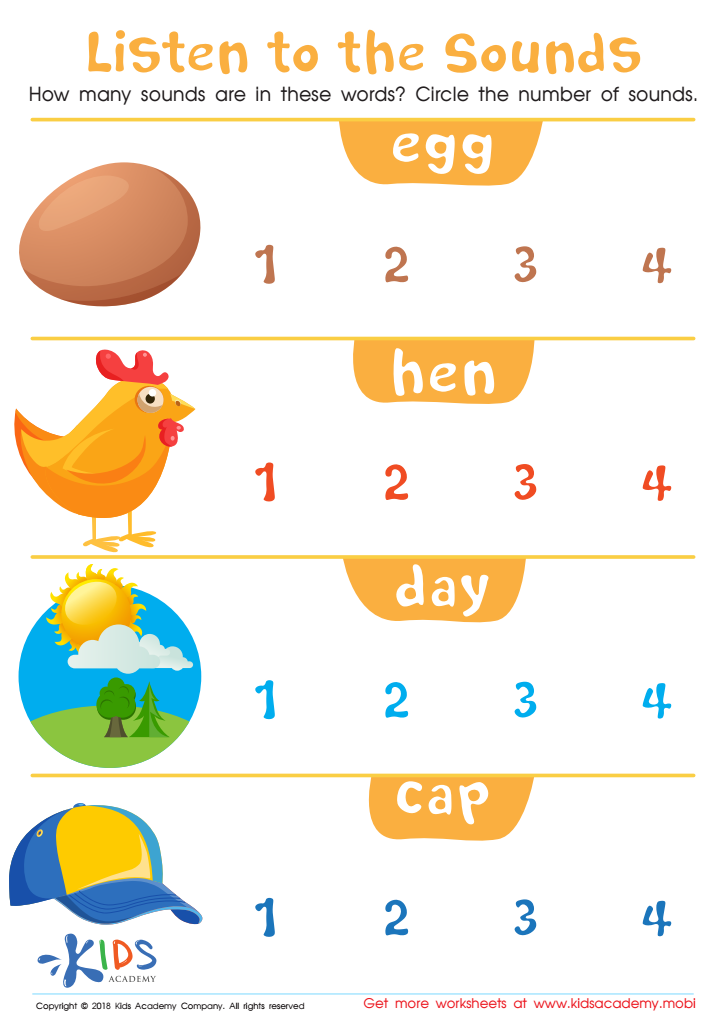
Listen to the Sounds Worksheet
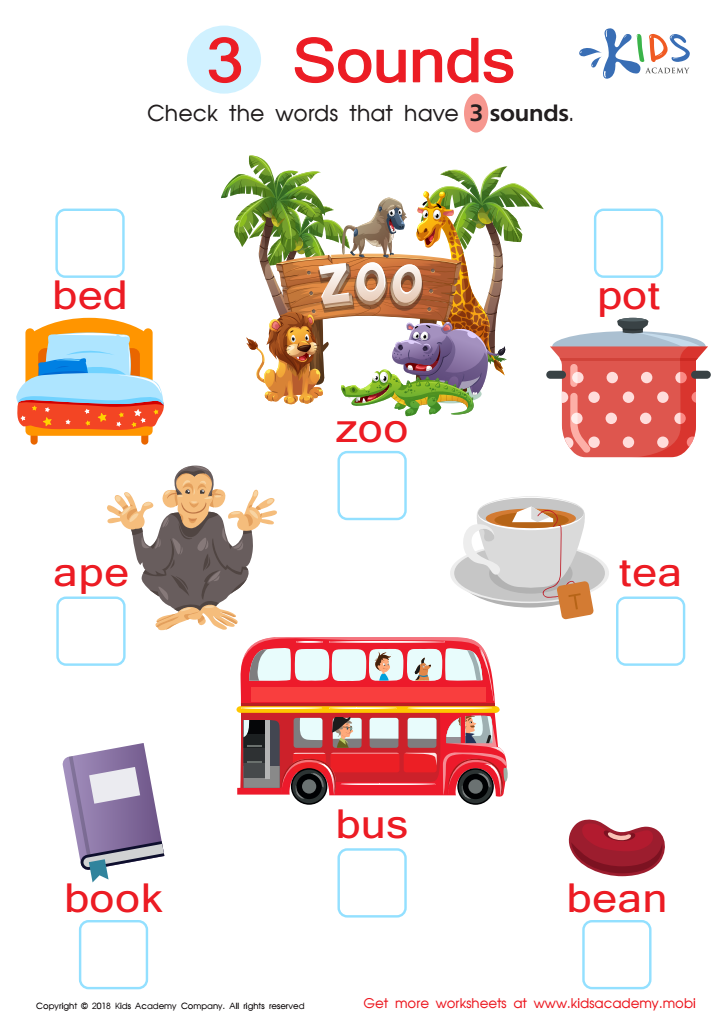
3 Sounds Worksheet
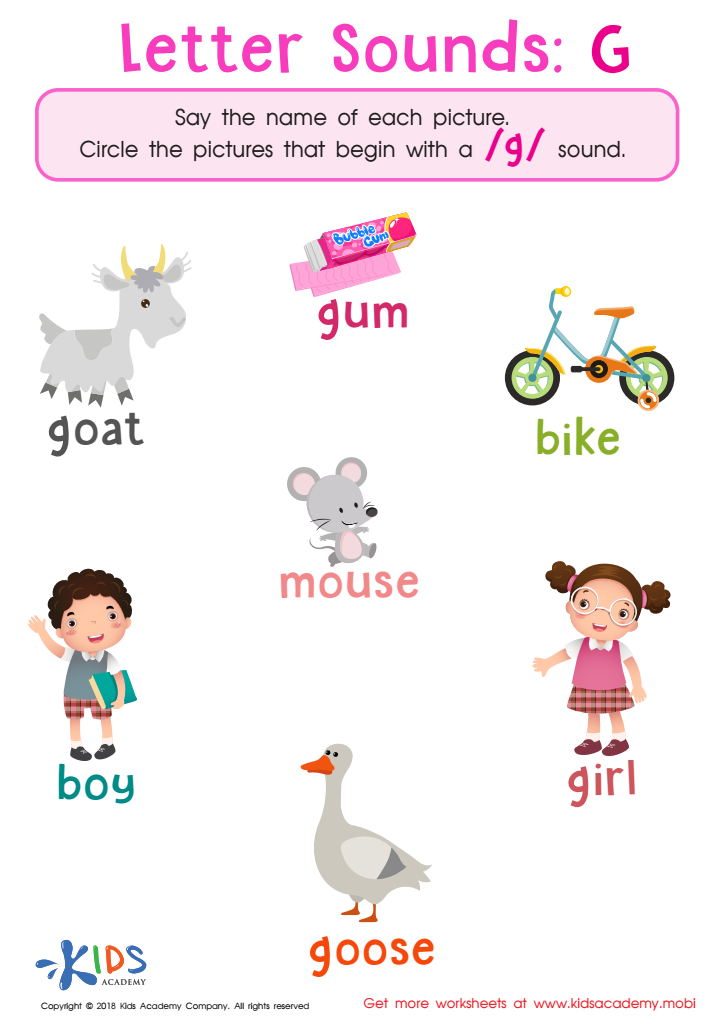
Letter G Sounds Worksheet








Vocabulary enhancement and understanding normal letter sounds between the ages of 4 to 9 are critical components of early childhood education. During these formative years, children are rapidly developing their cognitive and language skills. A robust vocabulary equips children with the necessary tools to express their thoughts, emotions, and ideas effectively, which fosters social competence and self-confidence.
Parents and teachers should care about vocabulary enhancement because it has a direct impact on reading comprehension. A richer vocabulary enables children to understand and process the texts they read better, leading to improved academic performance. Additionally, children with extensive vocabularies are better prepared to tackle new subjects and adapt to different learning environments as they advance through their education.
Normal letter sounds are fundamental to phonemic awareness, a crucial skill that underpins successful reading. By understanding and mastering the sounds that letters make, children can decode words more effectively, contributing to smoother, more fluent reading. This fluency, in turn, enhances comprehension and overall literacy.
Prioritizing vocabulary expansion and phonemic awareness not only sets the stage for academic success but also opens the door to a lifelong love of learning and reading about new topics. By focusing on these key areas, parents and teachers provide children with the foundational building blocks they need to thrive both academically and socially.






