Alphabet understanding Normal Upper & Lowercase Letters Worksheets for Ages 4-9
3 filtered results
-
From - To
Enhance your child's literacy skills with our engaging "Alphabet Understanding Normal Upper & Lowercase Letters Worksheets" designed for ages 4-9. These thoughtfully crafted worksheets help young learners distinguish between upper and lowercase letters, reinforcing their letter recognition and phonemic awareness. Each activity promotes fun and interactive learning, making it easier for children to grasp the basics of the alphabet. Perfect for parents and educators alike, these resources support early reading and writing development while fostering a love for learning. Download our printable worksheets today and watch your child's confidence soar as they explore the fascinating world of letters!
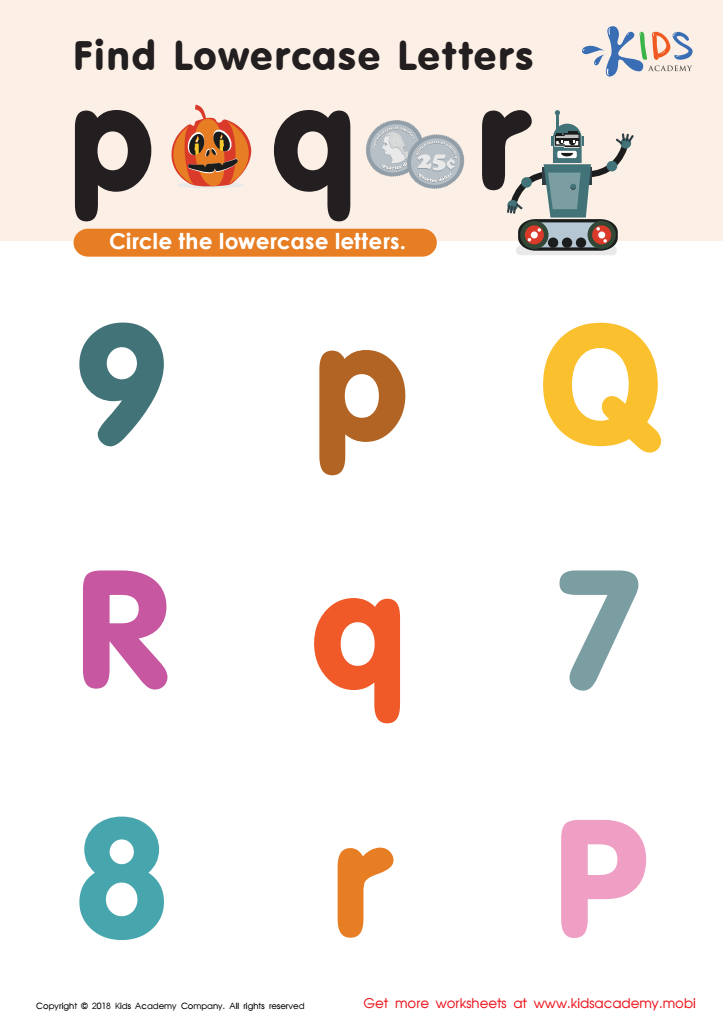
Find lowercase Letters p q r Worksheet
 Assign to My Students

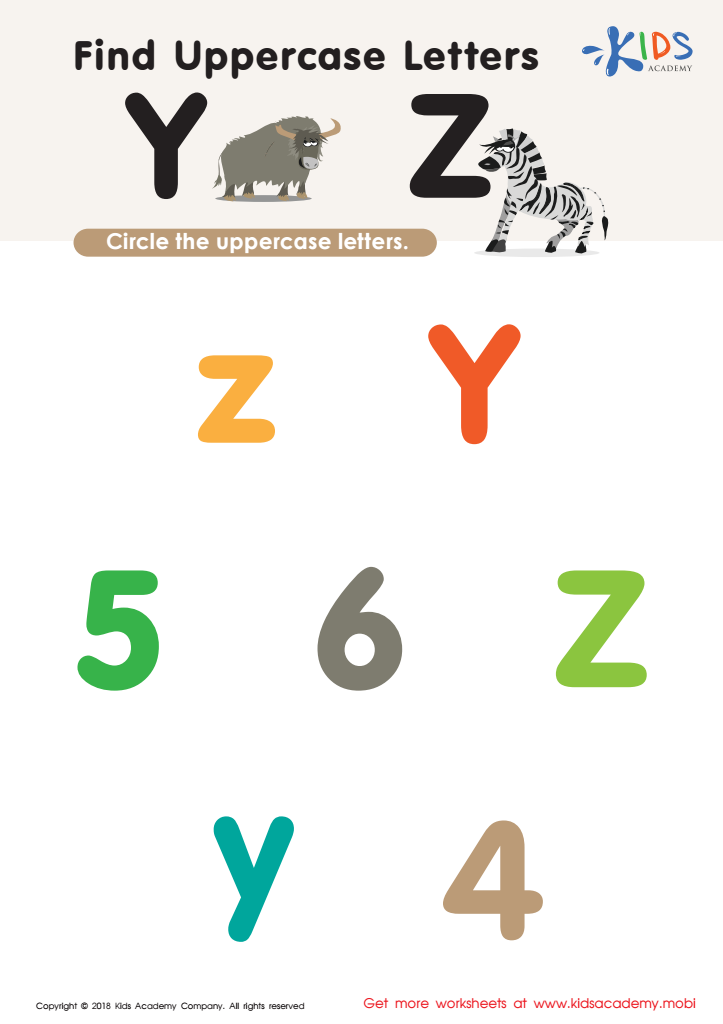
Find Uppercase Letters Y Z Worksheet
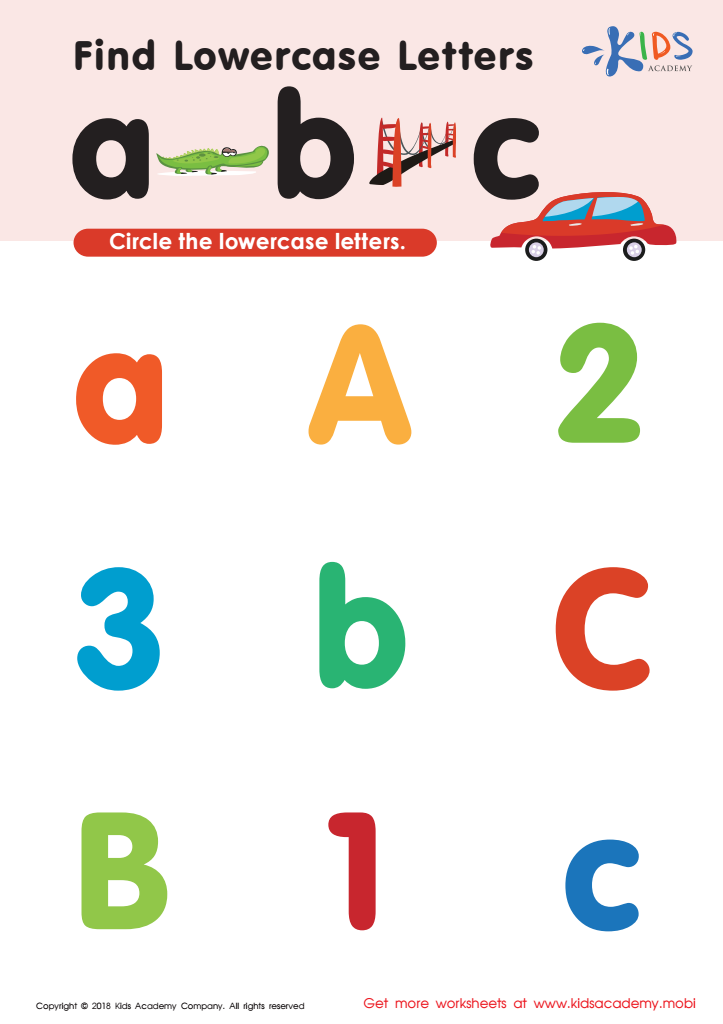
Find lowercase letters a b c Worksheet






Understanding both uppercase and lowercase letters is crucial for children aged 4-9, as it forms the foundation for their literacy skills. Mastery of the alphabet promotes phonemic awareness, which enhances reading and writing abilities. Recognizing letter shapes, sounds, and their varied appearances helps children decode words and understand the mechanics of writing.
Additionally, knowing the difference between uppercase and lowercase letters is important for proper grammar and punctuation. For instance, children learn that proper nouns start with uppercase letters, directly impacting their writing and communication skills. This understanding fosters their confidence in written expression, enabling them to convey their thoughts clearly.
Furthermore, literacy is intrinsically linked to academic success. Children who grasp the basics of letter recognition are better equipped for reading comprehension and vocabulary development, essential for all subjects in school. From a social standpoint, assisting children in learning their letters can bond parents and teachers with their students, creating a supportive learning environment.
Ultimately, when parents and teachers prioritize alphabet understanding, they are investing in children's long-term educational journey, nurturing essential skills that will benefit them throughout their academic and personal lives.







