Uppercase identification Normal Upper & Lowercase Letters Worksheets for Ages 4-9
5 filtered results
-
From - To
Enhance your child’s letter recognition skills with our "Uppercase Identification Normal Upper & Lowercase Letters Worksheets" designed specifically for ages 4-9. These engaging worksheets are structured to help young learners distinguish between uppercase and lowercase letters through fun and interactive activities. Perfect for early grade teachers and parents, our resources combine colorful visuals with educational exercises, creating an enjoyable learning experience. Foster foundational reading skills as children confidently identify and differentiate letters, building a strong literacy base. Explore these expertly crafted worksheets to support your child’s journey in mastering the alphabet today!
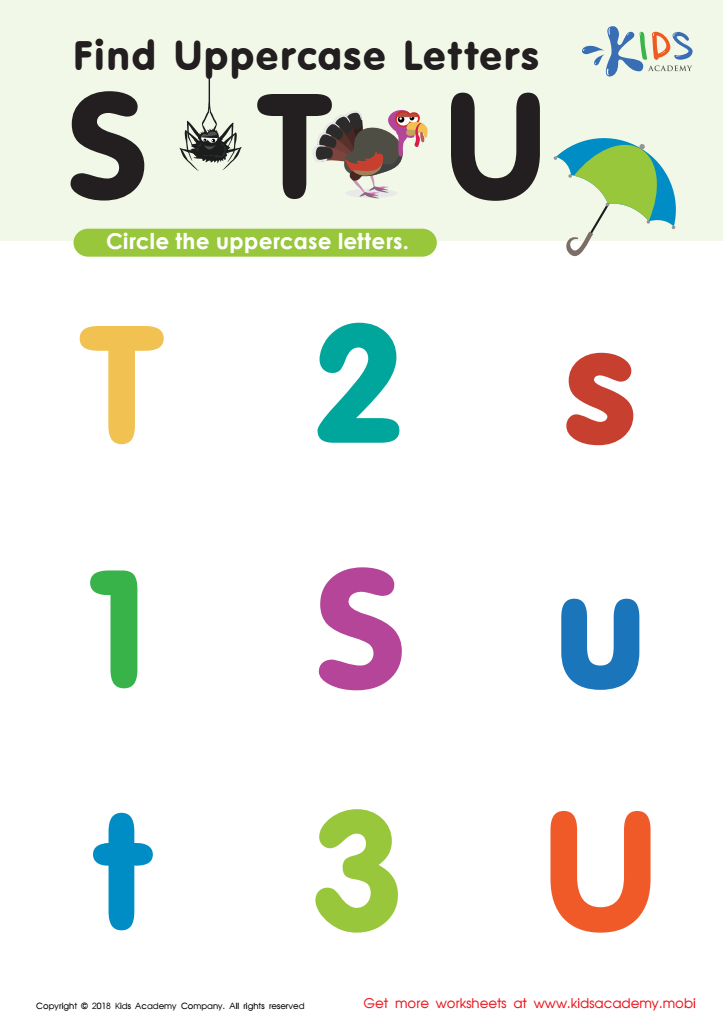
Find Uppercase Letters Worksheet
 Assign to My Students


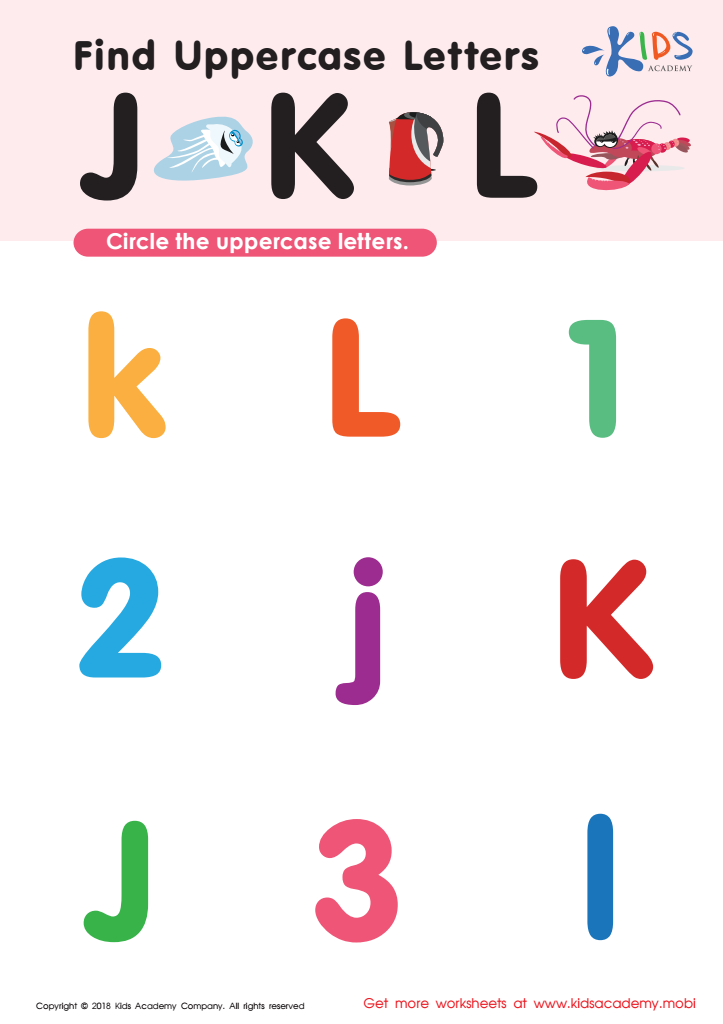
Find Uppercase Letters J, K, and L Worksheet

Find Uppercase Letters A, B, and C Worksheet
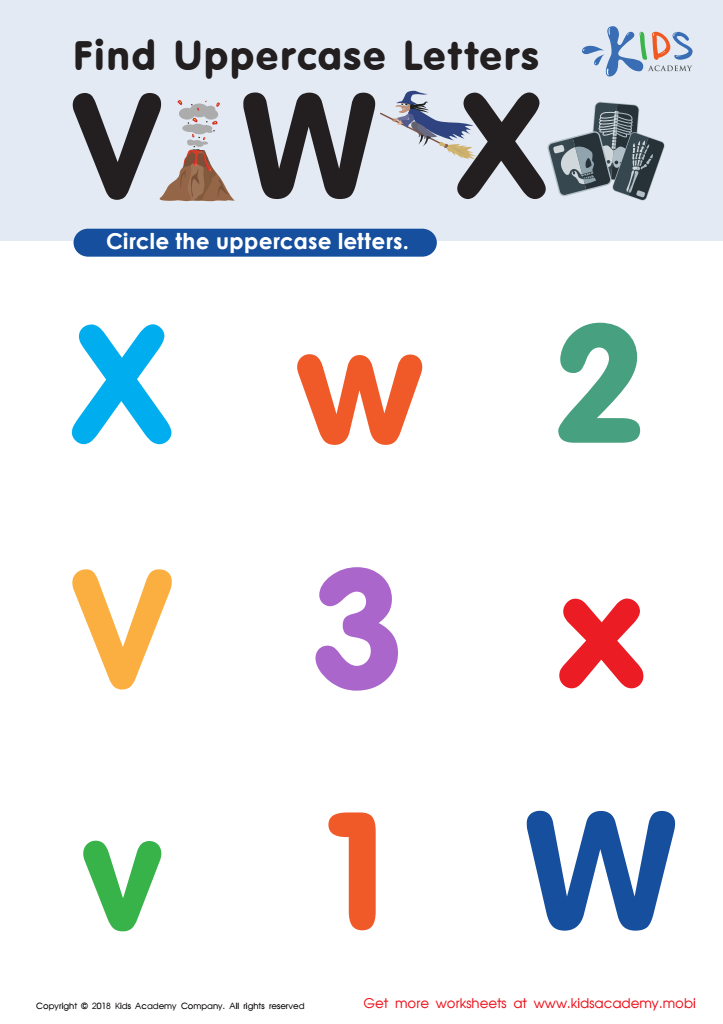
Find Uppercase Letters V, W, X Worksheet

Find Uppercase Letters M, N, and O Worksheet






Teaching children to identify uppercase and lowercase letters is a crucial foundation for reading and writing skills, especially in the early development stages for ages 4-9. When young learners understand the distinction between uppercase and lowercase letters, it opens up clearer pathways for effective communication and literacy.
Firstly, recognizing both forms of letters helps children decode words more efficiently. Since books, signs, and educational materials use a mix of uppercase and lowercase letters, children can only fully understand their surroundings if they can recognize both forms. This skill contributes greatly to fluent reading, as they can recognize words in any context, enhancing comprehension.
Secondly, correct identification and use of uppercase and lowercase letters aid in proper sentence structure and writing conventions. Knowing when to use uppercase letters—for instance, at the beginning of sentences and proper nouns—makes a child's writing clearer and more professional-looking. This ability not only affects their performance in school but fosters confidence as they see their written work adhering to expected norms.
Lastly, proficiency in both uppercase and lowercase recognition supports cognitive development. It exercises a child's memory, enhances visual discrimination skills, and builds attention to detail. Thus, focusing on teaching these distinctions early on sets up a strong foundation for lifelong literacy and academic success, making it essential for parents and educators to prioritize.







