Understanding prefixes Normal Building Vocabulary Worksheets for Ages 4-9
3 filtered results
-
From - To
"Understanding Prefixes: Building Vocabulary Worksheets for Ages 4-9" provides engaging, age-appropriate activities designed to help young learners expand their vocabulary. Through exercises focused on common prefixes, children develop reading comprehension and word recognition skills. These worksheets offer interactive learning, turning the challenge of decoding new words into a fun experience. Tailored for children aged 4 to 9, they seamlessly integrate with early education curriculum goals. Parents and teachers trust these resources for their effective approach in making language learning accessible and enjoyable. Empower your child's reading journey with tools that build a strong foundation in understanding prefixes.
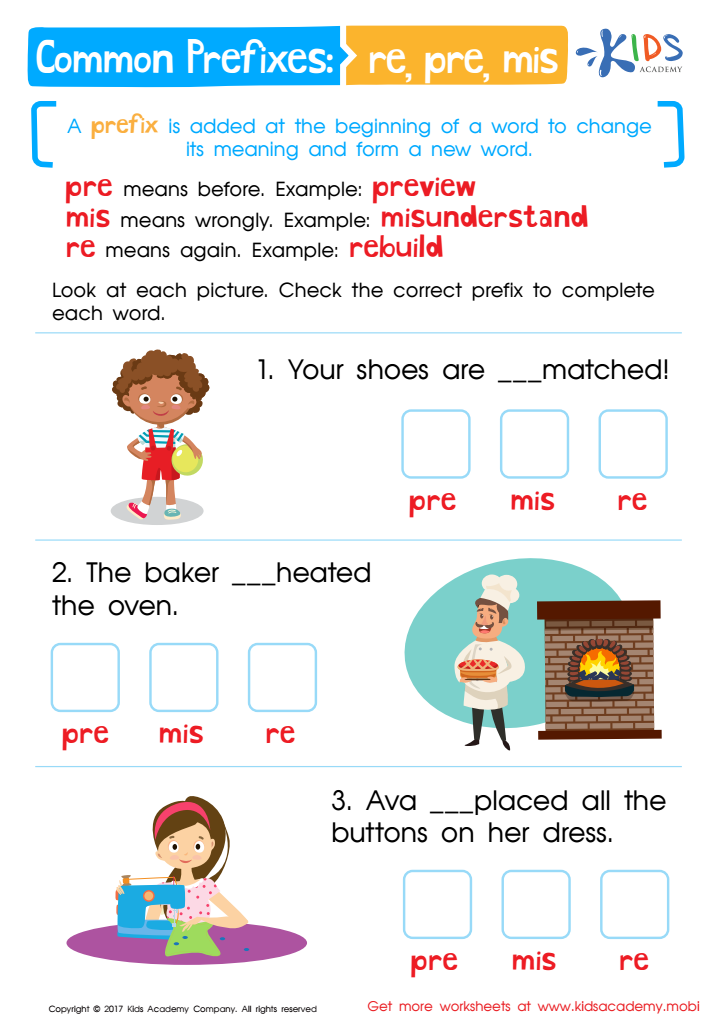
Common Prefixes Worksheet: RE, PRE, MIS
 Assign to My Students











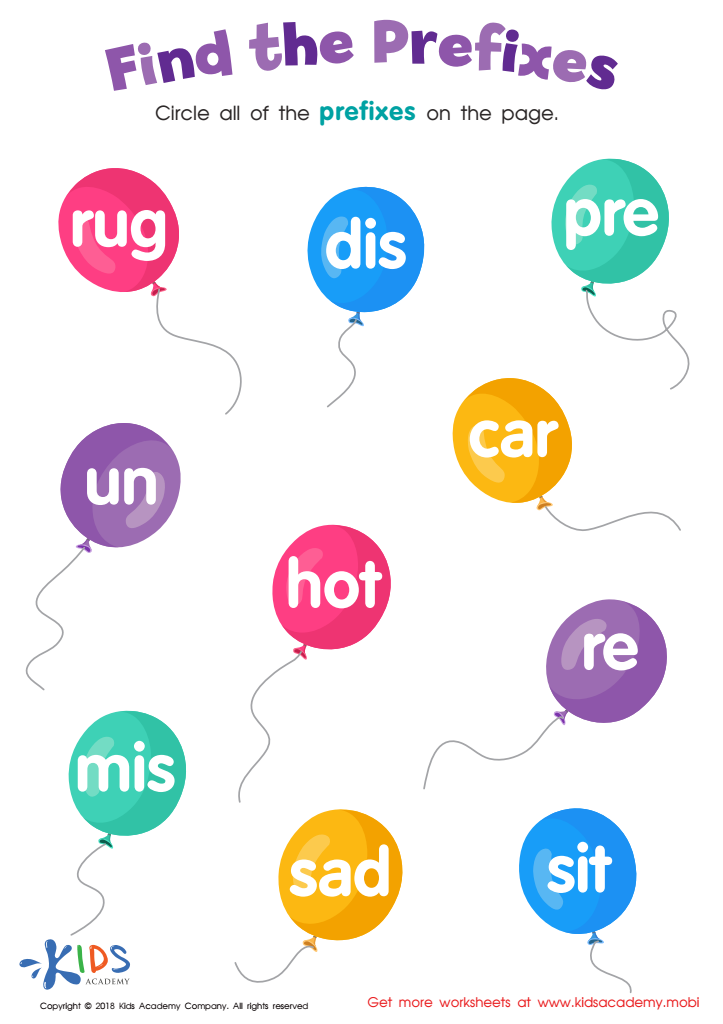
Reading: Find the Prefixes Worksheet
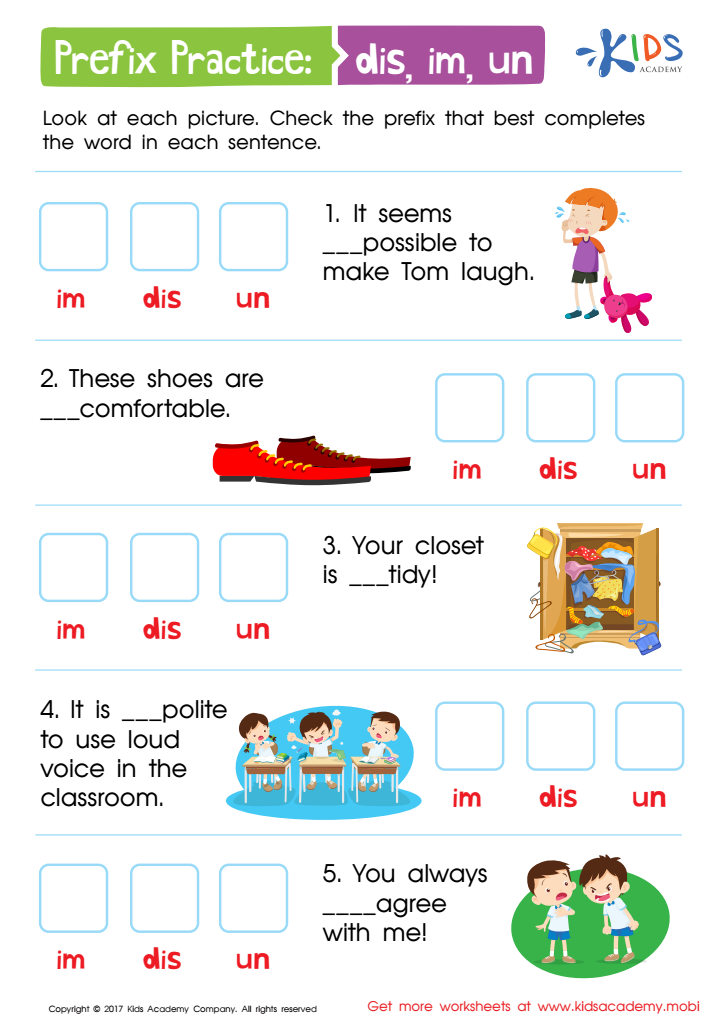
Prefix Practice Worksheet: DIS, IM, UM


.jpg)





Understanding prefixes is fundamental for building a strong vocabulary in children aged 4-9. By acquainting young learners with common prefixes like "un-", "re-", "pre-", and others, parents and teachers provide them with essential tools to decipher meanings of new words. This skill becomes particularly important for developing reading comprehension and language acquisition.
When children recognize that a prefix modifies the meaning of a root word, they begin to deduce meanings independently, thus expanding their vocabulary more efficiently. For instance, knowing that "un-" means "not" allows a child to understand unfamiliar words like "unhappy" or "unfair." This process not only builds vocabulary but also reinforces spelling and pronunciation skills as children learn to break words into smaller, manageable parts.
Moreover, early mastery of prefixes fosters confidence in reading and communication. Children who can easily identify and understand new words are more likely to engage actively with reading materials, participate in discussions, and express themselves clearly and effectively. The enhanced vocabulary also sets a strong foundation for future academic success, as complex texts and subjects become more approachable.
In essence, focusing on prefix understanding in early childhood education equips children with critical linguistic skills, promotes self-sufficiency in learning, and lays the groundwork for lifelong literacy.








