Understanding suffixes Normal Building Vocabulary Worksheets for Ages 4-9
3 filtered results
-
From - To
Discover our engaging "Understanding Suffixes Normal Building Vocabulary Worksheets" designed for children aged 4 to 9. These user-friendly worksheets help young learners grasp the concept of suffixes, essential for expanding their vocabulary and enhancing reading skills. Through a variety of fun exercises, kids will practice identifying suffixes, deciphering word meanings, and applying their knowledge in sentences. Our worksheets provide a foundation for effective communication, making learning about suffixes enjoyable and interactive. Perfect for classroom use or at-home practice, these resources will empower your child to become a confident reader and writer. Encourage literacy and language development today!
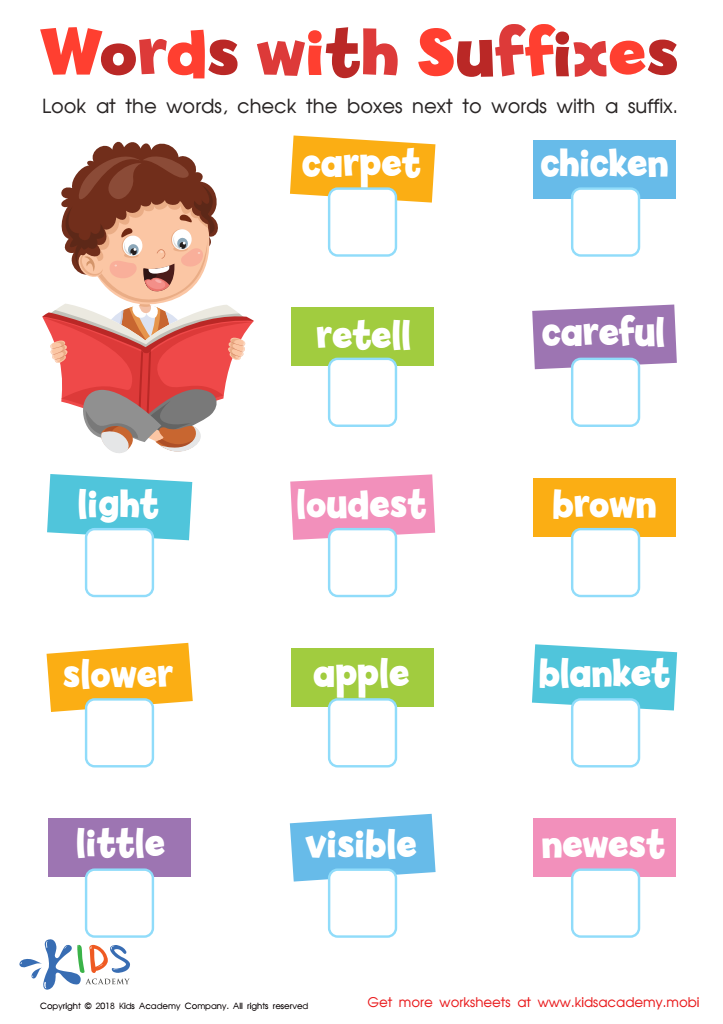
Reading: Words With Suffixes Worksheet
 Assign to My Students











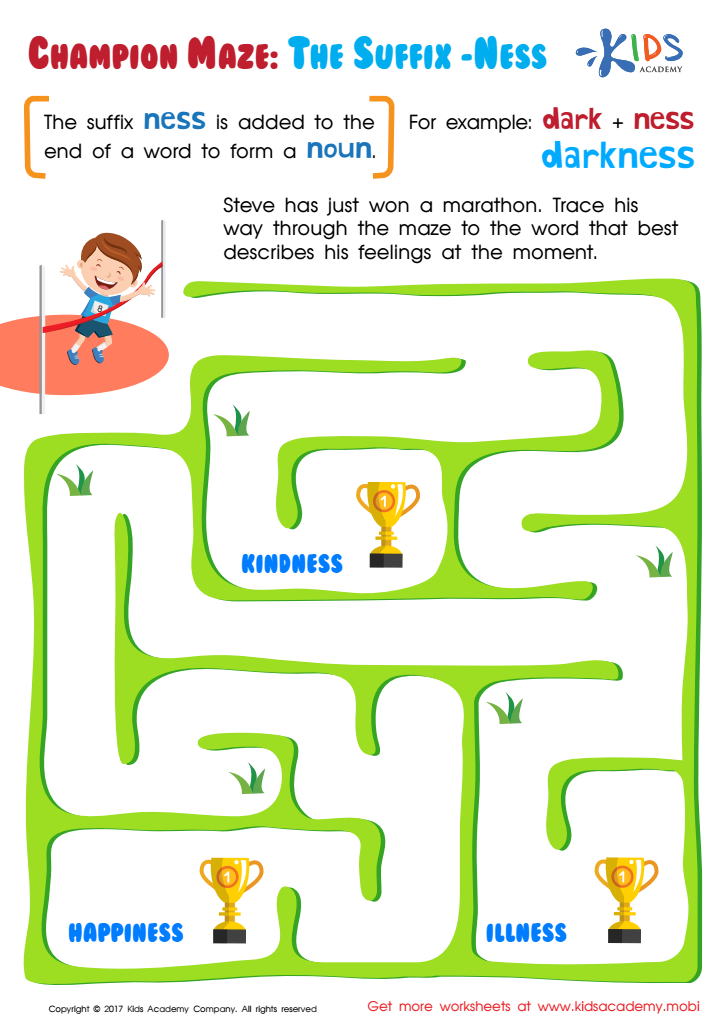
Suffix Ness Worksheet
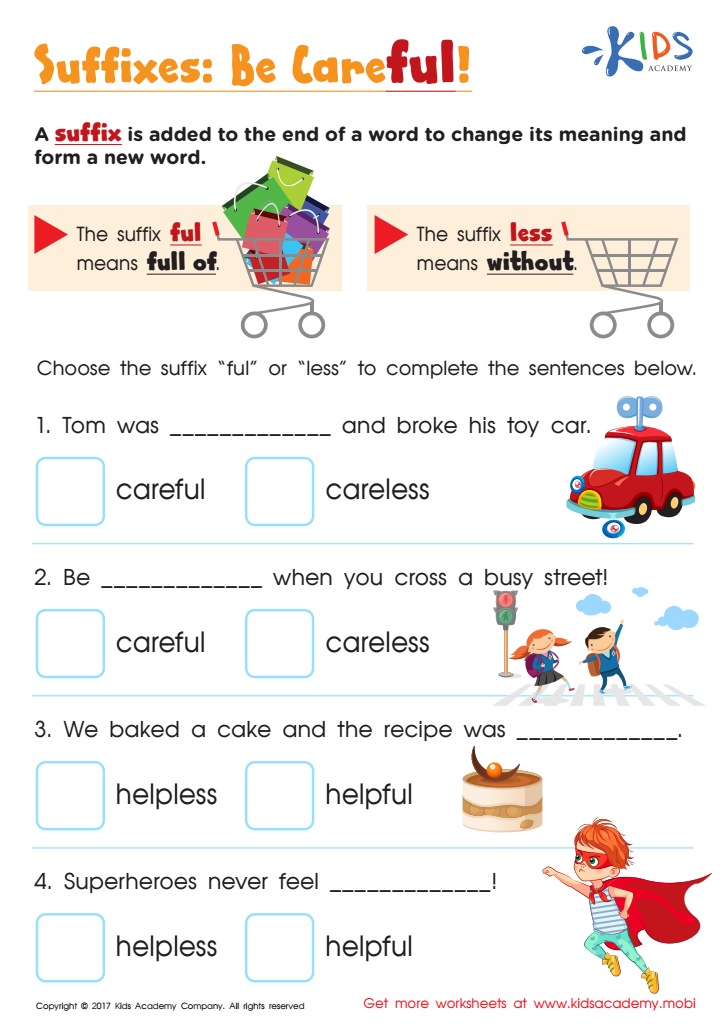
Suffixes Ful and Less Worksheet






.jpg)

Understanding suffixes is crucial for children aged 4-9 as it plays a significant role in vocabulary development and language comprehension. Suffixes are word endings that modify a word's meaning or grammatical function, such as -ing, -ed, -es, and -ful. By teaching suffixes, parents and teachers equip children with tools to decode new words, enhancing their reading skills. For instance, knowing that adding -ed can turn "play" into "played" helps children grasp verb tenses and builds their understanding of past actions.
Moreover, understanding suffixes fosters creative expression. When children learn how to manipulate word forms, they gain the confidence to expand their spoken and written language. This flexibility encourages playful experimentation with words and ideas, increasing their engagement in learning.
Furthermore, a robust vocabulary foundation leads to better communication skills, improving children's ability to articulate thoughts and emotions clearly. This competency not only supports their academic success but also enhances social interactions.
In summary, parents and teachers who prioritize understanding suffixes in early education significantly enhance children’s language Abilities, paving the way for lifelong literacy and effective communication. Investing in this knowledge base ensures children are better prepared for academic challenges and real-world interactions.








