Reading Improvement Normal Reading Worksheets for Ages 4-9
5 filtered results
-
From - To
Discover our engaging "Reading Improvement Normal Reading Worksheets" designed for children aged 4-9! These interactive worksheets aim to enhance early literacy skills through fun and educational activities. Tailored to meet varying reading levels, our resources help young learners improve their phonics, comprehension, and vocabulary. Each worksheet is aligned with developmental milestones, ensuring that every child progresses at their own pace. Perfect for classroom learning or homework support, our reading worksheets foster a love for reading while building confidence. Unlock your child’s potential with these valuable tools, making reading a delightful adventure. Start their journey toward literacy success today!
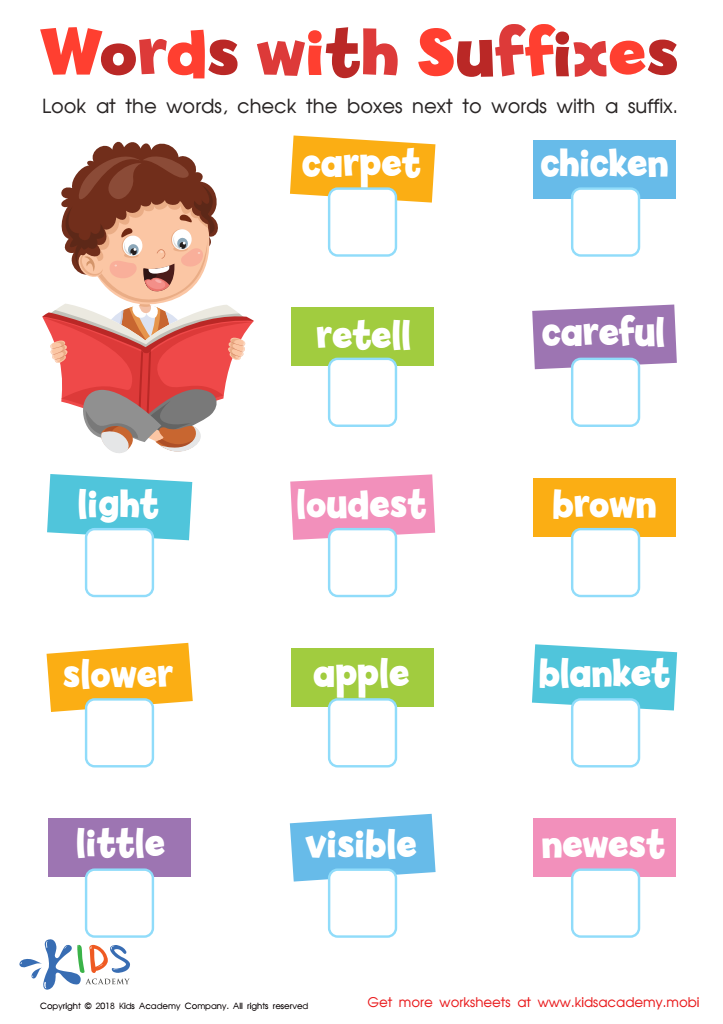
Reading: Words With Suffixes Worksheet
 Assign to My Students
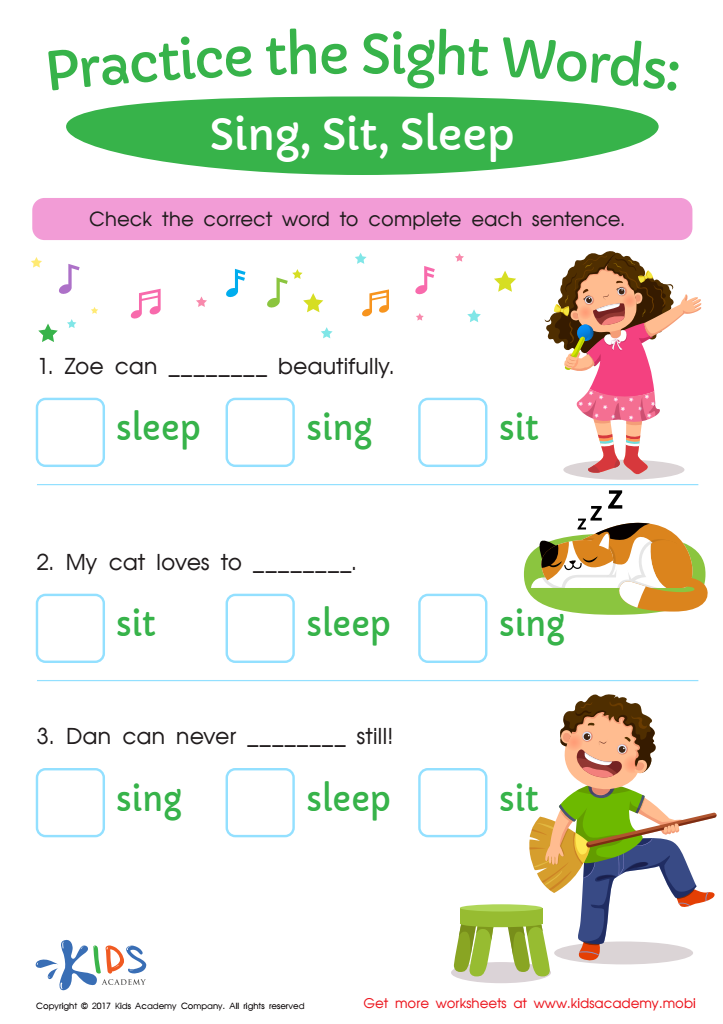
Sing, Sit, Sleep Sight Words Worksheet
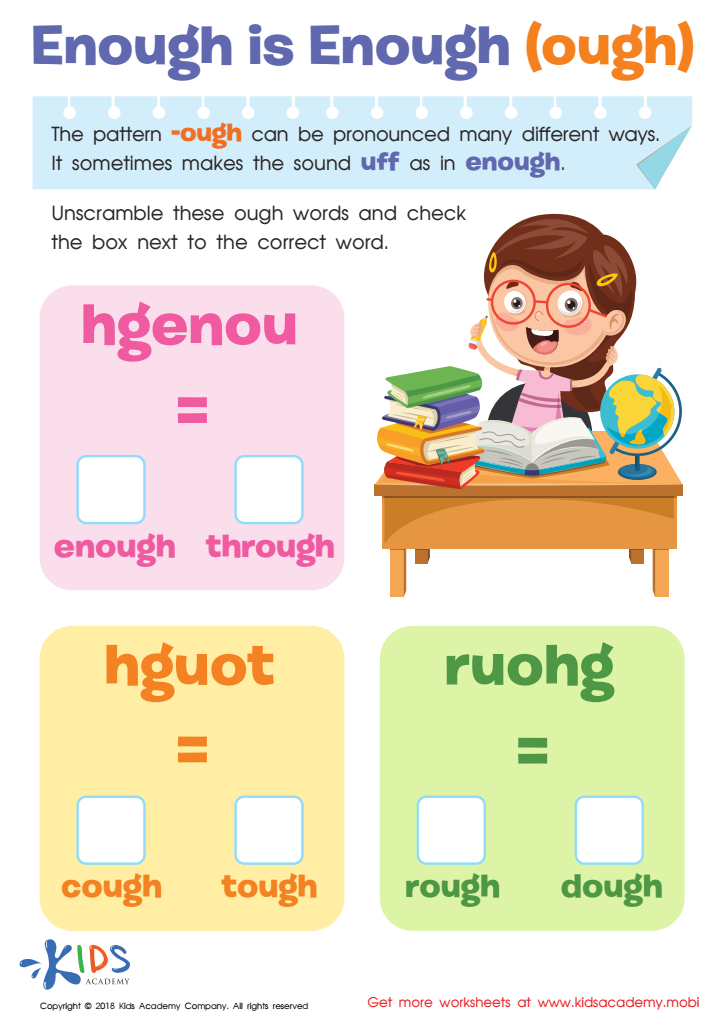
Enough Is Enough (ough) Worksheet
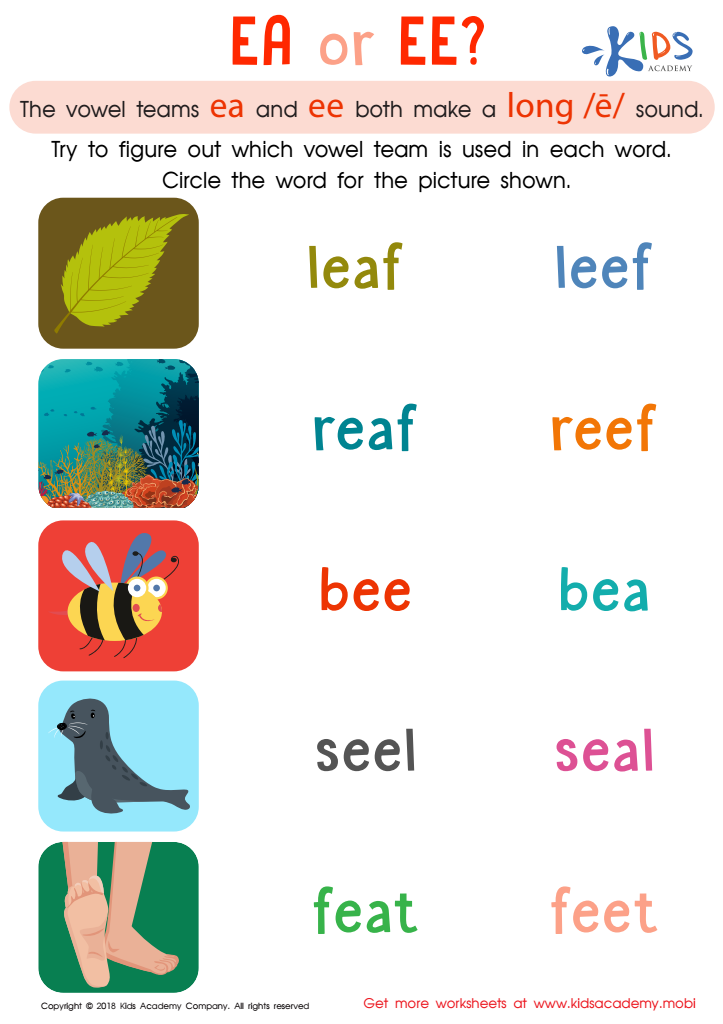
Reading: EA and EE Worksheet
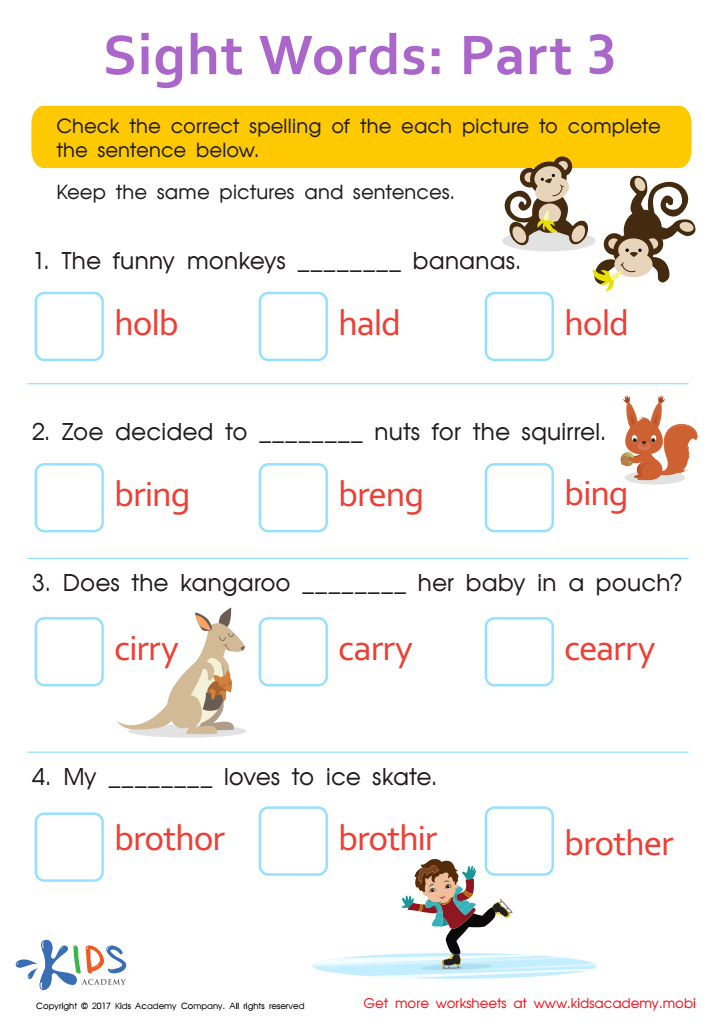
Hold, Bring, Carry, Brother Sight Words Worksheet







Reading improvement for children ages 4-9 is crucial for several reasons, making it an essential concern for both parents and teachers. At this early stage, foundational literacy skills are developed, which set the tone for a child's future academic success. Children who can read effectively tend to perform better in all subjects, as reading influences critical thinking, comprehension, and the ability to absorb new information.
Additionally, establishing a positive attitude towards reading early on fosters a lifelong love for learning. When children improve their reading abilities, they gain confidence, leading to greater participation in class and at home. This sense of achievement fuels motivation and encourages them to take on new challenges.
Moreover, investing in reading development can bridge educational gaps often seen in diverse socio-economic backgrounds. Parents and teachers play an integral role in creating a supportive reading environment, filled with engaging materials and strategies tailored to meet each child’s needs. This collaborative approach not only strengthens reading skills but also nurtures social and emotional growth. Ultimately, prioritizing reading improvement during these formative years lays a strong foundation for successful, well-rounded individuals, reinforcing the importance of establishing effective literacy practices early on.








