Visual interpretation Normal Reading Worksheets for Ages 4-9
5 filtered results
-
From - To
Explore our "Visual Interpretation Normal Reading Worksheets" tailored for children ages 4-9. These engaging worksheets are designed to enhance your child's reading and comprehension skills through vivid illustrations and fun activities. As they interact with visual prompts, children will develop critical thinking, improve word recognition, and gain a deeper understanding of the text. Ideal for both classroom and at-home learning, our expertly crafted resources ensure enjoyable, educational experiences that build confidence in young readers. Unlock their potential and make learning an adventure with our visual interpretation reading worksheets today! Visit Kids Academy for more details.
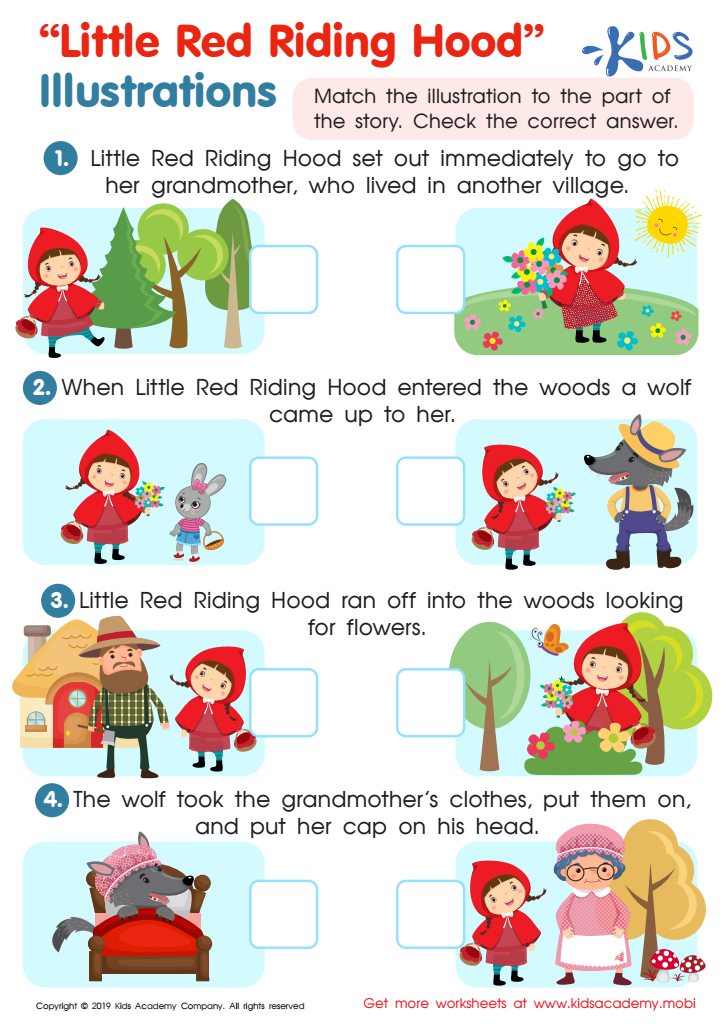
Little Red Riding Hood: Illustrations Worksheet
 Assign to My Students
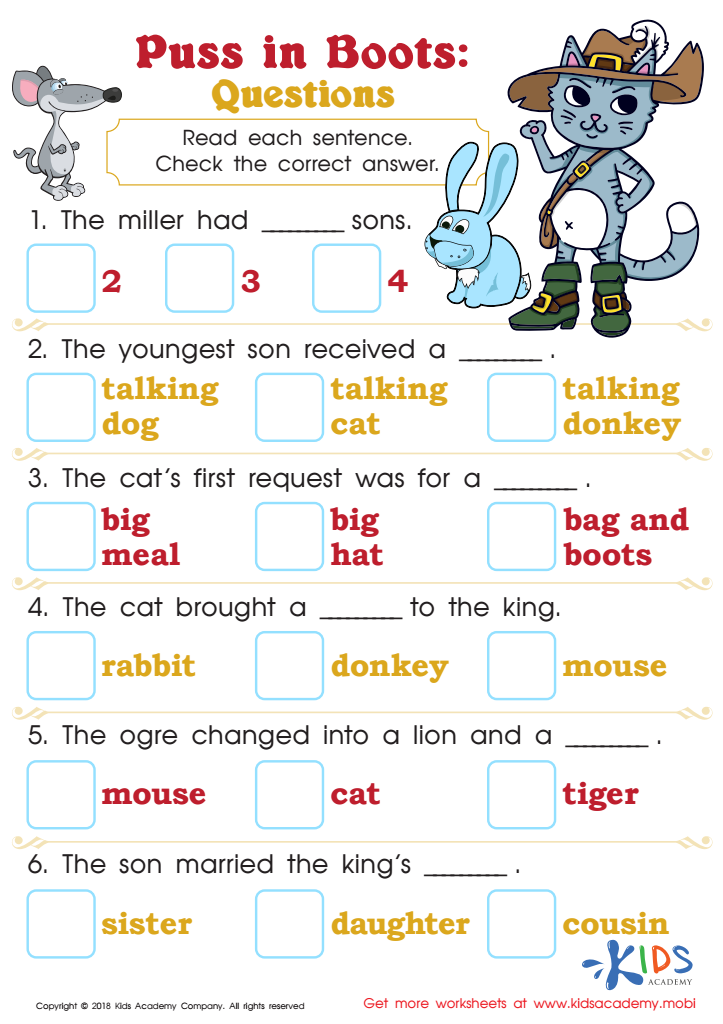
Puss in Boots: Questions Worksheet
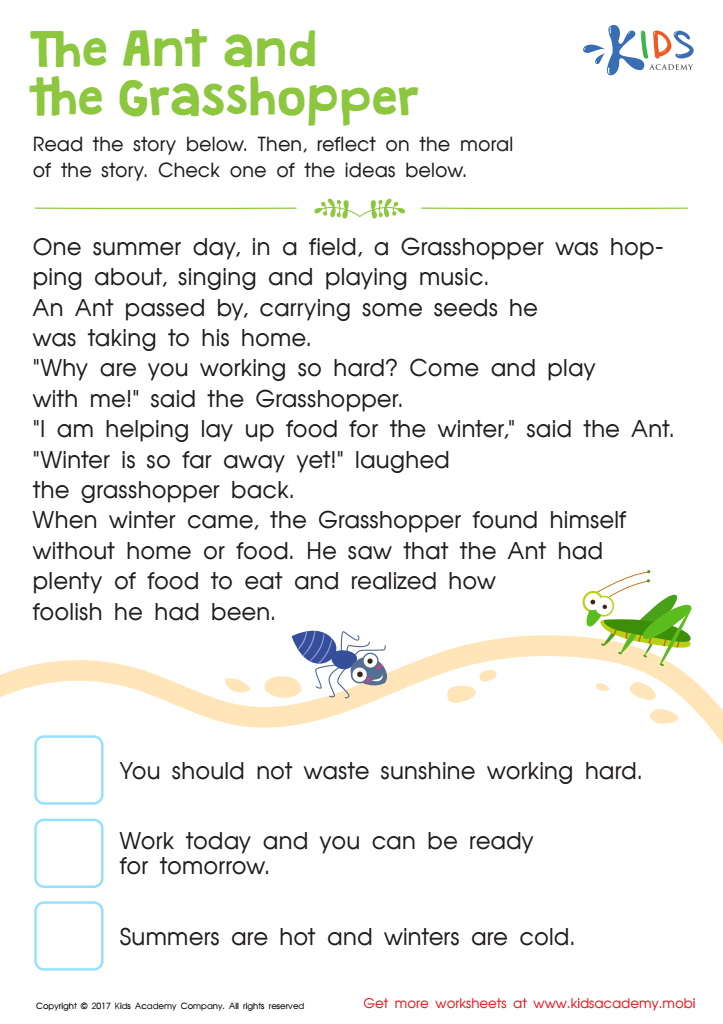
The Ant and The Grasshopper Printable
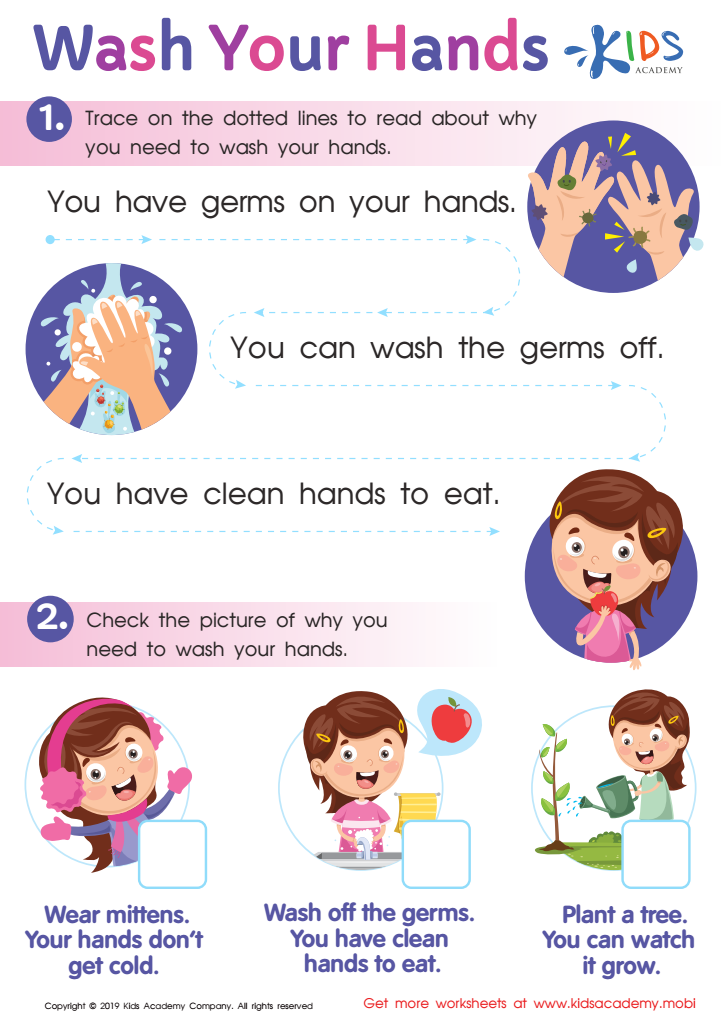
Wash Your Hands Worksheet
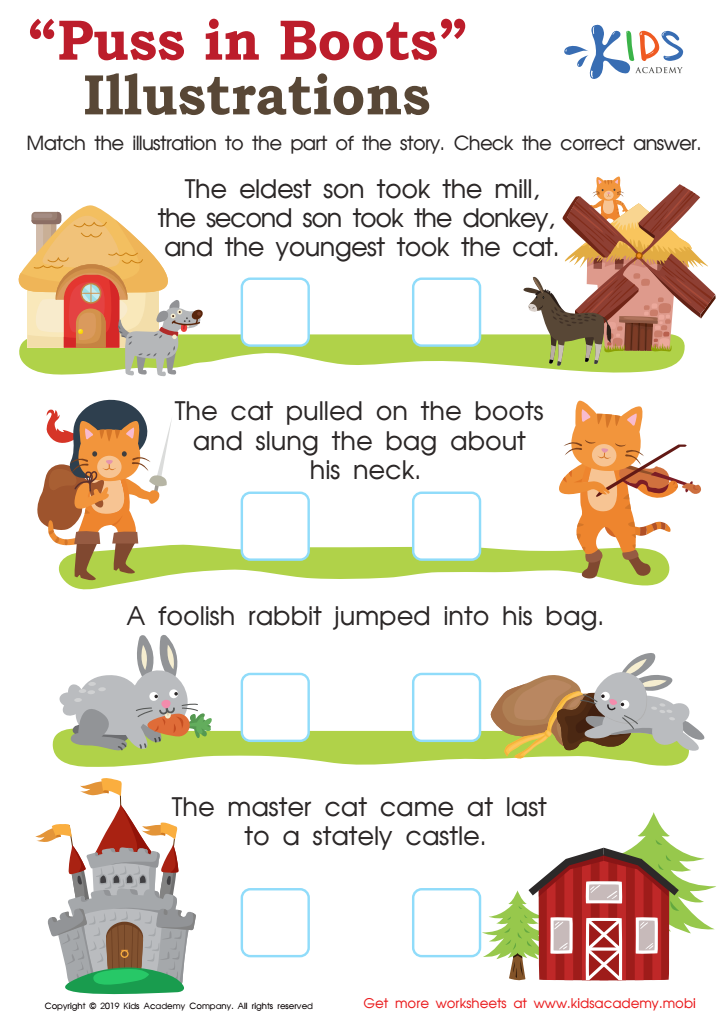
Puss in Boots Illustrations Worksheet








Visual interpretation is crucial for young children aged 4-9 as it lays the foundation for successful reading and cognitive development. At this stage, children’s brains are highly receptive to learning through visual stimuli, and their ability to interpret images can significantly influence their reading skills. Pictures accompany words in children's books, helping kids understand the story context and vocabulary. Engaging with images also supports memory retention, as children are more likely to remember the material when they can visualize it.
Teachers and parents need to foster visual interpretation skills to help children decode words, understand complex concepts, and engage more deeply with texts. When children match images with words, they develop a holistic understanding that promotes cognitive connections necessary for fluent reading. Furthermore, visual interpretation aids in comprehension and critical thinking, as children learn to infer meaning and predict outcomes from images and text.
Additionally, visual learning caters to various learning styles and can be particularly beneficial for visual learners who thrive on seeing information. It also encourages children’s creativity and imagination, which are essential for not only academic success but also overall intellectual growth. By supporting visual interpretation, parents and teachers ensure that children build a solid foundation in reading and critical analysis, equipping them for continued educational success.








