Understanding perspectives Normal Reading Comprehension Worksheets for Ages 4-9
3 filtered results
-
From - To
Explore our "Understanding Perspectives" Normal Reading Comprehension Worksheets, specially designed for children aged 4-9. These engaging worksheets help young learners develop essential skills in critical thinking and empathy by encouraging them to visualize and interpret different viewpoints within stories. Featuring age-appropriate texts and activities, our worksheets are tailored to spark curiosity and foster a love for reading. Teachers and parents will appreciate how these resources promote discussions about character motivations and emotions, helping children connect with the material on a deeper level. Enhance your child's reading comprehension and social understanding with our thoughtfully crafted activities!
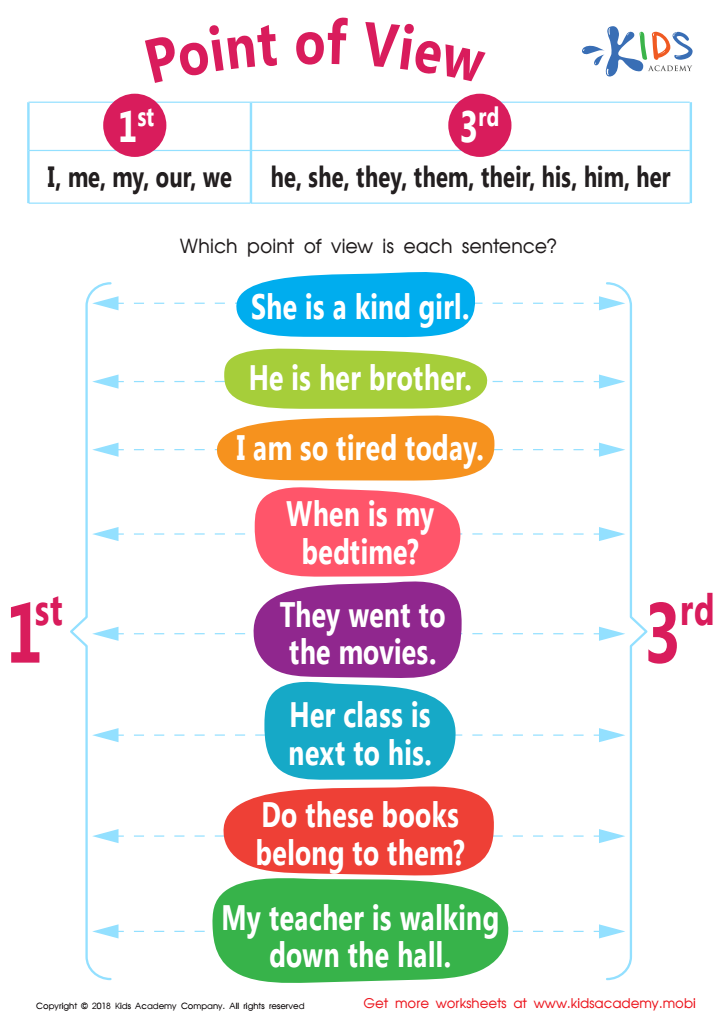
Point of View Worksheet
 Assign to My Students
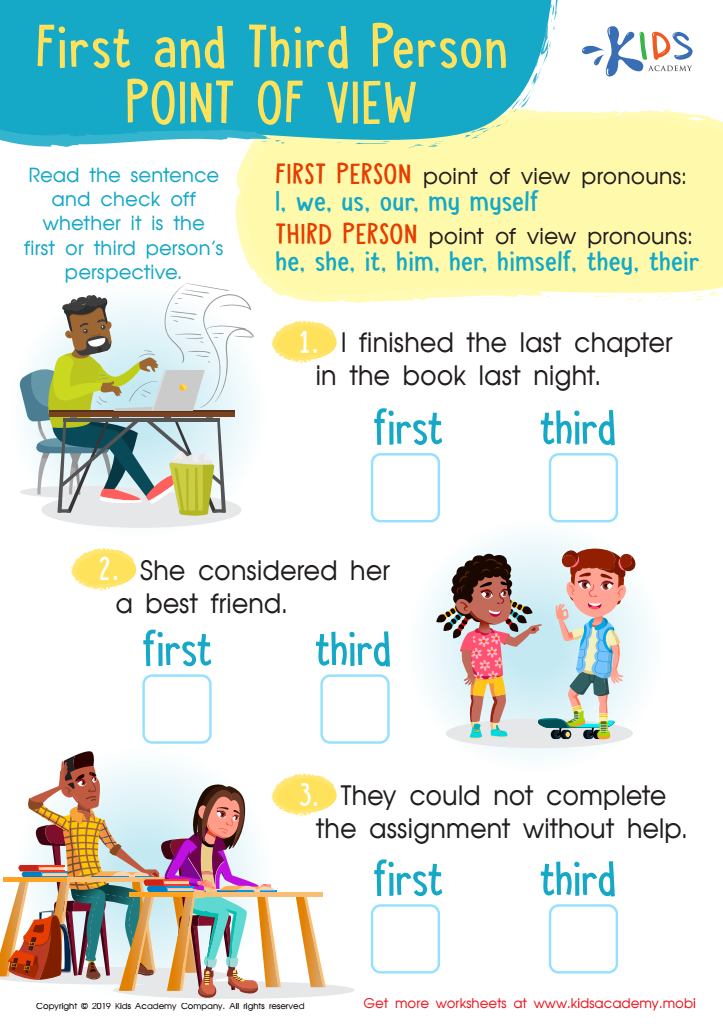
First and Third Person Point of View Worksheet
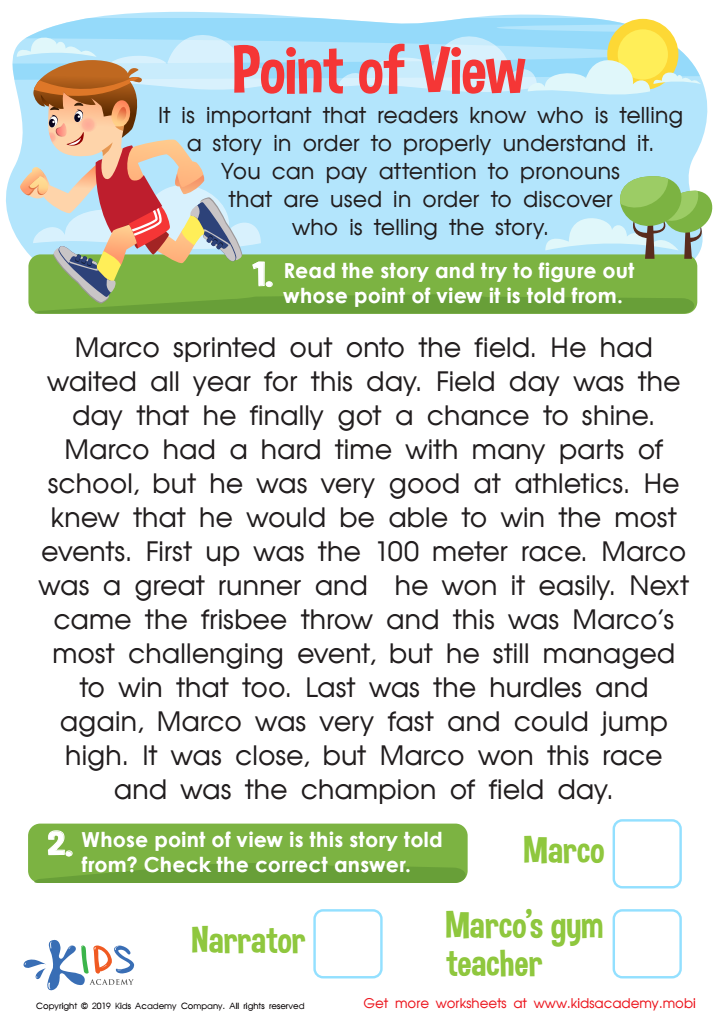
Point of View Worksheet







Understanding perspectives in reading comprehension is essential for children aged 4-9, and parents and teachers should care deeply about this concept. At this developmental stage, children's cognitive skills are rapidly evolving, and they are beginning to grasp that different characters in stories can have varied thoughts, feelings, and motivations. Recognizing these perspectives enhances empathy, improves social interactions, and fosters critical thinking skills.
When children learn to understand perspectives while reading, they engage more deeply with the text. This engagement not only aids in comprehension but also encourages them to make connections between the story and their own experiences. As children recognize how characters might react in different situations, they develop problem-solving skills that are crucial in real life.
Moreover, this understanding aids in preparing children for discussions and debates, as they learn to articulate and respect differing viewpoints. Parents and teachers can support this development by selecting diverse literature that presents a range of perspectives and by creating activities that encourage discussions around characters' motivations and feelings. Ultimately, fostering an understanding of perspectives nurtures well-rounded, empathetic individuals, ready to navigate the complexities of human experiences both in and outside the classroom.








