Reading thermometers Normal Science Worksheets for Ages 4-9
3 filtered results
-
From - To
Explore our engaging "Reading Thermometers Normal Science Worksheets" designed specifically for children aged 4-9! These printable resources help young learners grasp the concept of temperature measurement in a fun and interactive way. Through colorful illustrations and hands-on activities, children will learn how to read various thermometer scales, understand temperature differences, and apply these skills in real-life scenarios. Perfect for classroom or home use, our worksheets promote critical thinking and enhance scientific vocabulary. Encourage your child's curiosity about the world around them with our thoughtfully crafted resources that make learning about thermometers an enjoyable adventure in science!
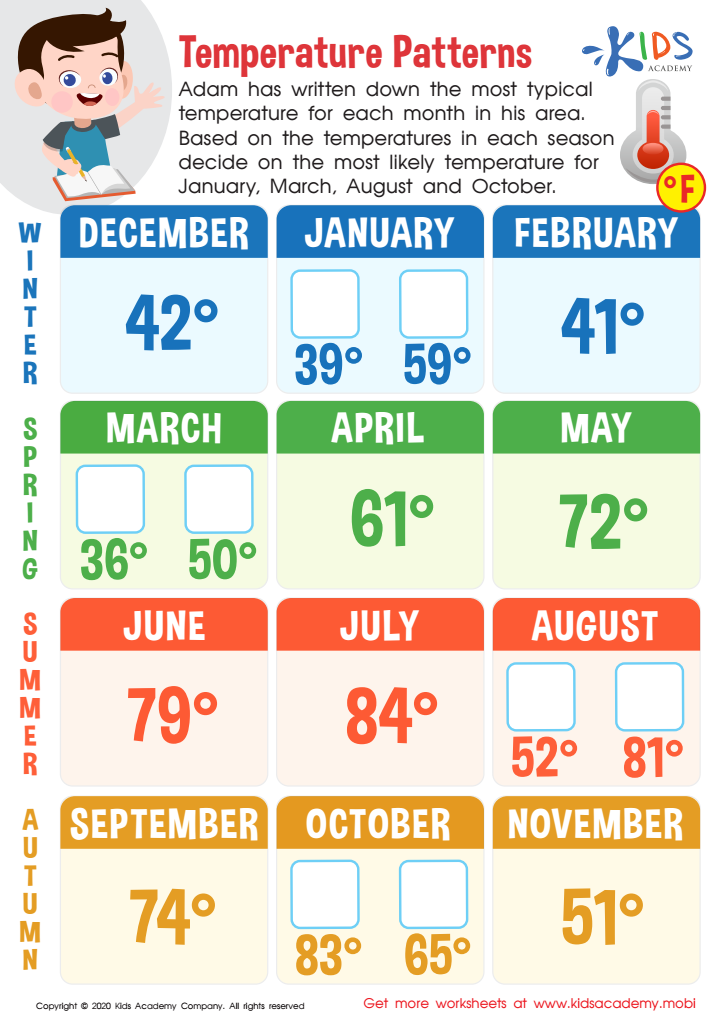
Temperature Patterns Worksheet
 Assign to My Students
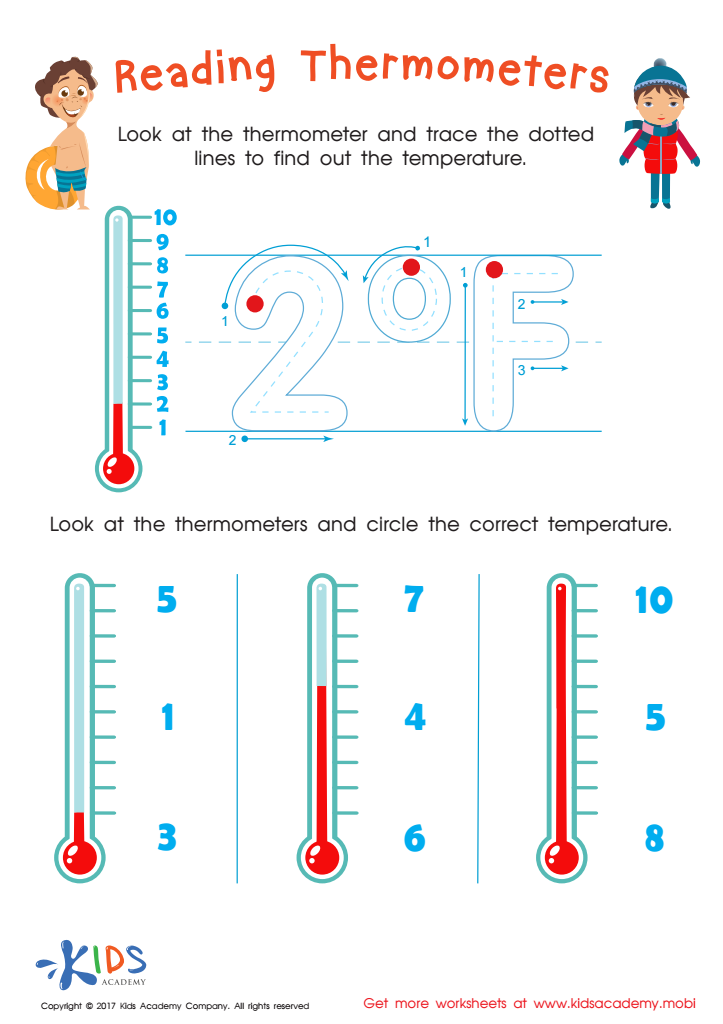
Reading Thermometers Printable
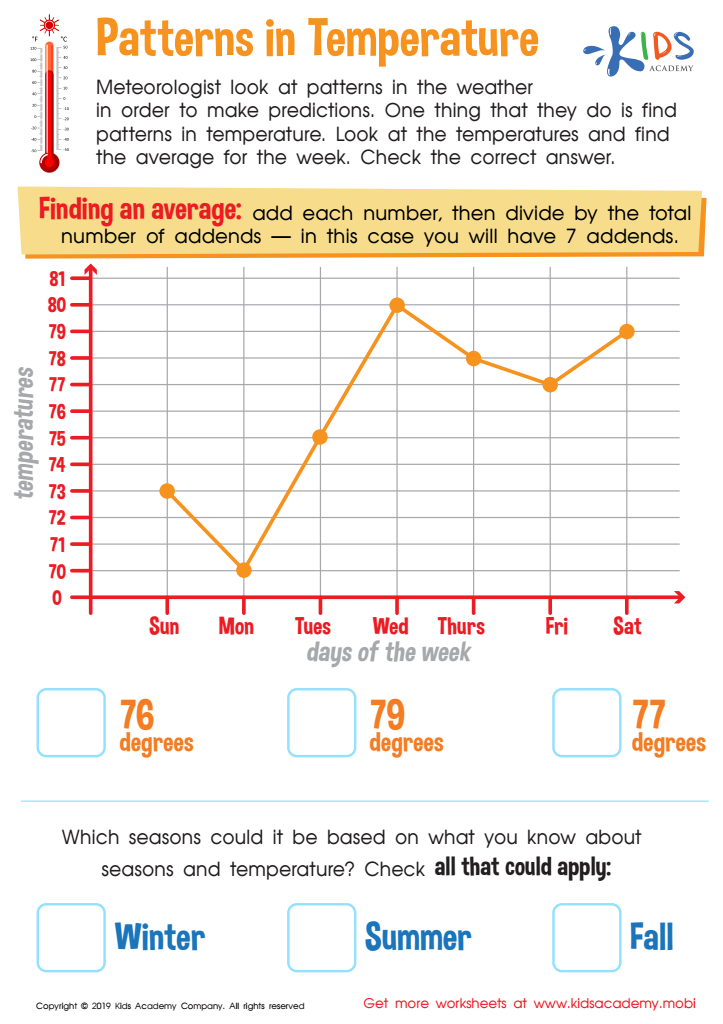
Patterns in Temperature Worksheet







Reading thermometers is a fundamental skill that parents and teachers should prioritize for children aged 4-9 for several compelling reasons. First, it fosters essential numeracy and literacy skills. Children learn to recognize numbers, understand scales, and develop the ability to interpret measurements. This foundational knowledge not only enhances their mathematical skills but also improves their ability to absorb and process information in various contexts.
Second, understanding thermometers promotes scientific literacy. By learning about temperature and how it is measured, children expand their knowledge of the physical world. This builds curiosity and encourages exploratory discussions about weather, seasons, and even health—linking temperature to daily life experiences, such as when they feel hot or cold.
Furthermore, competence in reading instruments serves to cultivate independence and confidence as kids engage with their environment. It empowers them to understand and respond appropriately to changes, whether checking their own body temperature when feeling unwell, examining the weather before outdoor play, or exploring scientific concepts in classrooms.
Ultimately, teaching children to read thermometers not only enriches their academic journey but also equips them with practical life skills that are essential for both personal responsibility and informed decision-making.







