Spatial awareness Normal Science Worksheets for Ages 4-9
6 filtered results
-
From - To
Enhance your child's spatial awareness with our engaging Science Worksheets tailored for ages 4-9. Designed to spark curiosity and foster essential cognitive skills, these worksheets provide fun, interactive activities that help young learners understand concepts like shape recognition, object positioning, and spatial relationships. By incorporating vibrant visuals and hands-on tasks, children will enjoy exploring their surroundings while reinforcing scientific understanding. Ideal for home or classroom use, our worksheets encourage independent learning and critical thinking. Discover the joy of science and watch your child develop confidence in their spatial skills through play and exploration. Start your journey to spatial awareness today!
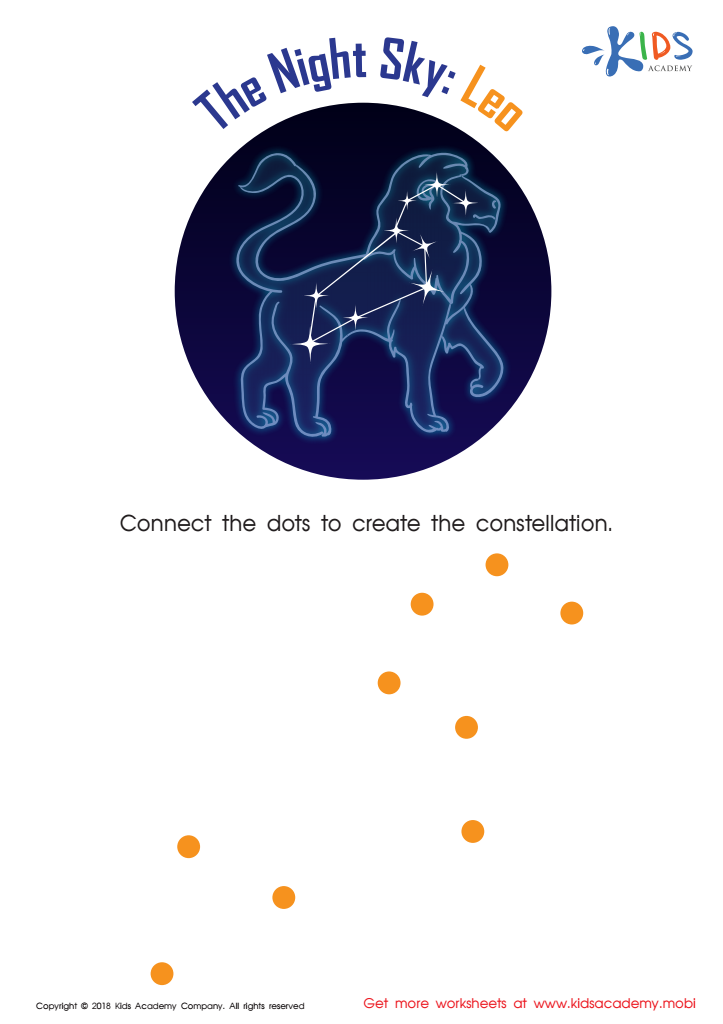
The Night Sky: Leo Worksheet
 Assign to My Students
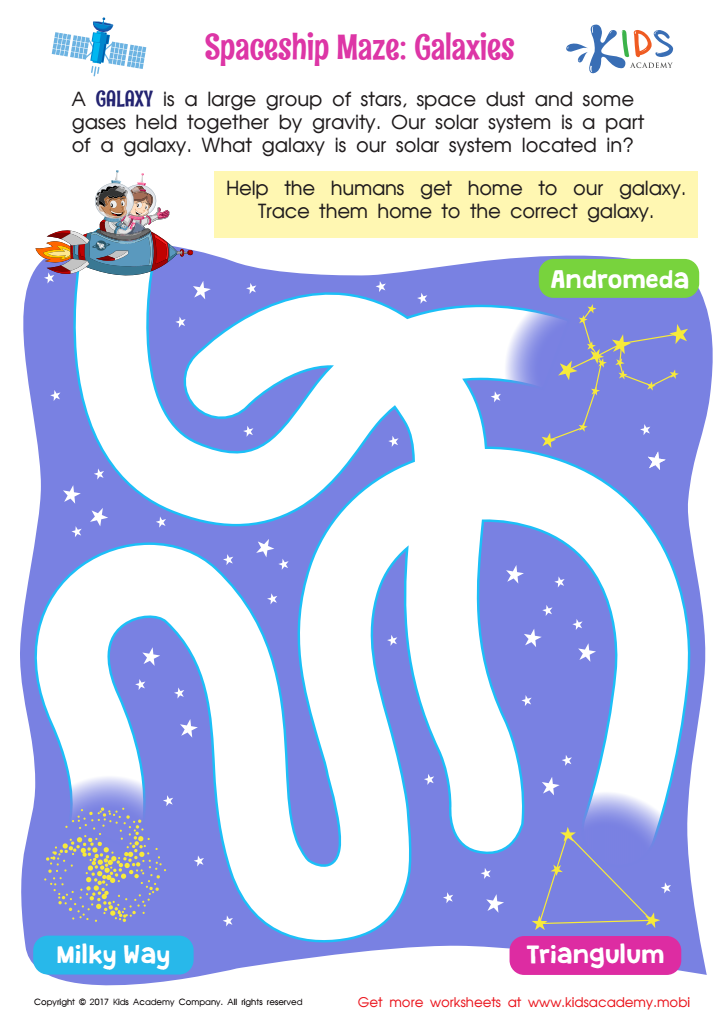
Spaceship Maze: Galaxies Worksheet
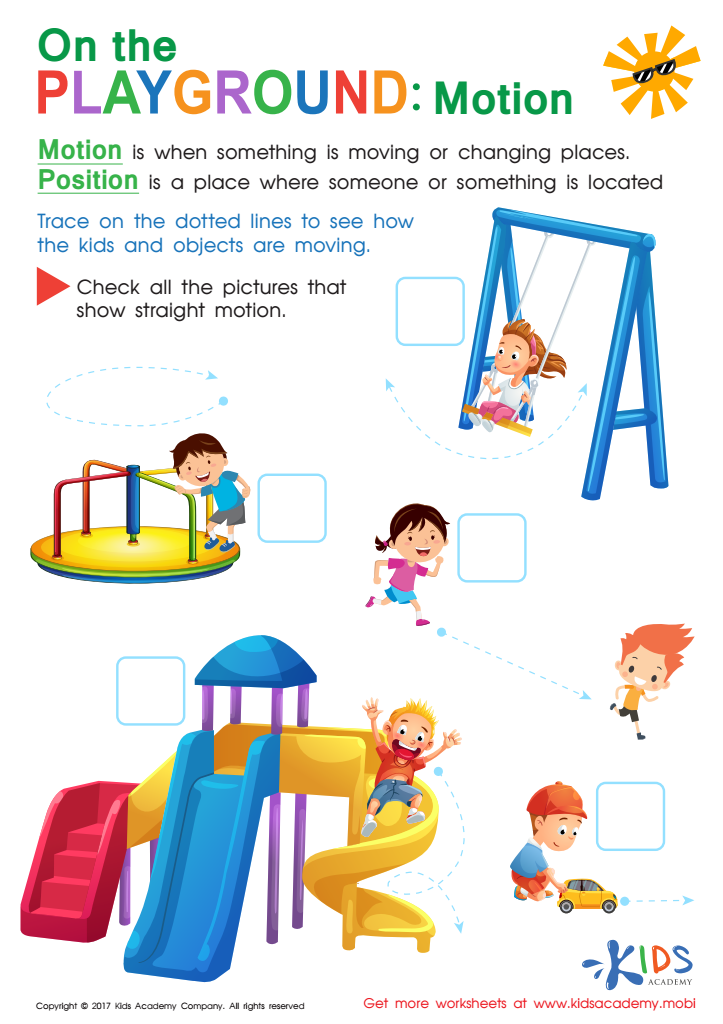
Position and Motion Worksheet
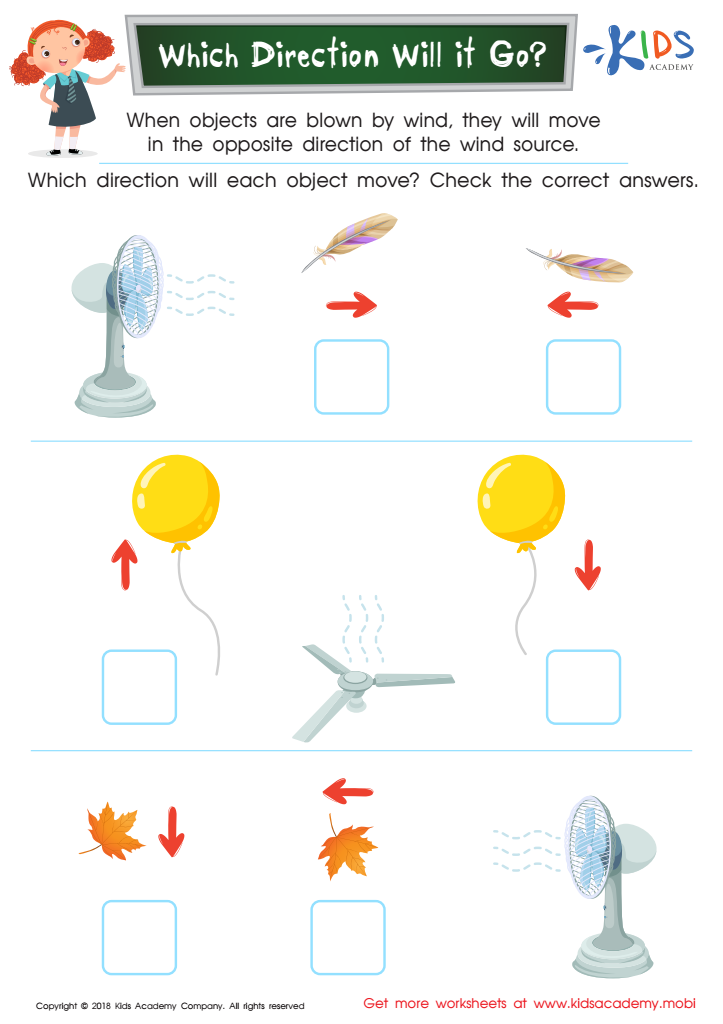
Which Direction Will it Go? Worksheet
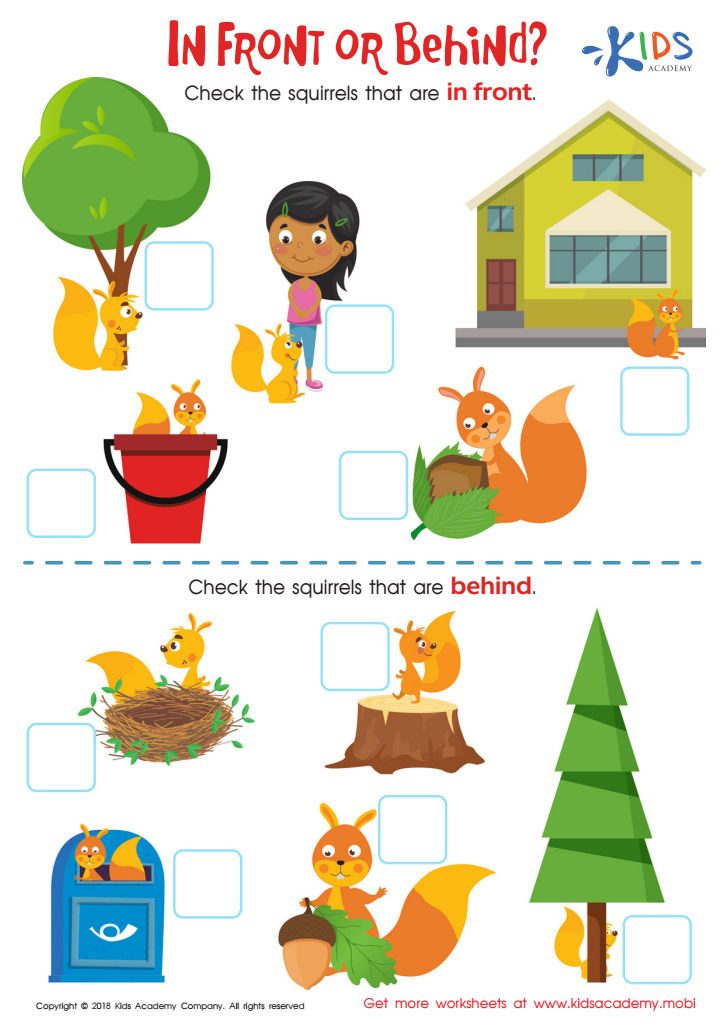
In Front or Behind: Part 2 Worksheet
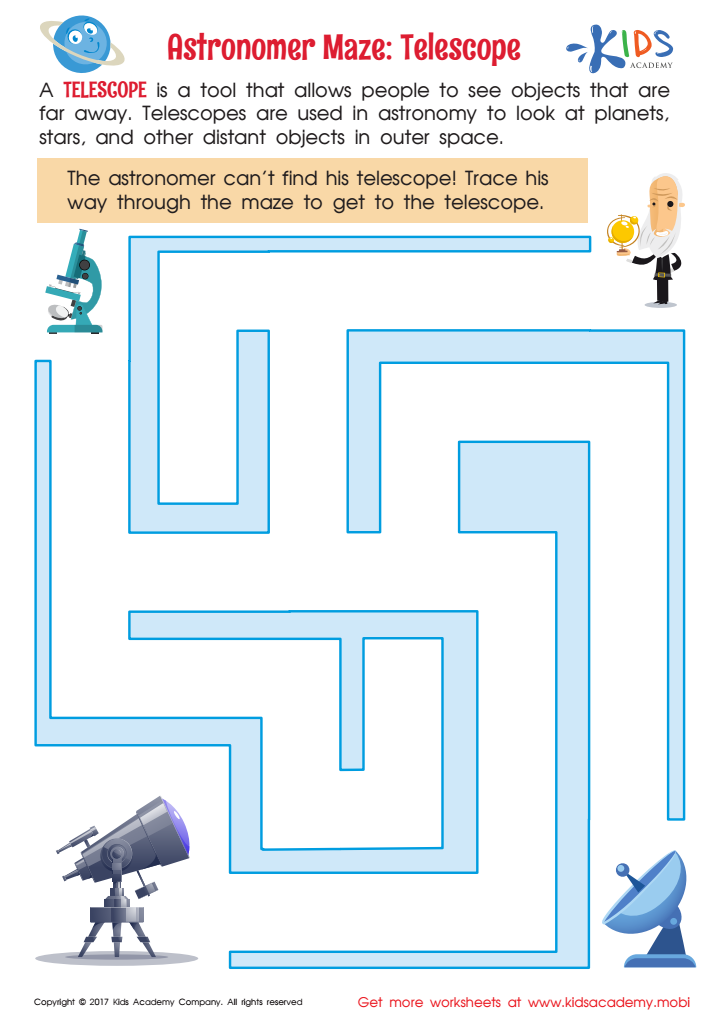
Astronomer Maze: Telescope Worksheet



.jpg)


Spatial awareness is a crucial aspect of cognitive development in children aged 4-9, playing a foundational role in their ability to understand positions, shapes, and relationships in space. For parents and teachers, fostering spatial awareness through hands-on activities and learning experiences is essential for several reasons.
First, strong spatial skills contribute to academic success in subjects such as mathematics and science, facilitating problem-solving and critical thinking. Children with well-developed spatial awareness can visualize concepts better, making it easier to grasp mathematical operations, geometry, and even scientific phenomena.
Second, spatial awareness enhances a child’s motor skills and coordination, aiding in physical activities and sports. It teaches them how to navigate their environment effectively, impacting their daily life and promoting physical health.
Furthermore, nurturing spatial skills encourages creativity and innovation. Children learn to think in three dimensions, which can lead to greater aptitude in art, design, and engineering in the future.
Lastly, early development of spatial awareness fosters confidence. When children successfully engage with their spatial environment, they gain a sense of accomplishment, encouraging them to explore and learn further. By prioritizing this aspect of development, parents and teachers set children on a path to lifelong success in numerous fields.







