
Enhancing observation skills Normal Physical Science Worksheets for Ages 4-9
3 filtered results
Difficulty Level
Grade
Age
-
From - To
Subject
Activity
Standards
Enhancing observation skills is crucial for young learners, and our Normal Physical Science Worksheets are designed specifically for children aged 4-9. These engaging worksheets encourage curiosity and exploration, allowing kids to observe, investigate, and make sense of the physical world around them. Through thoughtfully crafted activities, students practice critical thinking and sharpen their observational abilities. The worksheets cover essential topics in physical science, promoting a hands-on approach that sparks interest and fosters a love for learning. Ideal for classrooms or home use, these resources equip teachers and parents with tools to cultivate essential science skills in budding scientists.
Favorites
With answer key
Interactive
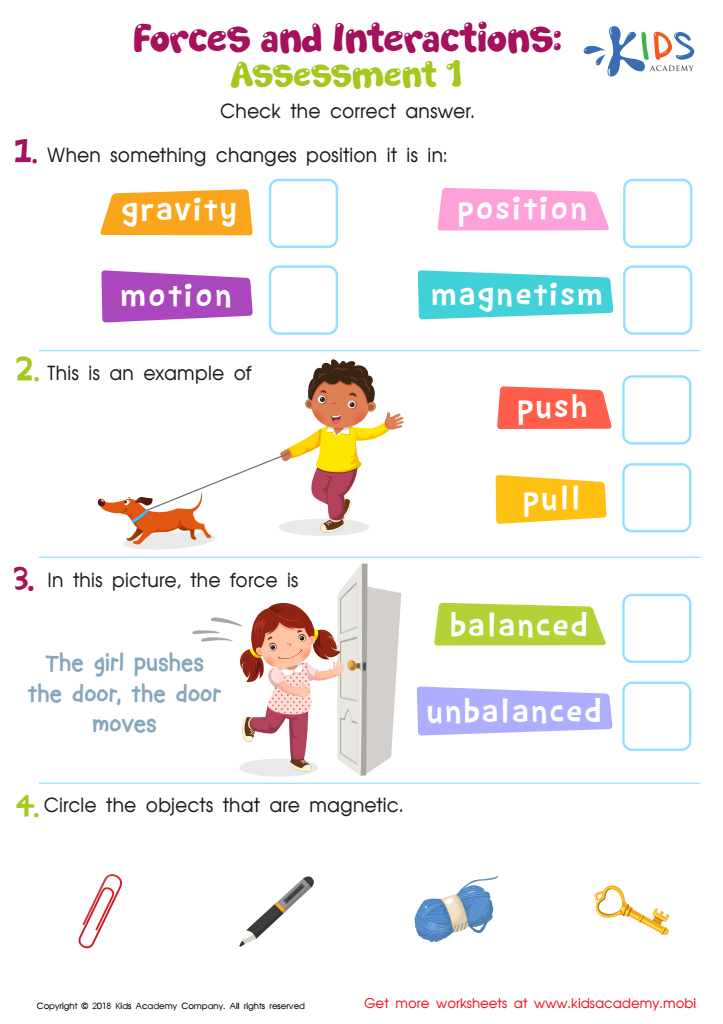
Forces and Interactions Printable
Test your child's physics know-how with this vibrant forces and interactions printable worksheet! Kids can assess their understanding of the different types of forces while they complete it. Read each example and check the boxes to show what they know!
 Assign to My Students
Forces and Interactions Printable
Worksheet
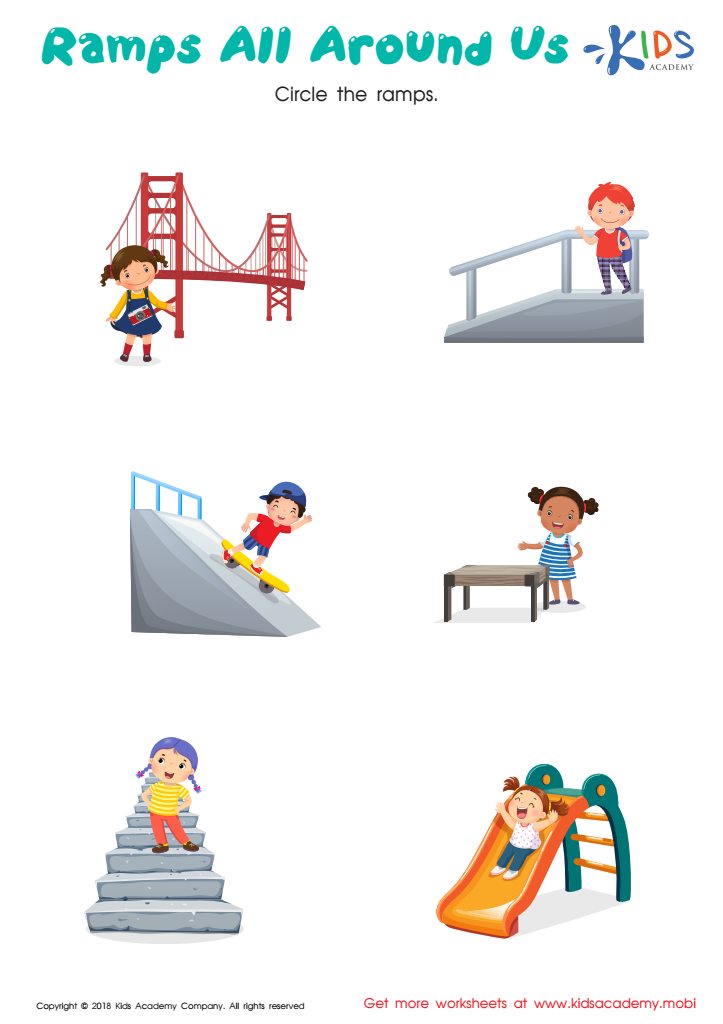
Ramps All Around us Worksheet
Ask your kids if they know what ramps are, then have them give you examples of places they've seen them. This worksheet has pictures of ramps - have your child identify and circle them.
Ramps All Around us Worksheet
Worksheet
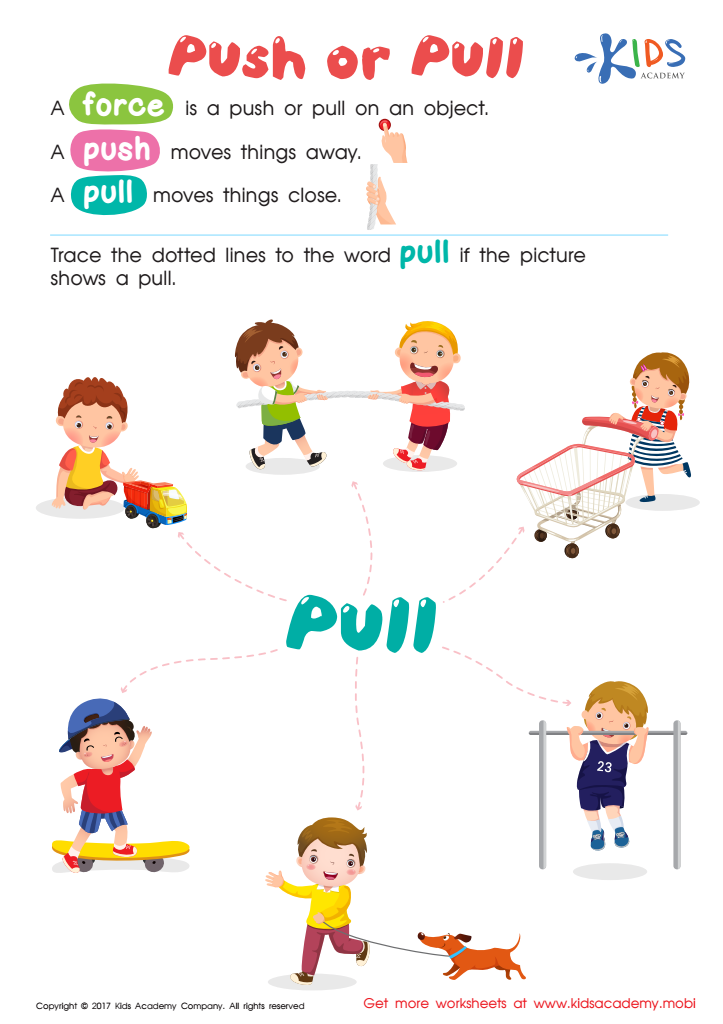
Pull or Push Worksheet
With this fun worksheet, they'll explore physics by sorting objects into categories according to their mode of motion. It's a great way to get them interested in science.
Pull or Push Worksheet
Worksheet
Join Kids Academy for Free
Who is primarily going to use this learning content?








Enhancing observation skills in young children, particularly in the context of Normal Physical Science, is vital for several reasons. Firstly, it fosters critical thinking. When children learn to observe their environment, they develop the ability to notice details, ask questions, and make connections between concepts, which are foundational skills for scientific inquiry. This promotes a curious mindset, encouraging children to explore and investigate the world around them.
Secondly, observation skills drive engagement in learning. When children actively observe phenomena, they become more invested in their learning processes. Hands-on activities, such as simple experiments or nature walks, make science tangible and relatable, promoting retention and understanding of scientific principles.
Moreover, observation is linked to language development. By articulating what they see, children expand their vocabulary and improve their communication skills, which are essential not just in science but across all subjects. Furthermore, these skills develop patience and focus, traits that are increasingly important in a fast-paced world.
Ultimately, enhancing observation skills in early education equips children with the tools they need not only for scientific endeavors but also for lifelong learning and problem-solving. Both parents and teachers play a crucial role in supporting these critical skills for holistic development.







