
Spatial awareness Normal Physical Science Worksheets for Ages 4-9
3 filtered results
Difficulty Level
Grade
Age
-
From - To
Subject
Activity
Standards
Enhance your child's spatial awareness with our engaging Normal Physical Science Worksheets tailored for ages 4-9! These worksheets are designed to support young learners in developing essential skills such as understanding spatial relationships, shapes, and positioning in their environment. With colorful illustrations and interactive activities, children will have fun while learning important scientific concepts. Our worksheets promote critical thinking and problem-solving abilities, helping kids grasp the fundamentals of physical science naturally. Perfect for home or classroom use, these resources ensure that learning is both educational and entertaining. Explore the wonders of spatial awareness with our easy-to-use, printable worksheets today!
Favorites
With answer key
Interactive
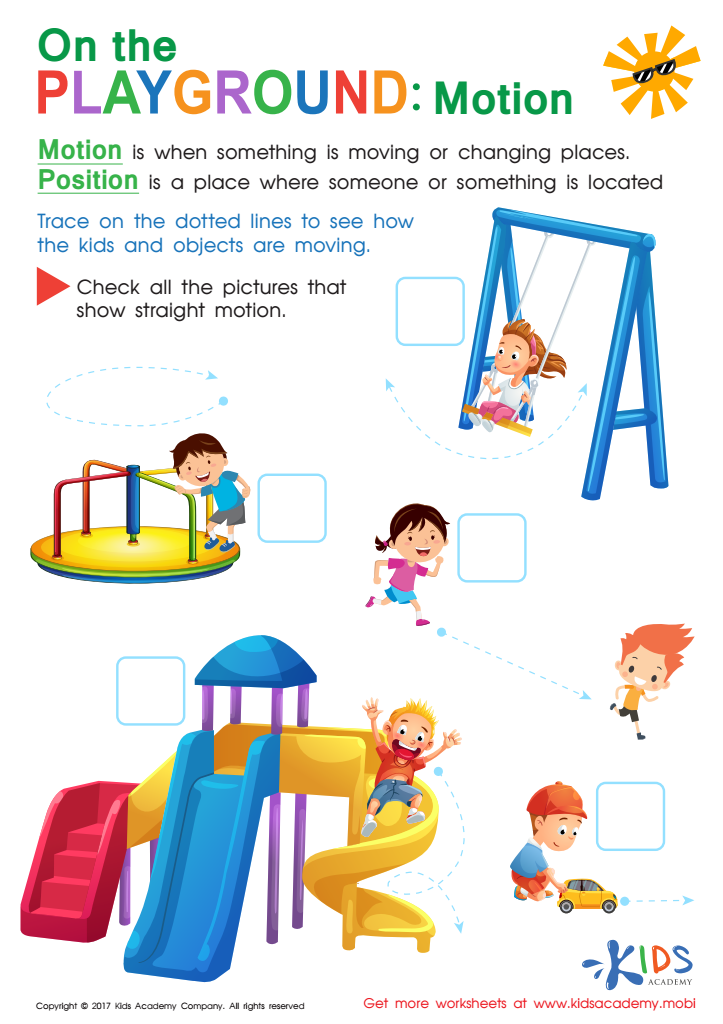
Position and Motion Worksheet
Take a trip to the park and explore motion and position with fun worksheets!
Take your child's science knowledge to a whole new level with Kids Academy's grade 2 position and motion worksheets! Explore motion and position with fun worksheets while taking a trip to the park. Strengthen their understanding of physics and how people and objects move through space.
 Assign to My Students
Position and Motion Worksheet
Worksheet
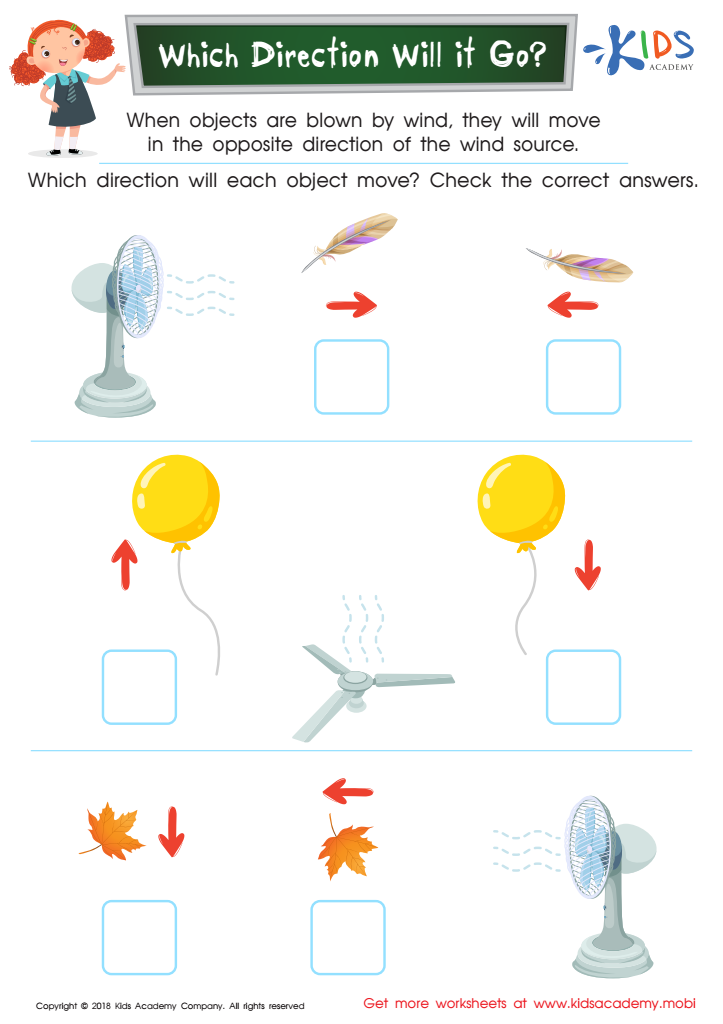
Which Direction Will it Go? Worksheet
Explain to your students: when objects are blown by wind, they will move in the opposite direction. In the worksheet, there are pictures of wind sources and objects being blown by the wind. Ask your child to identify and check the direction each object will move.
Which Direction Will it Go? Worksheet
Worksheet
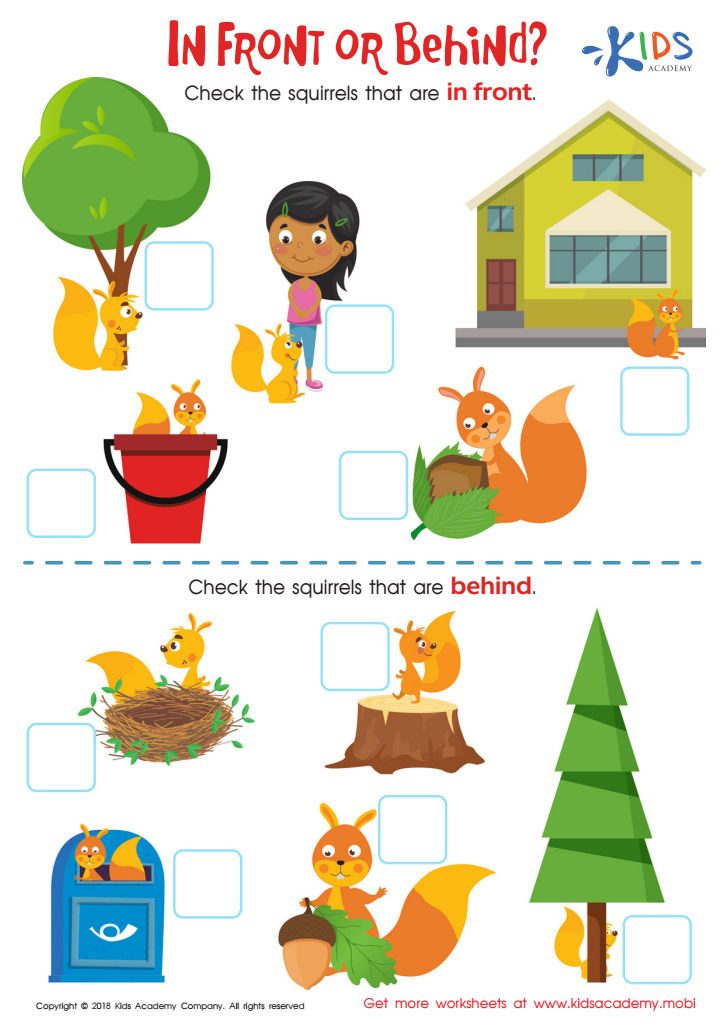
In Front or Behind: Part 2 Worksheet
Teach positional words "front" and "behind" with this fun worksheet! Students identify where the squirrel is in relation to the object - in front or behind. It's a great exercise to practice early geometry skills and understanding object movement.
In Front or Behind: Part 2 Worksheet
Worksheet
Join Kids Academy for Free
Who is primarily going to use this learning content?







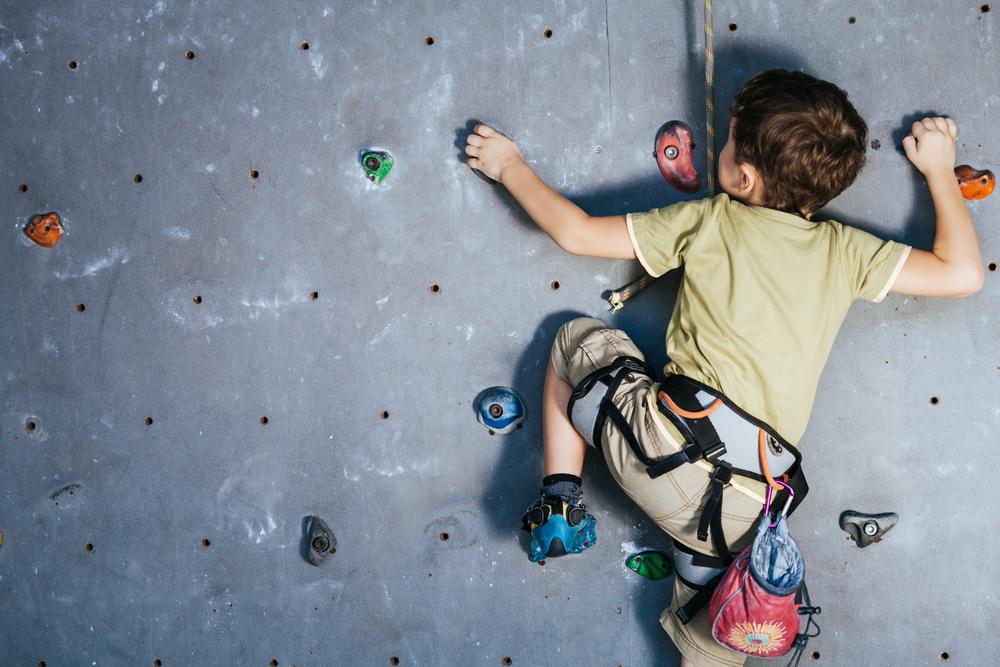
Spatial awareness, a fundamental cognitive skill, is vital for children aged 4-9 as it underpins their understanding of the world around them. For parents and teachers, fostering this skill is crucial for several reasons.
Firstly, spatial awareness enhances a child's ability to navigate their environment safely and independently. Simple activities like navigating playgrounds or participating in sports require an understanding of space, distance, and position. By supporting the development of spatial skills through movement and play, adults ensure children can interact confidently with their surroundings.
Secondly, spatial awareness is deeply connected to mathematics and early scientific concepts. Recognizing shapes, sizes, and patterns not only bolsters a child's math skills but also lays a foundation for more complex topics in physics later on, such as understanding forces, motion, and spatial relationships. In turn, these skills enrich problem-solving and critical-thinking abilities.
Finally, engaging children in activities that promote spatial awareness—such as puzzles, building blocks, or outdoor games—fosters creativity and imagination. In an increasingly technology-driven world, such skills will provide children with tools for future learning and adaptability. Thus, prioritizing spatial awareness in early education presents lasting benefits for a child's academic and social development.







