Letter-sound association Normal Alphabet Worksheets for 4-Year-Olds
6 filtered results
-
From - To
Help your 4-year-old master the basics of reading and writing with our engaging Letter-Sound Association Normal Alphabet Worksheets! Designed to develop essential literacy skills, these printable resources combine playful illustrations with interactive activities. Each worksheet invites young learners to match letters with their corresponding sounds, reinforcing phonemic awareness in a fun, hands-on way. Perfect for preschool and early kindergarten students, these worksheets set a strong foundation for successful literacy development. Visit Kids Academy to discover our curated collection of Letter-Sound Association Alphabet Worksheets and make learning an enjoyable adventure for your little one.
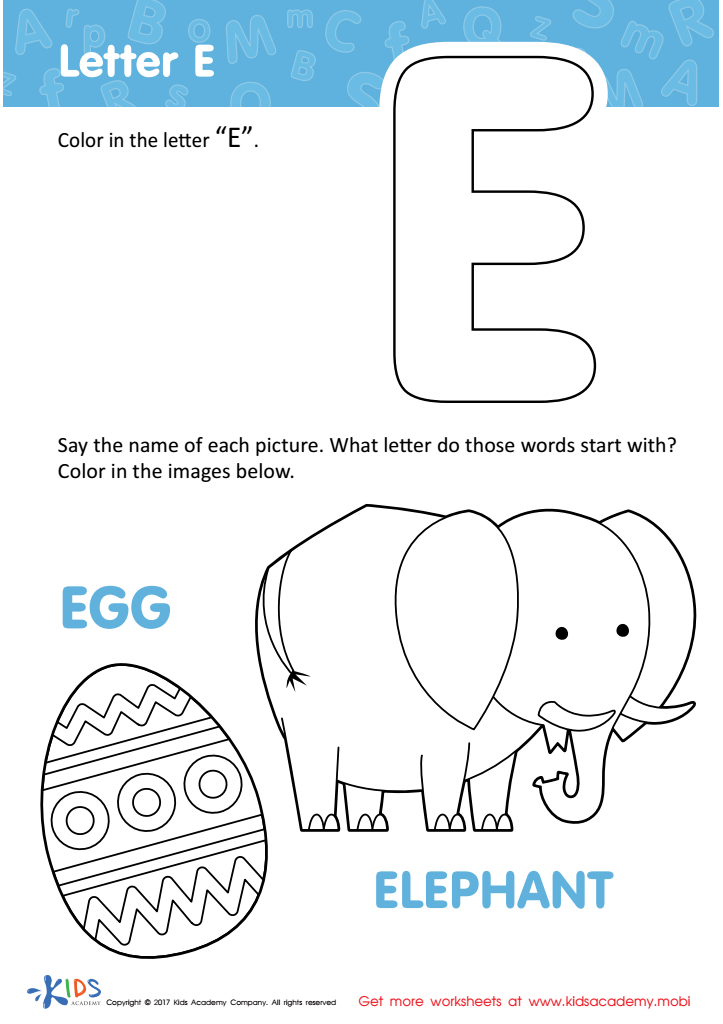
Letter E Coloring Sheet
 Assign to My Students
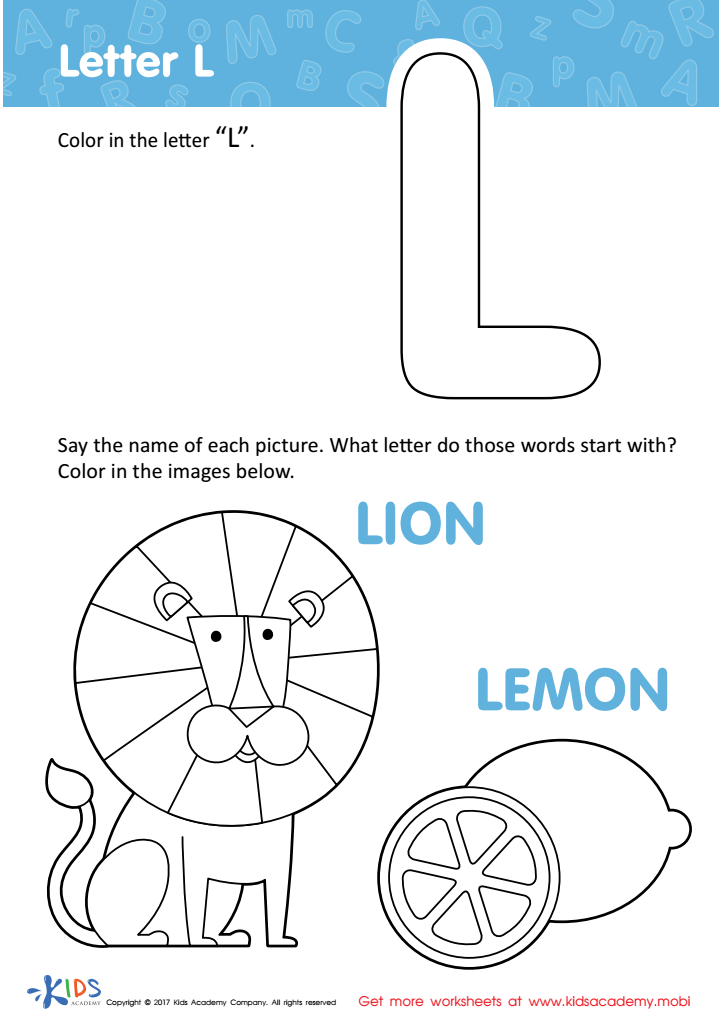
Letter L Coloring Sheet
Assign to My Students
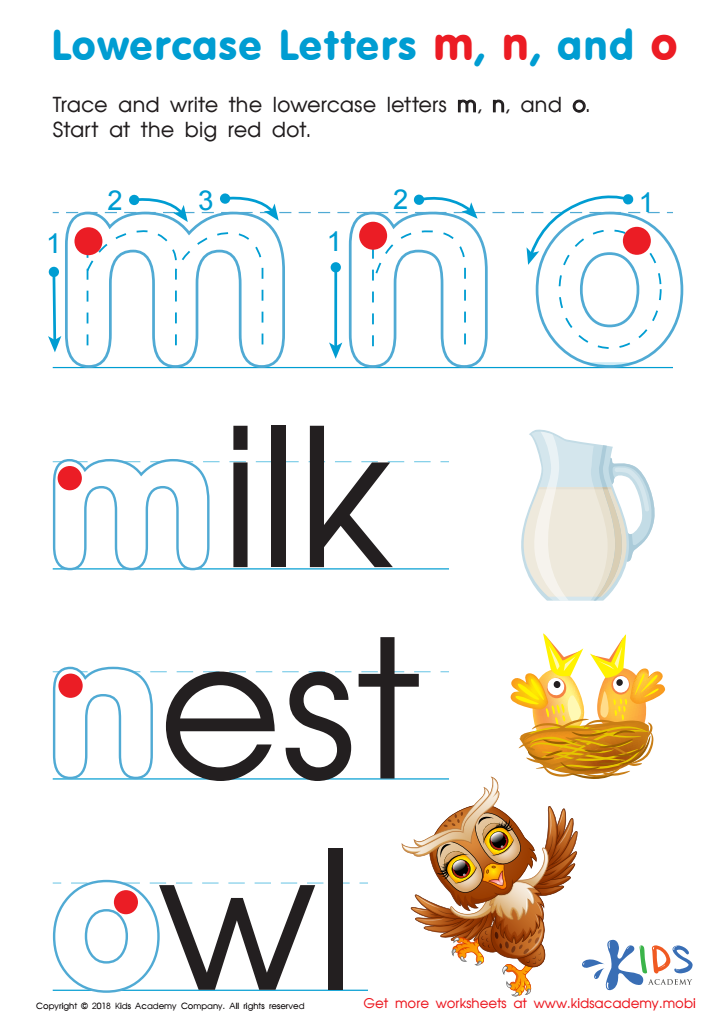
Lowercase Letters m n o Worksheet
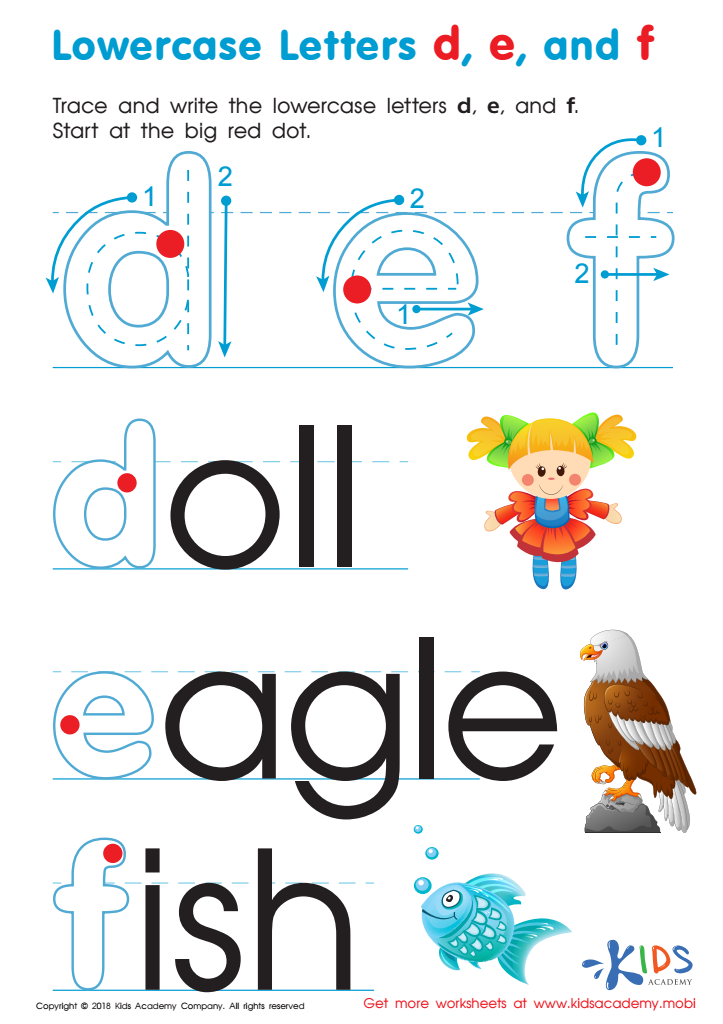
Lowercase Letters d e f Worksheet
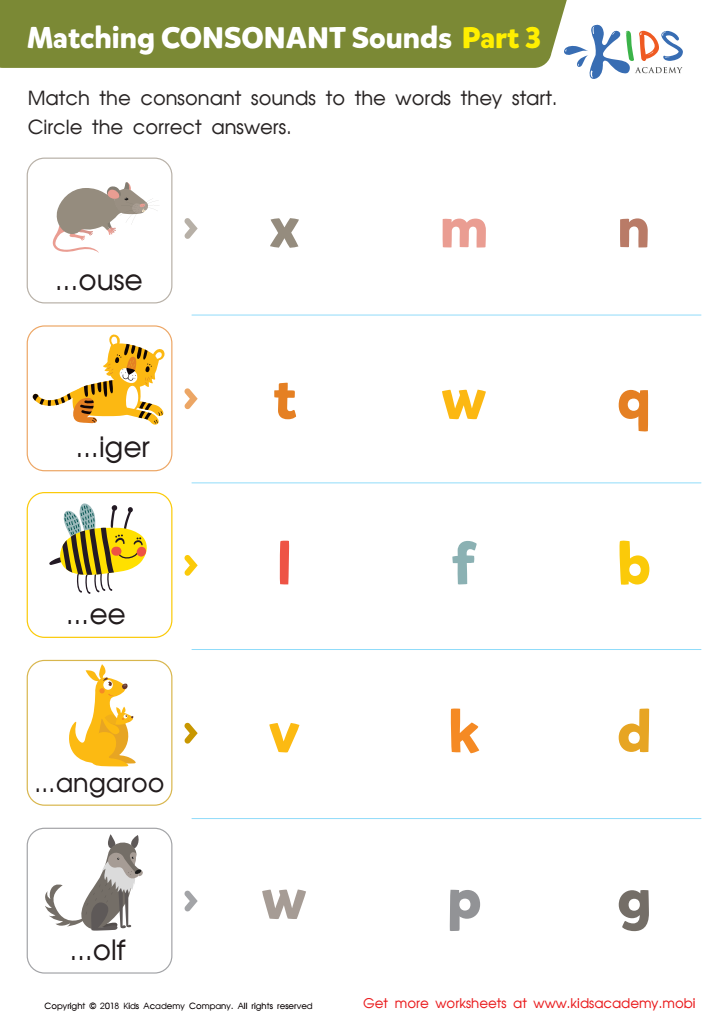
Matching Consonant Sounds: Part 3 Worksheet
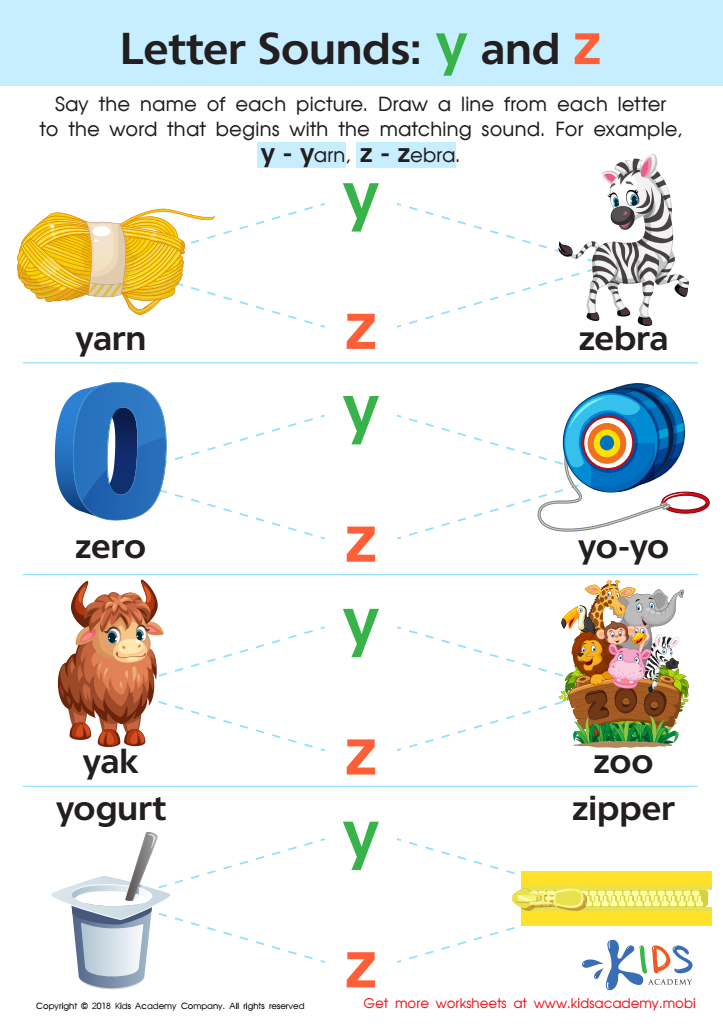
Letter Y and Z Sounds Worksheet







Letter-sound association, often known as phonics, plays a critical role in early literacy and is particularly important for 4-year-olds. At this age, children's brains are highly receptive to learning new concepts, making it an ideal time to introduce foundational literacy skills. Here’s why parents and teachers should prioritize this learning:
Cognitive Development: Understanding letter sounds boosts cognitive skills as children start to recognize patterns and make connections between letters and their corresponding sounds. This forms the basis for word recognition and reading fluency.
Reading Skills: Early mastery of phonics helps children decode words, easing their transition into more complex reading tasks. This foundational knowledge makes learning to read less frustrating, setting the stage for a lifelong love of reading.
Language and Communication: Phonics helps in expanding vocabulary and improving pronunciation. As children learn to form words from sounds, their ability to communicate thoughts and ideas clearly improves.
Confidence: Success in learning letter-sound associations encourages a sense of achievement. This boosts self-esteem and motivates children to tackle new challenges in both academic and social settings.
By focusing on phonics at an early age, parents and teachers lay the groundwork for proficient reading and writing skills, essential for academic success and effective communication in later years.







