Rhyming skills development Normal Phonics Worksheets for 4-Year-Olds
3 filtered results
-
From - To
Unlock your child's potential with our engaging Rhyming Skills Development Normal Phonics Worksheets designed specifically for 4-year-olds. These worksheets promote phonemic awareness and enhance language skills through fun and interactive rhyming activities. By incorporating vibrant illustrations and playful themes, children will easily connect sounds and words, making learning enjoyable and effective. Each worksheet focuses on key phonics concepts, helping young learners recognize and produce rhymes. Perfect for at-home or classroom use, these resources nurture early literacy skills essential for reading success. Dive into our collection and watch your child's love for learning blossom as they master rhyming and phonics fundamentals!
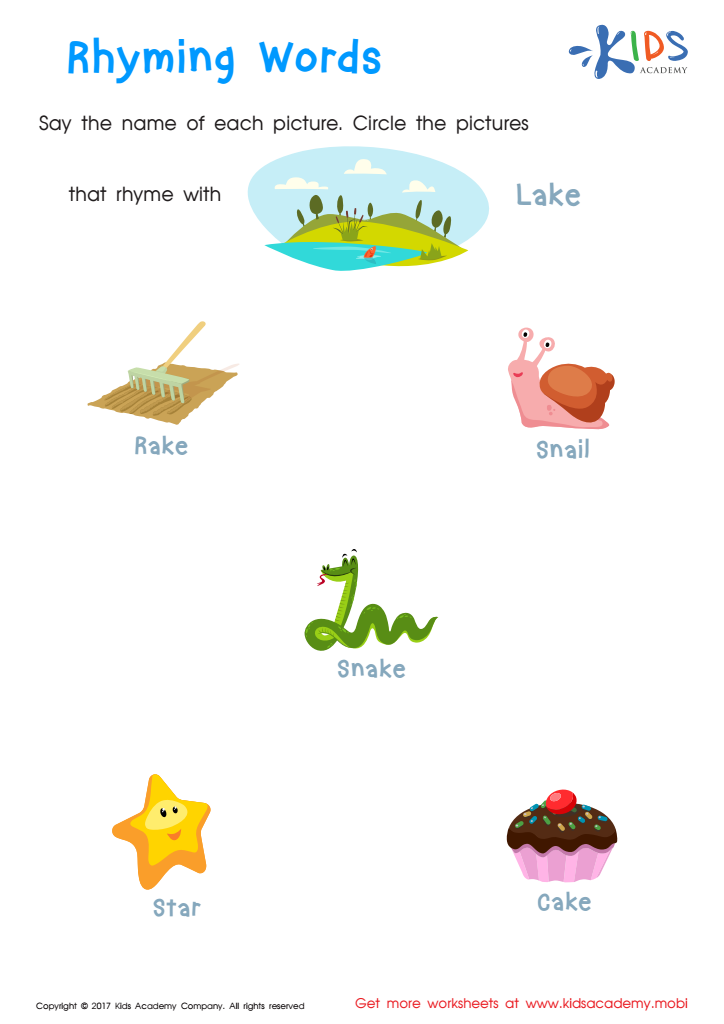
Rhyming Words Rhyming Worksheet
 Assign to My Students
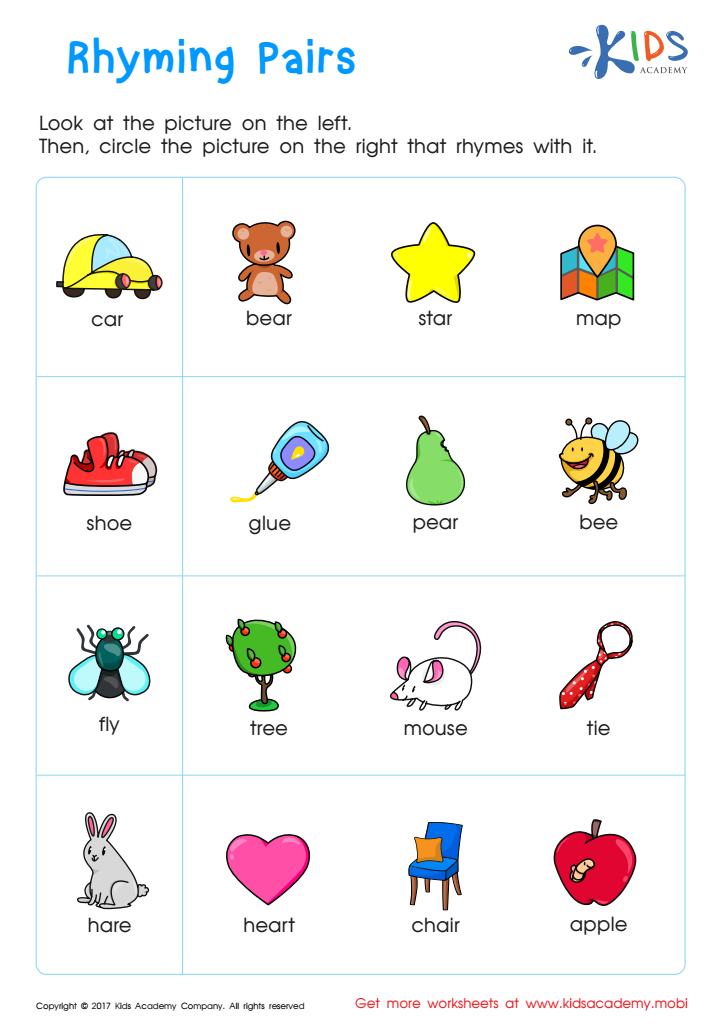
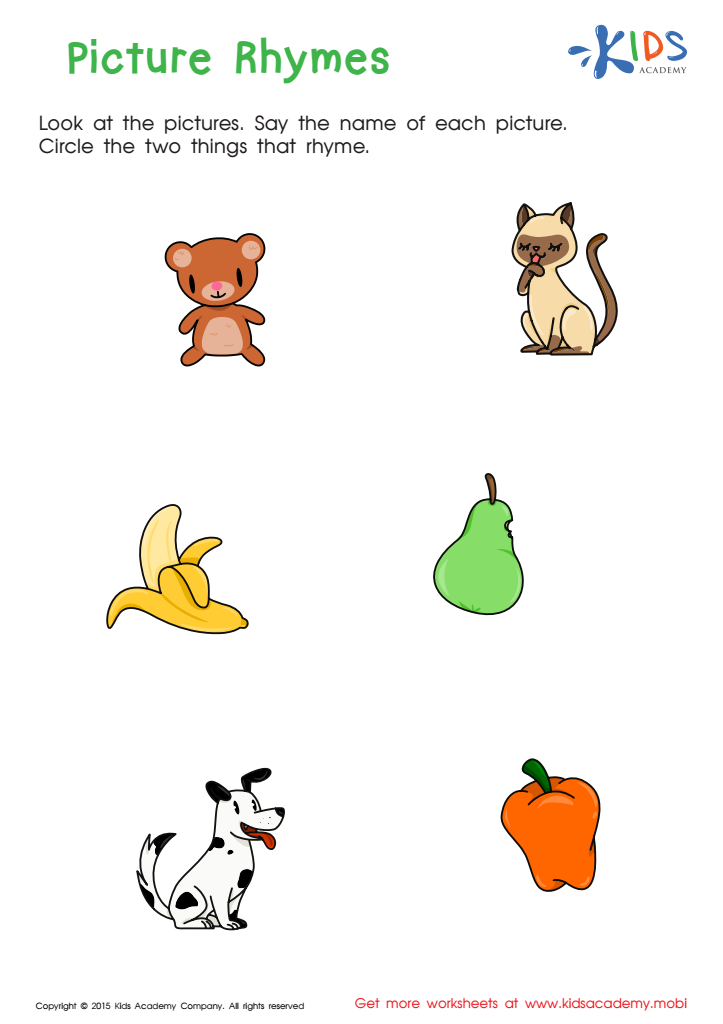
First Words: Picture Rhymes Worksheet








Rhyming skills and phonics are foundational components of early literacy development, crucial for 4-year-olds. When children engage with rhymes, they develop phonemic awareness, which is the ability to hear and manipulate sounds in words. This skill is vital for reading and writing success as it lays the groundwork for decoding words and understanding their structure.
For educators and parents, fostering rhyming skills helps create a love for language. Fun and engaging rhyming games, songs, and stories stimulate children's interest in words and boost vocabulary development. As children explore different sounds through rhyming, they become more adept at recognizing patterns in spoken language, which enhances their ability to segment words and blend phonemes—key aspects of phonics.
Moreover, phonics instruction helps children connect sounds to letters, reinforcing their understanding of how written language corresponds to spoken language. By emphasizing rhymes and sounds, educators and parents nurture critical thinking and auditory discrimination, essential skills for academic achievement.
Overall, supporting rhyming and phonics development in 4-year-olds equips them with essential skills for reading and communication, ultimately setting the stage for future success in their educational journey.







