Letter formation Normal Tracing Letters Worksheets for 4-Year-Olds
3 filtered results
-
From - To
Boost your 4-year-old’s handwriting skills with our "Letter Formation Normal Tracing Letters Worksheets". Perfectly crafted for young learners, these engaging worksheets provide a fun way to master alphabet tracing. Each sheet features clear, dotted-letter guides that aid in learning proper letter shapes and formations. Enhancing fine motor skills and muscle memory, our resources ensure a solid foundation in writing while building confidence. Ideal for preschoolers, these worksheets make letter tracing an enjoyable part of your child's daily learning routine. Help your child flourish in literacy with these excellent, printable tools designed to foster early writing success.
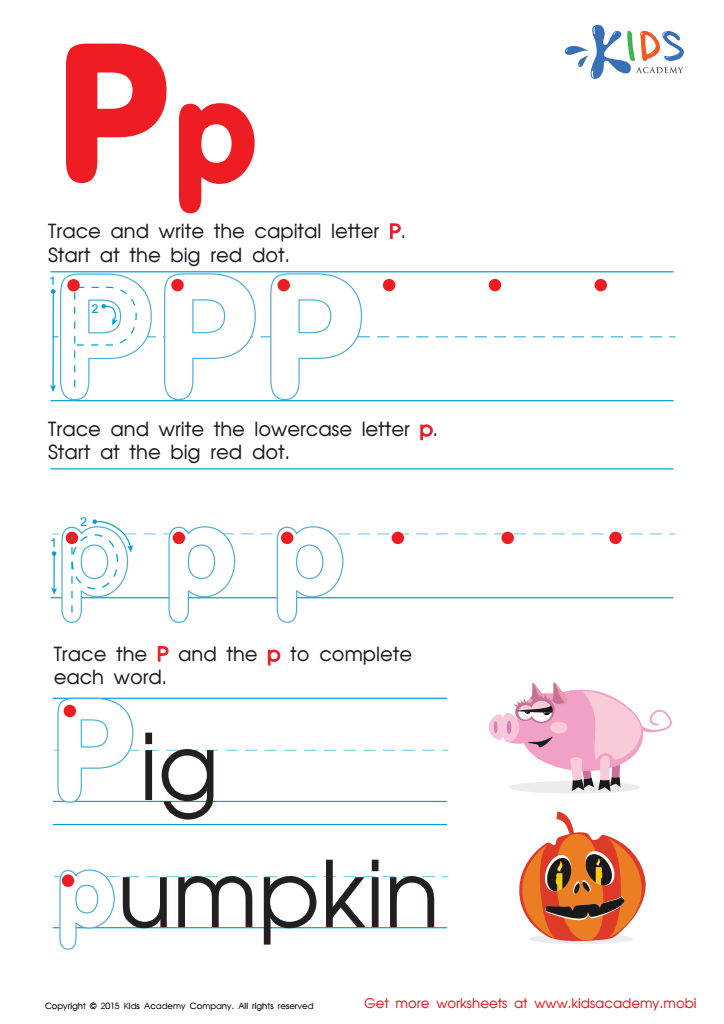
Letter P Tracing Page
 Assign to My Students
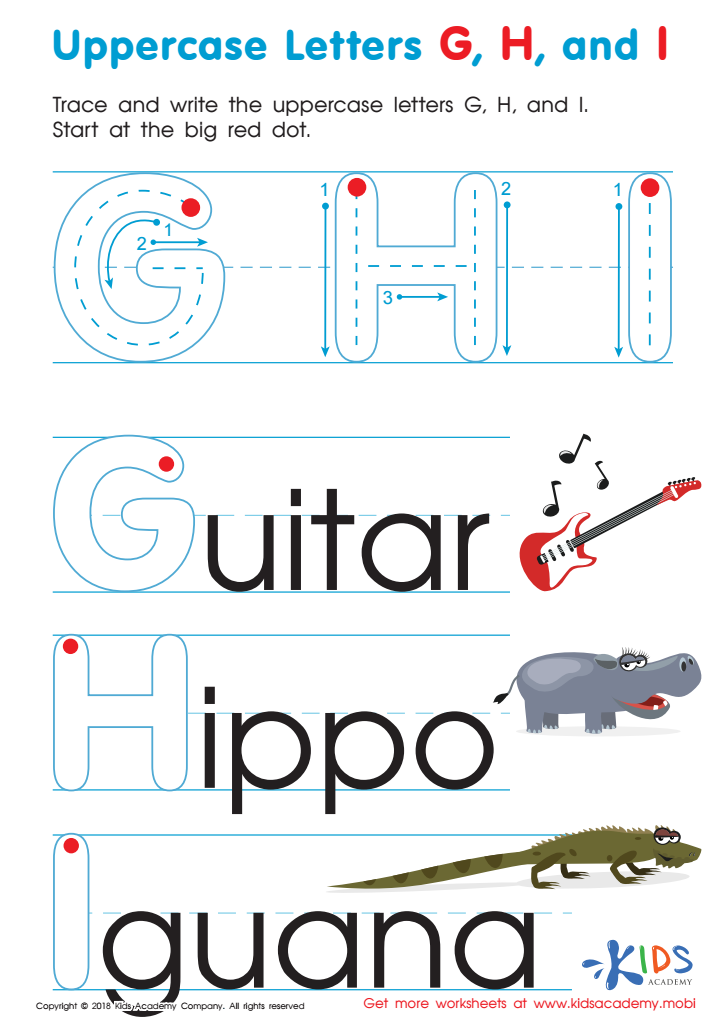
Uppercase Letters G, H, and I Worksheet
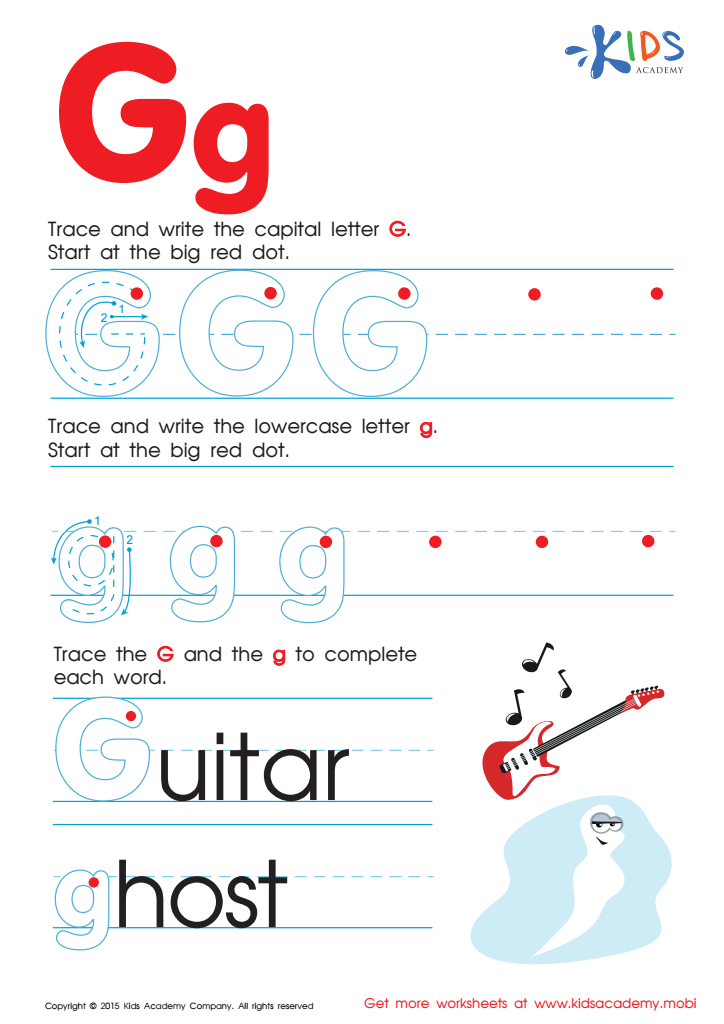
Letter G Tracing Page








Parents and teachers should care about letter formation and normal tracing letters for 4-year-olds because these foundational skills are crucial for early literacy development. At this age, children's fine motor skills and hand-eye coordination are still developing, and engaging in tracing activities helps to strengthen these abilities. Proper letter formation lays the groundwork for legible handwriting, which can impact a child's academic performance and self-esteem. When children learn to write letters correctly, they are less likely to develop bad habits that can be difficult to correct later on.
Additionally, tracing letters helps children recognize the shapes and sounds associated with each letter, reinforcing their understanding of the alphabet and contributing to their ability to read. It provides a multisensory approach that enhances memory retention and learning engagement. Early exposure to these skills sets the stage for successful reading and writing experiences, which are critical components of overall academic success. Moreover, mastering letter formation can foster a sense of accomplishment and confidence in young learners, motivating them to tackle more complex tasks with enthusiasm. Therefore, investing time in proper letter tracing activities is essential for the holistic development of 4-year-olds, paving the way for lifelong learning skills.








