Lowercase identification Normal Upper & Lowercase Letters Worksheets for 4-Year-Olds
4 filtered results
-
From - To
Discover our engaging Lowercase Identification Worksheets designed specifically for 4-year-olds. These educational tools focus on helping young learners distinguish between normal uppercase and lowercase letters. Through fun and interactive activities, children will develop essential reading and writing skills, gaining confidence in recognizing and forming letters. Perfect for preschoolers, these worksheets are crafted to ensure a seamless learning experience that makes alphabet mastery enjoyable. Support your child's literacy journey with our expertly designed resources, available now on Kids Academy. Unlock the joy of learning and watch your little one thrive!
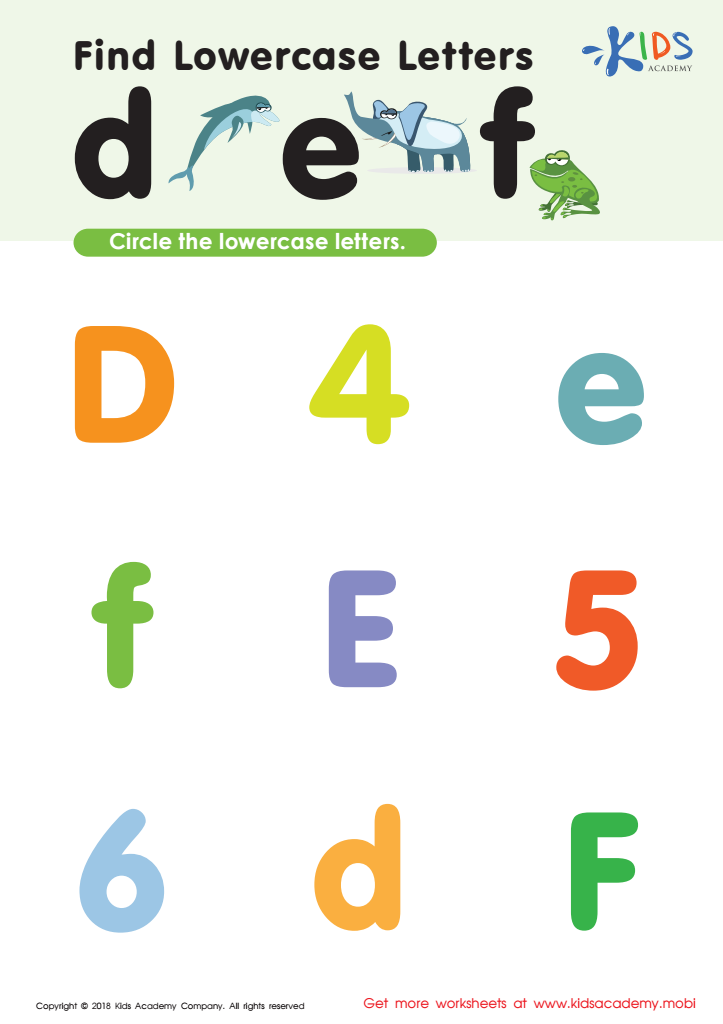
Find Lowercase Letters d e f Worksheet
 Assign to My Students

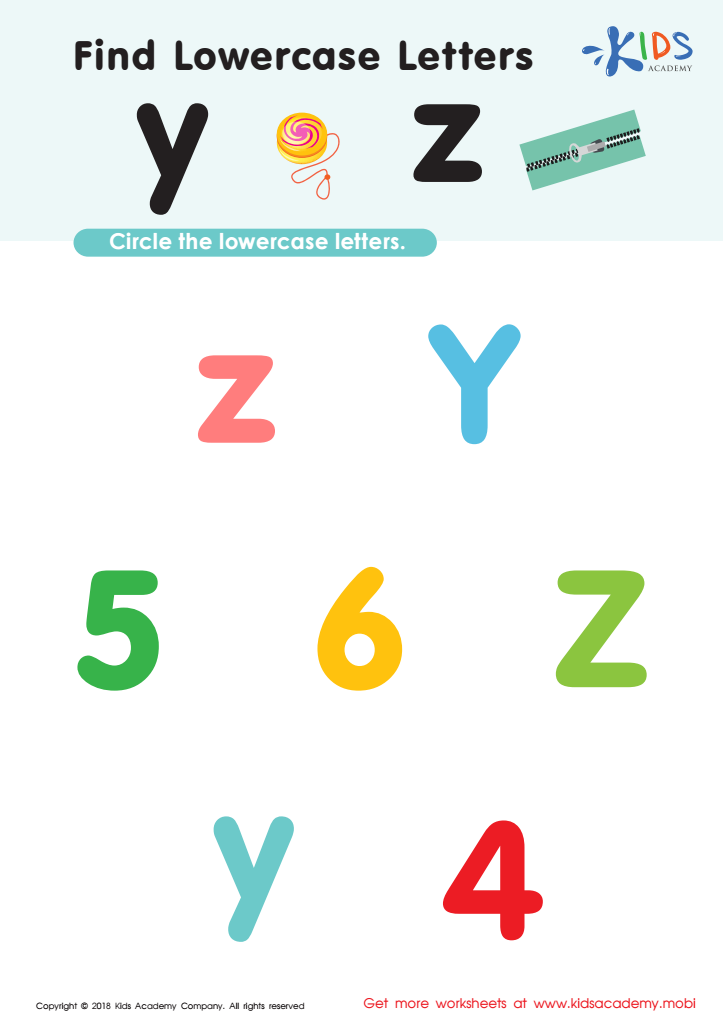
Find Lowercase Letters y z Worksheet
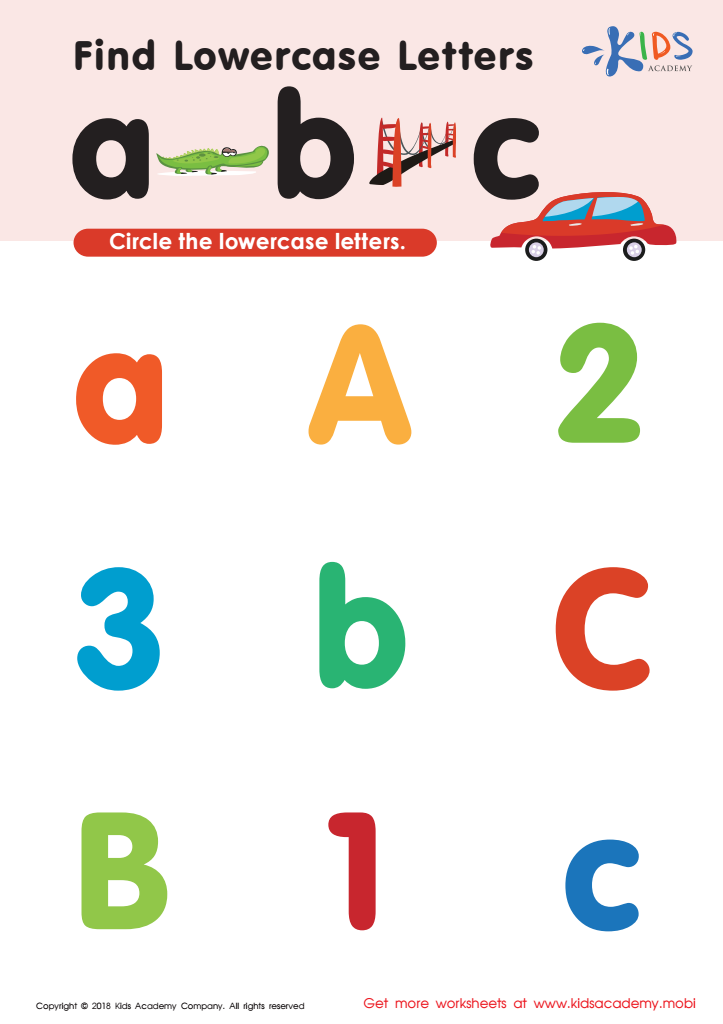
Find lowercase letters a b c Worksheet
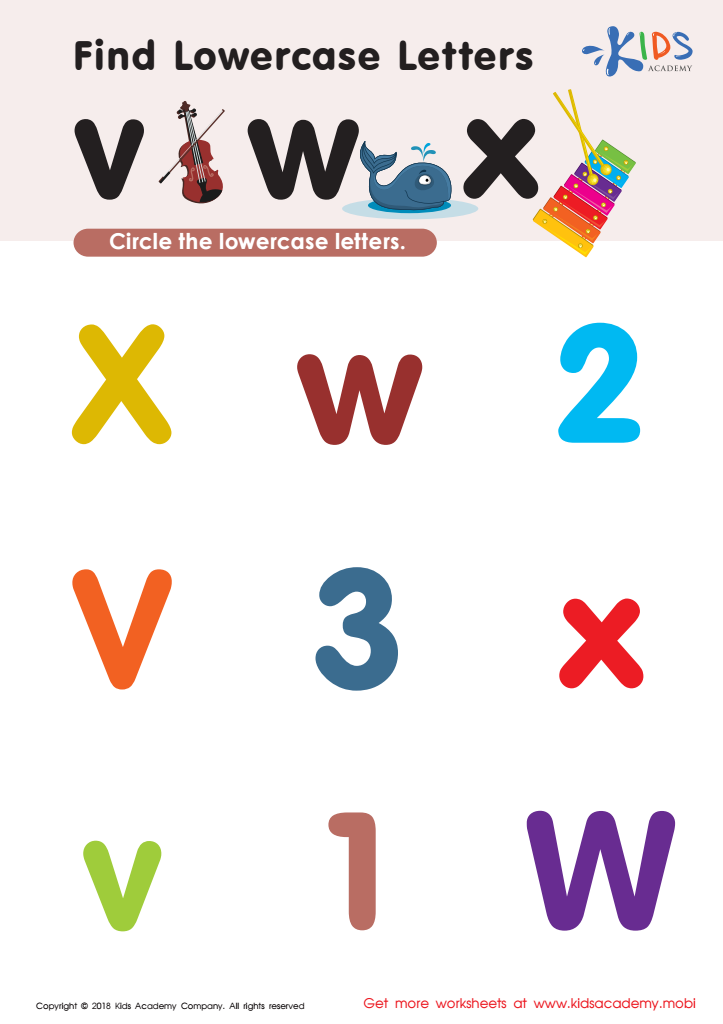
Find Lowercase Letters v w x Worksheet






It's essential for parents and teachers to understand the importance of lowercase identification in 4-year-olds. At this developmental stage, children are beginning to recognize letters and sounds, which form the foundation of their literacy skills. Familiarity with both uppercase and lowercase letters is crucial for a smooth transition to reading and writing.
First, most of the written text in books and other reading materials is in lowercase letters. Thus, recognizing these helps children become more proficient readers. Second, lowercase identification improves writing skills, as most handwriting guidelines emphasize lowercase letters for everyday writing. This promotes not only legibility but also fine motor skill development.
Moreover, early mastery of both uppercase and lowercase letters helps children understand that letters can look different but represent the same sounds, reinforcing letter-sound relationships crucial for phonics. This dual identification enhances cognitive flexibility and builds stronger neural connections.
In addition, identifying both forms of letters can boost a child's confidence and motivation in learning. It provides a strong foundation that integrates seamlessly with kindergarten curriculum expectations.
By focusing on lowercase letter identification, parents and teachers set the stage for successful academic progress and a lifelong love for reading and learning.







