Differentiating shapes Normal Worksheets for 4-Year-Olds
3 filtered results
-
From - To
Explore our fun and educational "Differentiating Shapes Normal Worksheets for 4-Year-Olds"! Specially designed for toddlers, our printable worksheets focus on teaching children how to identify and differentiate between various shapes. Through engaging activities like matching, coloring, and tracing, kids will enhance their shape recognition skills in an enjoyable and interactive way. Perfect for preschoolers, these worksheets help build foundational geometry knowledge, improve motor skills, and boost cognitive development. Easy to download and print, our resources make learning shapes simple and fun for young learners. Give your child a head start with our shapes worksheets!
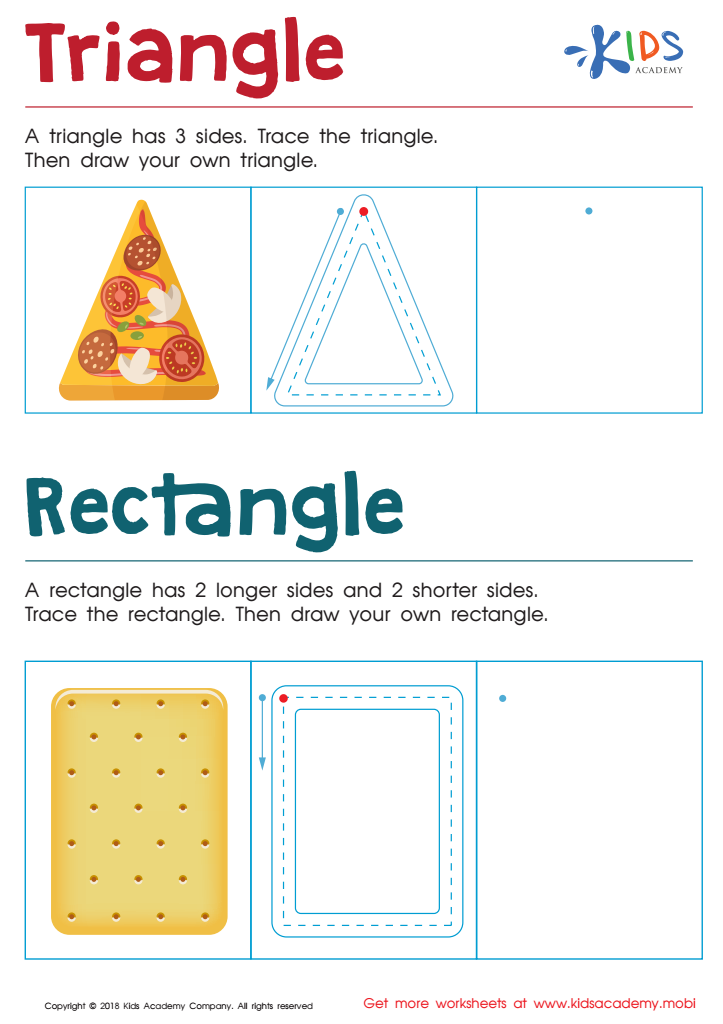
Triangle Rectangle Worksheet
 Assign to My Students
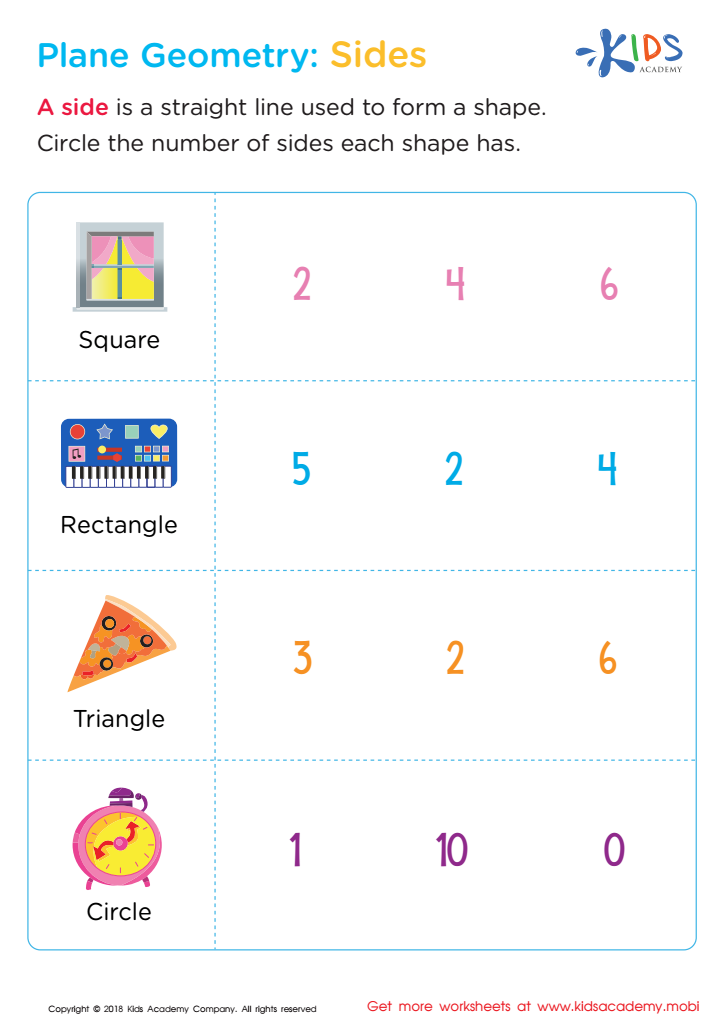
Plane Geometry: Sides Worksheet
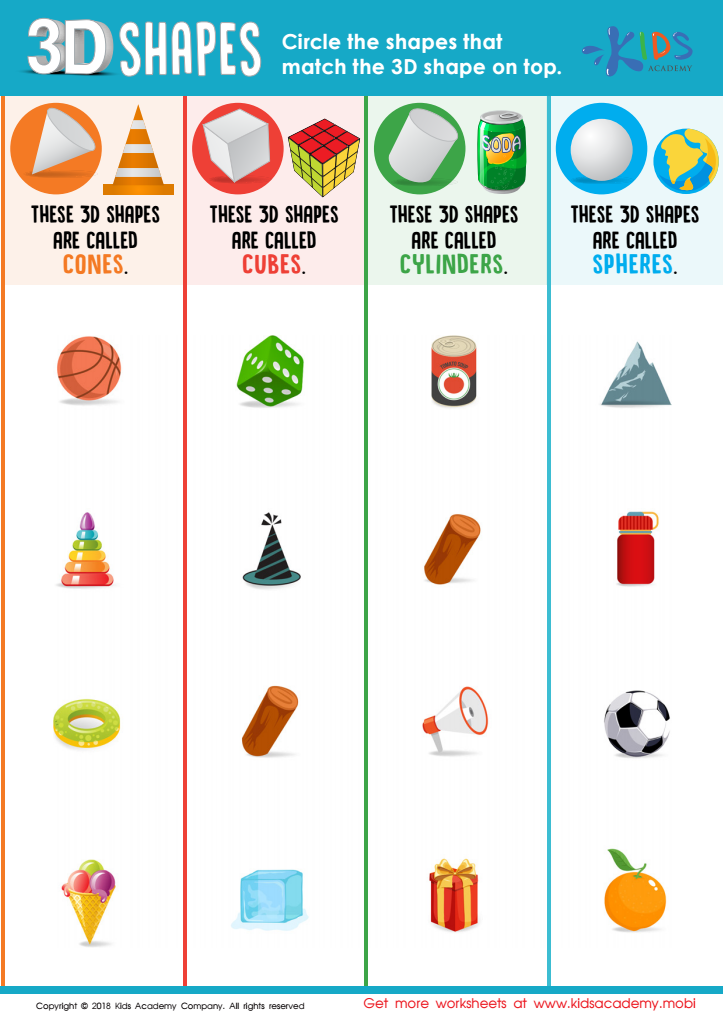
3D Shapes Worksheet








Differentiating shapes is an essential foundational skill for 4-year-olds. First, understanding basic shapes fosters cognitive development. Recognizing and naming shapes like circles, squares, and triangles helps young children categorize and process information, a crucial step in brain development.
Second, shape differentiation enhances math readiness. Shapes are fundamental to geometry, and early familiarity with them can ease the transition into more advanced math concepts. Children learn about attributes such as size, color, and number of sides, which lays the groundwork for comparing, sorting, and classifying objects later on.
Third, recognizing shapes aids in literacy development. Many letters and numbers are based on shapes. For example, the letter "O" resembles a circle, and the letter "A" has triangular components. By knowing shapes, a child more easily grasps these symbols during reading and writing activities.
Additionally, shape recognition promotes spatial awareness and fine motor skills. Activities involving shapes, like drawing or crafting, refine hand-eye coordination and help children understand their physical world better.
Finally, knowing shapes boosts confidence and social skills. When children recognize and correctly name shapes, they feel a sense of accomplishment, fueling their enthusiasm for learning. Being able to participate in shape-related games or conversations with peers also supports social interaction and cooperative play.
In summary, teaching shapes to 4-year-olds is not just about visual recognition; it's a multifaceted tool that aids overall cognitive, mathematical, literacy, motor, and social development.








