Logical thinking development Normal Worksheets for 4-Year-Olds
6 filtered results
-
From - To
Unlock your child's potential with our "Logical Thinking Development Normal Worksheets for 4-Year-Olds." Carefully designed to nurture young minds, these printable worksheets from Kids Academy enhance critical cognitive skills through engaging activities. Tailored for preschoolers, each worksheet provides a blend of fun and learning, helping kids recognize patterns, classify objects, and solve simple puzzles. Our expertly crafted exercises promote problem-solving abilities while fostering creativity and a love for learning. Ideal for parents and educators, these worksheets are your go-to resource for captivating young learners and laying the foundation for future academic success.
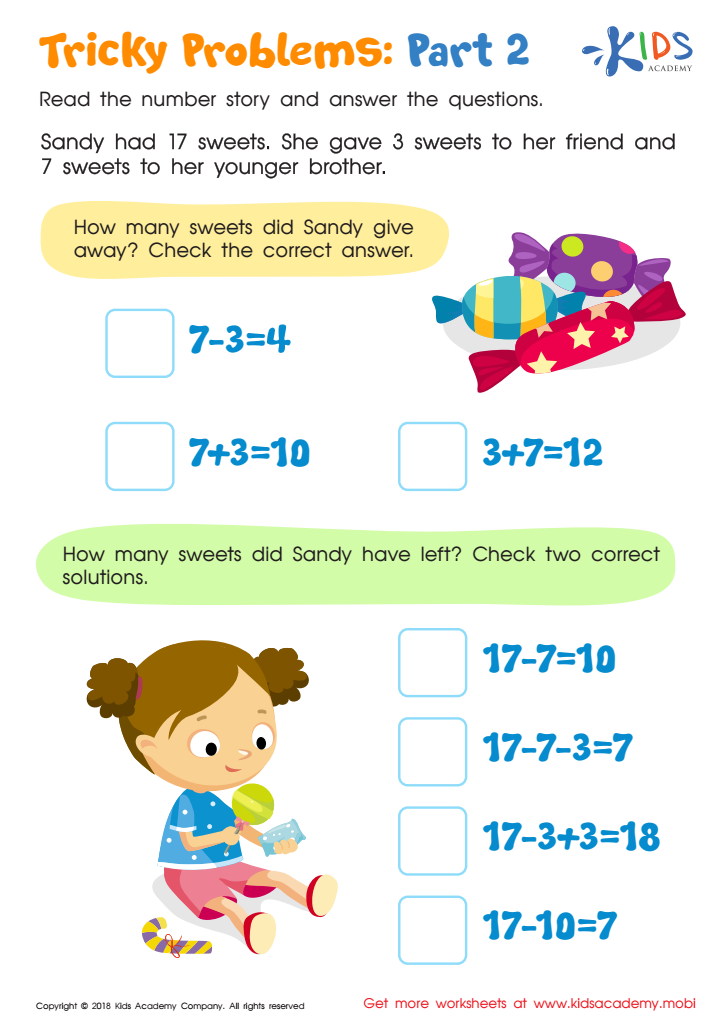
Tricky Problems Worksheet: Part 2
 Assign to My Students
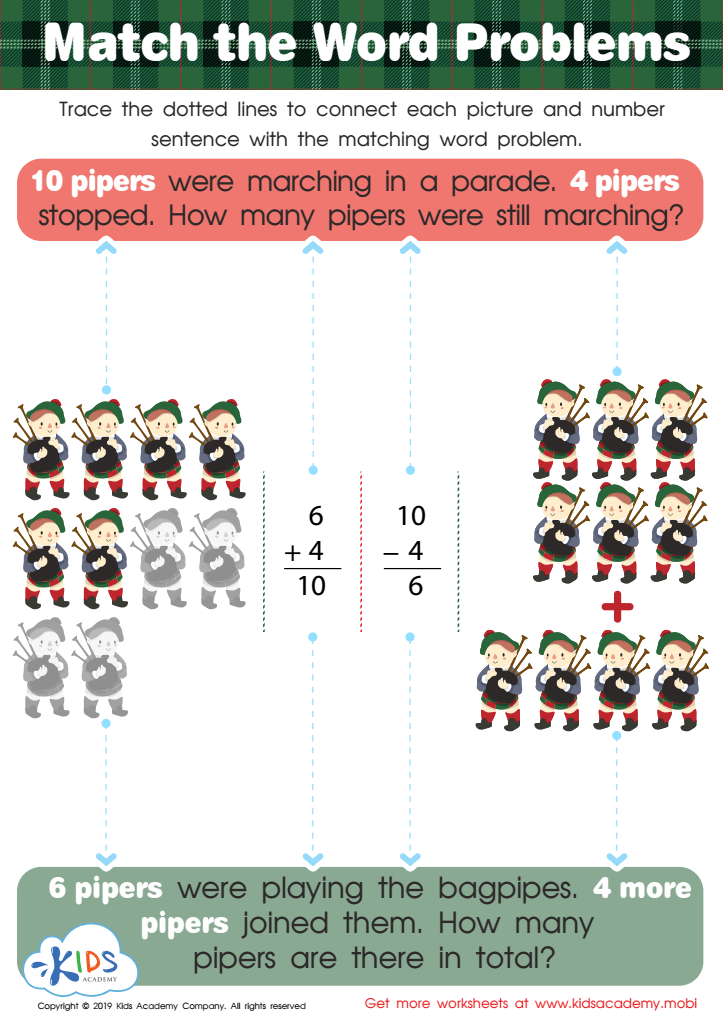
Match the Word Problems Worksheet
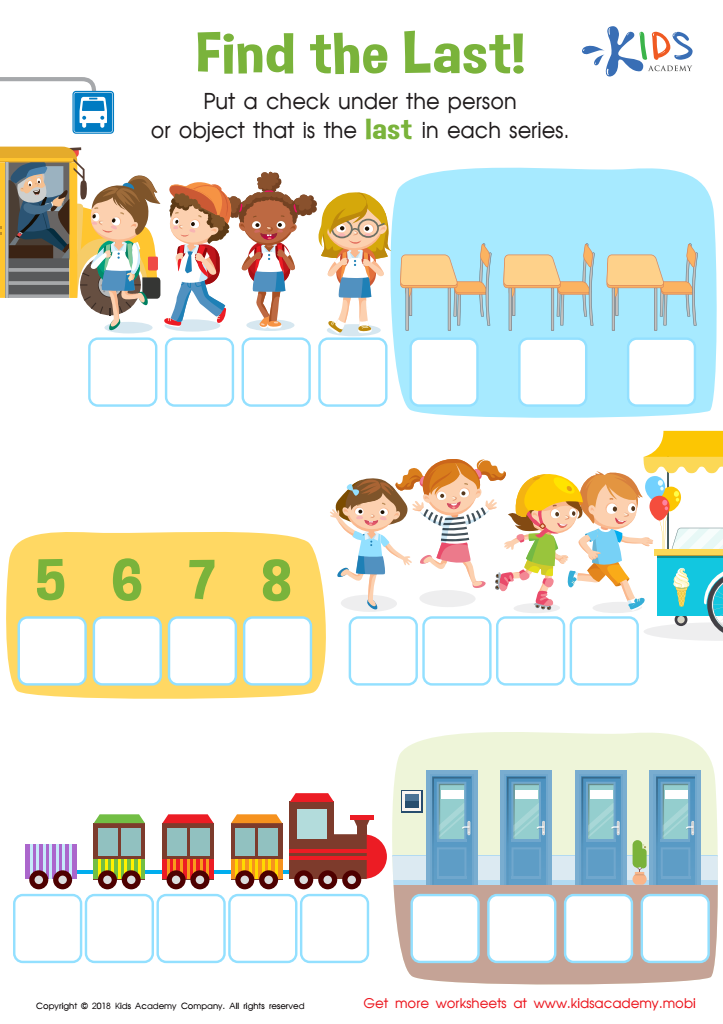
Find the Last! Worksheet
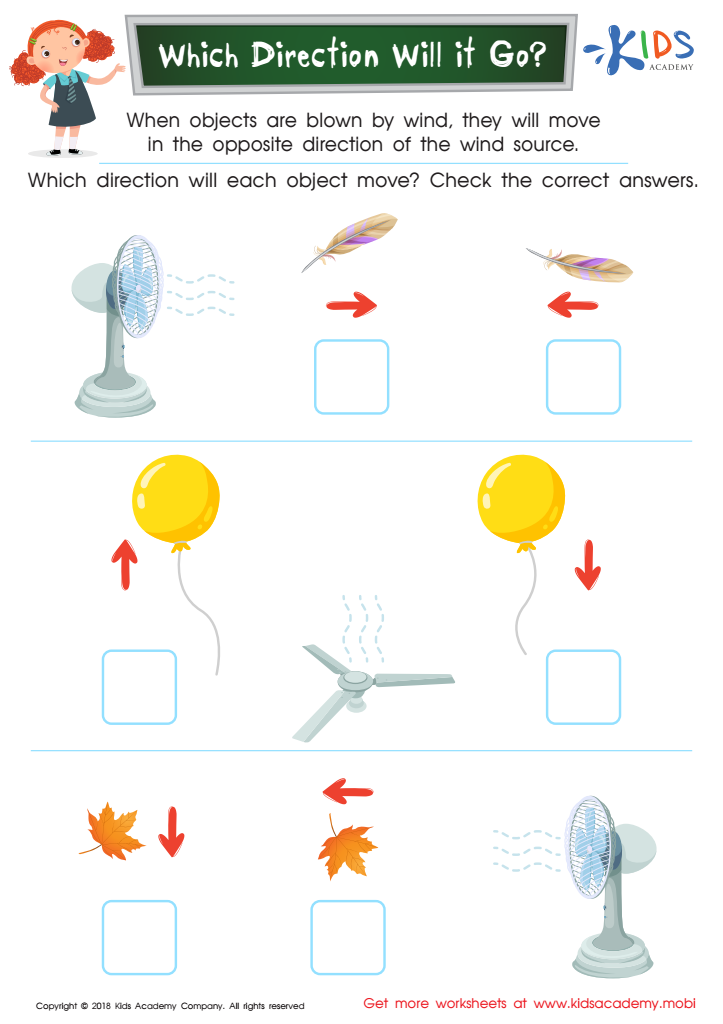
Which Direction Will it Go? Worksheet
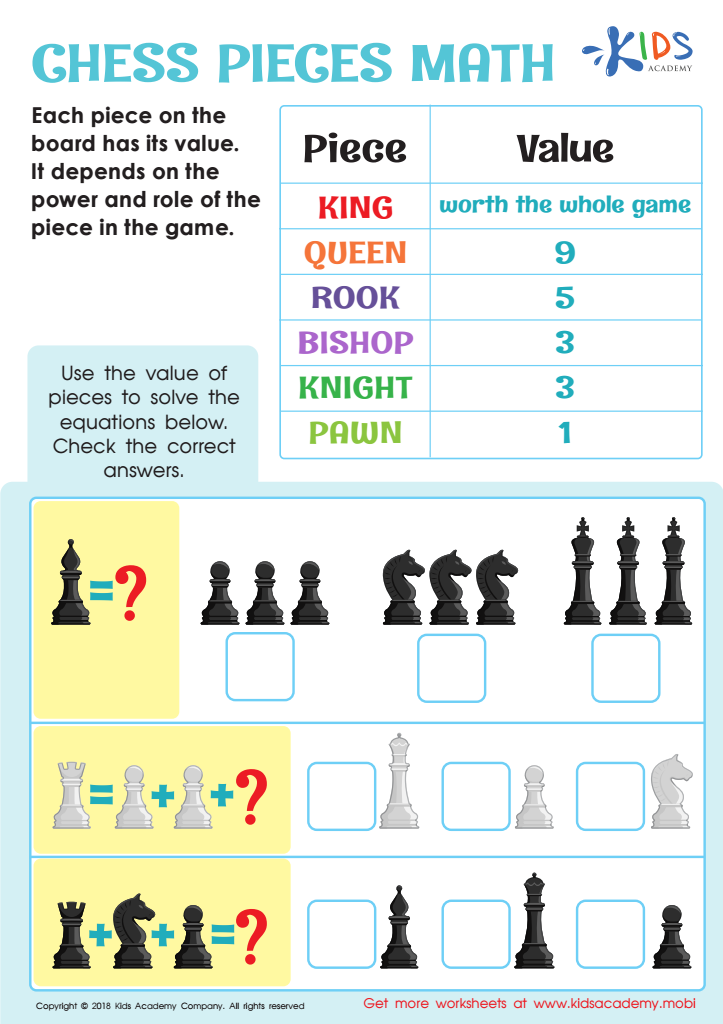
Chess Pieces Math Worksheet
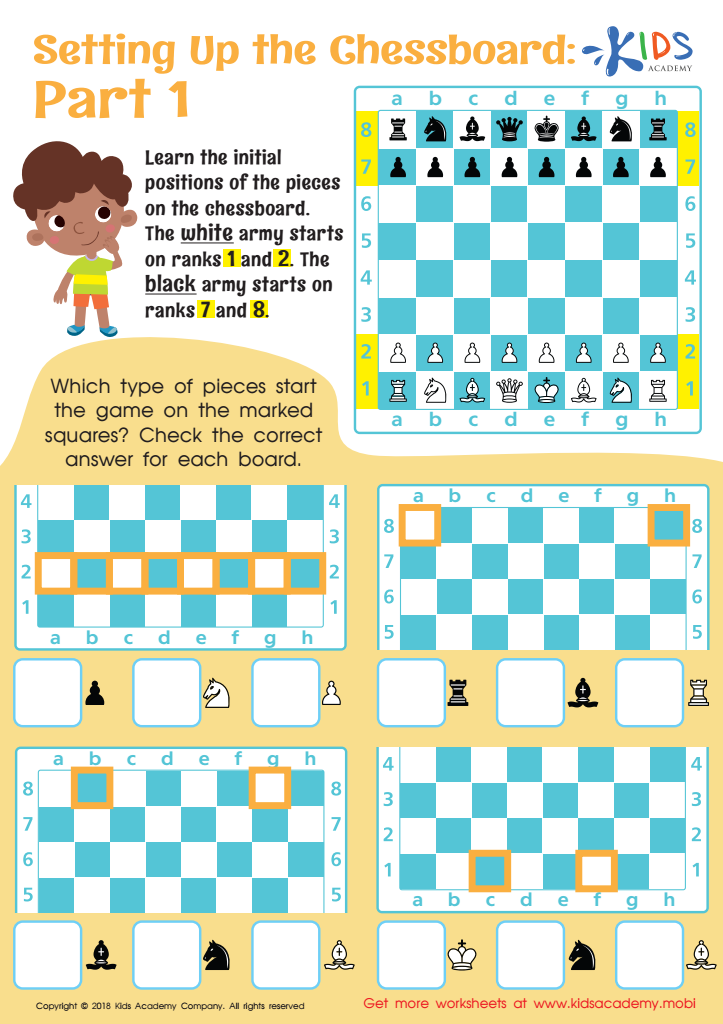
Setting up the Chessboard: Part 1 Worksheet







Logical thinking development refers to the ability of a child to reason, solve problems, and make sense of the world around them. For 4-year-olds, fostering this skill is crucial as it lays the groundwork for future cognitive development and academic success.
At this age, children are naturally curious and are starting to understand cause-and-effect relationships. Encouraging logical thinking helps them better grasp how and why things happen, enhancing their problem-solving abilities and promoting independence. For example, by asking them to sequence events in a story or sort objects by category, adults can help hone their organizational skills and understanding of relationships between different elements.
Moreover, developing logical thinking supports language skills. When children are encouraged to explain their reasoning or describe patterns, they expand their vocabulary and improve communication skills. These capabilities are fundamental for effective interaction in social settings and academic environments.
Additionally, early logical thinking development is linked to improved concentration and attention span. Activities that challenge a child’s cognitive processes, such as puzzles or matching games, encourage them to stay focused and persist through tasks, setting a strong foundation for learning habits.
Teachers and parents should place importance on logical thinking to boost children's confidence, autonomy, and overall intellectual growth, leading to more successful and well-rounded individuals.








