Mental math practice Normal Worksheets for 4-Year-Olds
3 filtered results
-
From - To
Develop your child's early math skills with our Mental Math Practice Worksheets, designed specifically for 4-year-olds. These engaging worksheets focus on building a strong foundation in basic arithmetic through fun activities and age-appropriate challenges. With a variety of puzzles and exercises, children will develop essential numeric understanding, counting, addition, and problem-solving skills. Our printable resources provide a colorful and interactive way for preschoolers to gain confidence in math, setting them up for future success. Give your young learner a head start with our effective and enjoyable mental math practice worksheets!
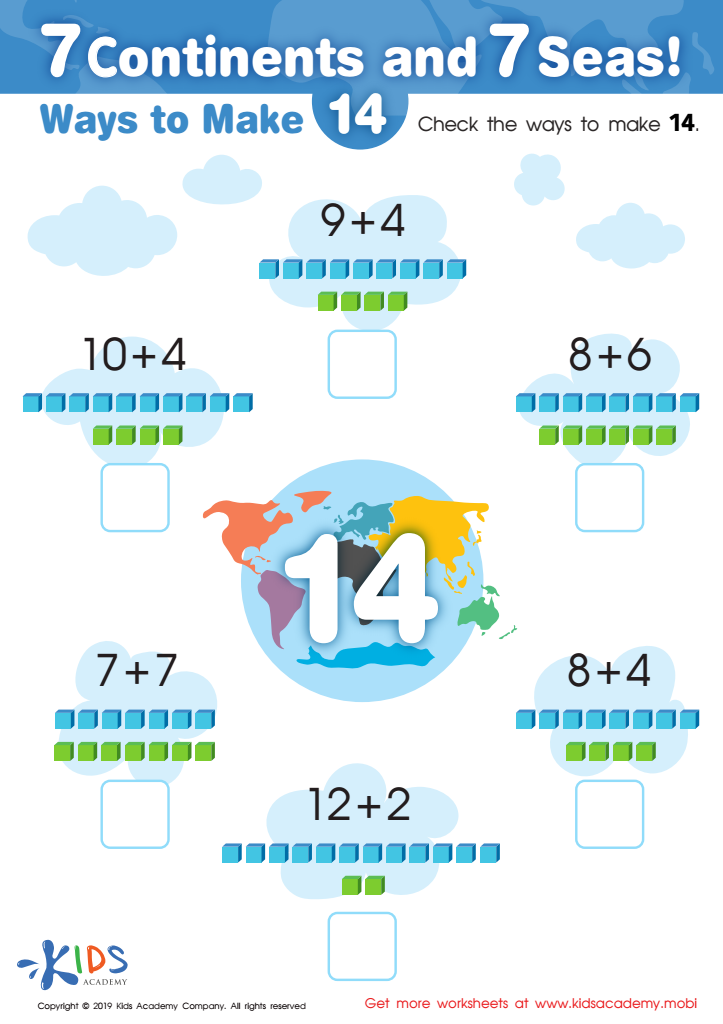
7 Continents and 7 Seas Worksheet
 Assign to My Students
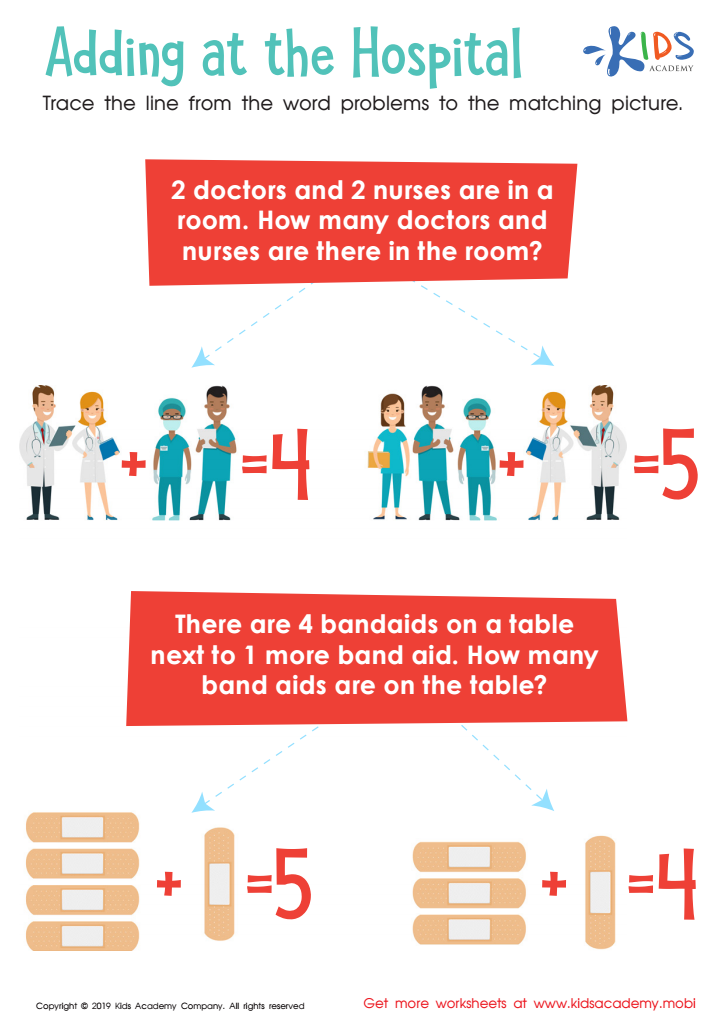
Adding at the Hospital Worksheet
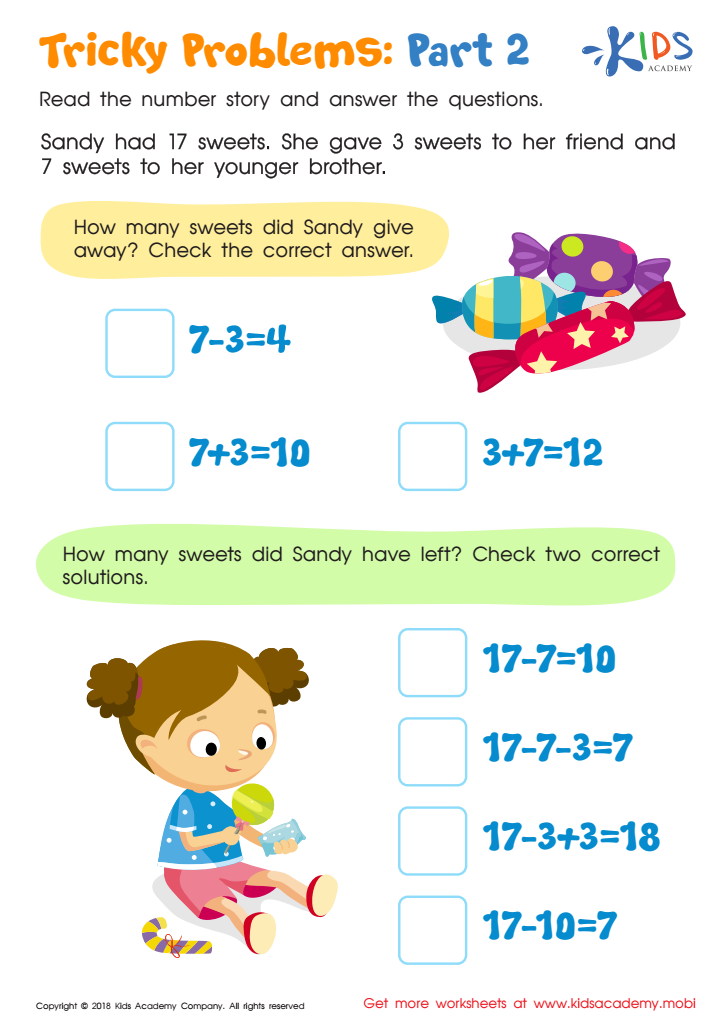
Tricky Problems Worksheet: Part 2







Mental math practice is incredibly beneficial for 4-year-olds, and parents and teachers should prioritize it for several reasons. Firstly, engaging young children in mental math helps develop their numerical fluency. At this age, children's brains are highly receptive to learning new concepts, and regularly practicing mental math can aid in solidifying their understanding of numbers and simple arithmetic operations.
Secondly, mental math encourages the development of critical thinking and problem-solving skills. When children solve math problems in their heads, they learn to think logically, make quick decisions, and improve their ability to process information—all of which are crucial cognitive skills.
Moreover, early exposure to mental math helps build confidence in young learners. As children successfully solve problems mentally, they gain a sense of achievement, which boosts their self-esteem and fosters a positive attitude toward learning. This confidence is essential as it lays a solid foundation for future academic pursuits.
Additionally, mental math practice supports memory improvement. When children actively recall math facts and processes, they strengthen their working memory, which is vital for overall cognitive development.
In summary, incorporating mental math into the daily routine of 4-year-olds promotes numerical fluency, critical thinking, confidence, and memory skills. Parents and teachers should care about this practice because it provides foundational benefits that will support children's academic and personal growth.








