
Mental math skills Normal Addition & Subtraction Worksheets for 4-Year-Olds
3 filtered results
Difficulty Level
Grade
Age
-
From - To
Subject
Activity
Standards
Enhance your 4-year-old's foundational math skills with our engaging Normal Addition & Subtraction Worksheets focused on mental math. These worksheets are designed to develop early number sense through fun and interactive activities that foster critical thinking and problem-solving abilities. With a variety of colorful exercises suited for young learners, children will enjoy mastering basic addition and subtraction concepts while building confidence. The worksheets encourage independent learning and help prepare kids for more complex math challenges ahead. Perfect for homeschooling or classroom settings, these resources will promote a positive attitude towards math, laying the groundwork for a lifelong love of learning.
Favorites
With answer key
Interactive
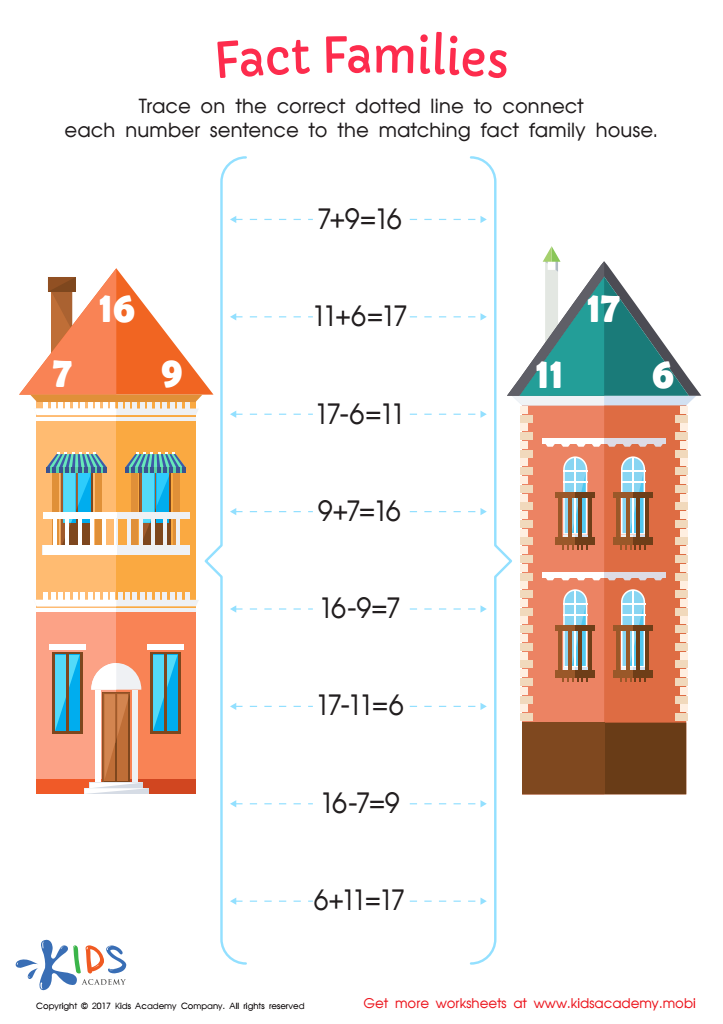
Fact Families — Add and Subtract Worksheet
Kids will love seeing how families of numbers "live" in their own houses!
 Assign to My Students
Fact Families — Add and Subtract Worksheet
Worksheet
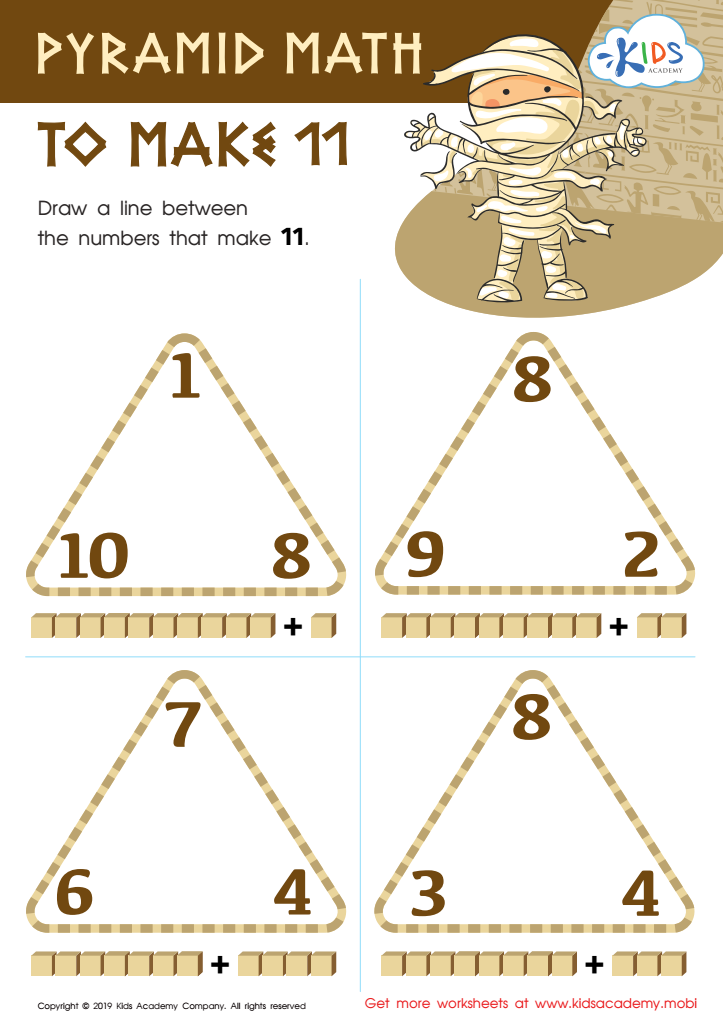
Pyramid Math to Make 11 Worksheet
Have your kids look at the picture of the Egyptian pyramids and tell you what they see. Then, help them do simple math by adding up the numbers in the pyramids and connecting those that make 11. This worksheet is perfect for teaching your kids about history, mathematics, and problem-solving.
Pyramid Math to Make 11 Worksheet
Worksheet
Join Kids Academy for Free
Who is primarily going to use this learning content?








Parents and teachers should prioritize mental math skills, particularly normal addition and subtraction, for 4-year-olds because they lay the foundation for future mathematical understanding. At this age, children possess remarkable cognitive flexibility and curiosity, which makes them ideal candidates for engaging with basic math concepts. Developing mental math skills fosters a strong number sense, helping children recognize relationships between numbers and enhancing their problem-solving abilities.
Moreover, early exposure to addition and subtraction aids in critical thinking, as children learn to visualize calculations and manipulate numbers mentally. This is not just about numbers; it encourages persistence and resilience, as children often tackle challenges through mental math exercises. Engaging in these activities in a playful, informal manner ensures that learning feels fun rather than stressful.
Additionally, strong mental math skills are linked to better academic performance in later years, creating a positive feedback loop of confidence and capability. When children master these basic operations, they build a crucial toolkit for future math learning, including more complex concepts. Ultimately, by fostering mental math proficiency at an early age, parents and teachers are not only equipping children with vital skills but also inspiring a lifelong love for learning and exploration in mathematics.








