Shape identification Normal Math Worksheets for 4-Year-Olds
5 filtered results
-
From - To
Discover our engaging "Shape Identification Normal Math Worksheets" designed specifically for 4-year-olds! These fun and interactive worksheets will help your little learners recognize and identify various shapes, enhancing their visual perception and cognitive skills. Each activity includes colorful illustrations and age-appropriate exercises that make learning shapes exciting and effective. From circles and squares to triangles and rectangles, kids will develop essential early math skills while exploring the world of shapes. Ideal for use at home or in the classroom, these worksheets promote hands-on learning, creativity, and critical thinking in young children. Start your child's shape discovery journey today!
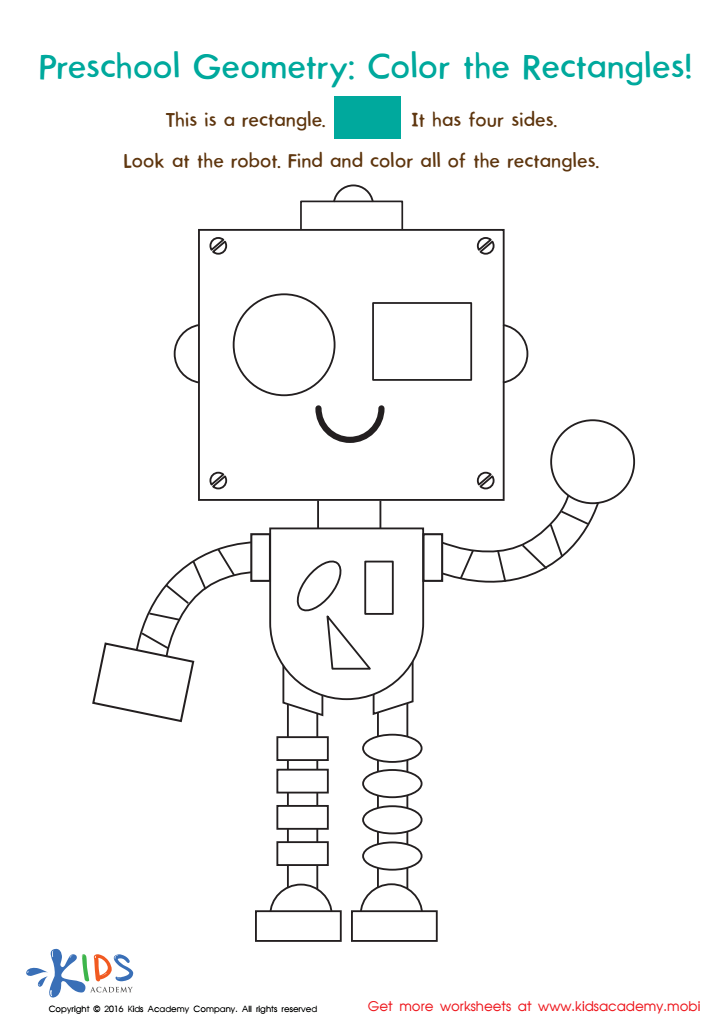
Geometry Worksheet
 Assign to My Students
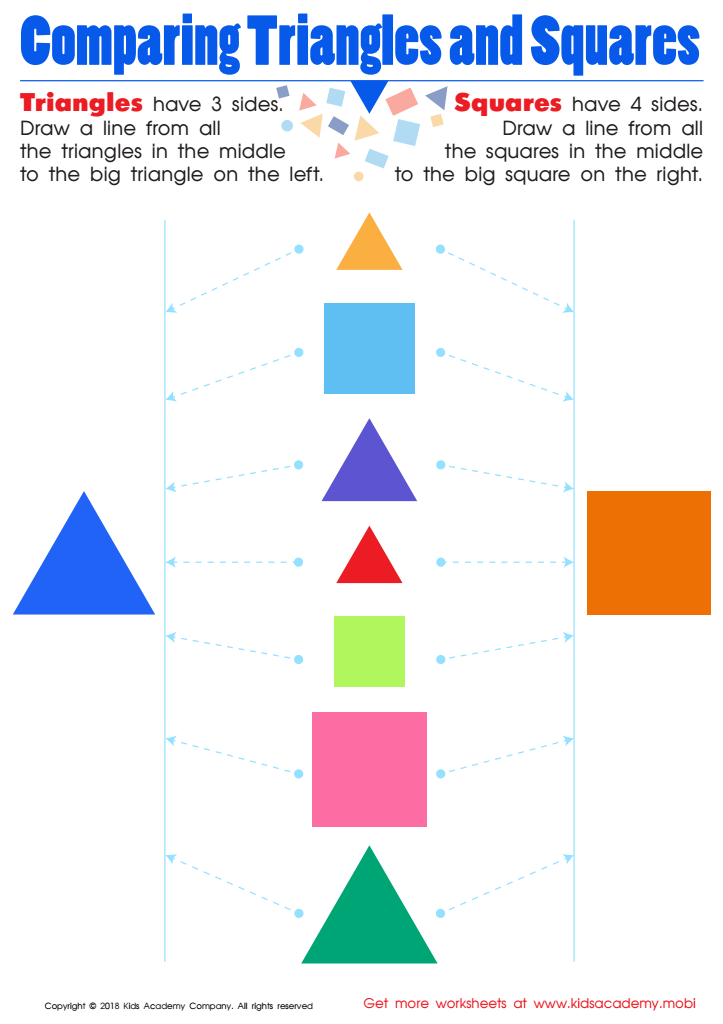
Comparing Triangles Squares Worksheet
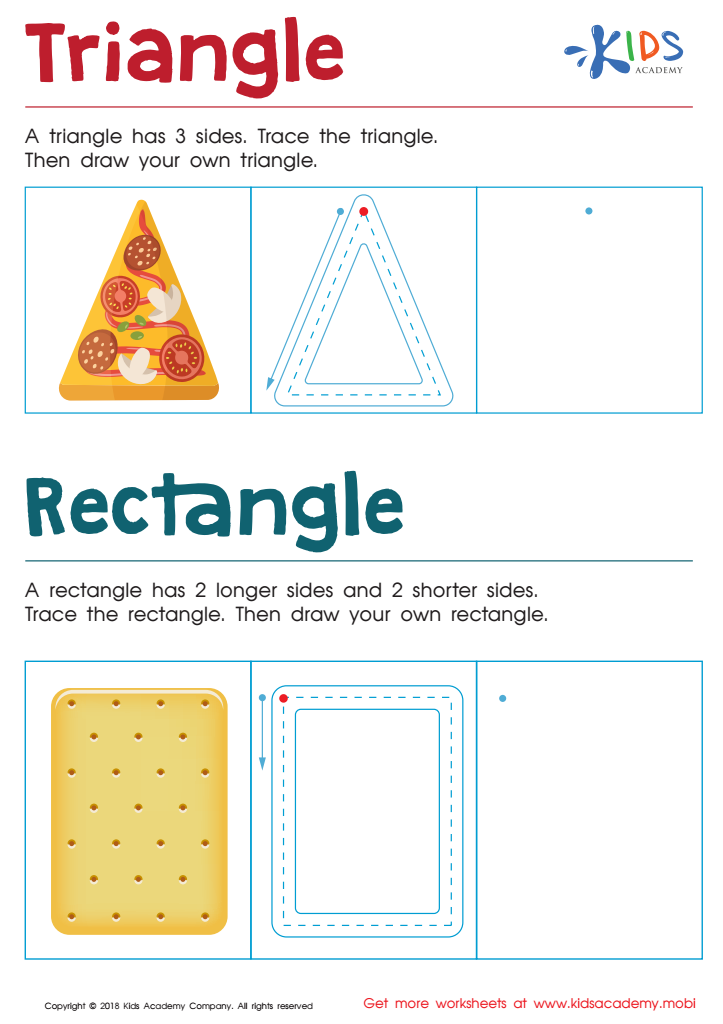
Triangle Rectangle Worksheet
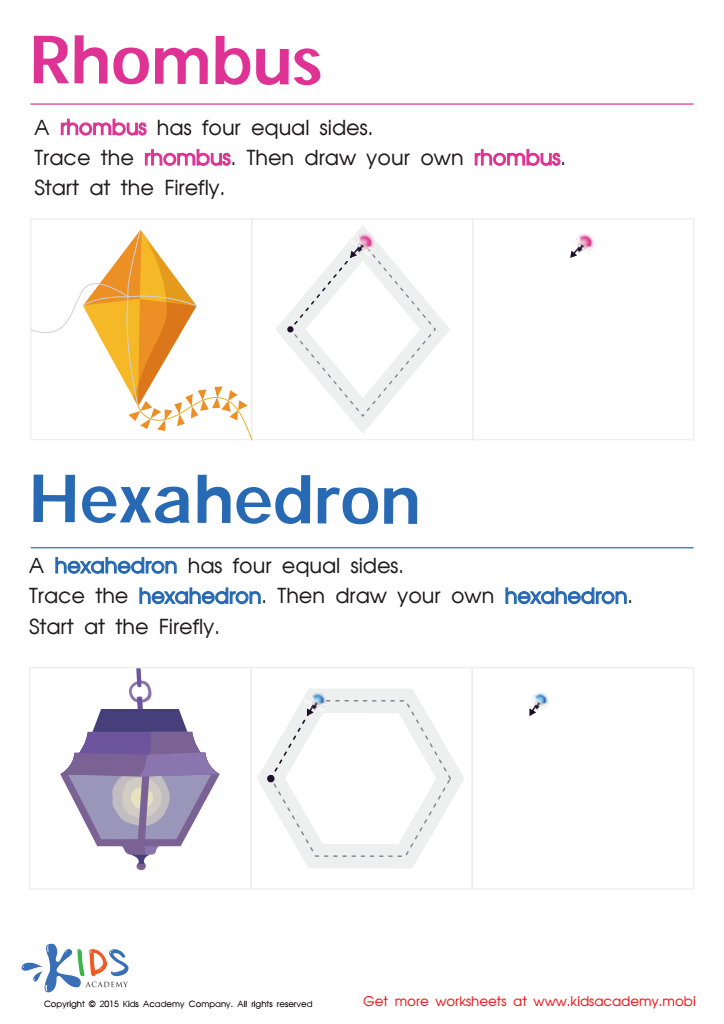
Draw a Rhombus And a Hexahedron Printable
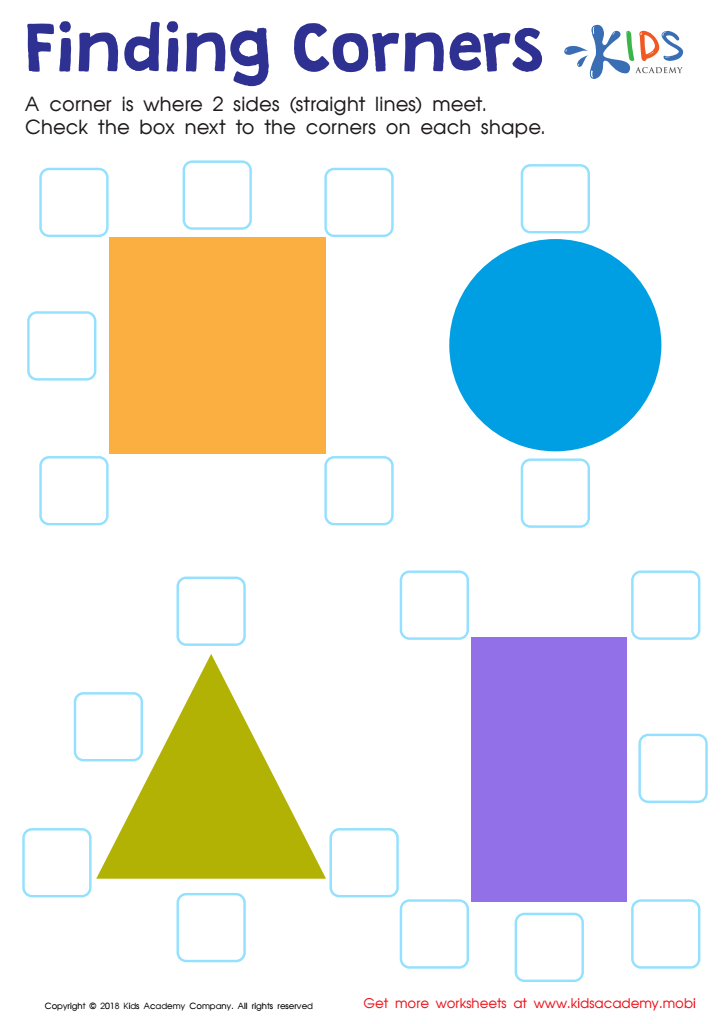
Finding Corners Worksheet








Shape identification is a fundamental skill for 4-year-olds that lays the groundwork for future mathematical understanding and spatial awareness. Parents and teachers should care about this aspect of early math education because it is crucial for cognitive development. Recognizing different shapes helps children classify objects, understand their environment, and enhance their critical thinking abilities.
Learning about shapes also supports language development, as children learn associated vocabulary and descriptors (e.g., "round," "flat," "pointy"). This enhances their communication skills, enabling them to express ideas and ask questions more effectively. Moreover, shape identification fosters creativity through art and play, allowing children to explore shapes in their surroundings and use them in various contexts.
In addition, mastering shapes is computation-heavier for young learners, as it introduces them to fundamental concepts of geometry. These skills are essential for later math proficiency and problem-solving situations, such as measuring, comparing sizes, or understanding patterns.
Overall, shape identification not only plays a vital role in a child's early education but also supports broader social and cognitive skills essential for lifelong learning and success. By prioritizing this development step, parents and teachers can cultivate a strong foundation for future academic achievements.








