Understanding prepositions Normal Math Worksheets for 4-Year-Olds
3 filtered results
-
From - To
Unlock the world of prepositions in this unique set of Normal Math Worksheets tailored specifically for 4-year-olds. Engaging activities blend language learning seamlessly with foundational math skills, transforming everyday terms like "under," "over," "next to," and "between" into compelling math concepts. Your child will flourish in recognizing spatial relationships while honing their problem-solving abilities. Our expertly designed worksheets are an excellent resource for early learners, enhancing their cognitive development to prepare them for more complex abstract mathematical thinking. Frequent practice helps solidify these essential concepts, ensuring a smooth and enjoyable learning journey for your preschooler.
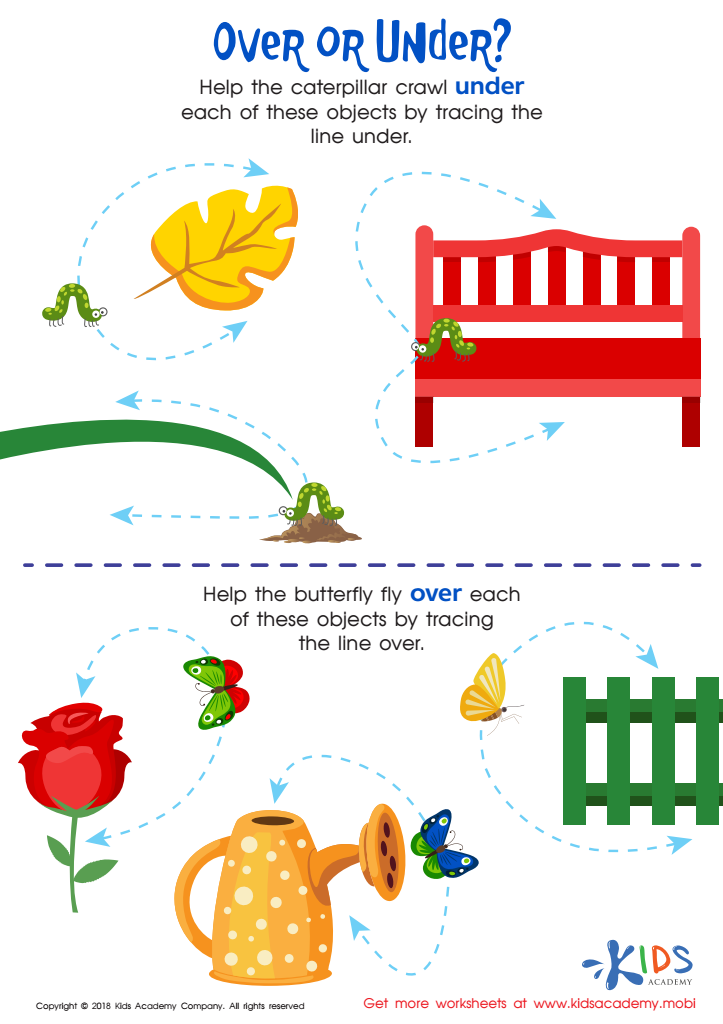
Over or Under? Worksheet
 Assign to My Students
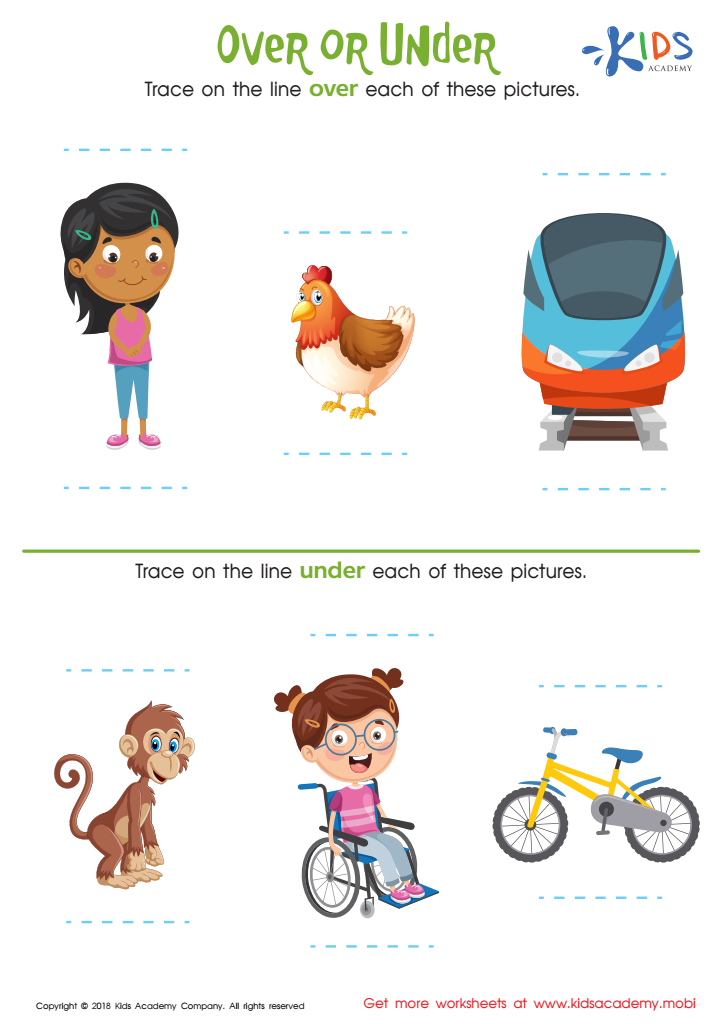
Over or Under Worksheet
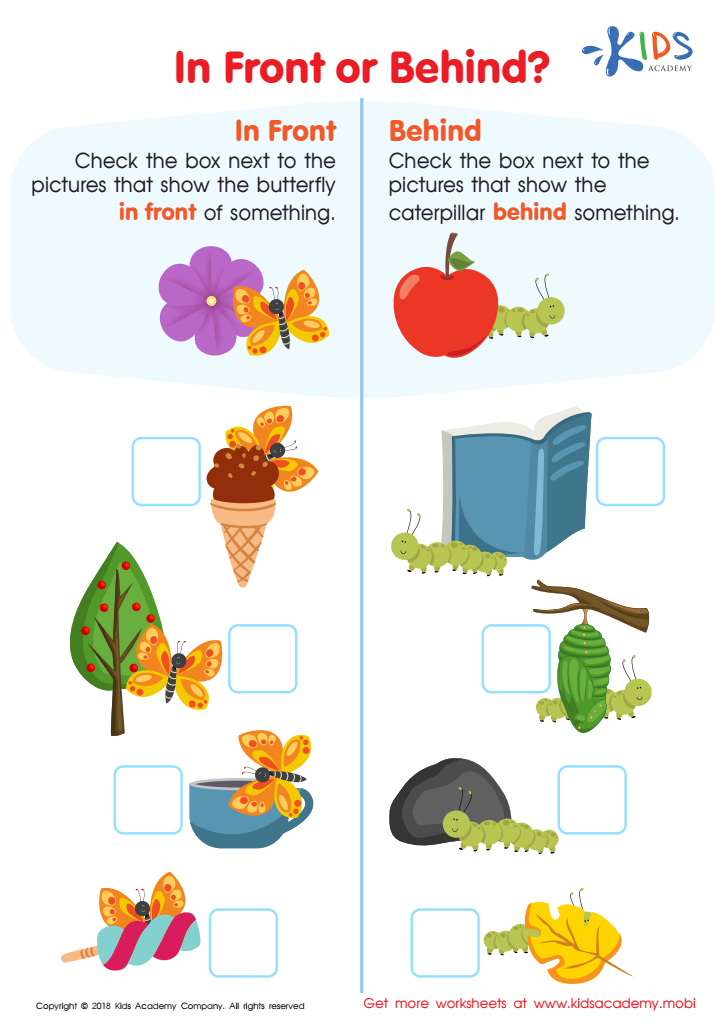
In Front or Behind Worksheet







Understanding prepositions is a fundamental skill in language development crucial for effective communication and comprehension. For 4-year-olds, this fosters their ability to follow instructions accurately and describe their environment, enhancing both social interactions and cognitive abilities. When parents or teachers emphasize comprehension of prepositions, they aid children in creating a mental map of spatial relationships and landscapes, such as "under the table" or "beside the chair," vital for navigating their world safely and effectively.
Moreover, this linguistic proficiency laid early provides the groundwork for mathematical concepts essential later in life. Normal math for young children often involves counting, comparison, and recognizing shapes—skills inherently tied to an understanding of positioning and direction that prepositions indicate. For instance, when a teacher instructs a child to place blocks "next to," "above," or "between" others, they are not only reinforcing language skills but also spatial reasoning, critical for geometry.
Also, nurturing this understanding cultivates patience and listening skills, as children learn to follow multi-step directions—key traits required for subsequent learning experiences. Ultimately, grasping prepositions aids cognitive development, language skills, and forms the foundation for future complex mathematical learning—providing a well-rounded, effective early education.








