Critical Thinking Normal Word Problems Worksheets for 4-Year-Olds
3 filtered results
-
From - To
Discover our engaging Critical Thinking Normal Word Problems Worksheets designed specifically for 4-year-olds! These worksheets encourage young learners to enhance their problem-solving abilities through age-appropriate math challenges. With fun and relatable scenarios, children will develop critical thinking skills while practicing their counting, reasoning, and comprehension. Each worksheet is crafted to ignite curiosity and foster a love for learning. Our interactive resources encourage independent thought as children explore real-life situations, solving dilemmas that require thoughtful analysis. Perfect for parents and educators alike, these worksheets offer a dynamic way for little ones to grow academically while having fun! Start their learning journey today!
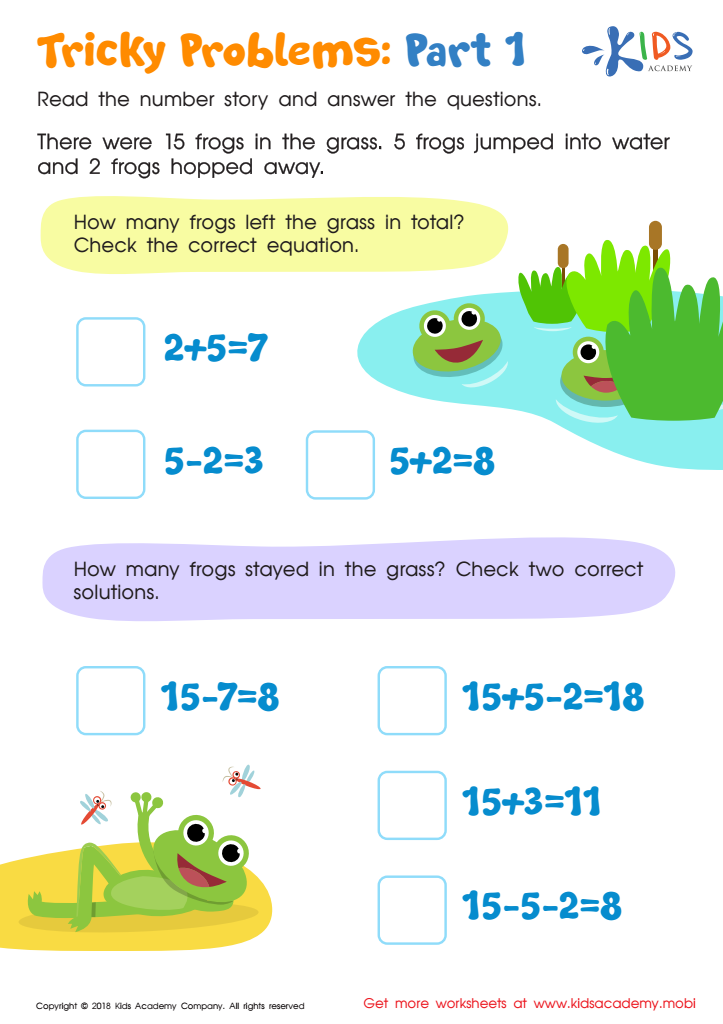
Tricky Problems Worksheet: Part 1
 Assign to My Students
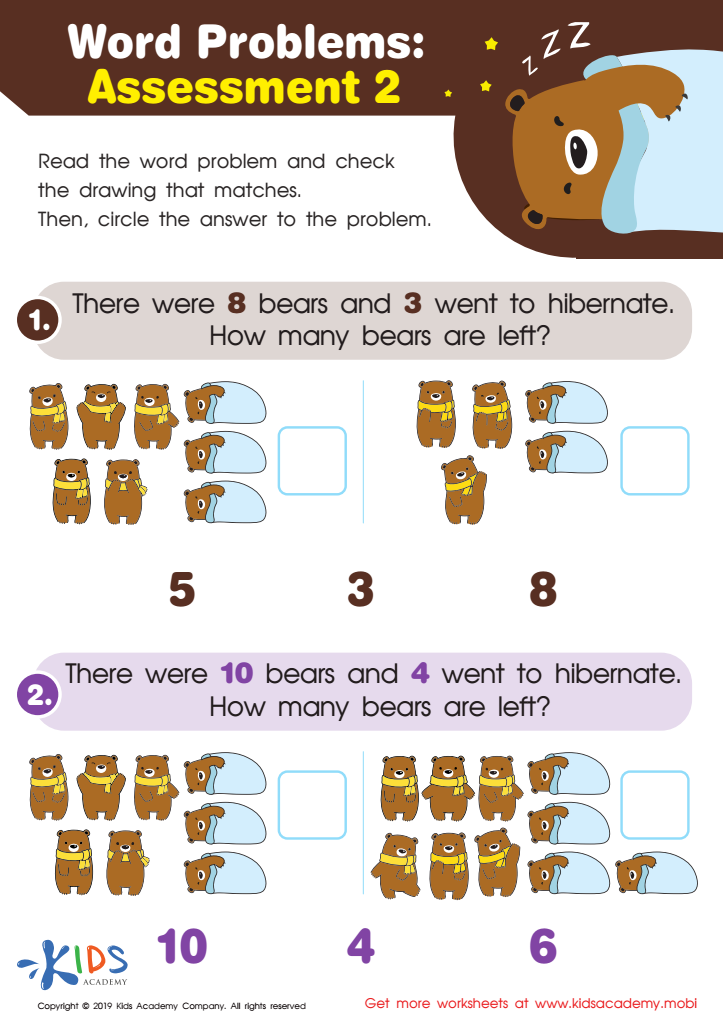
Word Problems: Assessment 2 Worksheet
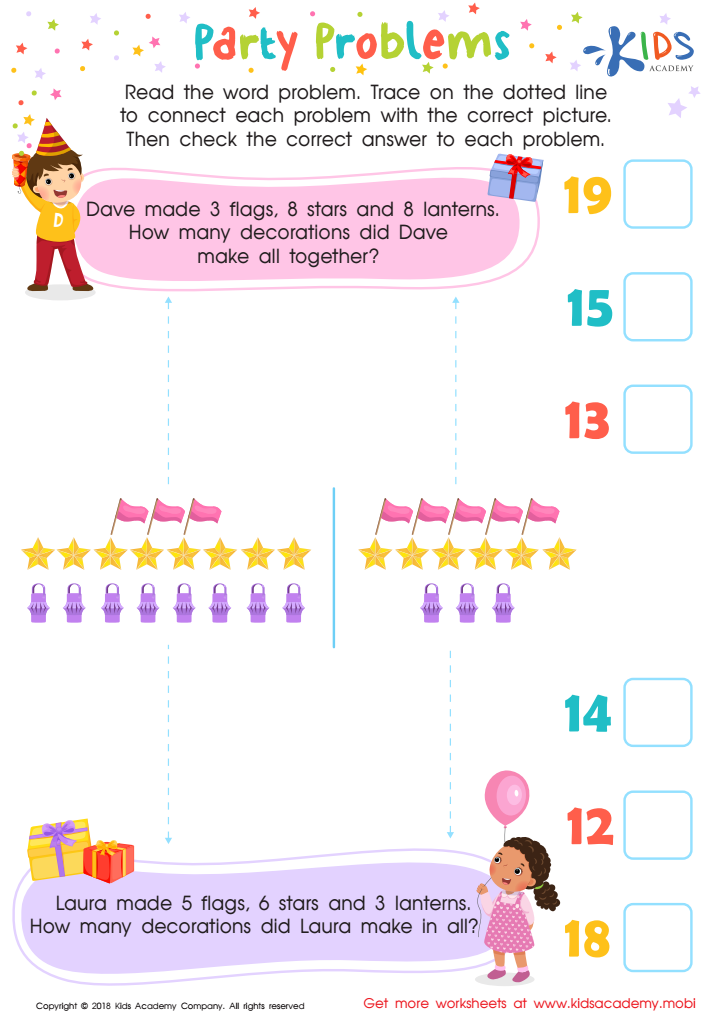
Party Problems Worksheet








Critical thinking skills are foundational for young children, especially for those as young as four years old. Engaging with critical thinking normal word problems helps develop their ability to analyze situations, make decisions, and solve problems effectively. This stage is crucial, as children are naturally curious and begin to explore their environment and relationships.
Incorporating word problems into their learning allows young learners to connect numerical concepts to real-life situations, reinforcing both math and language skills. Solving these problems encourages them to think deeply, weigh options, and become more adept at reasoning. This not only aids in academic growth but also promotes emotional intelligence as they learn to navigate challenges.
Moreover, early exposure to critical thinking fosters independence. Children gain confidence in their analytical abilities, which can lead to lifelong learning habits. Parents and teachers play a vital role in guiding this development. By providing engaging challenges, they instill a love for problem-solving, encouraging kids to ask questions and seek answers.
Ultimately, fostering critical thinking in young children lays the groundwork for academic success and equips them with essential life skills, making it a priority for caregivers and educators alike.








