Logical Reasoning Normal Word Problems Worksheets for 4-Year-Olds
4 filtered results
-
From - To
Enhance your 4-year-old's cognitive development with our engaging Logical Reasoning Normal Word Problems Worksheets. Designed specifically for young learners, these worksheets introduce basic problem-solving skills through fun and relatable scenarios. Children will learn to interpret simple problems, make connections, and think critically while developing essential mathematical reasoning skills. Each worksheet is thoughtfully crafted to encourage exploration and creativity, making learning enjoyable and effective. Ideal for home or classroom use, our printable resources promote independent thinking and comprehension. Foster your child’s logical reasoning abilities with captivating worksheets that will inspire a love for learning! Perfect for young minds to grow and thrive!
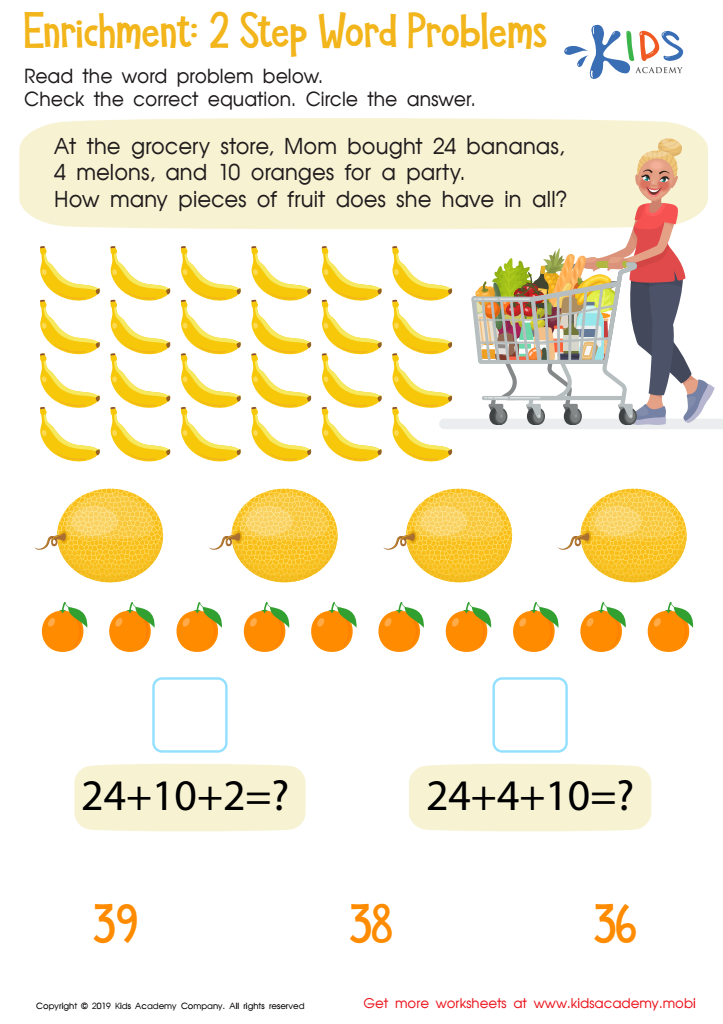
Enrichment -2 Step Word Problems Worksheet
 Assign to My Students
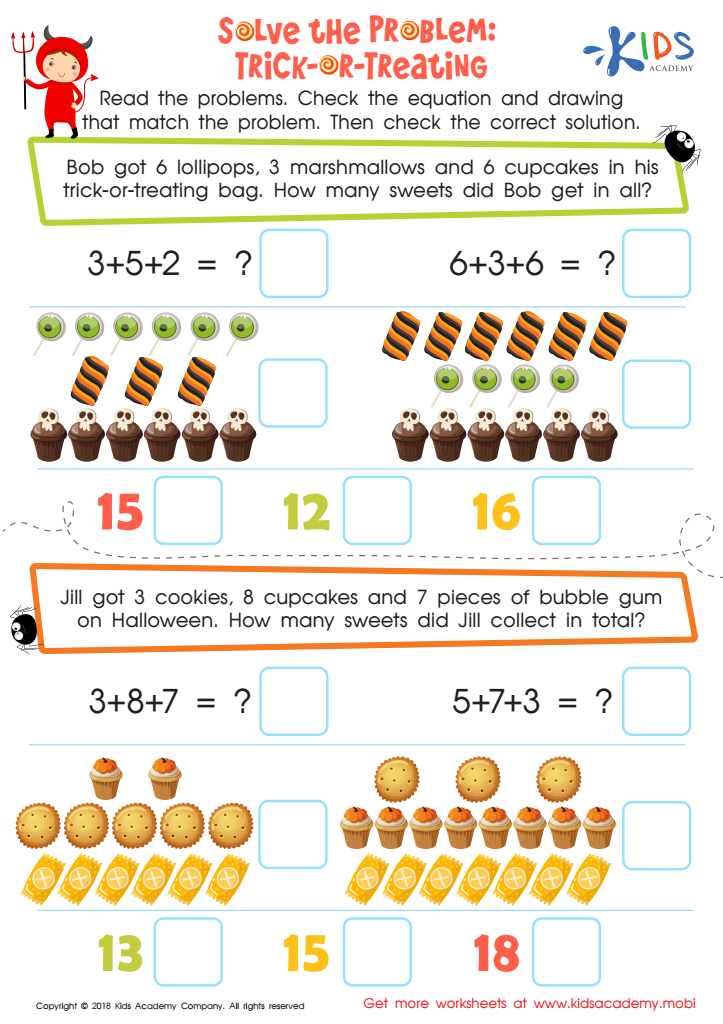
Solve the Problem: Trick–or–treating Worksheet
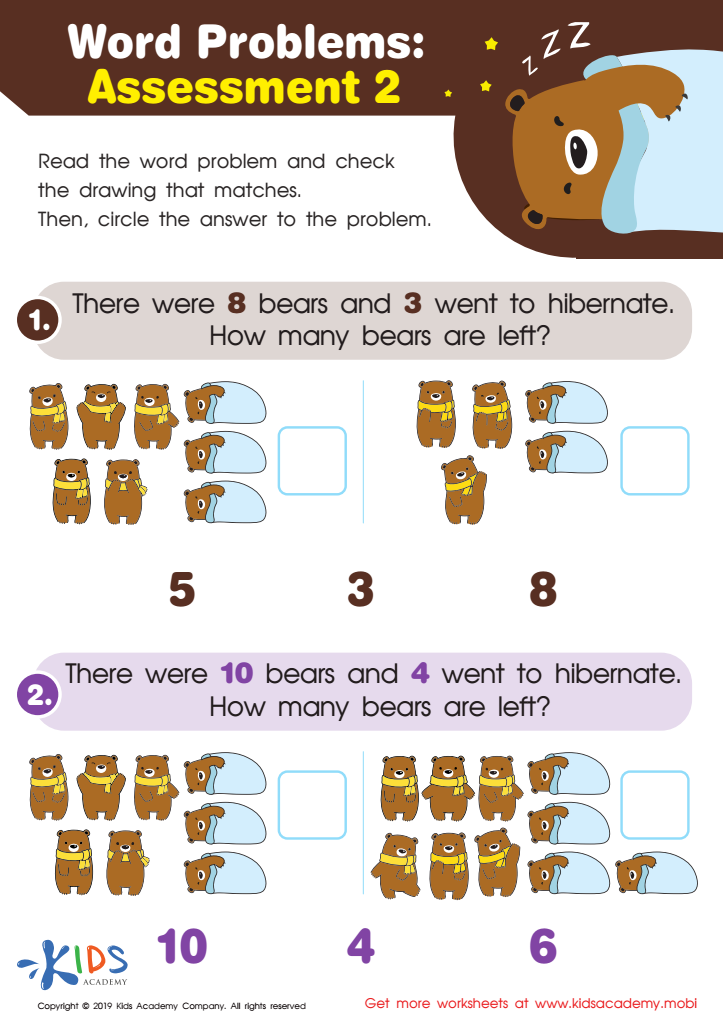
Word Problems: Assessment 2 Worksheet
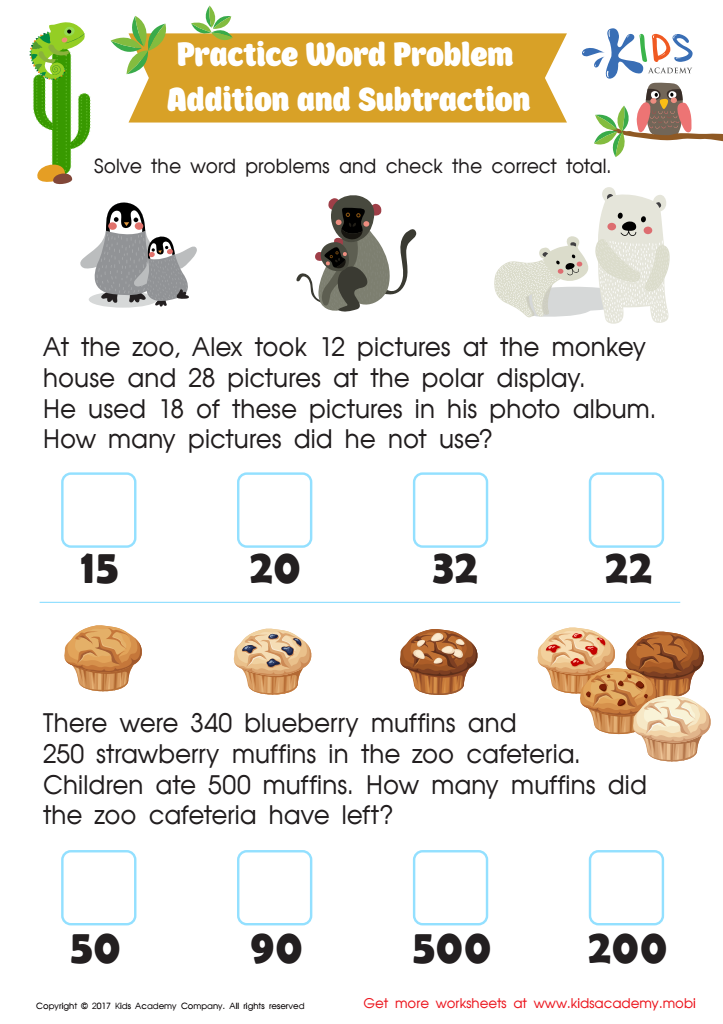
Addition and Subtraction: Word Problems Worksheet








Logical reasoning normal word problems are essential for 4-year-olds as they lay the foundation for critical thinking and problem-solving skills. At this age, children are highly impressionable, and engaging them in word problems stimulates their cognitive development. These types of problems encourage kids to actively think about situations, relating to their everyday experiences, rather than merely memorizing facts.
By tackling simple word problems, children learn to interpret language, extract relevant information, and identify relationships between objects or events. For example, if a problem involves sharing toys, it introduces concepts of fairness and comparison, enriching social skills alongside mathematical understanding. This not only aids in their emotional intelligence but also fosters language development as they learn to articulate their thoughts and reasoning.
Moreover, early exposure to such reasoning exercises can spark a profound interest in mathematics and science. It helps develop a growth mindset, where children learn to embrace challenges and develop resilience. For parents and teachers, promoting logical reasoning through normal word problems creates a nurturing environment that inspires curiosity, turning learning into a joyous adventure. Supporting children in this critical stage ultimately empowers them to face more complex challenges with confidence as they progress in their education.








