
Multiplication practice Normal Word Problems Worksheets for 4-Year-Olds
3 filtered results
Difficulty Level
Grade
Age
-
From - To
Subject
Activity
Standards
Welcome to our Multiplication Practice Normal Word Problems Worksheets for 4-Year-Olds! These engaging worksheets are specifically designed to introduce young learners to basic multiplication concepts through fun and relatable word problems. Each activity encourages children to think critically while developing math skills in a playful way. Our carefully crafted exercises utilize everyday scenarios to make learning multiplication enjoyable and meaningful. Perfect for homeschooling or classroom settings, these worksheets promote early math readiness and a solid foundation in multiplication, setting the stage for future success. Explore our resources to help your little ones become confident problem solvers while having fun with math!
Favorites
With answer key
Interactive
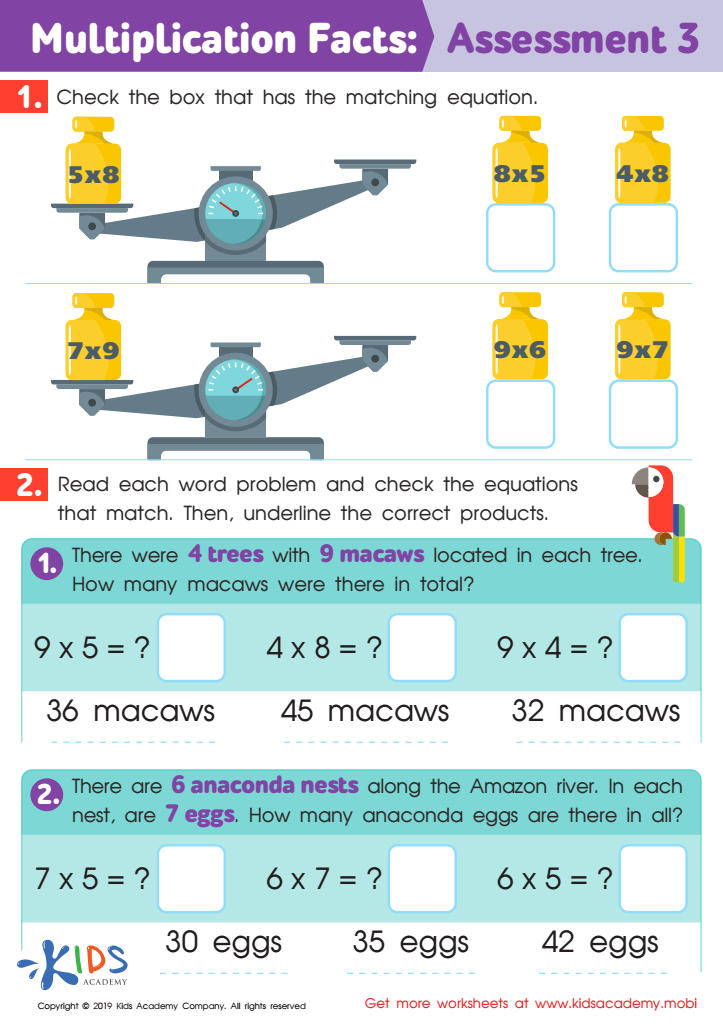
Multiplication Facts: Assessment 3 Worksheet
Test your kid's maths skills with this easy to use worksheet! Help them check the box that matches the equation in the first part, then read each word problem and underline the right answers to the second part. Assess your child's muliplication knowledge and find out where they need extra help.
 Assign to My Students
Multiplication Facts: Assessment 3 Worksheet
Worksheet
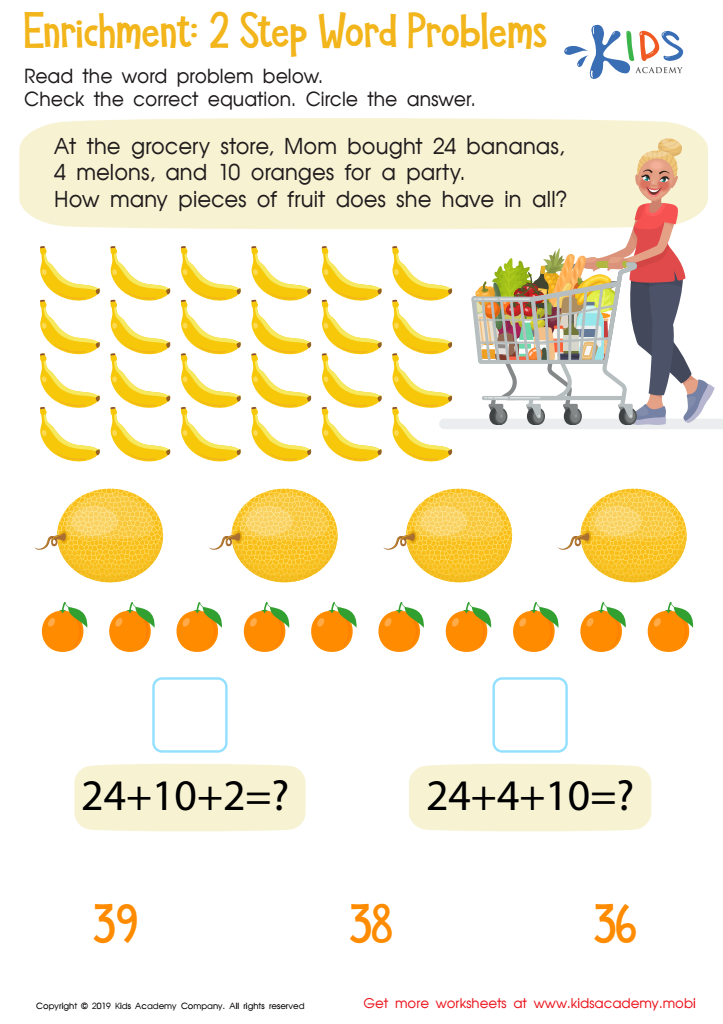
Enrichment -2 Step Word Problems Worksheet
Help your students learn math easier and faster with this colorful worksheet. Read the word problem and then guide them in checking the correct equation and finding the answer. Your students will benefit from the extra help, as they work through new concepts each day.
Enrichment -2 Step Word Problems Worksheet
Worksheet
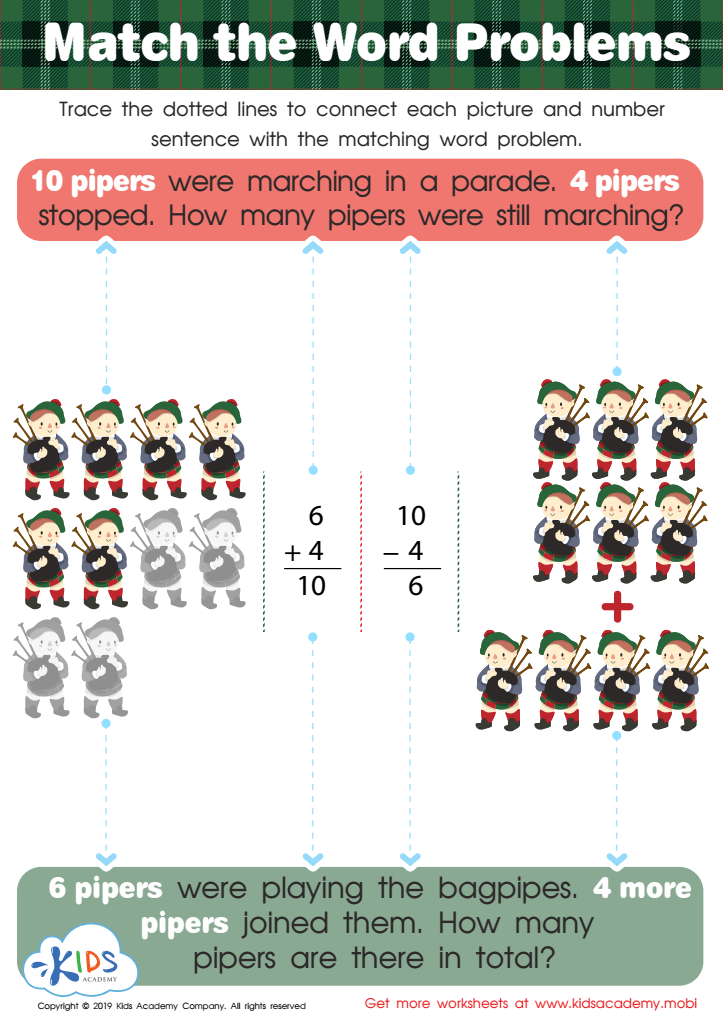
Match the Word Problems Worksheet
Read this word problem to your kids: Help them understand how it can be translated into a number problem. Trace the dotted lines to see how each picture and number sentence match the problem. With this worksheet, you can show your kids how easy it is to transform a word problem into a number problem.
Match the Word Problems Worksheet
Worksheet
Join Kids Academy for Free
Who is primarily going to use this learning content?








Parents and teachers should care about multiplication practice through normal word problems for 4-year-olds because this early intervention lays the foundation for mathematical understanding. By introducing multiplication in a practical context, young learners can develop problem-solving skills and logical thinking abilities that are crucial for future math success. Normal word problems simplify abstract concepts, making them relatable and easier for children to comprehend.
Additionally, engaging 4-year-olds with multiplication word problems encourages active participation in learning. They can visualize scenarios, like sharing toys or grouping objects, which helps integrate math into everyday life. This hands-on experience not only fosters critical thinking but also builds confidence as children see their ability to solve problems.
Moreover, early exposure to multiplication helps establish a positive attitude towards math. If children view math as fun and relevant to their daily experiences, they are more likely to remain interested and motivated in the subject as they grow. Approaching multiplication through stories and relatable contexts supports cognitive development and reinforces language skills, as children learn to communicate their thought processes. Thus, prioritizing these mathematical practices is essential for nurturing well-rounded, confident, and capable learners.








