Story sequencing Normal Reading Comprehension Worksheets for 4-Year-Olds
6 filtered results
-
From - To
Discover engaging Story Sequencing Normal Reading Comprehension Worksheets tailored for 4-year-olds on Kids Academy. Our expertly designed worksheets help young learners enhance their reading comprehension by practicing the essential skill of sequencing stories. Through colorful illustrations and relatable scenarios, children will learn to identify the beginning, middle, and end of tales, thus boosting their understanding and memory retention. These fun, educational activities are perfect for both classroom and home use, providing a foundation for early literacy and cognitive development. Encourage your child's reading journey with our delightful and educational story sequencing resources!
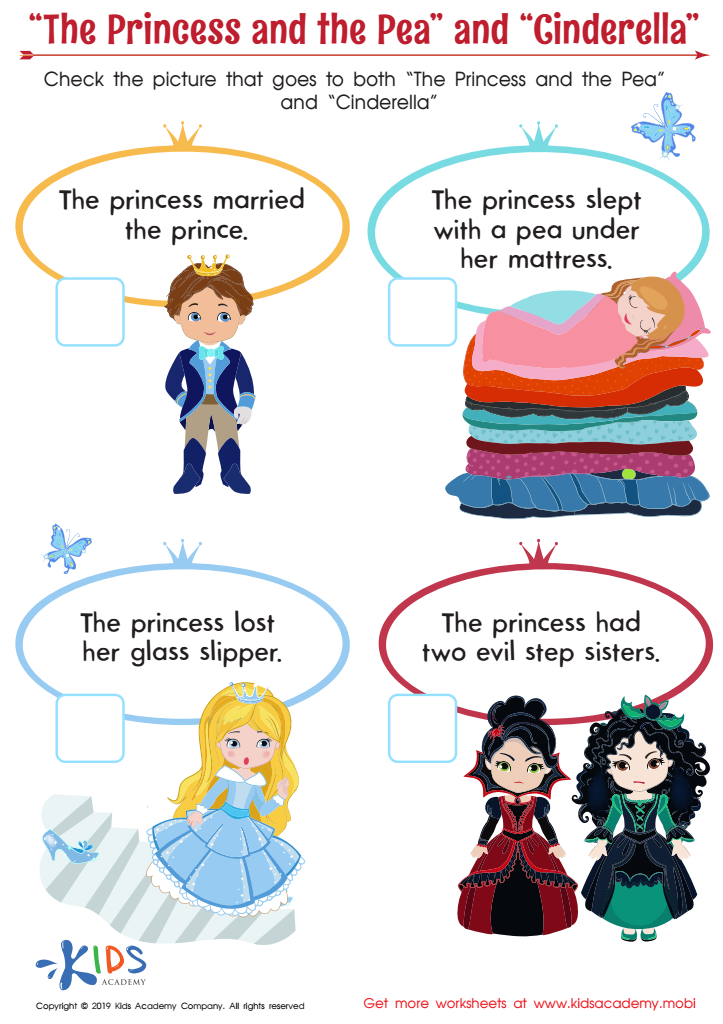
“The Princess and the Pea” and “Cinderella” Worksheet
 Assign to My Students
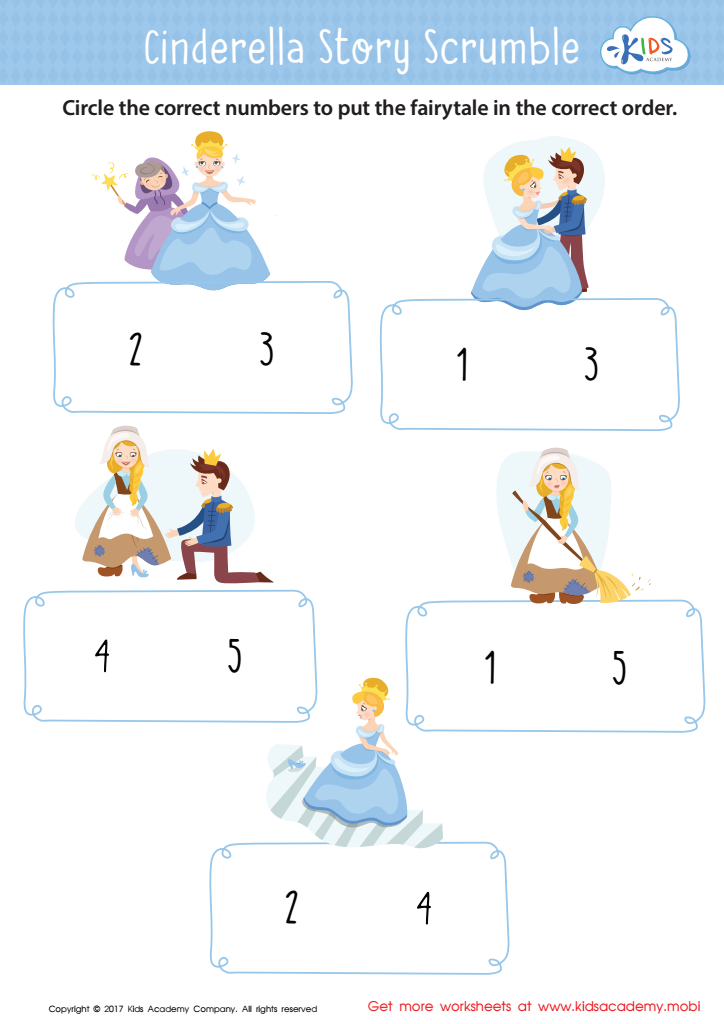
Cinderella Story Sequencing Worksheet
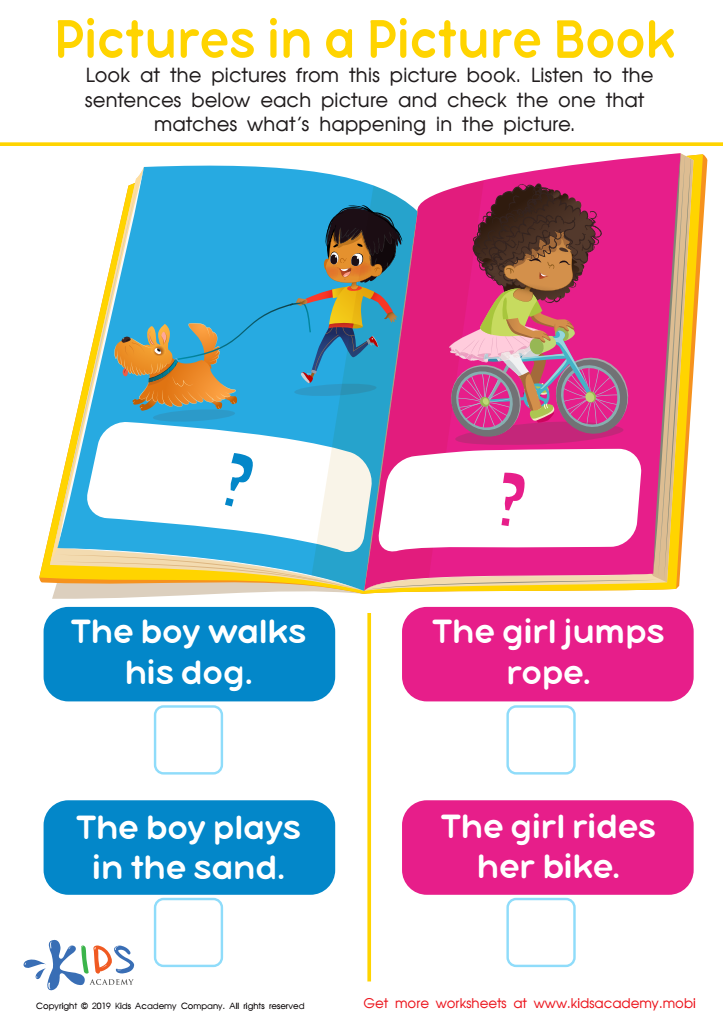
Picture in Books Worksheet
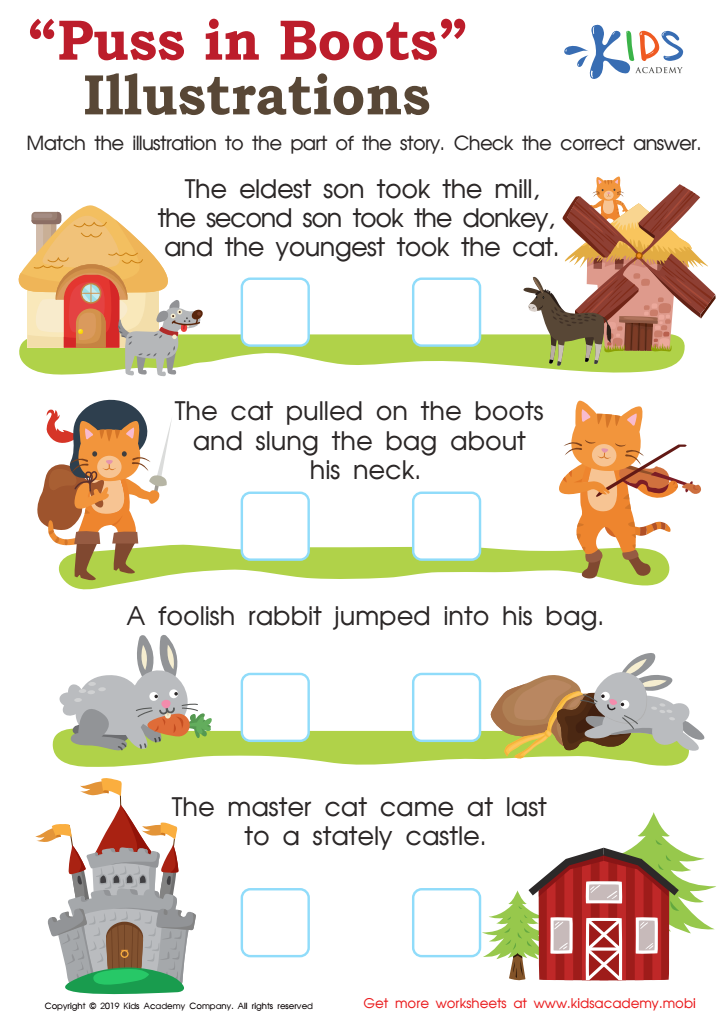
Puss in Boots Illustrations Worksheet
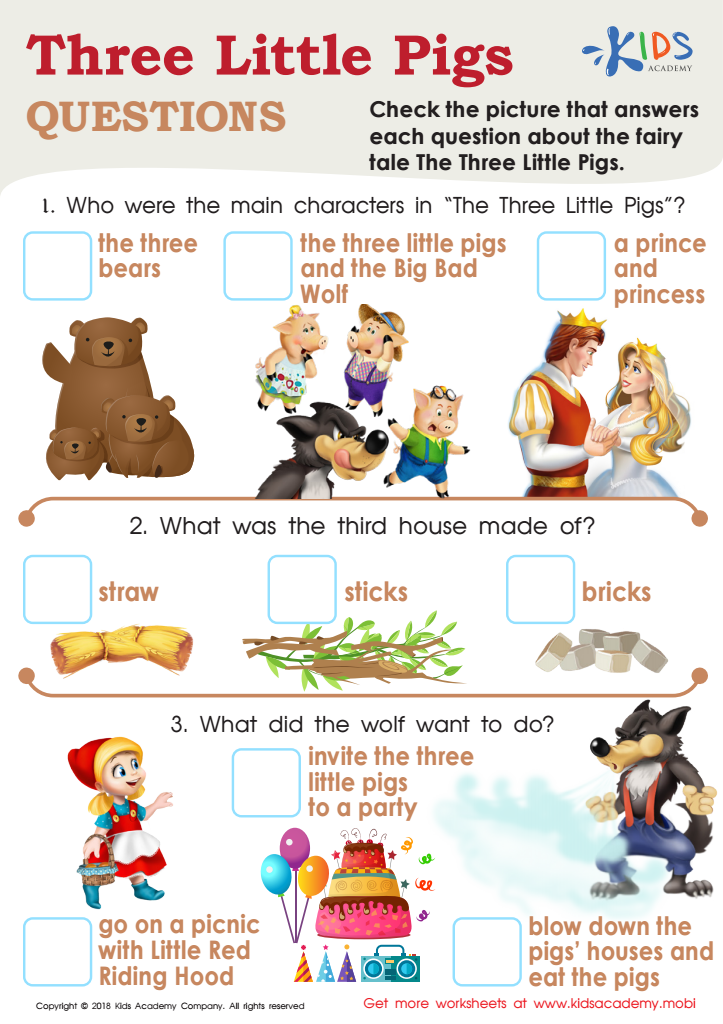
Three Little Pigs Questions Worksheet
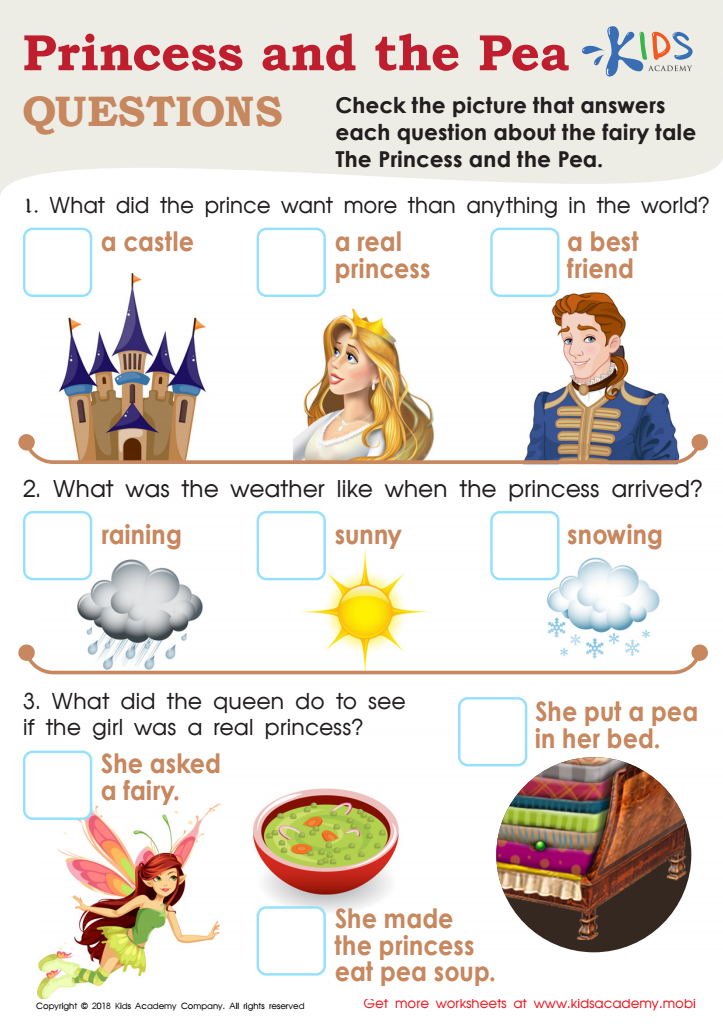
Princess and the Pea Questions Worksheet








Parents and teachers should care about story sequencing and normal reading comprehension for 4-year-olds because these skills are critical in early childhood development and lay the foundation for future learning. Story sequencing helps children understand the order of events, which enhances their ability to comprehend narratives and improves their logical thinking capabilities. By learning to remember and recount the beginning, middle, and end of a story, children develop improved memory skills and a better understanding of cause and effect.
Normal reading comprehension at this age ensures that children not only recognize words but also grasp the meaning and context of what they are reading or listening to. Enhancing comprehension skills early helps build vocabulary, introduces new concepts, and fosters a love for reading. This engagement prepares children for more complex literacy tasks in formal schooling.
Moreover, strong story sequencing and comprehension skills are linked to better academic performance in the long-term. They help nurture critical thinking and communication skills. Ultimately, caring about these aspects of early education fosters well-rounded, curious learners who are equipped to navigate and make sense of the world around them through the power of language and storytelling. Prioritizing these elements can set children on a path toward lasting educational success and personal growth.








