Rhyming skills development Normal Rhyming Words Worksheets for 4-Year-Olds
3 filtered results
-
From - To
Nurture your child's phonemic awareness with our Rhyming Skills Development worksheets tailored for 4-year-olds. These engaging worksheets are designed to help young learners recognize and match rhyming words, building a fundamental skill crucial for reading readiness. With fun and interactive exercises, your child will enjoy learning how words sound alike, boosting their literacy and language confidence. Our rhyming activities foster creativity and pave the way for successful early reading. Download these expertly crafted worksheets and watch your child's love for words and reading flourish. Perfect for preschoolers, explore an enjoyable path to mastering rhyming with Kids Academy.

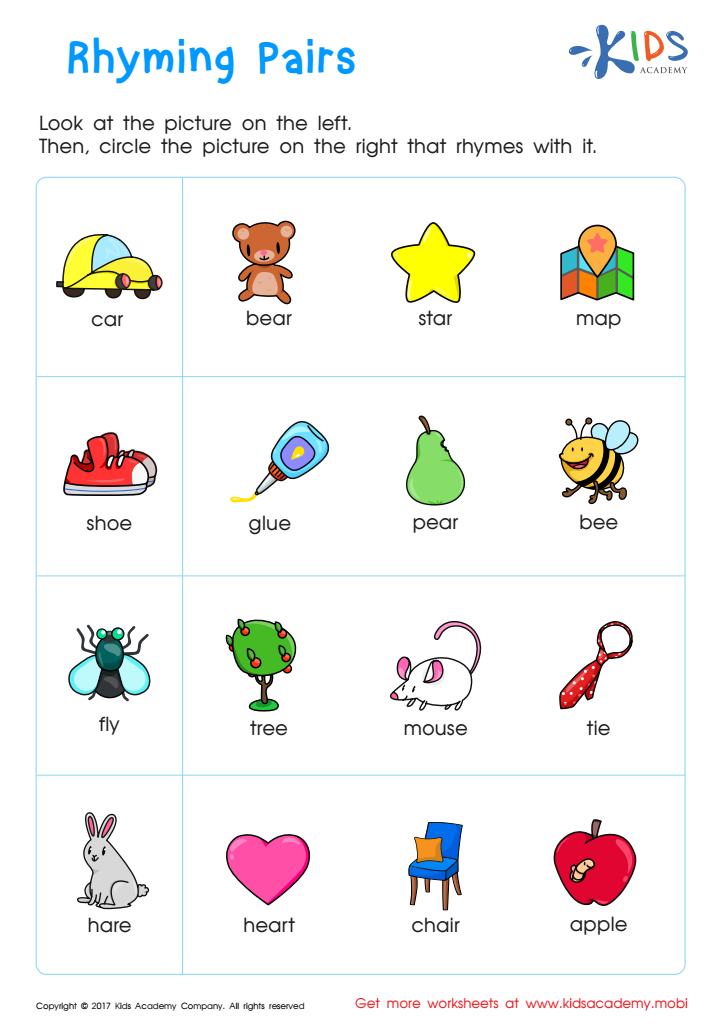
Rhyming Words Rhyming Worksheet
 Assign to My Students
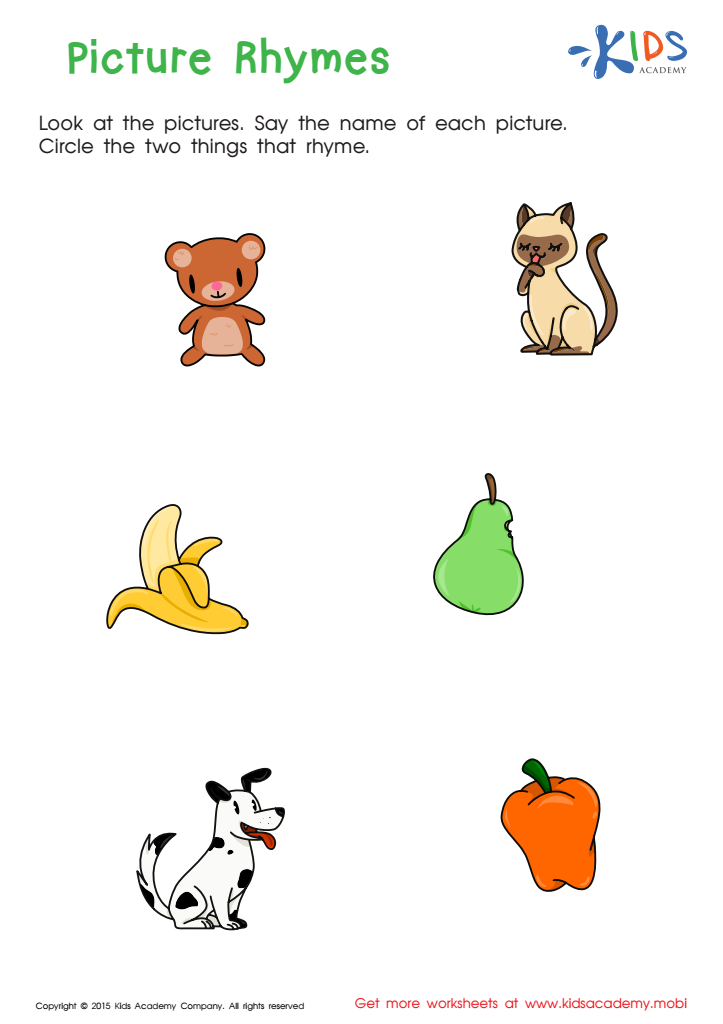
First Words: Picture Rhymes Worksheet







Rhyming skills are fundamental in early literacy development for 4-year-olds, and both parents and teachers should prioritize nurturing these abilities. At this age, children are laying the groundwork for reading and writing, and rhyming is an effective building block in that foundation. When children engage in rhyming activities, they learn to identify sound patterns and structures within words, which enhances their phonological awareness. This, in turn, prepares their brains for decoding words while reading, fostering better recognition of word families and sound sequences.
Rhymes also improve children's memory and recall. Learning simple rhyming words and songs allows young minds to practice remembering sequences, aiding their cognitive development. These activities make language learning fun and engaging, creating a positive and stimulating environment for preschoolers.
Additionally, rhyming nurtures vocabulary expansion. As children become familiar with various rhymes, they encounter new words, thereby broadening their linguistic repertoire. This exposure helps them understand context and usage better over time.
Lastly, rhyming promotes social interaction and auditory skills. Group rhyming games and activities encourage cooperation and sharing among peers, fostering social and interpersonal development. Overall, rhyming is a critical, multifaceted aspect of early childhood education that supports comprehensive language growth and helps prepare children for future academic success.








