Understanding directions Normal Science Worksheets for 4-Year-Olds
3 filtered results
-
From - To
Explore our engaging "Understanding Directions Normal Science Worksheets" specifically designed for 4-year-olds! These interactive worksheets help young learners develop essential directional skills through fun science-related activities. Aimed at early education, they encourage children to identify left vs. right, follow instructions, and understand spatial language. By integrating visual elements, such as arrows and illustrations, these worksheets captivate young minds while making learning enjoyable. Perfect for parents and teachers, our resources promote cognitive development and foster a love for science. Unlock your child's potential in understanding directions today—download these exciting worksheets and watch them thrive in their learning journey!
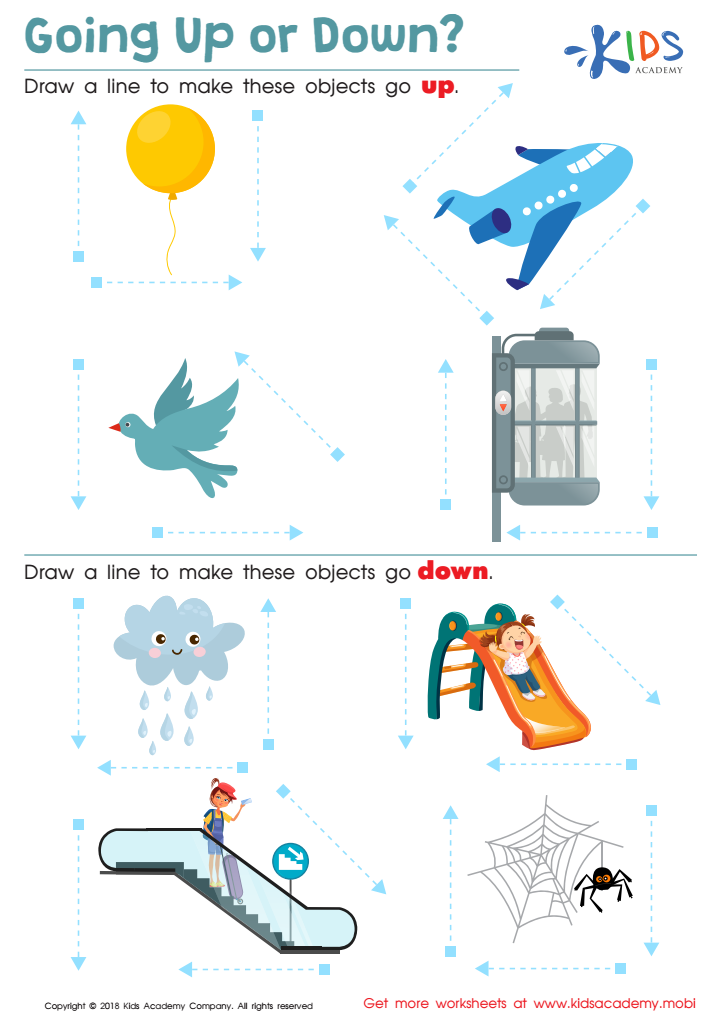
Going up or Down? Worksheet
 Assign to My Students
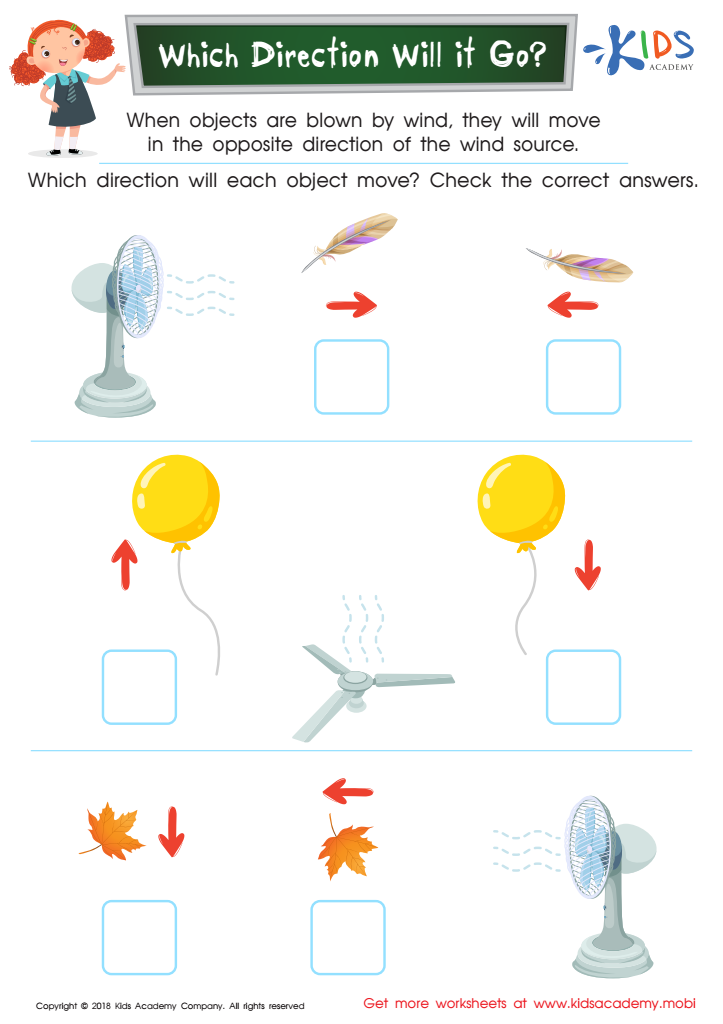
Which Direction Will it Go? Worksheet
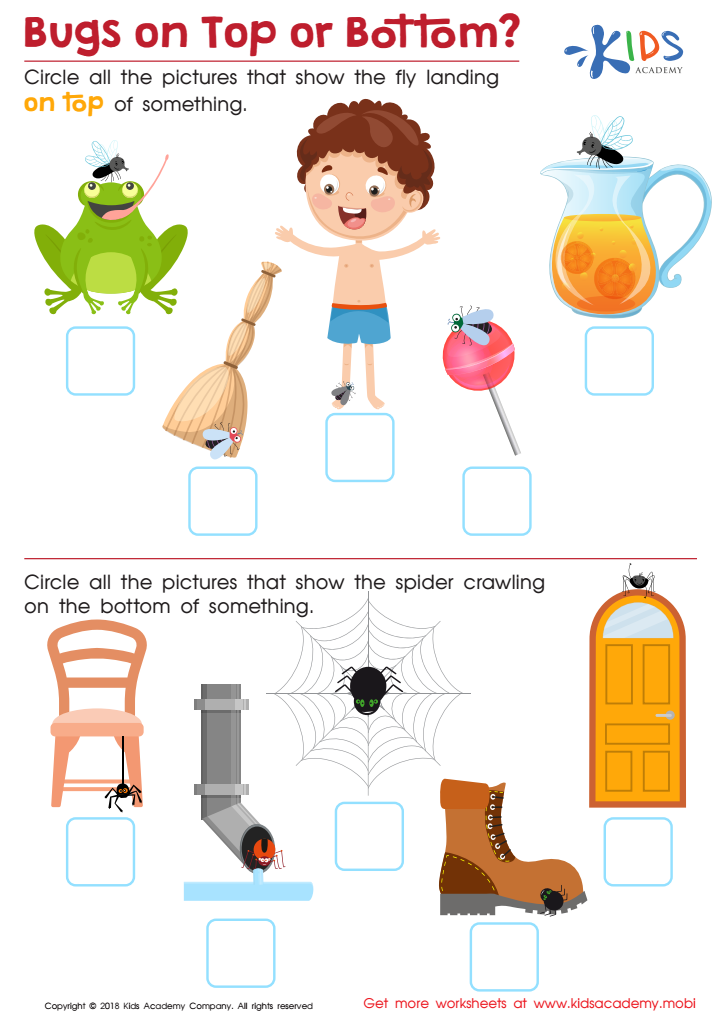
Bugs on Top or Bottom? Worksheet






Understanding directions in early science education is vital for 4-year-olds, as it lays the groundwork for critical thinking, problem-solving, and cognitive development. At this young age, children are naturally curious, and engaging them in basic scientific concepts fosters a love for learning. Teachers and parents should prioritize this understanding because:
-
Cognitive Growth: Early exposure to scientific terminology and concepts enhances cognitive abilities, promoting curiosity about the world. Directions in science activities help children learn to follow instructions, improving their ability to process information and develop listening skills.
-
Language Development: Learning to understand directions promotes vocabulary expansion. As children practice terminology associated with science, they improve their communication skills and grasp complex ideas more readily.
-
Problem-Solving: Following scientific directions encourages children to think critically and creatively. It helps them learn to predict outcomes, test hypotheses, and analyze results, all foundational skills for future education.
-
Interactive Learning: Science can inspire exploration and hands-on experiences. Engaging children in experiments or simple projects helps them apply directions practically, making learning fun.
In summary, nurturing an understanding of directions in science empowers young learners, providing them with essential skills for lifelong success.







