
Weather identification Normal Science Worksheets for 4-Year-Olds
4 filtered results
Difficulty Level
Grade
Age
-
From - To
Subject
Activity
Standards
Explore our engaging Weather Identification Normal Science Worksheets designed specifically for 4-year-olds! These printable resources introduce young learners to the wonders of weather in a fun and interactive way. Through colorful visuals and straightforward activities, children will learn to identify different weather types such as sunny, rainy, cloudy, and snowy. These worksheets focus on enhancing observation skills, vocabulary development, and critical thinking, making them perfect for early childhood education settings. Foster a love for science and the natural world as your little ones discover how weather affects their everyday life. Download our worksheets today and make learning about weather exciting!
Favorites
With answer key
Interactive
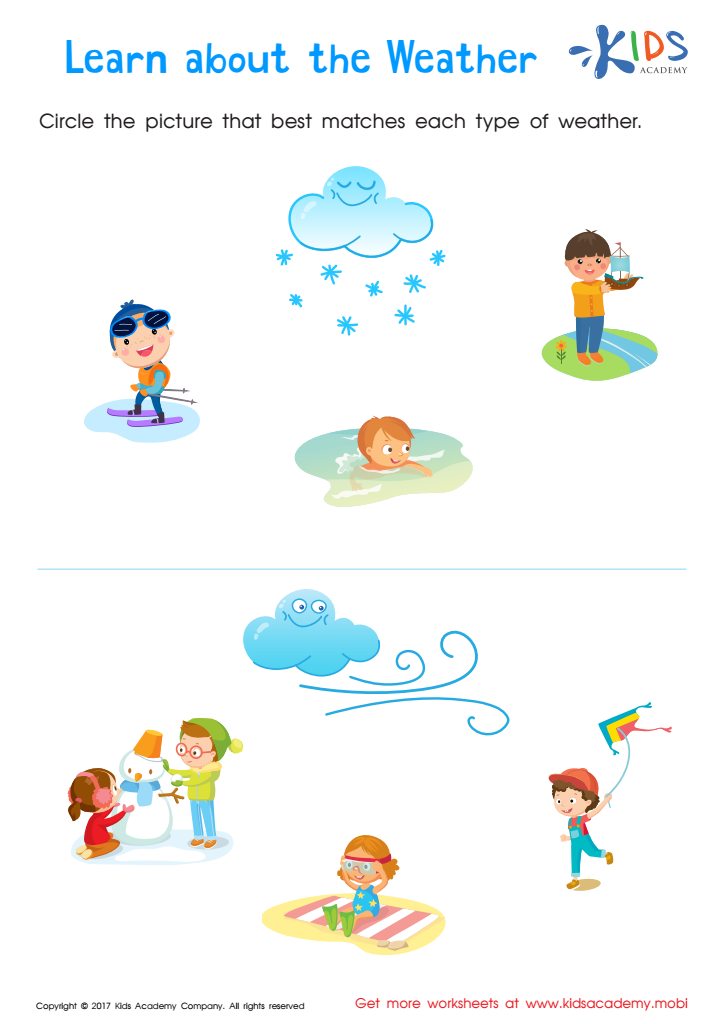
About the Weather Printable
This worksheet is perfect for reinforcing knowledge about changing weather and activities that suit each season. Help your child use their life experiences to observe the weather and complete the worksheet. Fun and colorful, it's a great way to learn about weather and seasons. Let's get started!
 Assign to My Students
About the Weather Printable
Worksheet
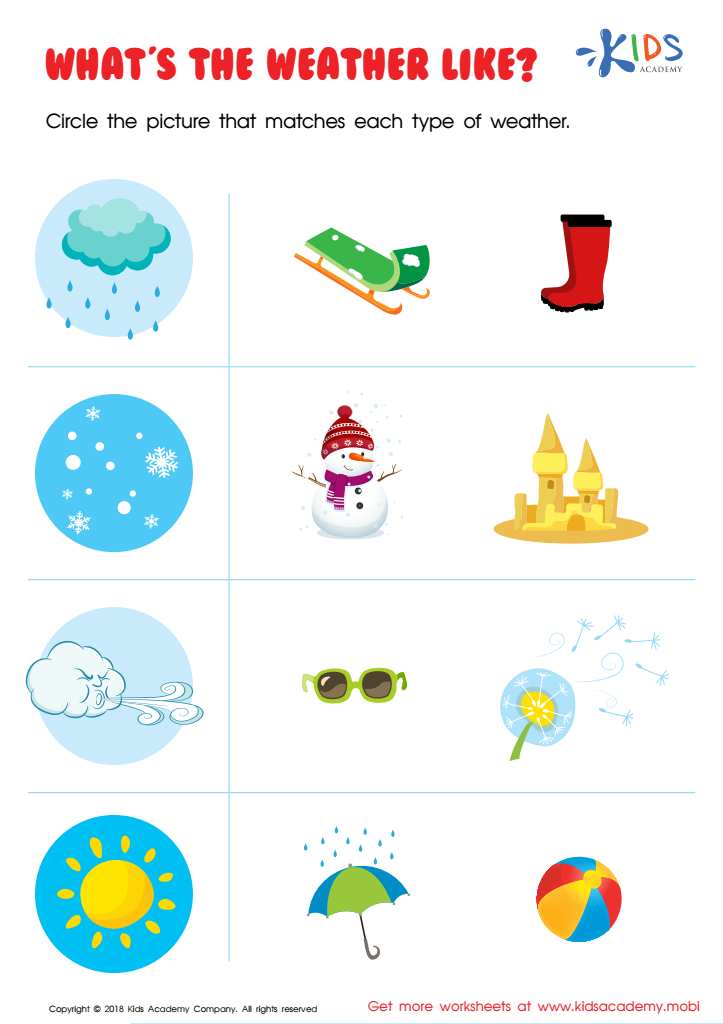
What's the Weather Like? Worksheet
Help budding meteorologists practice matching weather to seasons with this PDF worksheet. Picture clues help identify seasons and fine motor skills are practiced circling the correct weather patterns. Bright and engaging characters make learning fun and reinforce weather knowledge.
What's the Weather Like? Worksheet
Worksheet
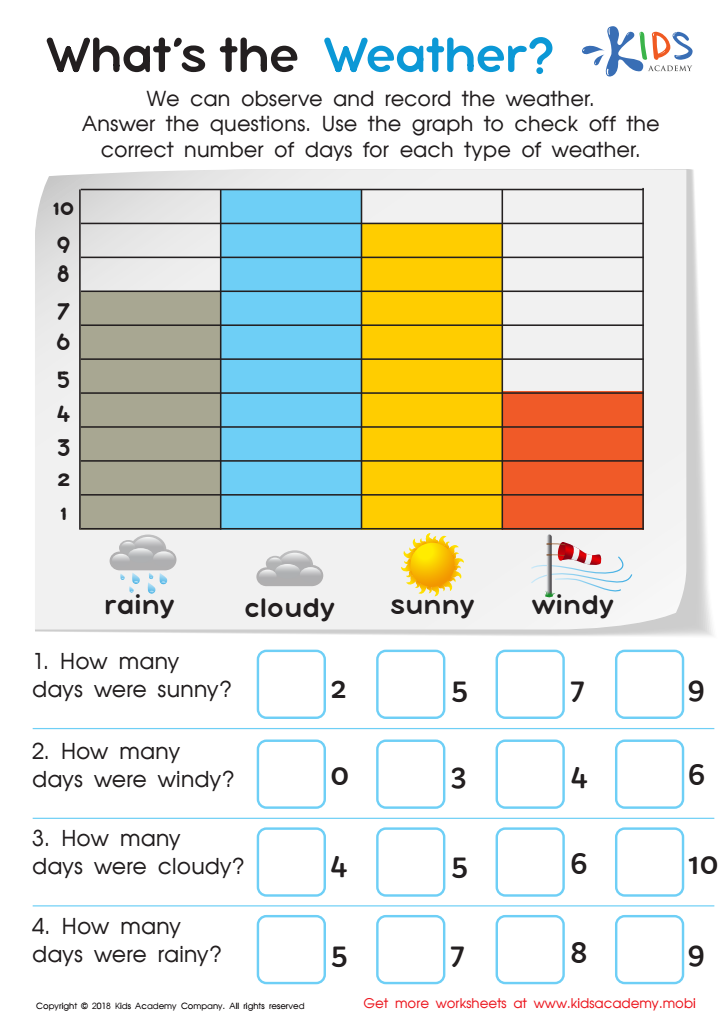
What's the Weather? Worksheet
Check the weather outside. Help kids learn and practice science and math by tracking different types of days using this printable worksheet. Have them count bars next to weather types like cloudy, sunny, windy, and rainy. Answer the questions and take the lesson further by creating a bar graph to show the monthly weather.
What's the Weather? Worksheet
Worksheet
Join Kids Academy for Free
Who is primarily going to use this learning content?








Teaching 4-year-olds about weather identification through the lens of Normal Science is essential for fostering early scientific thinking and curiosity. At this age, children are naturally inquisitive about the world around them. By introducing them to basic weather concepts—such as sunshine, rain, snow, and clouds—educators and parents can nurture their observational skills and promote critical thinking.
Understanding weather enables young learners to make connections between their environment and their everyday experiences. Recognizing different weather conditions helps children improve their vocabulary and descriptive language. Moreover, it encourages them to ask questions about the causes and effects of various weather phenomena, which stimulates cognitive development.
Furthermore, discussions about weather can lead to valuable lessons on safety and preparedness. Teaching children how to dress appropriately for different types of weather, for example, instills responsibility and helps develop decision-making skills.
Lastly, nurturing an interest in weather and the natural world fosters environmental awareness from a young age, which is crucial in today’s rapidly changing climate. This early engagement lays the groundwork for scientific literacy, enabling children to become informed decision-makers and compassionate stewards of the planet in the future. Thus, prioritizing weather education can yield long-term benefits for children’s development and society as a whole.







