
Weather Vocabulary Normal Science Worksheets for 4-Year-Olds
3 filtered results
Difficulty Level
Grade
Age
-
From - To
Subject
Activity
Standards
Discover our engaging "Weather Vocabulary Normal Science Worksheets" designed specifically for 4-year-olds! These worksheets introduce young learners to essential weather terms through fun activities that promote vocabulary building and comprehension. With colorful images and interactive exercises, children will explore different weather conditions such as sunny, rainy, snowy, and windy in a playful context. Each worksheet encourages creativity and critical thinking while reinforcing key concepts in a fun, age-appropriate way. Perfect for early grade teachers and homeschooling parents, our resources will spark curiosity about the world around them and enhance their science vocabulary skills in a delightful manner. Download today to get started!
Favorites
With answer key
Interactive
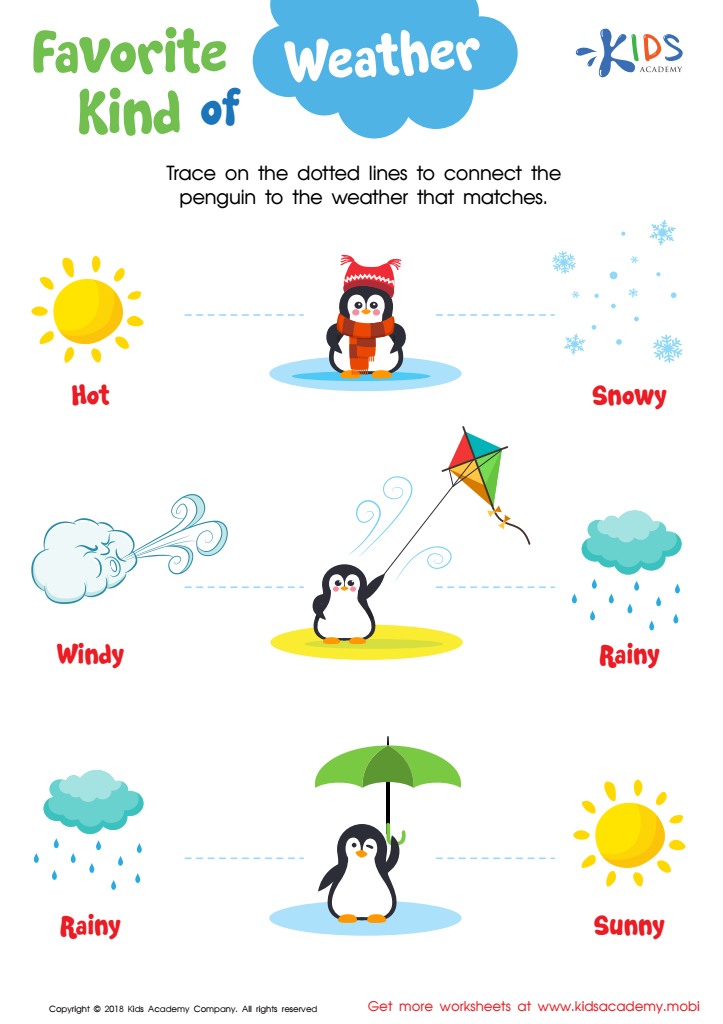
Favorite Kind of Weather Worksheet
!
Help your child understand weather and seasons with this fun worksheet featuring a cute penguin. They'll learn to recognize types of weather and associate them with seasons. To practice their fine motor skills, they'll trace lines to select the right seasons and weather. Kids will make a new friend while broadening their knowledge of nature.
Favorite Kind of Weather Worksheet
Worksheet
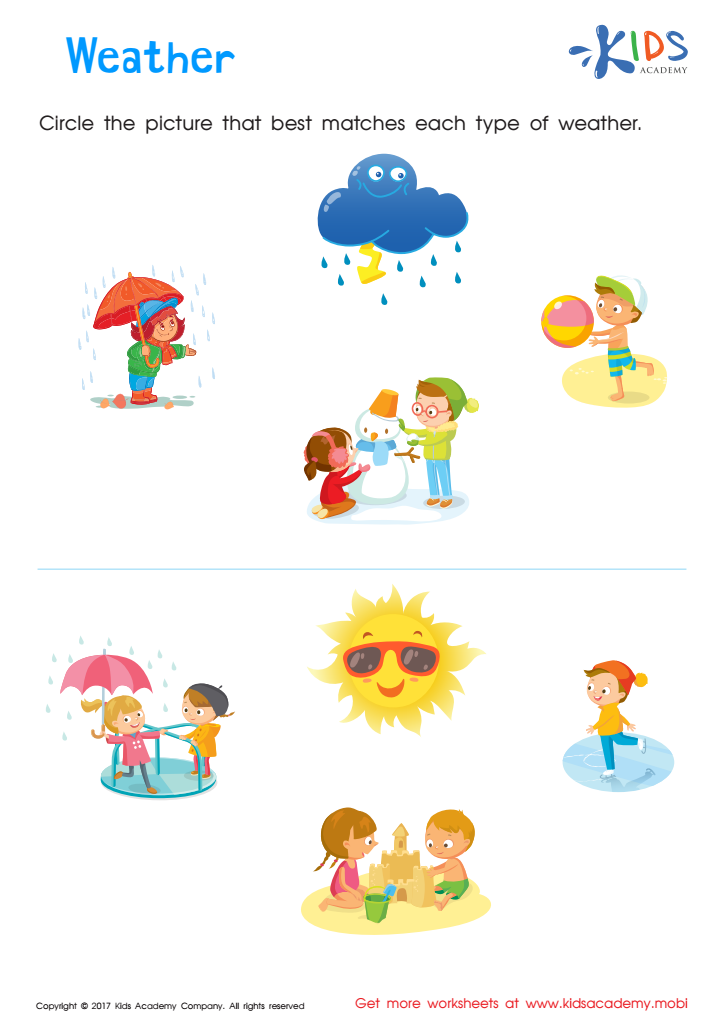
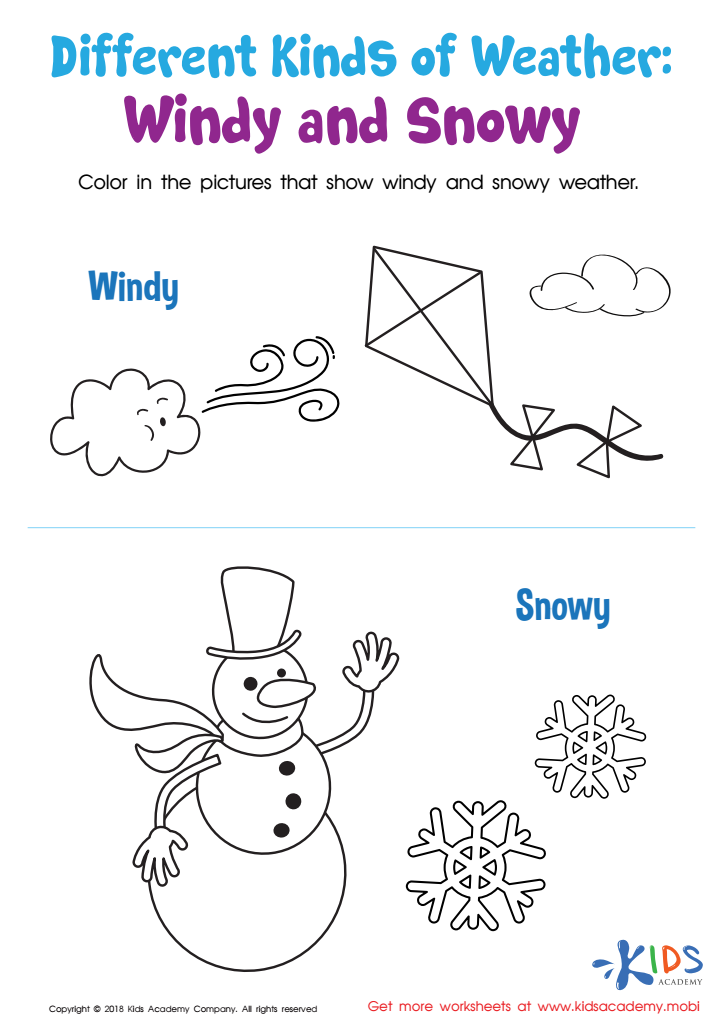
Different Kinds of Weather: Windy and Snowy Worksheet
Invite your little learner to practice their fine motor skills and learn about nature with this fun and charming PDF worksheet! Reinforce weather patterns and examine their environment as they color, giving them a foundation for understanding how weather affects them. No matter the weather, your learner will have a blast!
Download (PDF)
 Assign to My Students
Assign to My Students
Different Kinds of Weather: Windy and Snowy Worksheet
Worksheet
Join Kids Academy for Free
Who is primarily going to use this learning content?








Teaching weather vocabulary to 4-year-olds is essential for several reasons. Firstly, it fosters curiosity about the natural world. Introducing concepts like rain, snow, sunny, and windy helps children express their observations and ask questions about the environment around them. This language development is not only crucial for communication but also enhances their cognitive skills as they make connections between vocabulary and real-world experiences.
Additionally, understanding weather-related terms promotes safety awareness. When children can articulate concepts like thunderstorm or blizzard, they become more equipped to respond appropriately during inclement weather, enhancing their ability to follow safety instructions.
Engaging in weather discussions can also lead to opportunities for hands-on learning. Children can create weather charts or engage in art activities that depict different weather conditions, fostering creativity and various learning modalities.
Moreover, introducing weather vocabulary aligns with foundational literacy skills, reinforcing phonemic awareness and vocabulary growth, which are precursors for reading readiness. Ultimately, enhancing a child's understanding of weather vocabulary supports their overall cognitive, social, and emotional development, preparing them for future learning opportunities and instilling a sense of wonder about the world they inhabit.







