Weather identification Normal World Around Us Worksheets for 4-Year-Olds
3 filtered results
Difficulty Level
Grade
Age
-
From - To
Subject
Activity
Standards
Introduce your little learners to the fascinating world of weather with our engaging "Weather Identification Normal World Around Us Worksheets" designed specifically for 4-year-olds! These printable worksheets feature colorful illustrations and fun activities that help young children recognize different weather patterns, such as sunny, rainy, snowy, and windy. By participating in these interactive challenges, toddlers will develop essential observation and vocabulary skills, while also cultivating a love for learning about their surroundings. Perfect for classroom use or home activities, these worksheets make exploring the environment an exciting adventure for young minds. Start teaching about the weather today and watch your kids thrive!
Favorites
With answer key
Interactive
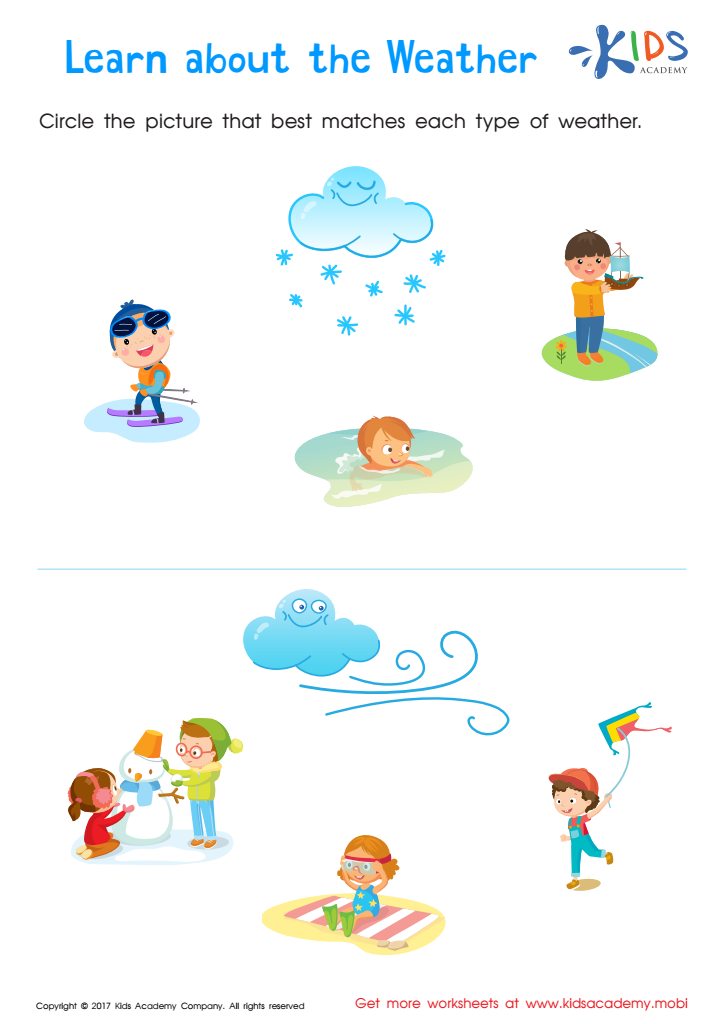
About the Weather Printable
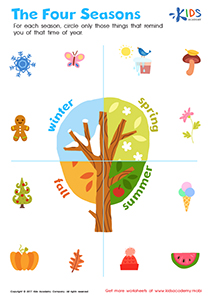
This worksheet is perfect for reinforcing knowledge about changing weather and activities that suit each season. Help your child use their life experiences to observe the weather and complete the worksheet. Fun and colorful, it's a great way to learn about weather and seasons. Let's get started!
 Assign to My Students
About the Weather Printable
Worksheet
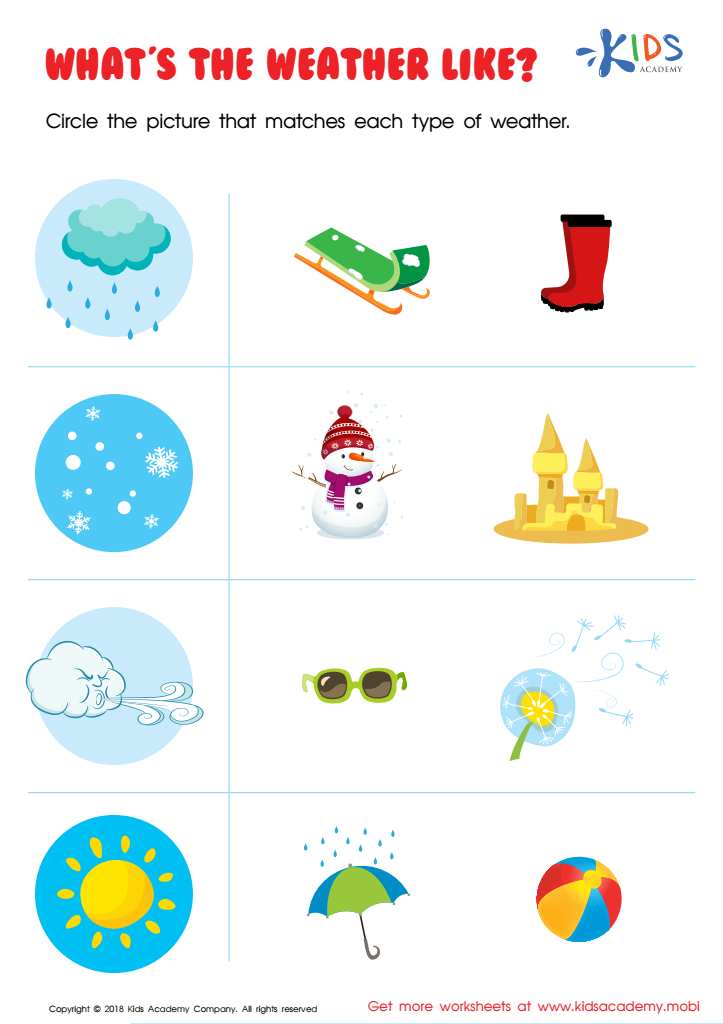
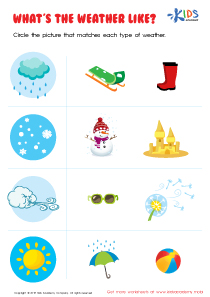
What's the Weather Like? Worksheet
Help budding meteorologists practice matching weather to seasons with this PDF worksheet. Picture clues help identify seasons and fine motor skills are practiced circling the correct weather patterns. Bright and engaging characters make learning fun and reinforce weather knowledge.
What's the Weather Like? Worksheet
Worksheet
Join Kids Academy for Free
Who is primarily going to use this learning content?






Teaching 4-year-olds about weather identification is essential for several reasons. First, it lays the foundation for understanding the world around them. Young children are naturally curious, and introducing them to concepts like sun, rain, snow, and wind helps them make sense of their environment. Recognizing different types of weather allows children to engage in conversations, enhancing their vocabulary and language skills while fostering a sense of wonder and exploration.
Second, knowledge of weather impacts everyday life and safety. Children learn to recognize signs of changing weather and understand when it's safe to play outside or when to stay in. This awareness promotes independence and decision-making skills, as they begin to dress appropriately for different weather conditions.
Additionally, studying weather can inspire an interest in science and nature. By observing cloud patterns, discussing seasons, and forecasting weather, children develop critical thinking skills and a foundational understanding of scientific principles.
Overall, parents and teachers play a crucial role in facilitating this learning, making weather identification not just an educational experience, but also a fun and interactive way to connect with the world, encourage curiosity, and promote safety and well-being in young learners.