
Letter tracing skills Normal ABC Letters Worksheets for Ages 5-6
3 filtered results
Difficulty Level
Grade
Age
-
From - To
Subject
Activity
Standards
Boost your child's literacy skills with our "Letter Tracing Skills: Normal ABC Letters Worksheets for Ages 5-6". Designed to enhance fine motor skills and hand-eye coordination, these worksheets are tailored for young learners embarking on their reading and writing journey. Each sheet introduces kids to uppercase and lowercase letters, encouraging consistent practice and mastery. Vibrant and engaging, our worksheets make learning both fun and effective, making it the perfect tool for teaching letter formation. Give your child the foundation they need for success in writing with our expertly crafted tracing activities. Download today and start the educational adventure!
Favorites
With answer key
Interactive
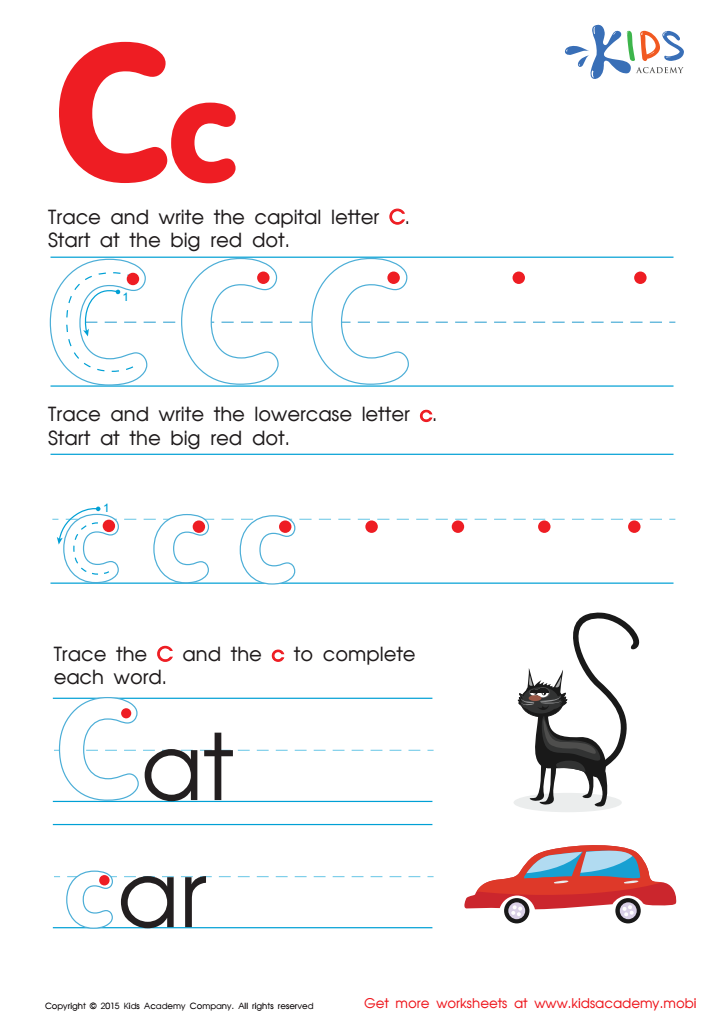
Letter C Tracing Page
Trace and write the letter 'C'! Put the pencil at the red dot then follow the lines – the capital letter first then the lowercase one. Cats love it and so will you! Get more free printables to practice tracing and writing.
Letter C Tracing Page
Worksheet





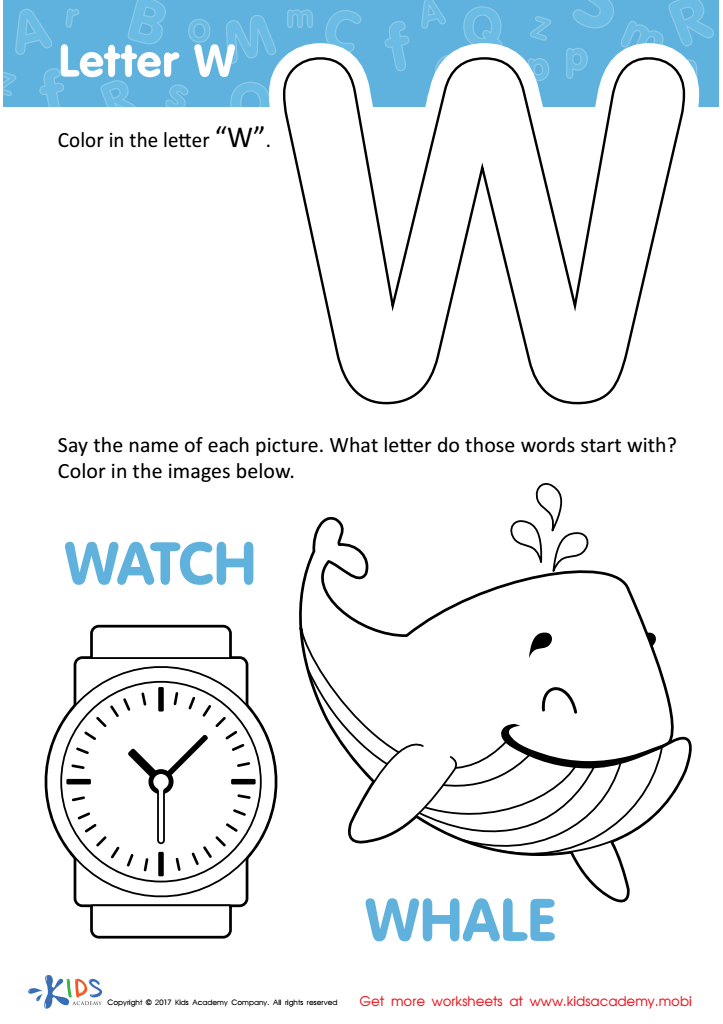
Letter W Coloring Sheet
Let your child have fun with this letter "W" coloring page! They can use their imagination to color the whale and discover the letter and its sound. Give them a helping hand to make it a whale of a time!
Download (PDF)
 Assign to My Students
Assign to My Students
Letter W Coloring Sheet
Worksheet
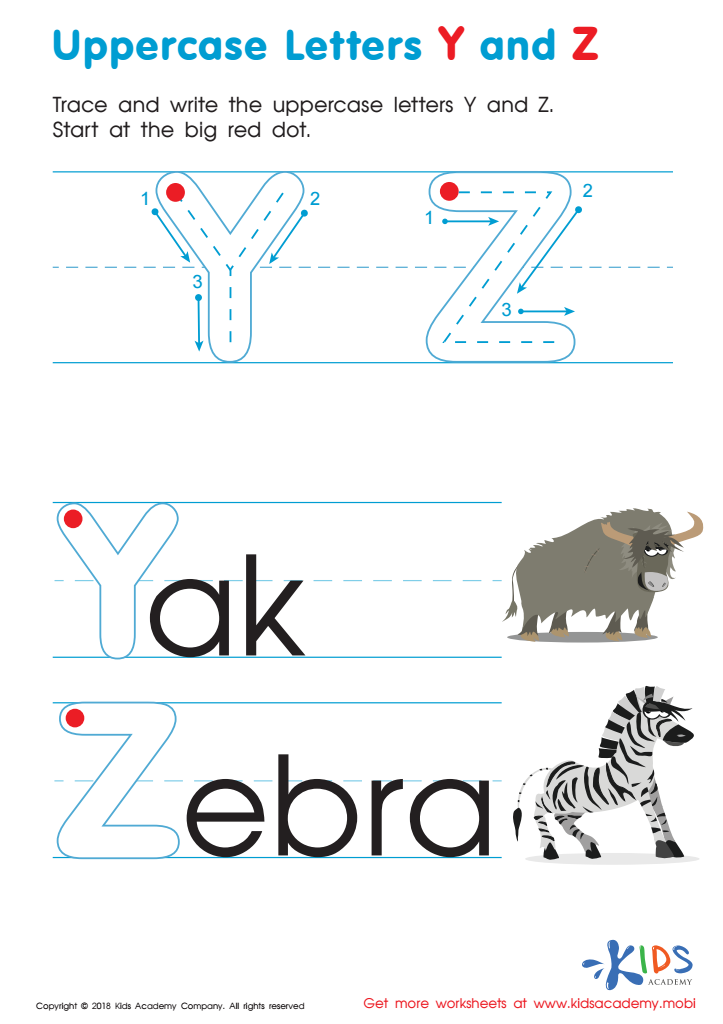
Uppercase Letters Y Z Worksheet
Help your child learn their ABCs with this fun tracing activity! They must trace and write Y and Z in uppercase form, starting from the red dot. Kids will love the fun images for extra engagement. Guiding their hand carefully will help them practice and perfect their writing skills.
Uppercase Letters Y Z Worksheet
Worksheet
Join Kids Academy for Free
Who is primarily going to use this learning content?








Letter tracing is a valuable skill for children ages 5-6 because it forms the foundation for literacy and fine motor skills development. At this age, children are in a crucial stage of learning how to read and write, and tracing provides them with a structured way to practice letter formation. By tracing, children learn the shapes and lines that make up each letter, improving their ability to recognize and write them correctly.
For parents and teachers, emphasizing letter tracing ensures children develop proper pencil grip and hand-eye coordination. These motor skills are essential not only for writing but also for various everyday tasks that require hand control. As children trace letters, they also become familiar with the alphabet, enhancing their ability to differentiate between letters and sounds, which is a critical step in learning to read.
Beyond the technical aspects, letter tracing can boost a child's confidence as they see their progress and improve their writing abilities. This confidence can translate into a more positive attitude toward learning in general. Introducing letter tracing early helps catch and correct any misunderstandings about letter shapes and formation before they become ingrained habits, making the journey to becoming proficient writers smoother and more enjoyable for young learners.







