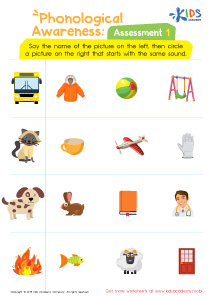
Sound recognition Normal Consonants Worksheets for Ages 5-6
3 filtered results
Difficulty Level
Grade
Age
-
From - To
Subject
Activity
Standards
Discover our engaging "Sound Recognition Normal Consonants Worksheets" designed specifically for children ages 5-6. These interactive printables help young learners enhance their phonemic awareness by focusing on the sounds of normal consonants. Each worksheet features fun activities that encourage kids to identify, differentiate, and practice consonant sounds through tracing, matching, and coloring exercises. Perfect for both classroom and home learning, these worksheets promote early literacy skills and support language development. With easy-to-follow instructions, your preschooler will enjoy mastering consonant sounds, setting a strong foundation for future reading success. Start your child's educational journey today with our vibrant and effective resources!
Favorites
With answer key
Interactive
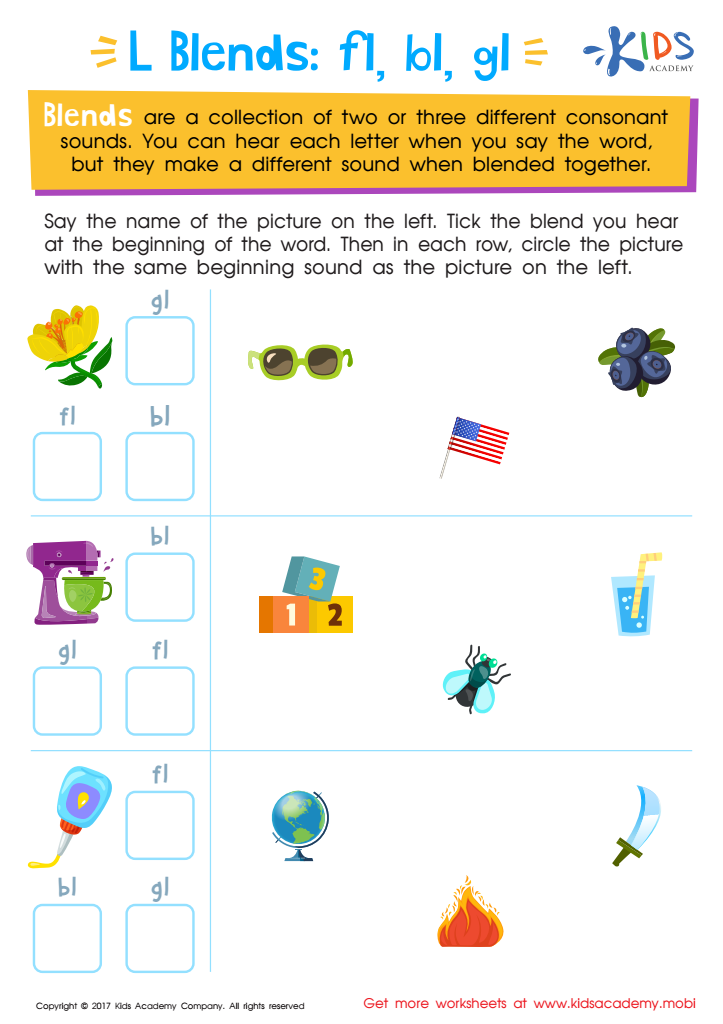
Blending Consonants: "Fl", "Bl" and "Gl" Printable
Help your child master consonant blends Fl, Bl, and Gl with this printable worksheet. Find words associated with the pictures and learn to better understand the difference between consonant blends. Vibrant images motivate and aid in learning. Download now for improved phonics success!
 Assign to My Students
Blending Consonants: "Fl", "Bl" and "Gl" Printable
Worksheet
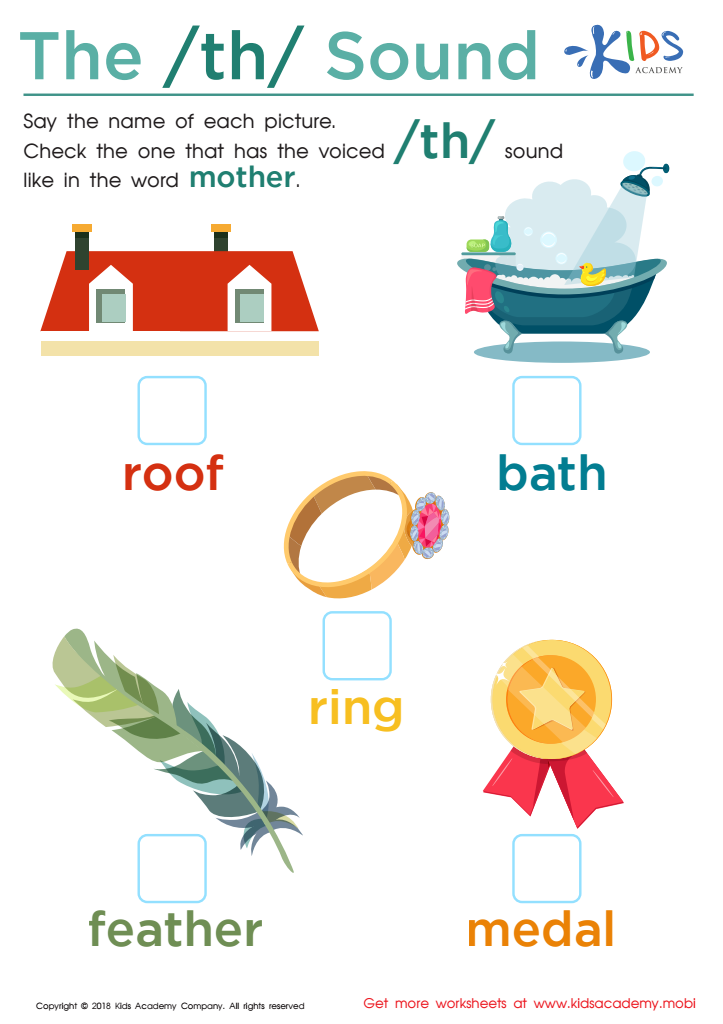
The /th/ Sound Worksheet
Confuse your students no more: have them use this worksheet to understand the /th/ sound and its two variants. With pictures, ask them to say the name of each one. Help them identify the voiced /th/ sound, like in 'mother', by having them say it aloud. Download the pdf to get started.
The /th/ Sound Worksheet
Worksheet
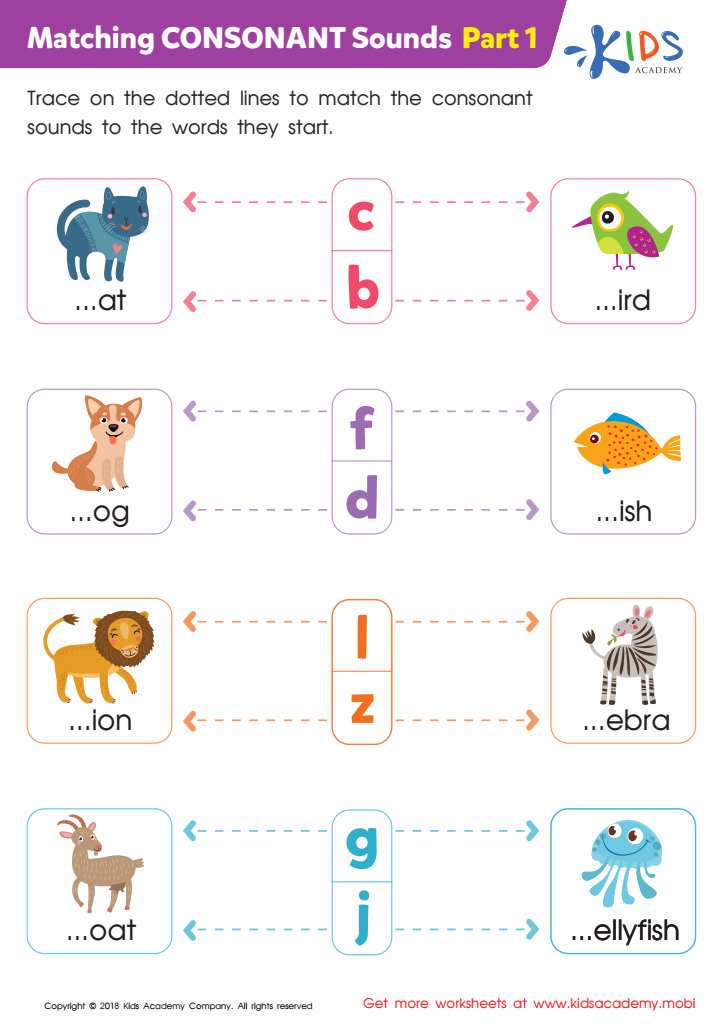
Matching Consonant Sounds: Part 1 Worksheet
Decide which letter matches each word and picture in this fun phonics worksheet. Slide your finger over each word, trying out each letter to check for matches. Once each pair is solved, trace the dotted lines with pencil to complete the printable. Who knew learning could be so enjoyable?
Matching Consonant Sounds: Part 1 Worksheet
Worksheet
Join Kids Academy for Free
Who is primarily going to use this learning content?



Sound recognition, particularly in identifying normal consonants, is a crucial skill for children aged 5-6 as they embark on their reading and writing journeys. Understanding consonant sounds helps lay the foundation for effective literacy development. When children can recognize and articulate consonant sounds, they become more proficient in phonemic awareness, which is essential for decoding words. This skill directly influences their ability to read fluently and comprehend text, vital components of meaningful communication and overall academic success.
Additionally, teaching normal consonants empowers children to develop spelling proficiency. As they learn the relationship between letters and their corresponding sounds, they gain confidence in both written and verbal expression. For parents and teachers, focusing on sound recognition means fostering an environment that nurtures language development, enhancing children's listening skills, and boosting their vocabulary.
Moreover, engaging children in activities that promote sound recognition helps address learning differences early on, allowing for timely interventions and support. When parents and teachers prioritize sound recognition, they not only facilitate a love for reading but also equip children with critical literacy skills that will serve them throughout their educational journey. Enhancing these foundational abilities ultimately fosters a lifelong appreciation for language and communication.