Rhyming skills development Normal Alphabet Worksheets for Ages 5-6
4 filtered results
-
From - To
Enhance your child's early literacy with our Rhyming Skills Development Normal Alphabet Worksheets, designed specifically for ages 5-6. These engaging and fun worksheets focus on building essential rhyming skills while reinforcing alphabet knowledge. Children will enjoy identifying and completing rhyming word pairs, important for phonemic awareness and language development. Each worksheet combines playful activities with colorful illustrations to keep young learners motivated. Perfect for parents and educators, our resources support creative learning at home or in the classroom. Foster your child's love for reading and improve their language skills with these tailored worksheets today!
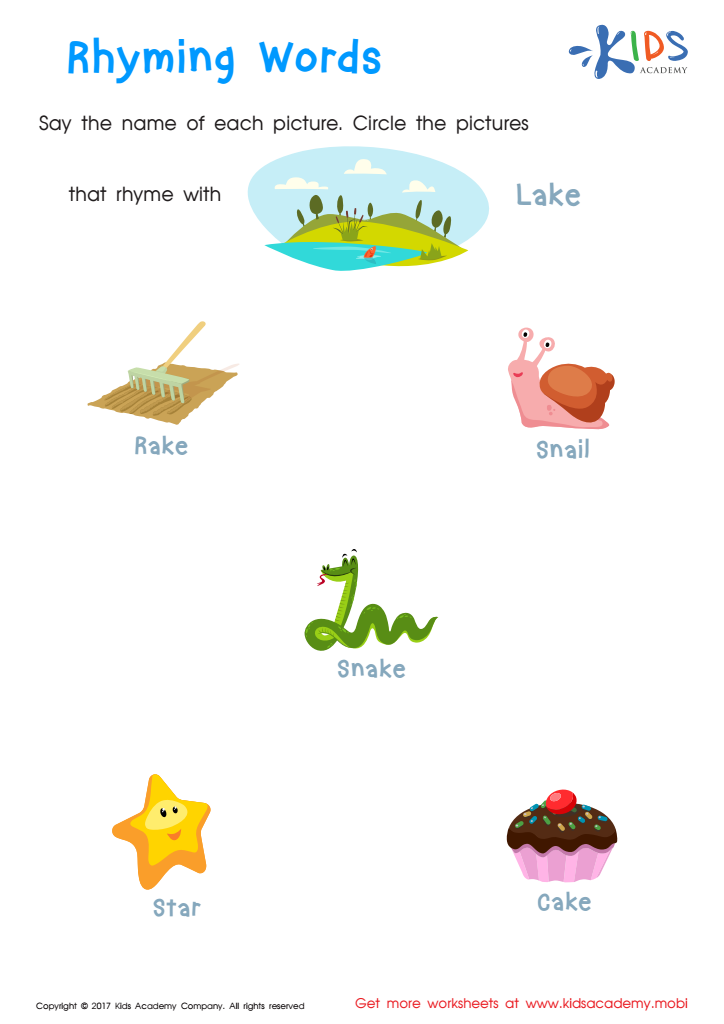
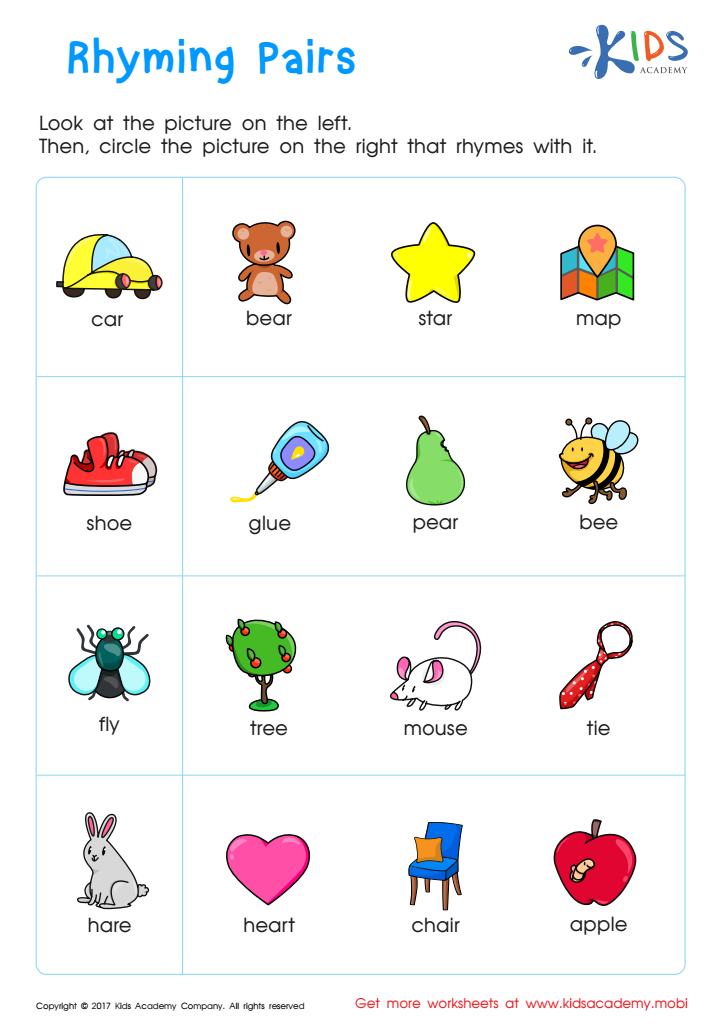
Rhyming Words Rhyming Worksheet
 Assign to My Students
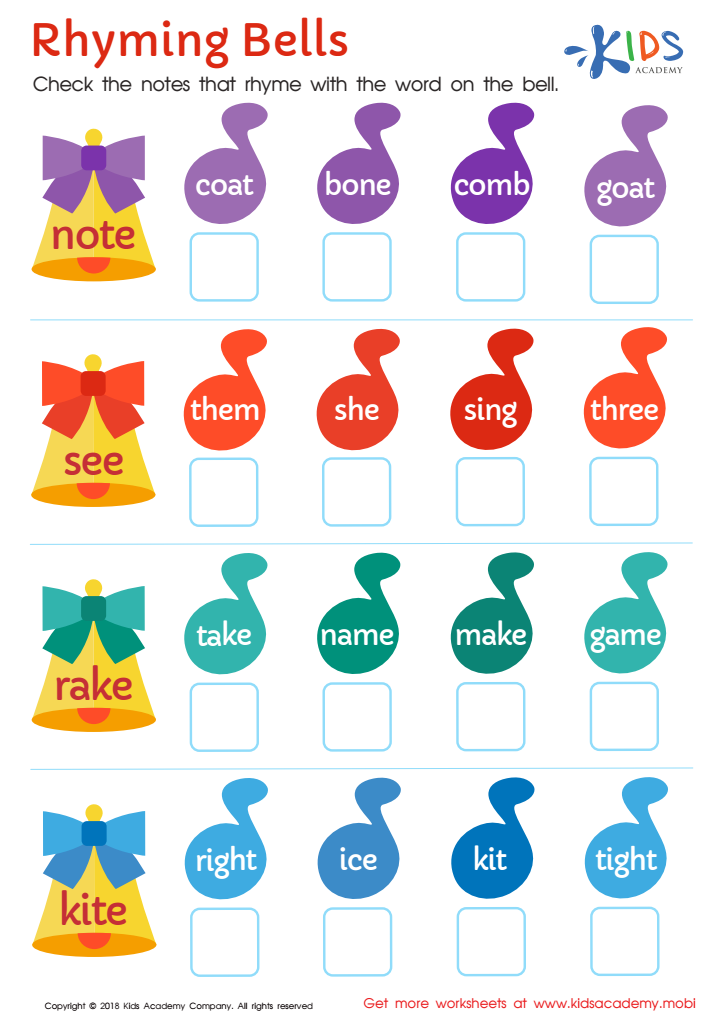
Rhyming Bells Worksheet
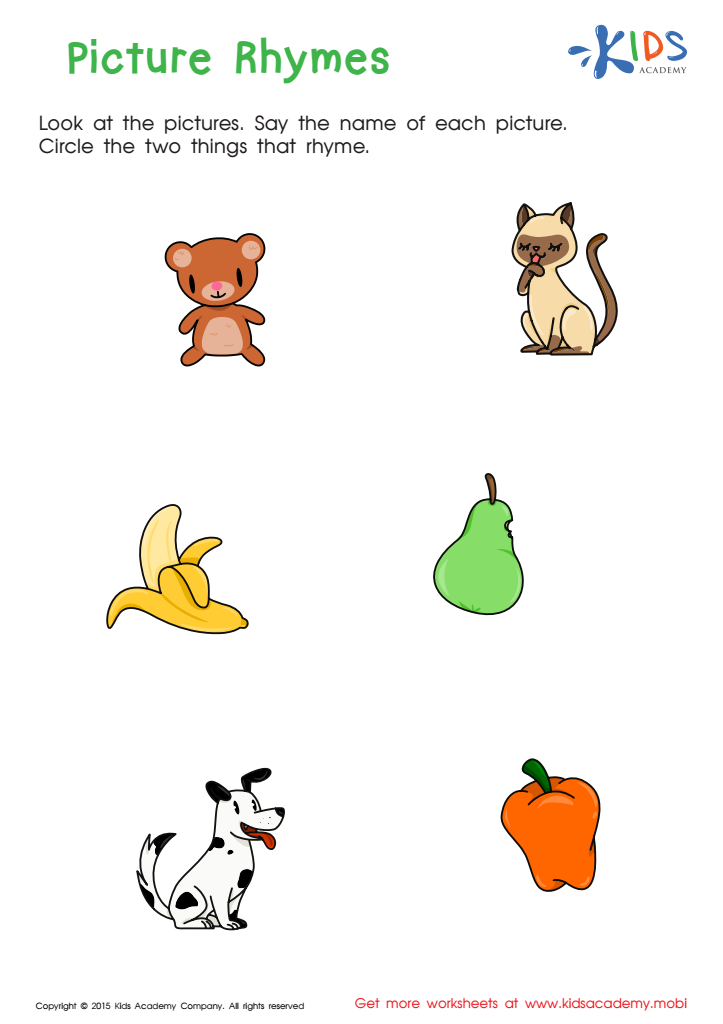
First Words: Picture Rhymes Worksheet







Rhyming skills are crucial for early literacy development, particularly for children aged 5-6. Parents and teachers should prioritize these skills because they play a significant role in phonemic awareness, a foundational component of reading success. When children can recognize and manipulate sounds in words through rhymes, they develop crucial auditory discrimination skills necessary for decoding words.
Moreover, rhyming enhances vocabulary development. Engaging with rhyming books and songs exposes children to new words and concepts, expanding their language skills in enjoyable and memorable ways. This not only encourages a love for reading but also supports expressive language as children experiment with sounds and words in their speech.
Additionally, recognizing rhymes taps into children's natural inclination for play and rhythm, making learning fun and interactive. Incorporating rhyming into daily activities fosters a positive learning environment that promotes creativity and imagination.
When parents and teachers encourage rhyming, they’re laying a strong foundation for future reading and writing skills. Ultimately, nurturing rhyming skills at this age contributes to lifelong learning and academic success, helping children become proficient readers and confident communicators. This makes it essential for any caregiver involved in a child's early education to understand and support rhyming skills development.







