Filters

28 filtered results

Clear all filters
Favorites
With answer key
Interactive

28 filtered results

Difficulty Level

Grade


Check out this FREE Trial Lesson on Alphabet for age 5-6!

Distinguish between Long I and Short I

Favorites
With answer key
Interactive
  • 5-6
  • Spelling practice
  • Alphabet
  • Normal
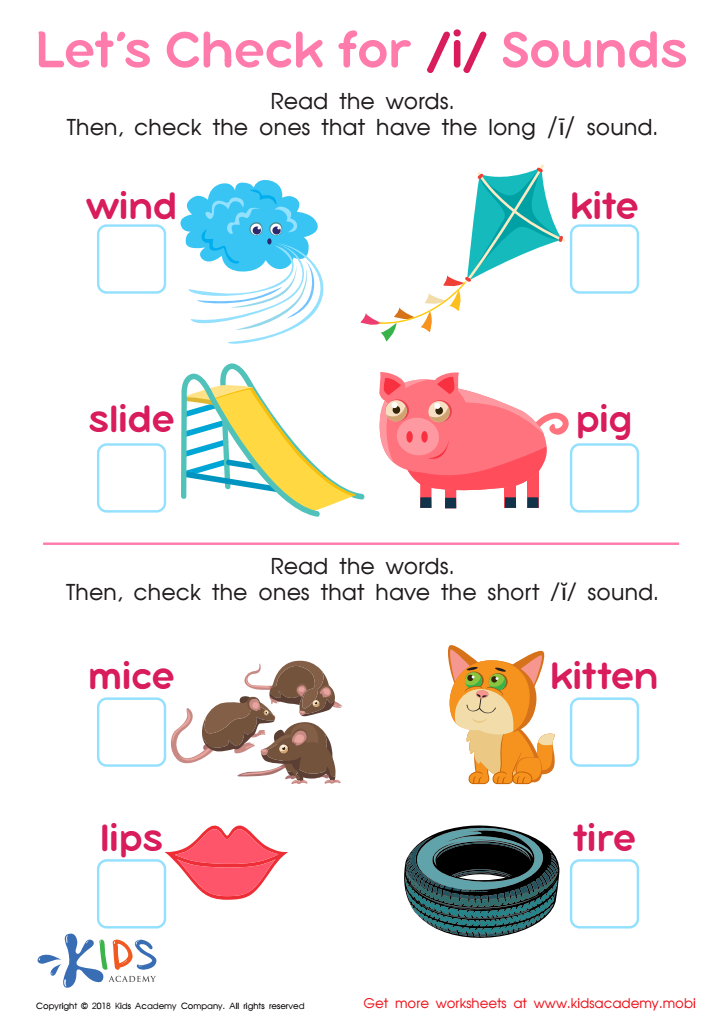
Let's Check for «i» Sounds Worksheet

Let's Check for «i» Sounds Worksheet

This fun worksheet with pictures boosts phonics skills - differentiating between long «ī» and short «i» sounds in 1- and 2-syllable words. Kids use picture clues to read words, then check off the correct ones. It's a great way for new readers to practice early reading skills and find success on their own.
Let's Check for «i» Sounds Worksheet
Worksheet
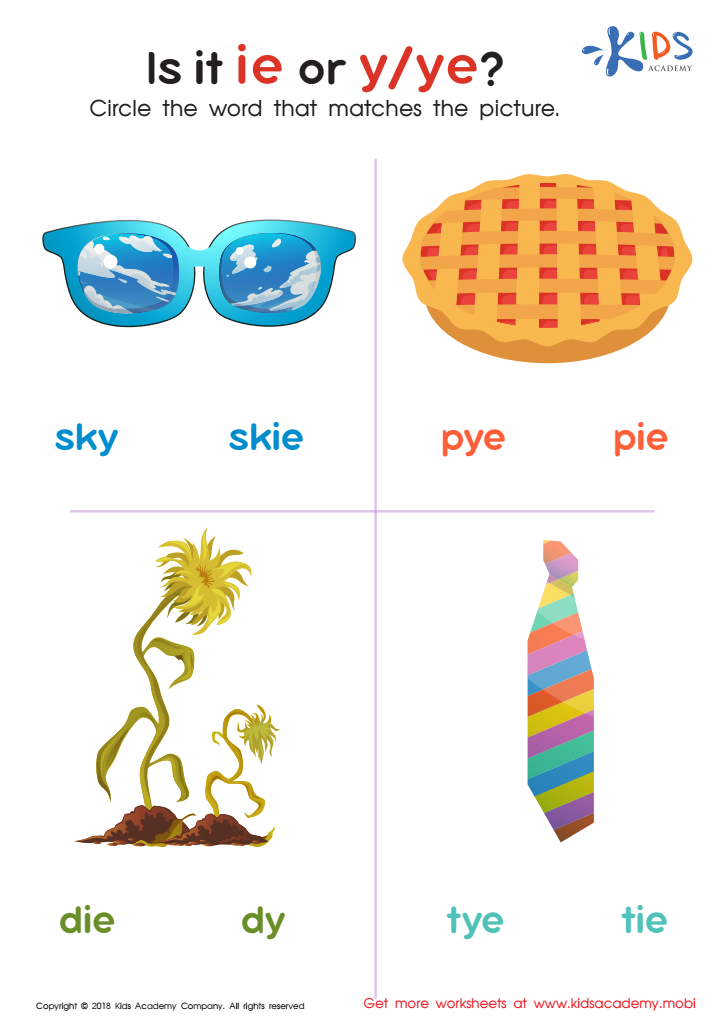
Is It IE or Y/Ye? Worksheet

Is It IE or Y/Ye? Worksheet

Test your child's picture identification skills by pointing at common items in your house and asking them to name them. Then, look at the objects in this worksheet with your little one. Point at each one, ask for the name, then ask which spelling is correct. Help them circle the correct word.
Is It IE or Y/Ye? Worksheet
Worksheet
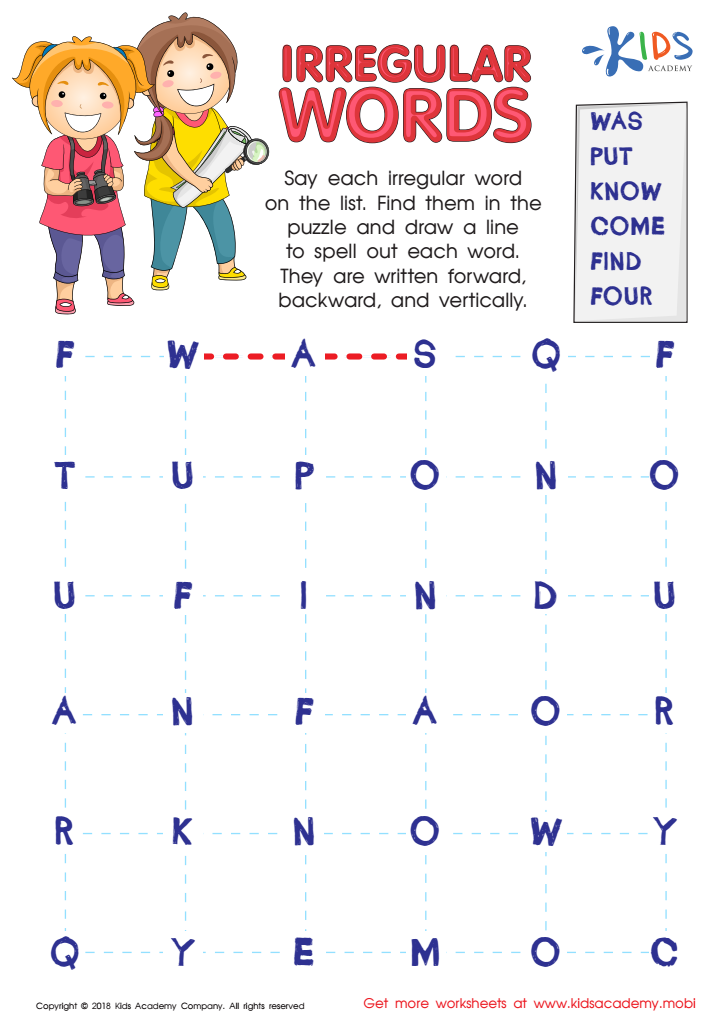
Irregular Words Worksheet

Irregular Words Worksheet

This fun word search worksheet helps kids practice reading irregular words and build their sight word banks. They'll also get practice with visual discrimination and fine motor skills as they hunt down the words.
Irregular Words Worksheet
Worksheet
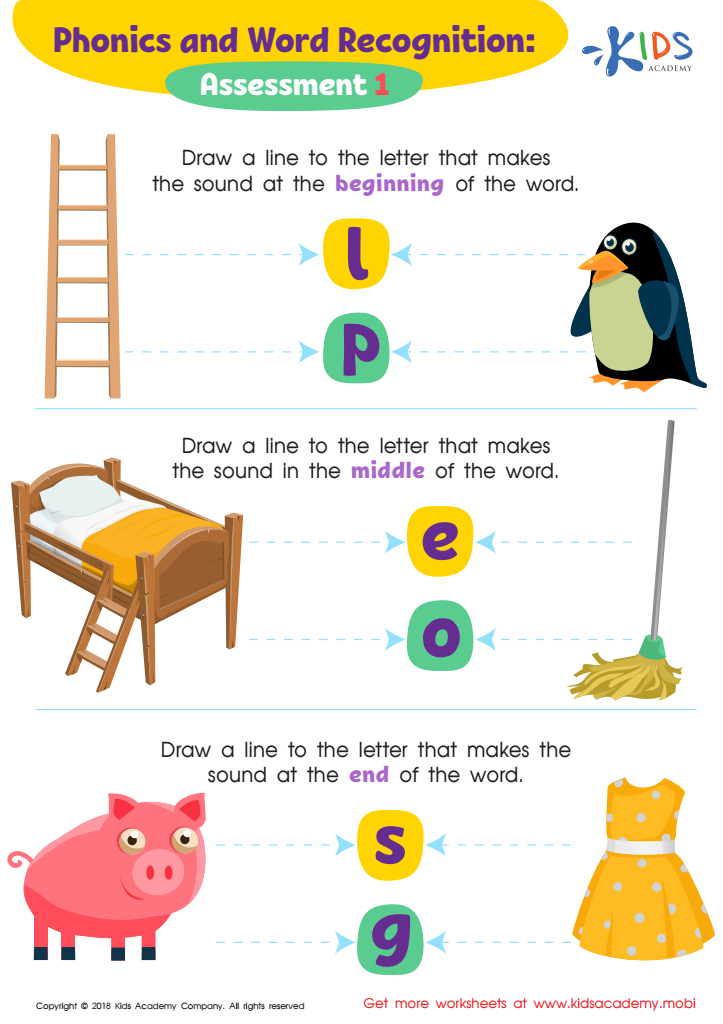
Phonics and Word Recognition: Assessment 1 ELA Worksheet


Phonics and Word Recognition: Assessment 1 ELA Worksheet

This fun worksheet tests your child's sound recognition skills for each part of a word. Ask your child to name each image and trace the line to match it with the corresponding letter. Listen for beginning sounds on 1st, middle sounds on 2nd, and ending sounds on 3rd. Encourage learning with this colorful and interactive activity!
Phonics and Word Recognition: Assessment 1 ELA Worksheet

Worksheet


Spelling practice using the normal alphabet is crucial for children aged 5-6 as it lays the foundation for their literacy skills. At this age, children are developing essential abilities in reading and writing, and proficiency in spelling is key to their overall communication skills. Mastering the alphabet and spelling simple words fosters phonemic awareness, which is vital for decoding words and understanding language structure.

Furthermore, engaging in regular spelling practice helps children enhance their vocabulary. Introducing new words in a fun and interactive way encourages exploration and curiosity. Moreover, spelling boosts their confidence when they read and write, creating positive associations with learning. When children become comfortable with spelling, they are more likely to engage in reading activities, thereby reinforcing their literacy development.

Parents and teachers play a critical role in facilitating this growth. Encouraging spelling through games, songs, and personalized exercises can make learning enjoyable and effective. By prioritizing spelling practice, adults can cultivate a strong foundation that not only prepares children for future education but also equips them with the essential tools for effective communication throughout their lives. Emphasizing the importance of early literacy helps foster a lifelong love for learning.