Visual discrimination skills Normal Alphabet Worksheets for Ages 5-6
5 filtered results
-
From - To
Discover engaging Alphabet Worksheets designed to enhance visual discrimination skills in children aged 5-6. Our expertly crafted activities help young learners distinguish between similar letters, improving their reading and writing abilities. Each worksheet is thoughtfully developed to provide fun and effective practice in recognizing and differentiating between basic alphabet shapes. Perfect for early learners, these worksheets support critical learning milestones and prepare kids for more advanced literacy challenges. Whether used at home or in the classroom, our visual discrimination skill-building resources offer a seamless blend of education and entertainment to ignite your child's passion for learning.
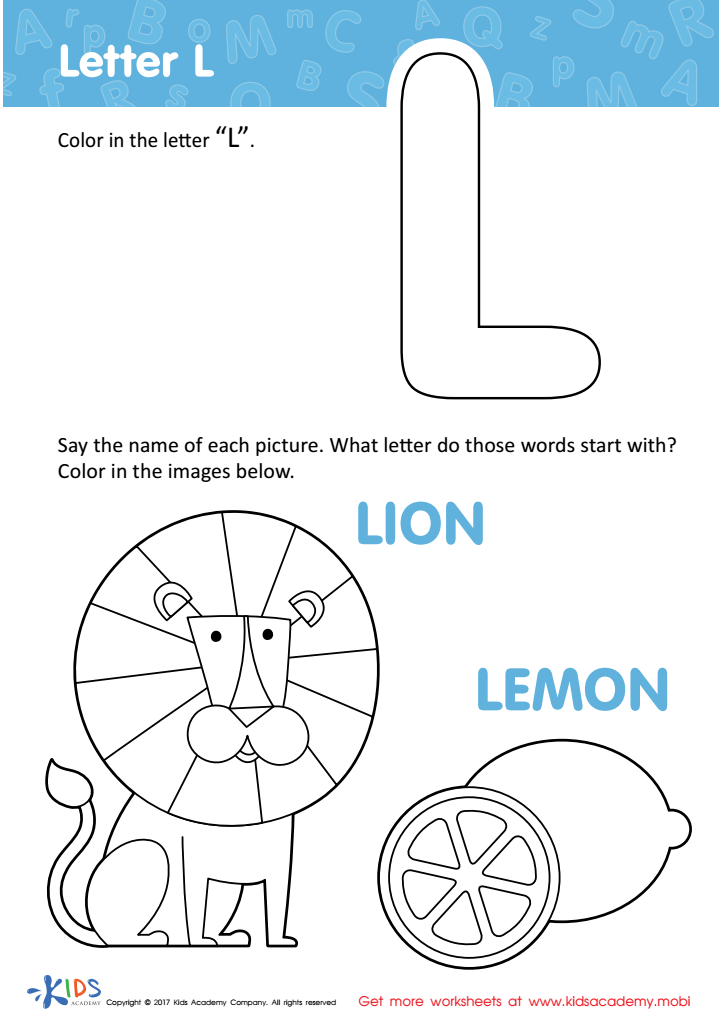
Letter L Coloring Sheet
 Assign to My Students
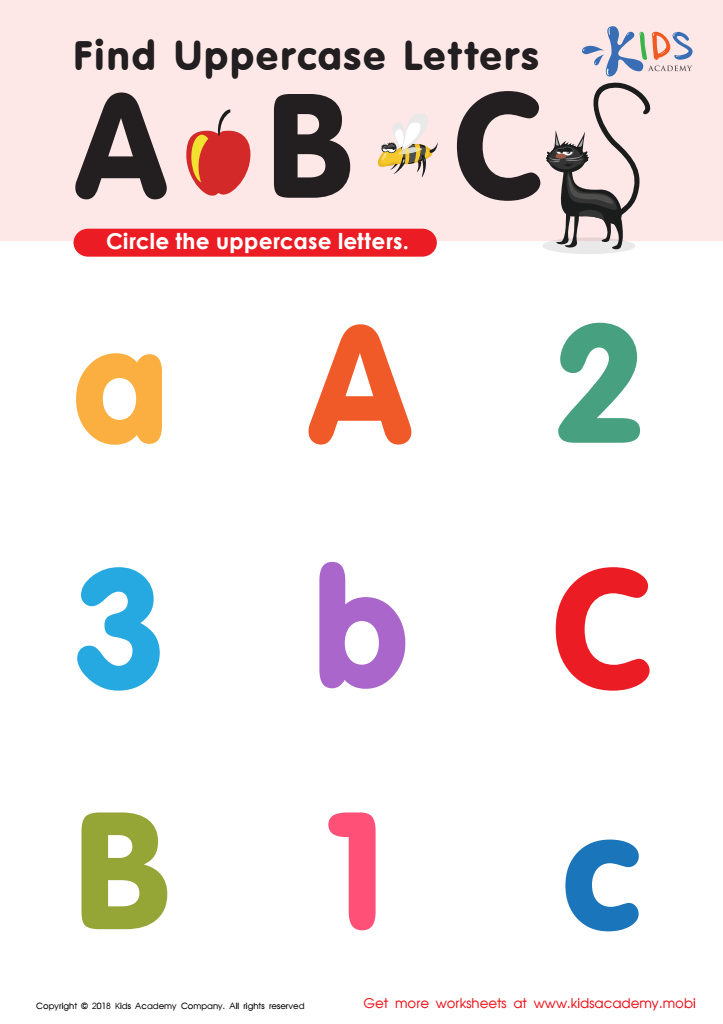
Find Uppercase Letters A, B, and C Worksheet
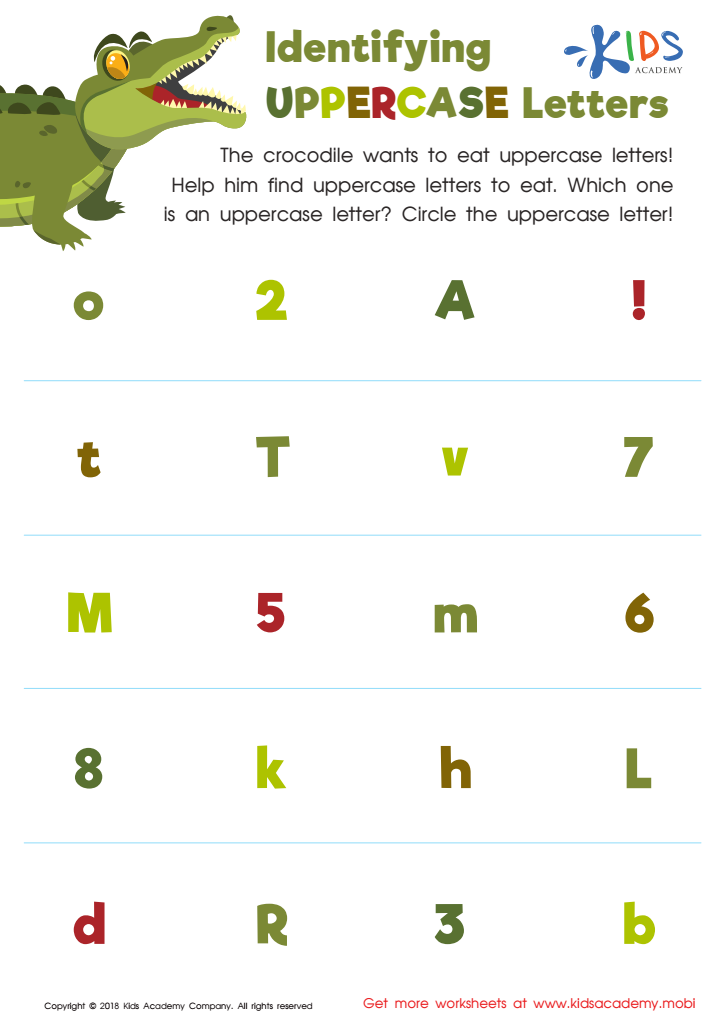
Identifying Uppercase Letters Worksheet
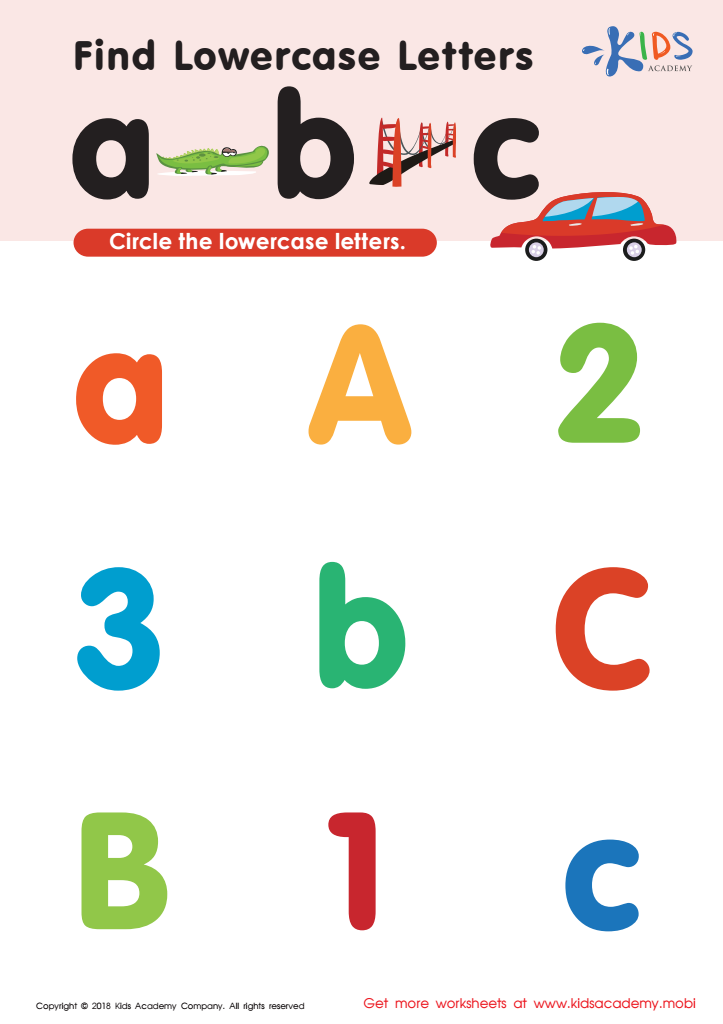
Find lowercase letters a b c Worksheet
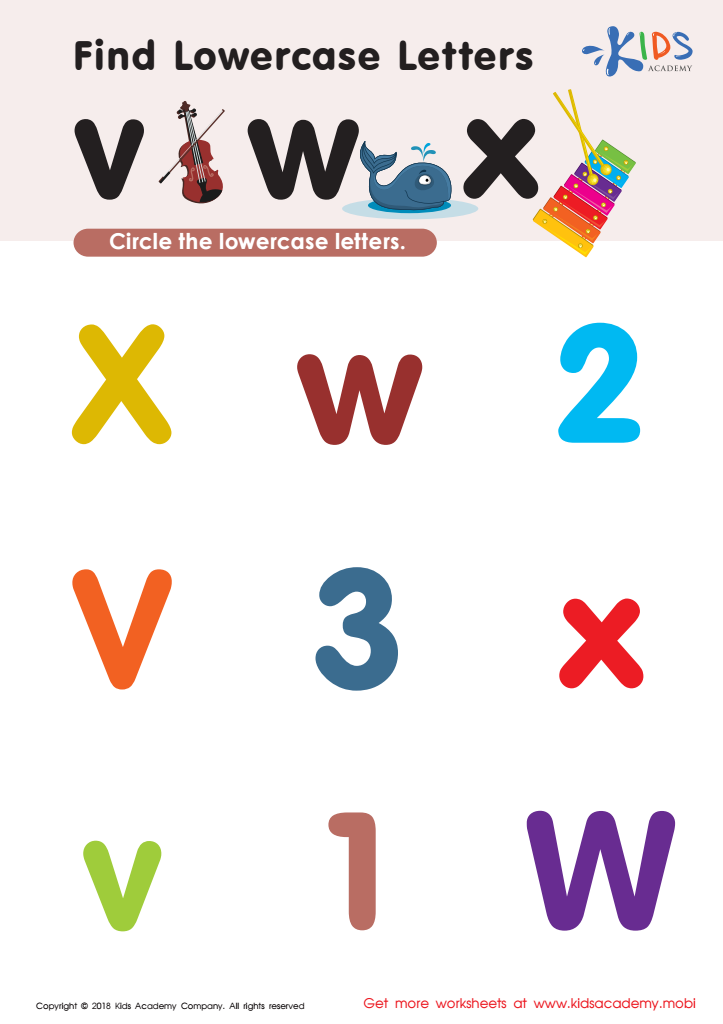
Find Lowercase Letters v w x Worksheet





Visual discrimination skills are critical for young learners, particularly in the 5-6 age range, as they form the cornerstone of early literacy and numeracy development. These skills enable children to notice differences and similarities in shapes, letters, and patterns, which is essential for reading and writing.
When children distinguish between “b” and “d” or “p” and “q” effectively, they can read words accurately, preventing confusion and promoting stronger reading fluency. This forms a strong foundation for spelling and writing, as recognizing the correct shape of each letter ensures they can reproduce it accurately. Visual discrimination extends beyond the alphabet; it helps children discern differences in numbers, geometric shapes, and various symbols they encounter.
For teachers and parents, encouraging the development of these skills through engaging activities such as matching games, puzzles, and attentive reading practices is beneficial. When children struggle, early interventions can be applied to address potential underlying issues, like visual perception challenges or learning disabilities.
Ultimately, fostering visual discrimination skills eliminates hurdles in a child's academic journey, instills self-confidence in their abilities, and generates enthusiasm for learning. This foundational competence not only aids literacy but contributes to overall cognitive development, underlining its importance in early education.







