Lowercase identification Normal Letter Recognition Worksheets for Ages 5-6
4 filtered results
-
From - To
Introducing our "Lowercase Identification Normal Letter Recognition Worksheets" designed specifically for young learners aged 5-6! These engaging worksheets help children develop essential literacy skills by focusing on recognizing and identifying lowercase letters. Each activity is thoughtfully crafted to encourage fun and interactive learning, providing various exercises that promote letter recognition through colorful visuals and exciting tasks. These worksheets not only boost confidence in reading but also lay a strong foundation for future literacy development. Perfect for classroom use or homeschooling, our printable resources make learning enjoyable and effective. Start your child's journey to reading success today with our lowercase identification worksheets!
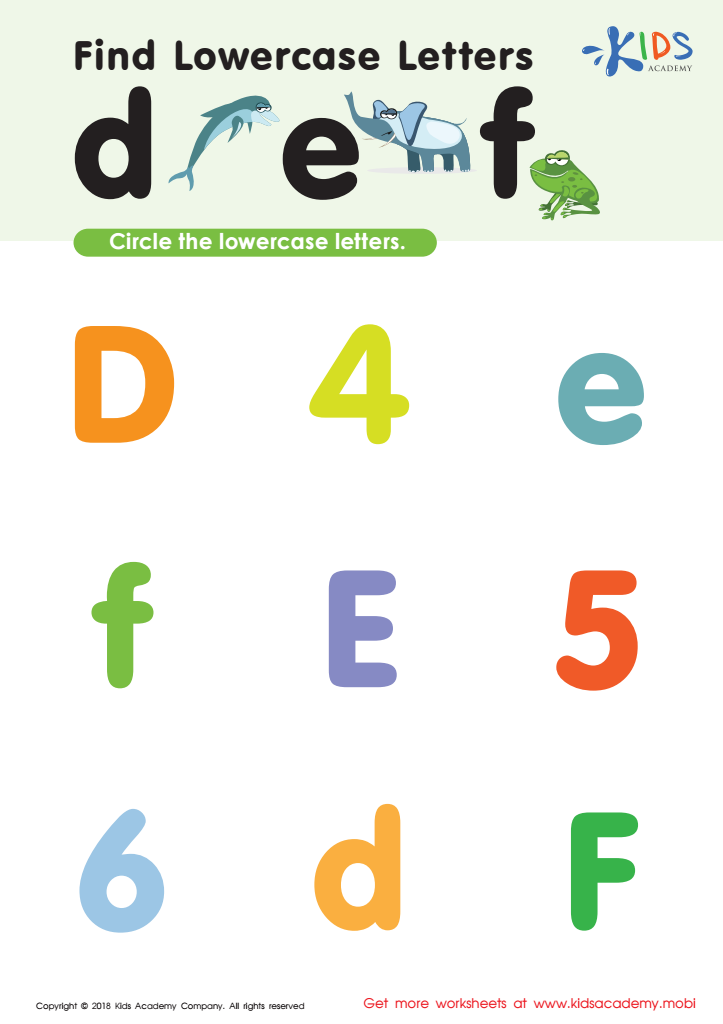
Find Lowercase Letters d e f Worksheet
 Assign to My Students
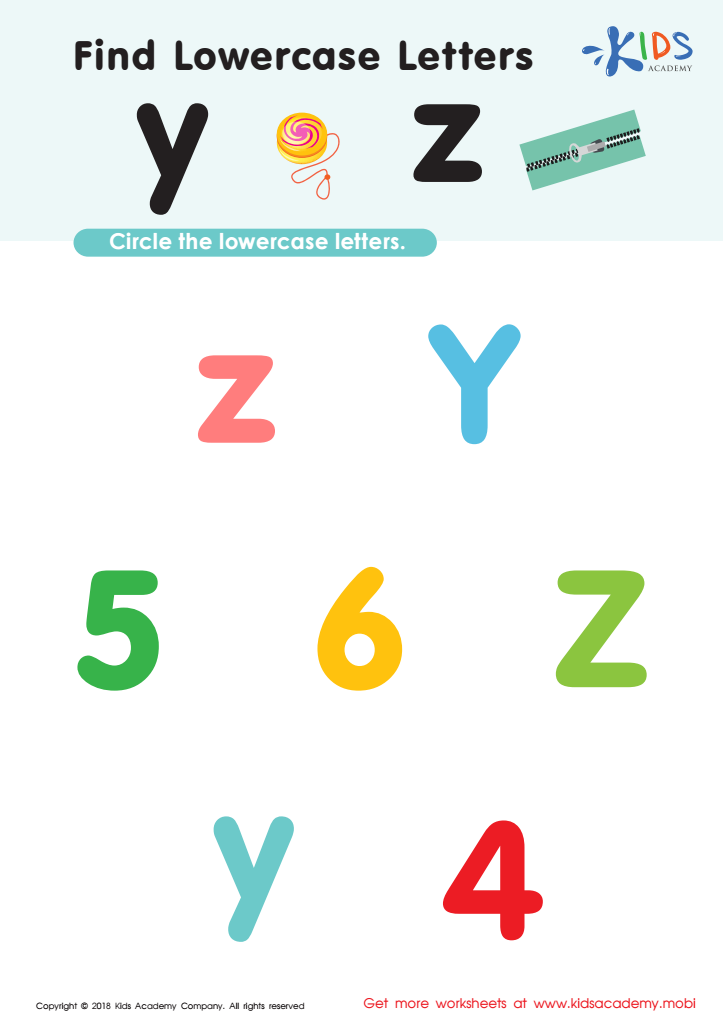
Find Lowercase Letters y z Worksheet
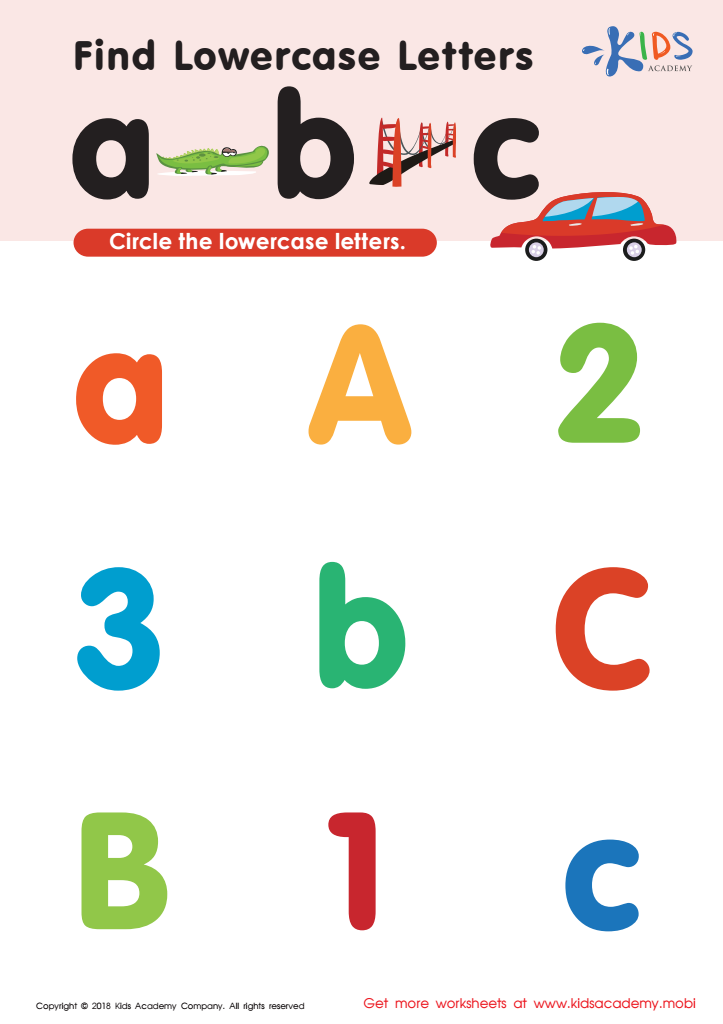
Find lowercase letters a b c Worksheet
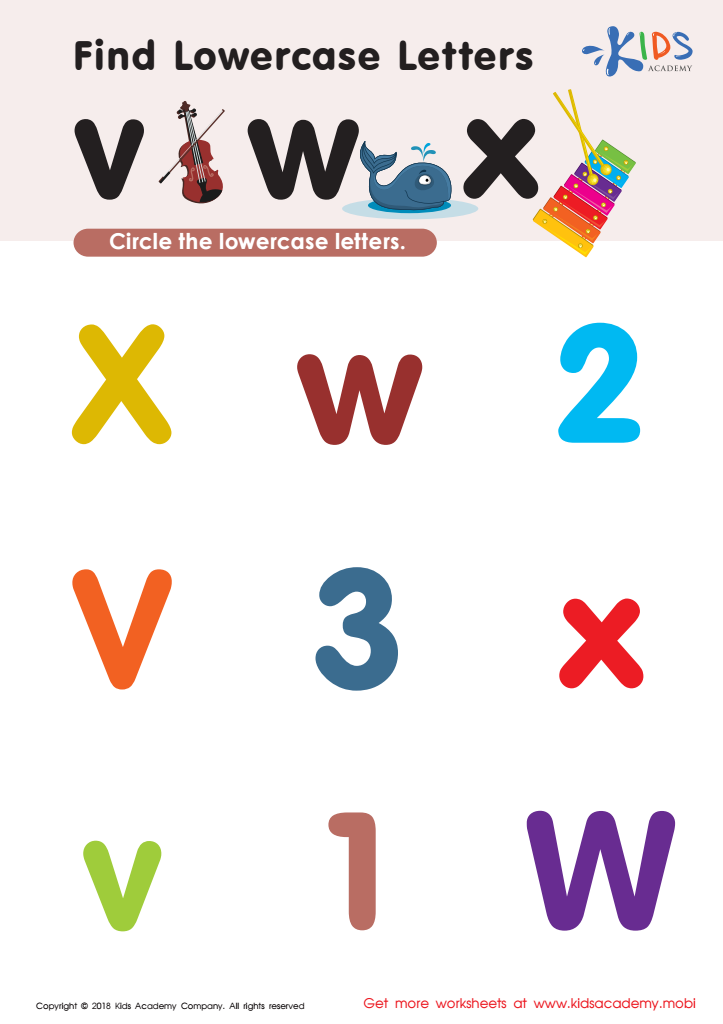
Find Lowercase Letters v w x Worksheet








Lowercase letter recognition is a fundamental skill that serves as the foundation for reading and writing in early childhood education. For children ages 5-6, mastering lowercase letter identification is crucial for several reasons. First, as most reading materials and writing exercises primarily utilize lowercase letters, proficiency in recognizing these letters enables children to decode words, understand texts, and express themselves effectively.
When children can identify letters, they build phonemic awareness, which improves their ability to sound out words. This skill is essential not only for early literacy development but also for fostering a love for reading. Moreover, when children recognize lowercase letters, they gain confidence in their writing abilities, finding it easier to compose letters, words, and sentences.
For educators and parents, promoting lowercase letter recognition supports overall literacy development and prepares children for more complex tasks in school. Engaging activities like letter hunts, interactive games, and storytelling can help reinforce this skill in enjoyable ways. By nurturing lowercase letter identification, caregivers play a pivotal role in equipping children with the necessary tools for academic success, laying the groundwork for lifelong learning and communication skills. Investing in these early skills forms an essential part of a child's educational journey.








