
Vocabulary development Normal Letter Sounds Worksheets for Ages 5-6
6 filtered results
Difficulty Level
Grade
Age
-
From - To
Subject
Activity
Standards
Explore our engaging Vocabulary Development Normal Letter Sounds Worksheets, designed specifically for children aged 5-6. These carefully crafted resources help young learners master letter sounds while enhancing their vocabulary skills. Each worksheet features fun and interactive exercises, encouraging kids to connect sounds with words and develop essential phonetic awareness. Perfect for homeschooling or classroom settings, our worksheets make learning enjoyable and effective. Watch as your child's confidence and literacy skills grow with these bright, colorful activities. Join us in fostering a love for language and laying the foundation for lifelong learning. Start your vocabulary journey today!
Favorites
With answer key
Interactive
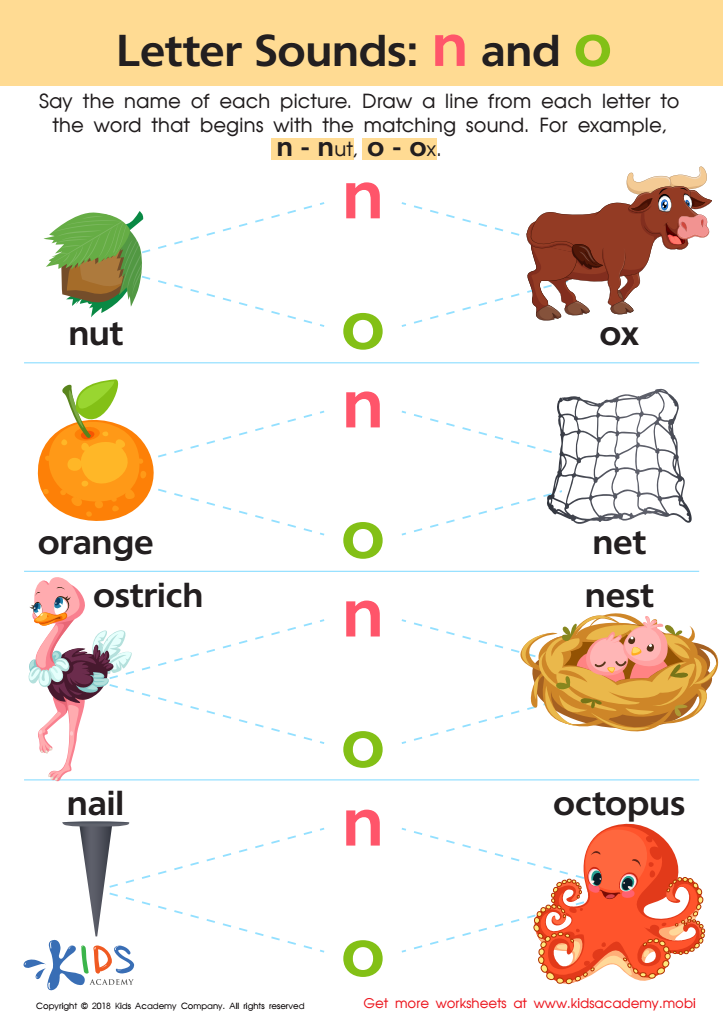
Letter N and O Sounds Worksheet
Help your preschooler learn to recognize the N and O letter sounds with this vibrant worksheet from Kids Academy! Have them say the name of each picture and listen for N or O. Trace the dotted line from letter to its match to complete the phonics review. It's a fun way to help them master the difference between the two sounds!
 Assign to My Students
Letter N and O Sounds Worksheet
Worksheet
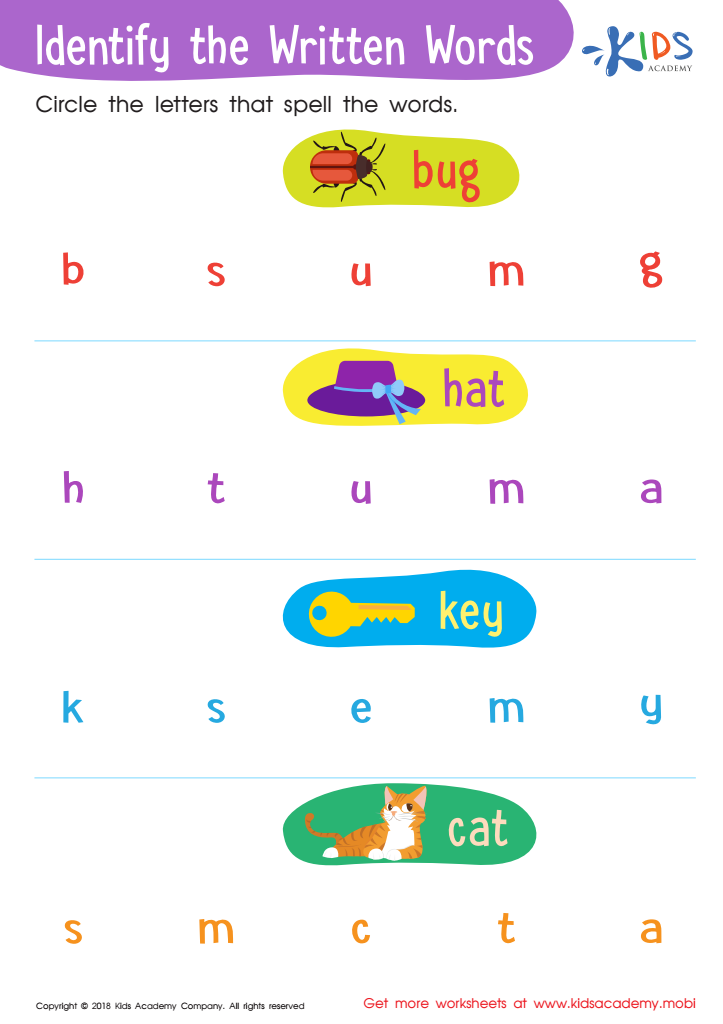
Identify the Written Words Worksheet
Have your students identify the objects on the printout, then spell the words. If they already know how to spell, this exercise should be easy. Help them circle the correct letters from the set to spell out the words. This is a great way to reinforce reading and spelling skills. Max 80 words.
Identify the Written Words Worksheet
Worksheet
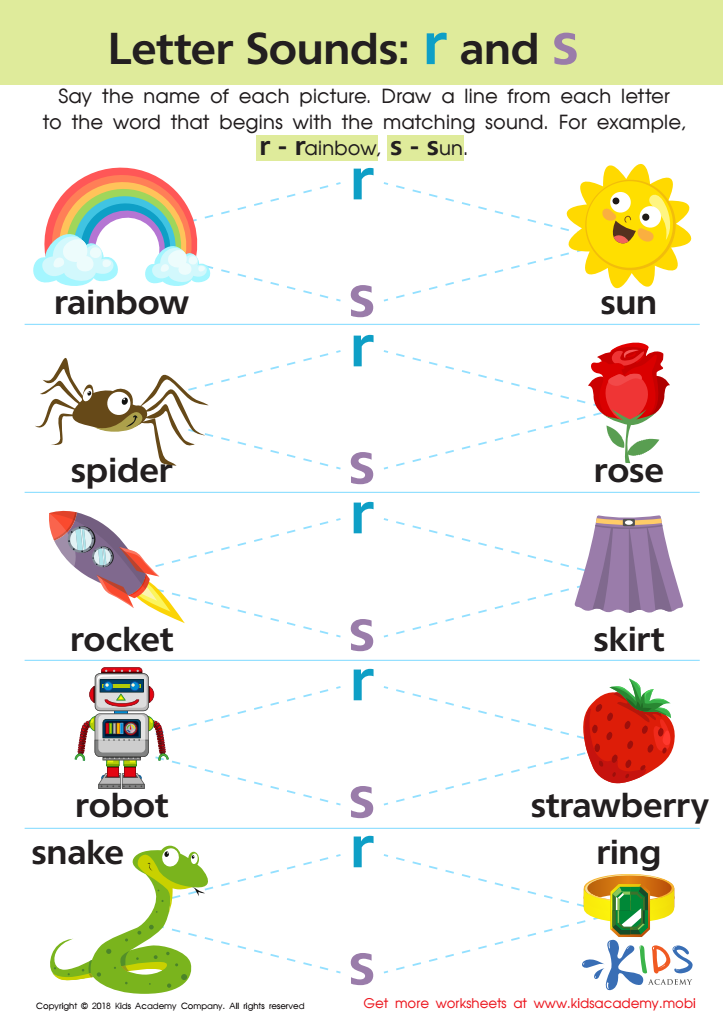
Letter R and S Sounds Worksheet
Kids Academy's phonics worksheet is full of fun and color! Help your child name the pictures and read the words under each one. Does it begin with an R or S? Then, use a pencil to trace the dotted line from the letter to its image. It's a great way to practice phonics skills!
Letter R and S Sounds Worksheet
Worksheet
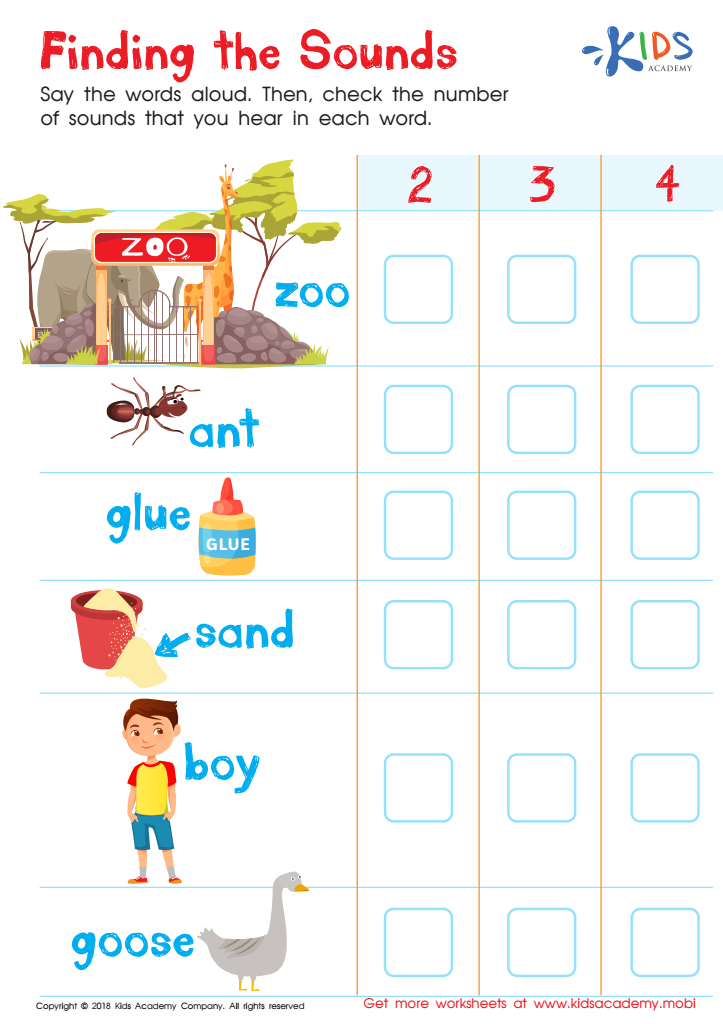
Finding the Sounds Worksheet
This free colorful worksheet assists children in learning words and breaking them down into sounds. It boosts auditory discrimination, phonological awareness and fine motor skills. Picture clues help them read confidently, and they can check the appropriate boxes to practice their reading skills.
Finding the Sounds Worksheet
Worksheet
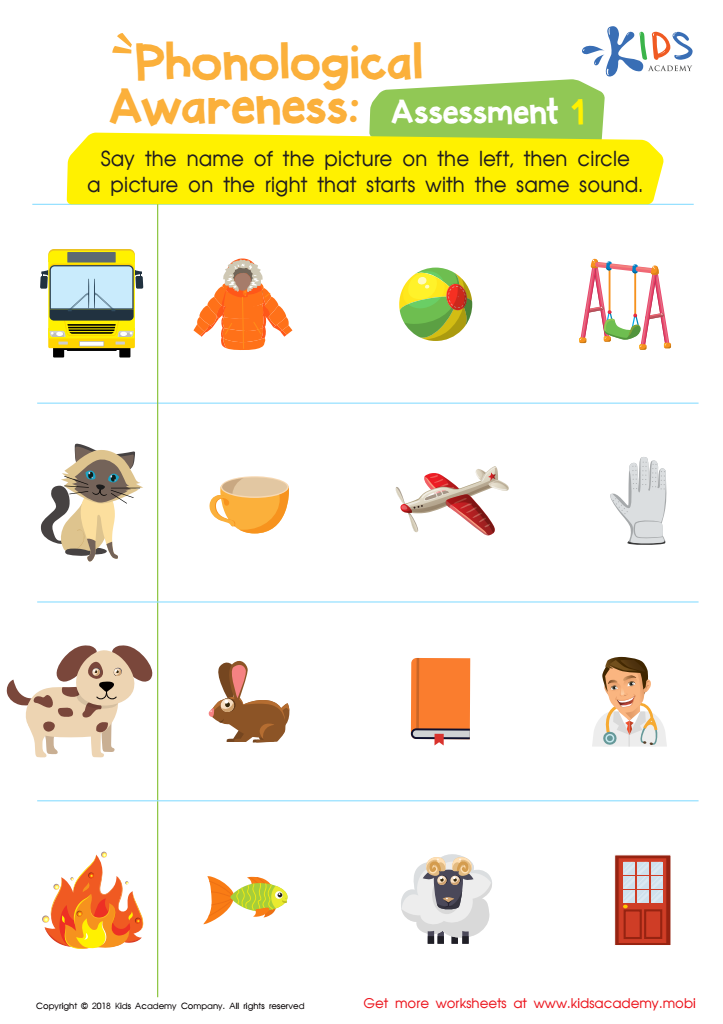
Phonological Awareness: Assessment 1 Worksheet
This worksheet helps kids build key phonics skills for pre-reading. They say each picture name aloud, focusing on the starting sound. Then, they match the sound with an image in the same row. Use as a checkpoint for kindergarten or grade 1 phonics readiness.
Phonological Awareness: Assessment 1 Worksheet
Worksheet
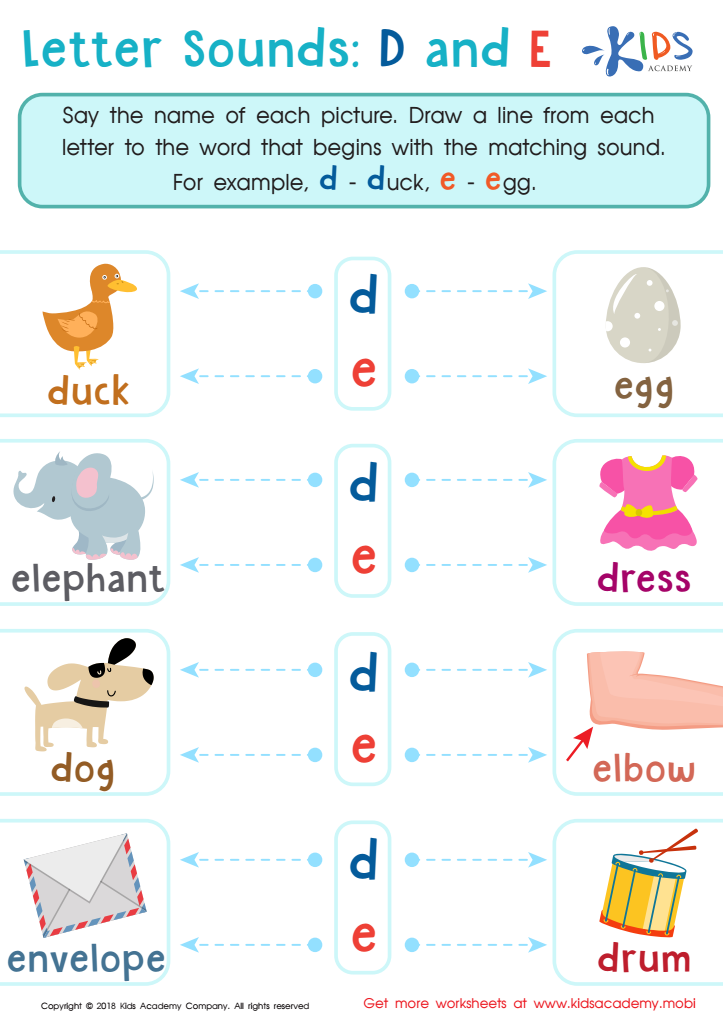
Letter D and E Sounds Worksheet
Kids can use picture clues and visual discrimination to name cheerful pics and isolate the beginning sound. This free PDF worksheet will help them develop phonological awareness, differentiate between "D" and "E", and hone fine-motor skills. It'll also boost their confidence as they become readers.
Letter D and E Sounds Worksheet
Worksheet
Join Kids Academy for Free
Who is primarily going to use this learning content?








Vocabulary development and understanding normal letter sounds are crucial for children aged 5-6 as they lay the foundation for future literacy skills. At this age, children are beginning to explore reading and writing, and a strong vocabulary helps them make sense of words they encounter, enhancing their comprehension. When children have a robust vocabulary, they become better readers and communicators, enabling them to express ideas clearly and understand instructions effectively.
Moreover, letter sounds, or phonics, are essential for decoding words—the process of translating written text into meaningful speech. Mastery of letter sounds empowers children to sound out unfamiliar words, thus boosting their confidence and fluency as readers. This age is critical for forming early literacy habits, and the more parents and teachers emphasize vocabulary and phonics, the more prepared children will be for the demands of complex texts in later grades.
Supporting vocabulary and sound development through engaging activities, such as reading aloud, storytelling, and rhyming games, fosters a love for language. Ultimately, by prioritizing these essential skills, parents and teachers can significantly enhance children's academic success and lifelong love of learning, equipping them for future challenges both in and out of the classroom.






