Phonics Skills Normal Long Vowels Worksheets for Ages 5-6
10 filtered results
Difficulty Level
Grade
Age
-
From - To
Subject
Activity
Standards
Discover the ideal tool for phonics skill development with our "Phonics Skills Normal Long Vowels Worksheets for Ages 5-6." Perfect for kindergarten and first-grade learners, these worksheets enhance reading skills by focusing on the long vowel sounds. Each engaging activity is expertly designed to help children recognize, understand, and pronounce long vowels, assisting them in building a solid reading foundation. Fun visuals and interactive tasks make learning enjoyable and effective, laying the groundwork for confident reading and writing. Boost your child’s phonics skills today and watch them flourish with these essential worksheets!
Favorites
With answer key
Interactive
Long /u/ Words Worksheet
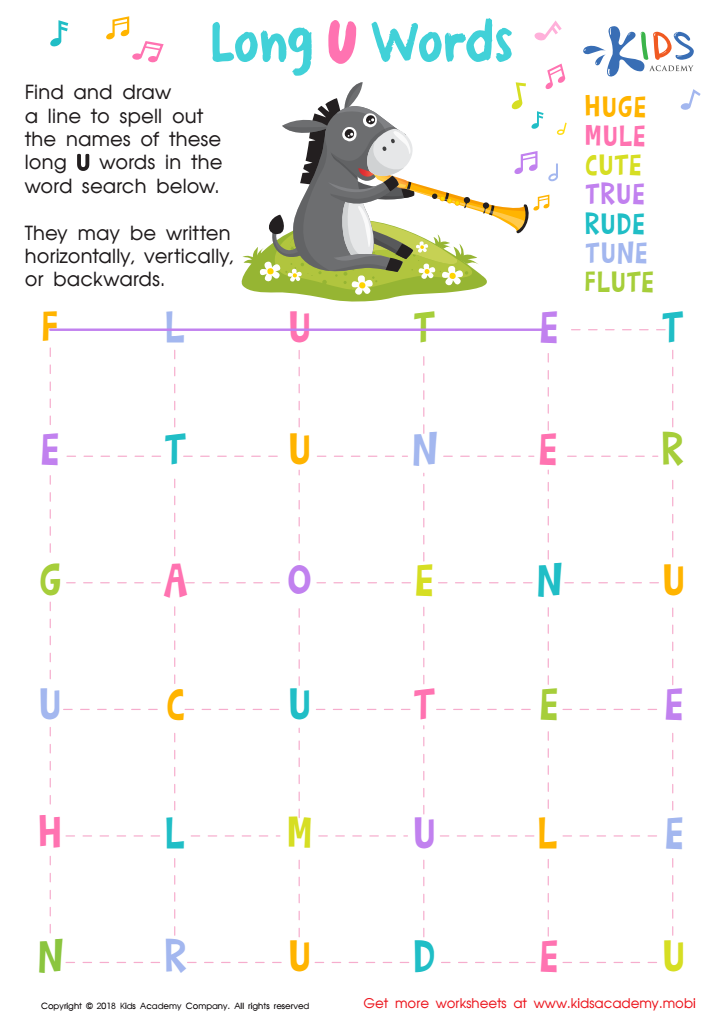
Your child needs to learn phonetics to enunciate and differentiate words. This fun worksheet encourages them to find and draw lines connecting the long 'U' words in the word search. Help them read the words on the right side of the picture, then look for them in the word search (horizontally, backwards or vertically).
Long /u/ Words Worksheet
Worksheet
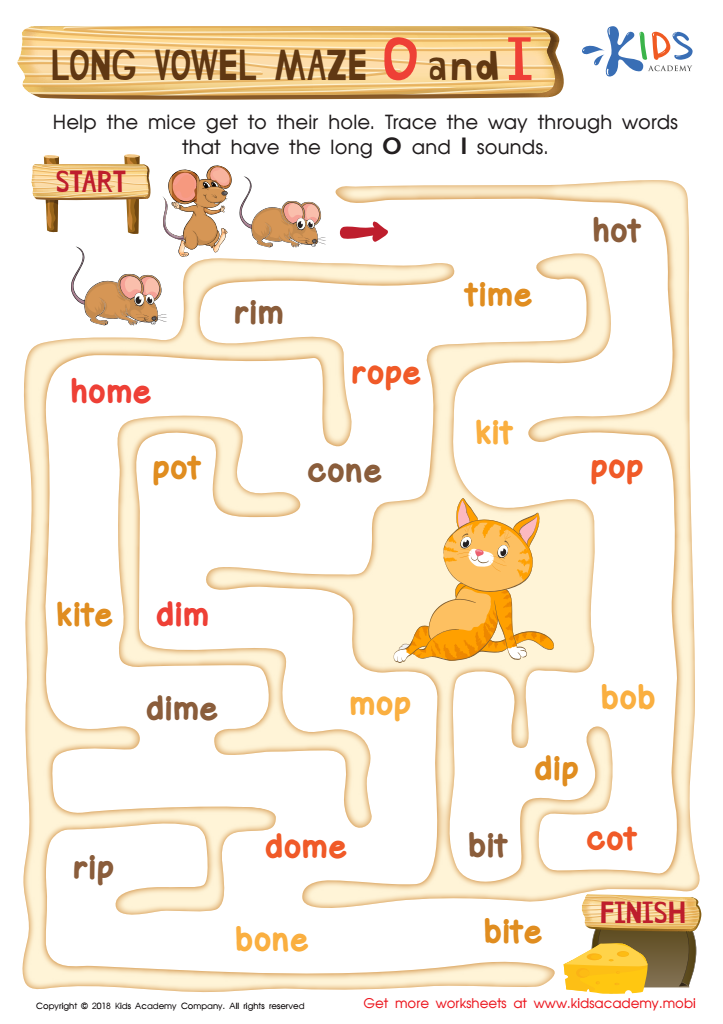
Long Vowel Maze /o/ and /i/ Worksheet
Help your new readers have fun and build their sight word vocabulary! Guide the mice to their prize cheese by having them trace the route on the worksheet, using words with the long o and long i sounds. But watch out for the kitty!
Long Vowel Maze /o/ and /i/ Worksheet
Worksheet
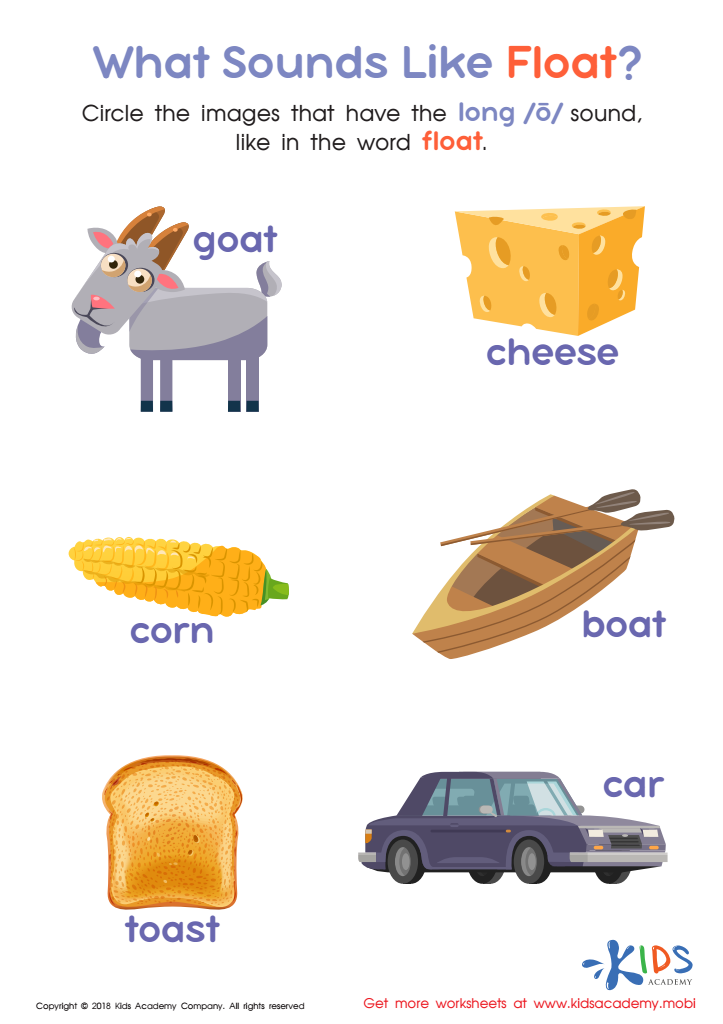
What Sounds Like Float? Worksheet
Help your kids practice the long /o/ sound with words such as 'boat', 'goat' and 'float'. Ask them to identify and circle the images in the worksheet that have the same sound. Award bonus points if they come up with more words with 'oa' spelling!
What Sounds Like Float? Worksheet
Worksheet
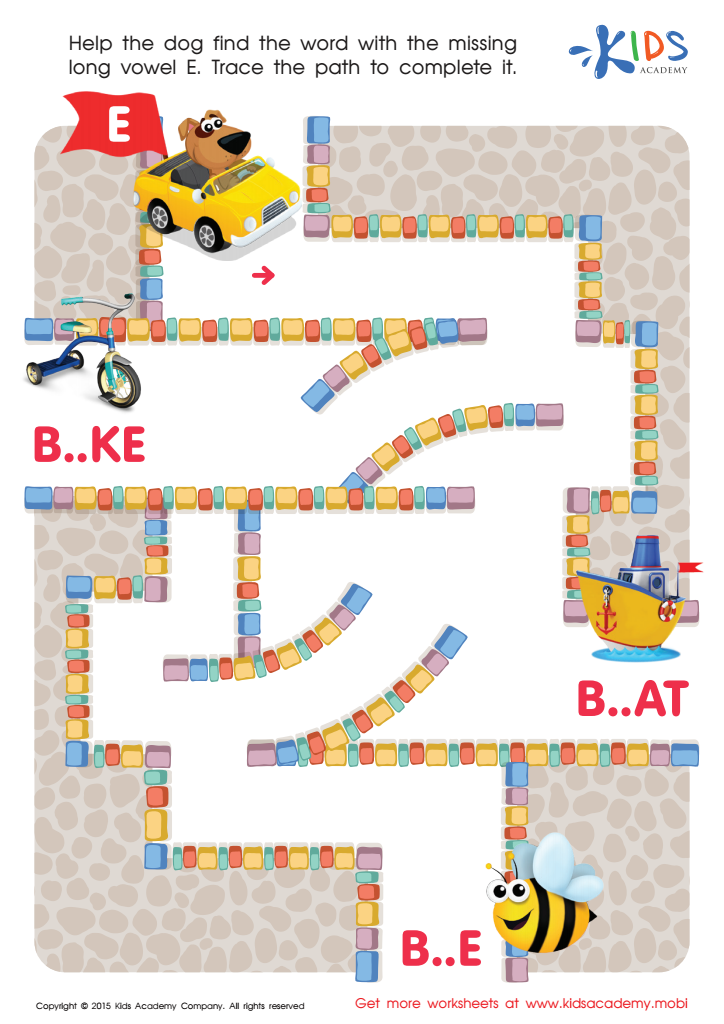
Long Vowel Sound E Worksheet
Practice distinguishing long and short vowel sound E with this free printable! Kids must complete the word “bee” by tracing the maze and adding the missing letter E. Remind them to say the word aloud to help sharpen their phonics ear. Get more phonics fun with the vowel sound E here.
Long Vowel Sound E Worksheet
Worksheet
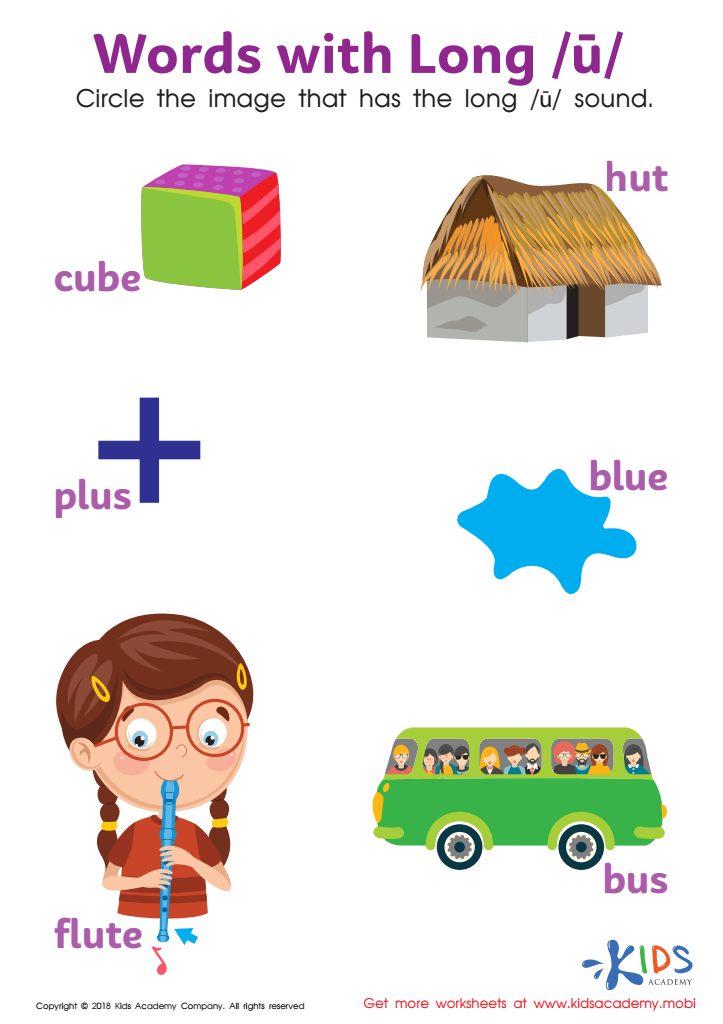
Words with Long U Reading Worksheet
Help your new reader master vowel recognition with this fun worksheet. By using picture clues and practicing fine motor skills, they'll learn to differentiate between words with the long and short «u» sound. Your learner will also get to practice vowel discrimination in high-frequency words. It's a great way to learn the importance of vowels in reading!
Words with Long U Reading Worksheet
Worksheet
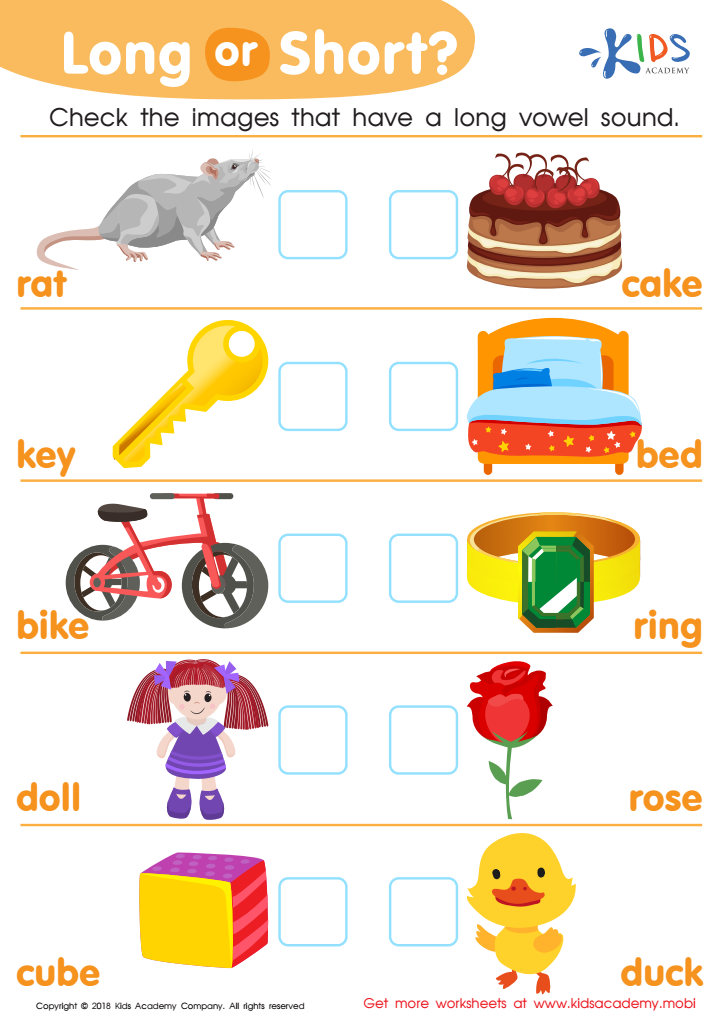
Long or Short Reading Worksheet
Every new reader needs to learn to recognize long and short vowel sounds. This phonics worksheet uses pictures of high-frequency words to help. Kids read the words and then check off images with long vowel sounds. It helps them learn to decode words and improves fine motor skills.
Long or Short Reading Worksheet
Worksheet
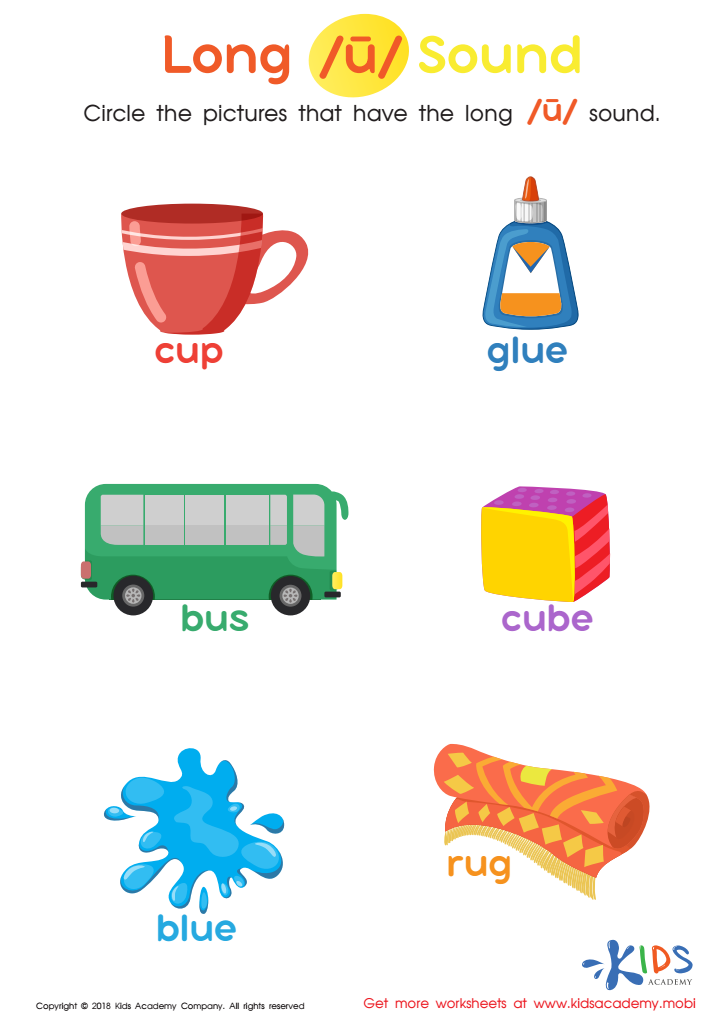
Long «u» Sound Worksheet
This fun and engaging free PDF worksheet teaches kids to differentiate between long and short «u» sounds. Through tracing circles around the correct words, they'll practice their fine motor skills while also recognizing patterns (silent-e for «ū» sound) in closed-syllable words. Bright and cheery pictures make it a great confidence booster for new readers!
Long «u» Sound Worksheet
Worksheet
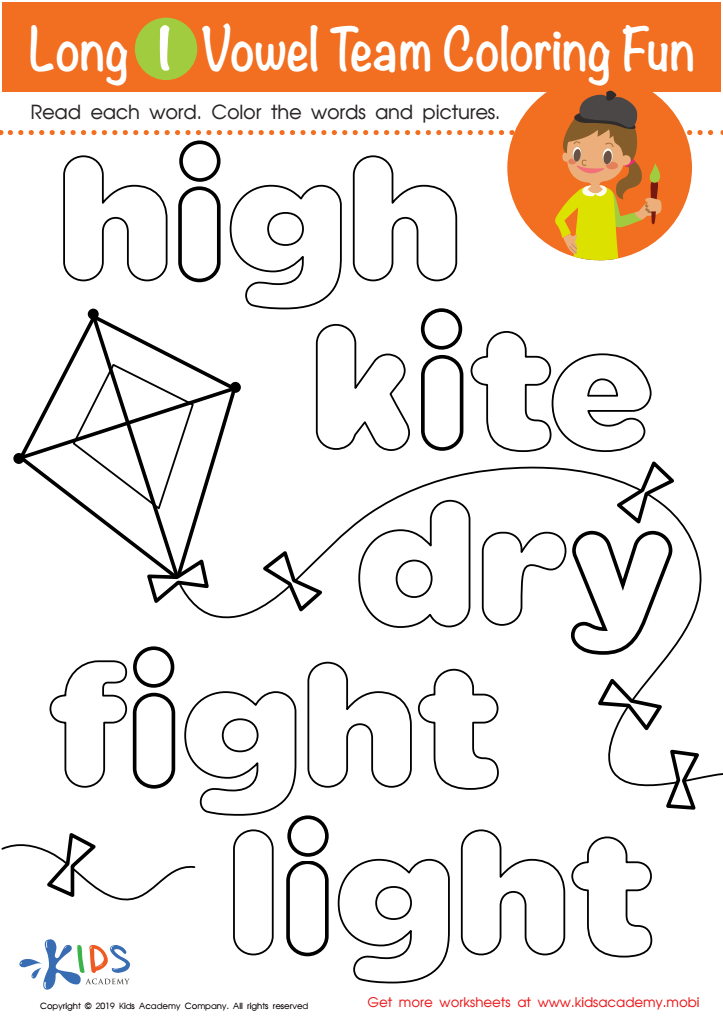
Long I Vowel Team Coloring Worksheet
This worksheet provides practice with letter combinations that make the long "i" sound while enhancing creativity and motor skills with a fun coloring activity. Unknowingly, new readers learn key phonics skills while having fun!
Download (PDF)
 Assign to My Students
Assign to My Students
Long I Vowel Team Coloring Worksheet
Worksheet
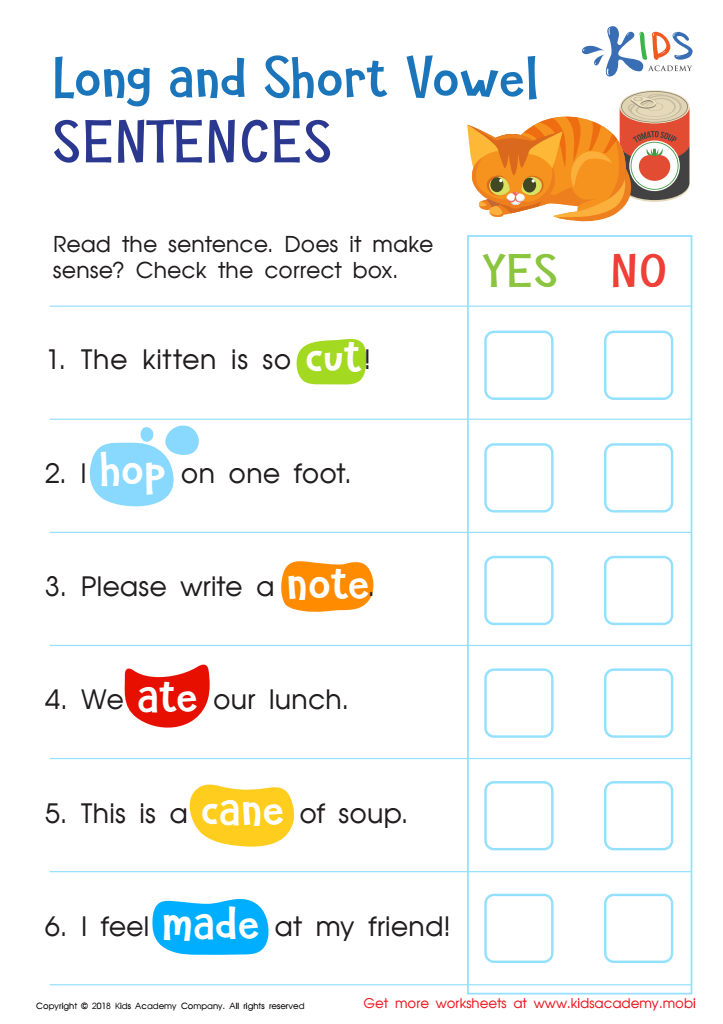
Long and Short Vowel Sentences: Assessment Worksheet
This printable worksheet helps kids practice differentiating between short and long vowel sounds. They'll use context clues to figure out which words make sense in simple sentences. A great way to build reading and writing skills!
Long and Short Vowel Sentences: Assessment Worksheet
Worksheet
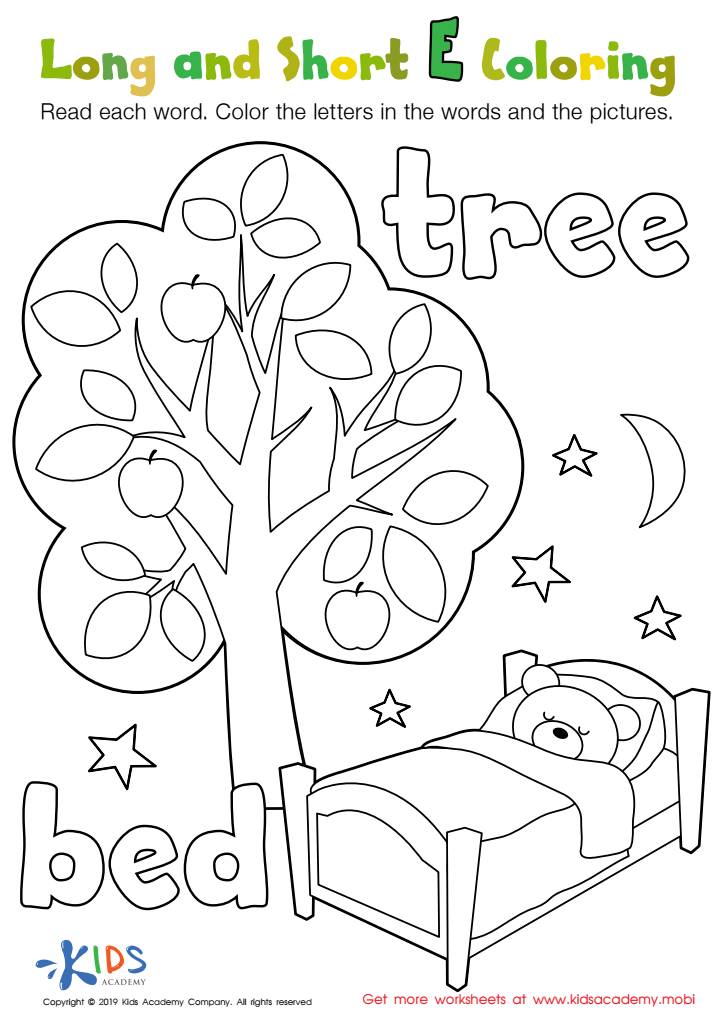
Long and Short E Worksheet
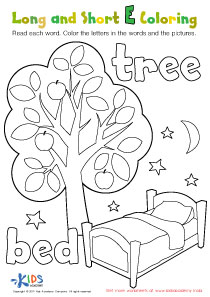
This fun printout makes learning phonics enjoyable for Grade 3 students. Get them to read the words “tree” and “bed” to recognize the different sounds of the letter “E”. After hearing the words they can color the words and the pictures to understand differences between long and short vowels.
Download (PDF)
Assign to My Students
Assign to My Students
Long and Short E Worksheet
Worksheet
Join Kids Academy for Free
Who is primarily going to use this learning content?



Phonics skills, especially understanding normal long vowels, are fundamental for children aged 5-6 as they lay the groundwork for future reading and literacy success. At this age, kids are typically in kindergarten or the early part of first grade, a crucial period for developing foundational language skills. Familiarity with long vowels aids in decoding words, which is a critical component of reading fluency.
Recognizing long vowel sounds helps kids in understanding that letters and combinations of letters represent different sounds (the alphabetic principle), crucial for both reading and spelling. For instance, understanding that 'a' can sound like /ā/ in 'cake' teaches students that vowels can have more than one sound, depending on their placement in a word, and on their pairings with other vowels.
For parents and teachers, focusing on teaching long vowels can also enhance a child's confidence and motivation. When kids can easily read simple words, texts, and stories, they are more likely to enjoy reading and, consequently, practice it more often, leading to improved literacy. Ignoring phonics instructions, on the other hand, can result in struggles with more complex texts, diminished self-esteem in reading, and an aversion to learning.
Therefore, phonics skills, particularly normal long vowels, are vital for it sets the stage for more advanced literacy skills, thus helping children become proficient readers, which is essential for their overall academic success.