Vowel Recognition Normal Long Vowels Worksheets for Ages 5-6
5 filtered results
Difficulty Level
Grade
Age
-
From - To
Subject
Activity
Standards
Enhance your child's reading skills with our "Vowel Recognition Normal Long Vowels Worksheets" tailored for ages 5-6. These expertly designed worksheets focus on recognizing and distinguishing between normal and long vowels, making learning fun and effective. Through engaging activities and colorful illustrations, young learners will build a strong foundation in vowel sounds, essential for reading and writing development. Perfect for both classroom use and home study, these worksheets provide interactive and enjoyable practice to help your child confidently identify and use long vowels in words. Boost your child's phonics skills today with these invaluable educational resources!
Favorites
With answer key
Interactive
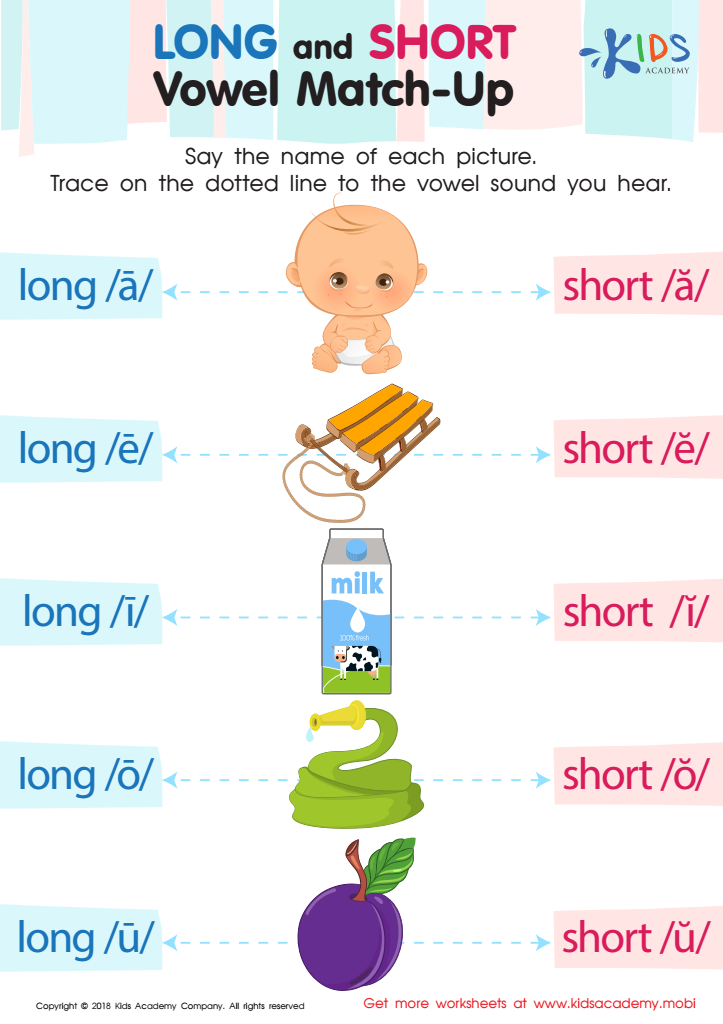
Long and Short Vowel Match up Reading Worksheet
Help your reader build confidence and refine their decoding skills! This worksheet combines long and short vowel recognition with a traceable component to improve fine motor skills. Your learner will name each picture and trace the dotted lines to get to the correct vowel sounds.
Long and Short Vowel Match up Reading Worksheet
Worksheet
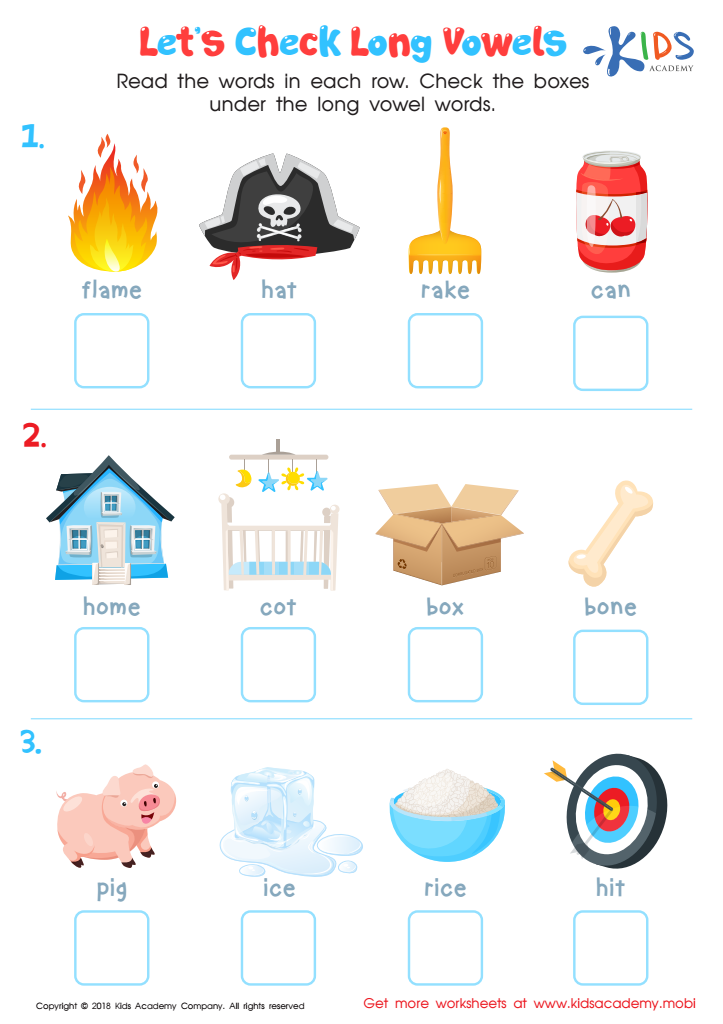
Let's Check Long Vowels: Assessment Worksheet
This worksheet helps your child identify objects and learn long vowel sounds. Ask them to say the names of the four objects in each row. Then, help them check the boxes to confirm they know the long vowel sounds. This will help them develop their reading skills.
Let's Check Long Vowels: Assessment Worksheet
Worksheet
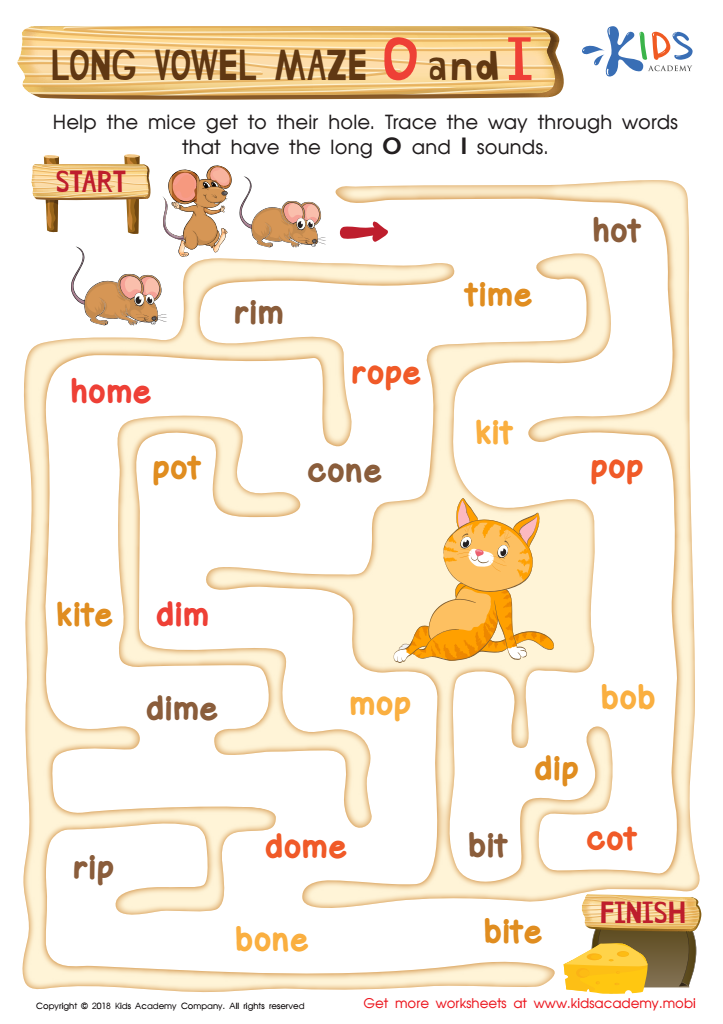
Long Vowel Maze /o/ and /i/ Worksheet
Help your new readers have fun and build their sight word vocabulary! Guide the mice to their prize cheese by having them trace the route on the worksheet, using words with the long o and long i sounds. But watch out for the kitty!
Long Vowel Maze /o/ and /i/ Worksheet
Worksheet
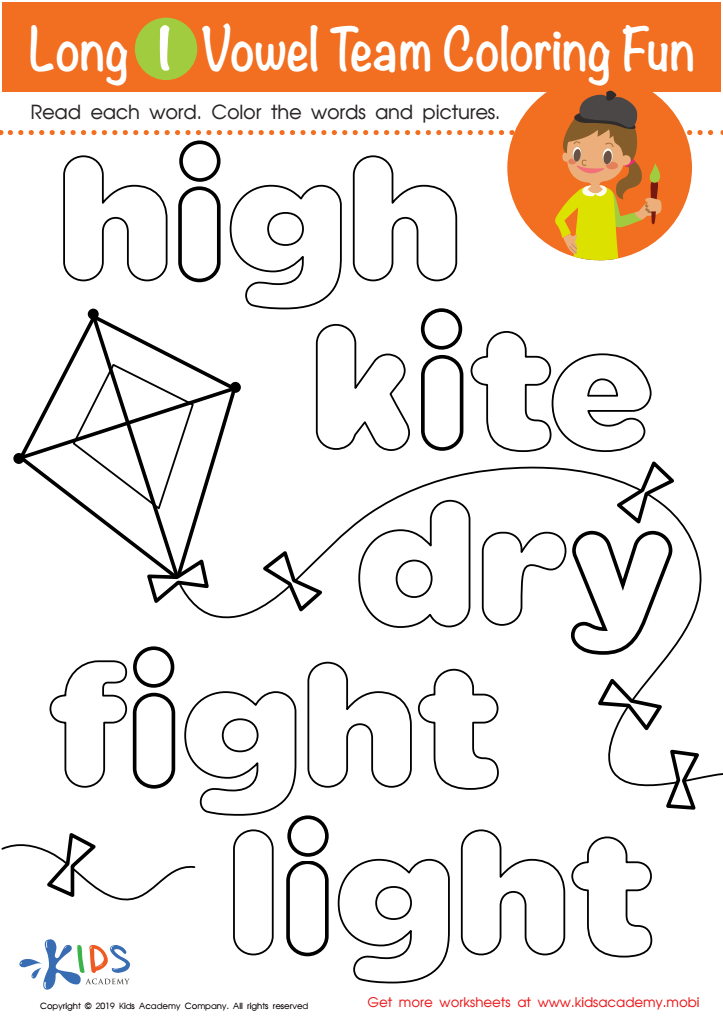
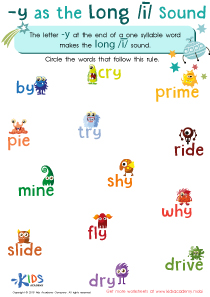
Long I Vowel Team Coloring Worksheet
This worksheet provides practice with letter combinations that make the long "i" sound while enhancing creativity and motor skills with a fun coloring activity. Unknowingly, new readers learn key phonics skills while having fun!
Download (PDF)
 Assign to My Students
Assign to My Students
Long I Vowel Team Coloring Worksheet
Worksheet
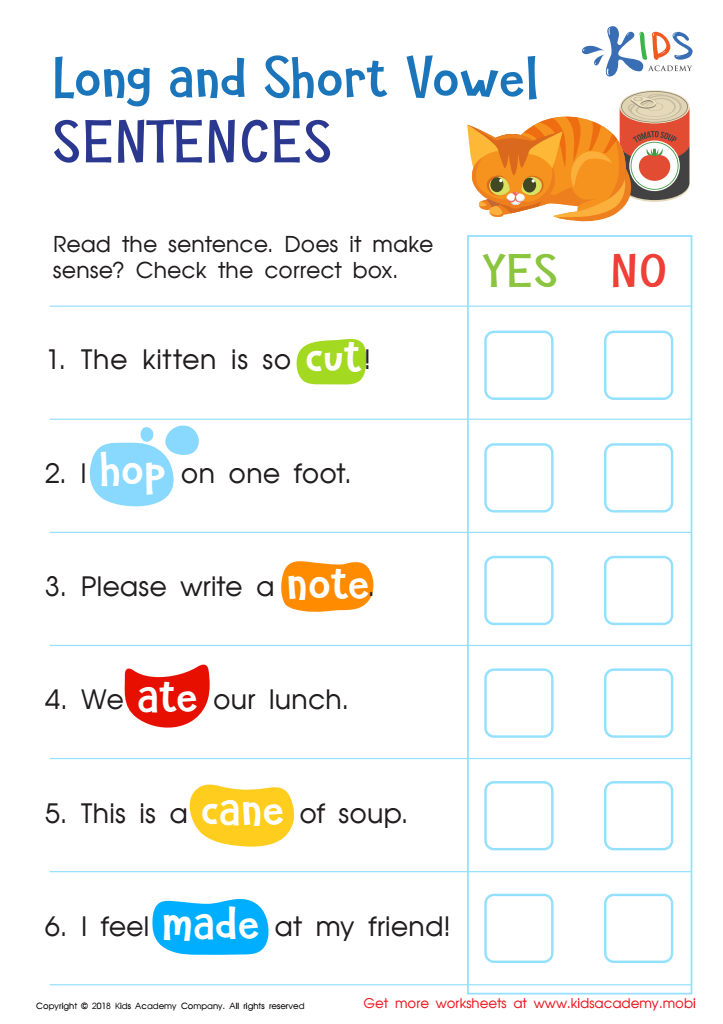
Long and Short Vowel Sentences: Assessment Worksheet
This printable worksheet helps kids practice differentiating between short and long vowel sounds. They'll use context clues to figure out which words make sense in simple sentences. A great way to build reading and writing skills!
Long and Short Vowel Sentences: Assessment Worksheet
Worksheet
Join Kids Academy for Free
Who is primarily going to use this learning content?



Vowel recognition and the differentiation between normal and long vowels are critical components of early reading development for children aged 5-6. At this age, children are typically in kindergarten or first grade, and their foundational literacy skills are being established. Understanding vowels and their various sounds significantly aids in decoding words, which is vital for fluent reading and comprehension.
Long vowels sound the same as their corresponding letter names, while short vowels have distinct sounds. Being able to recognize these differences helps children to accurately pronunciation words, improving their overall reading proficiency. For example, distinguishing between the short “a” sound in "cat" and the long “a” sound in "cake" not only aids in word recognition but also in spelling and writing, as it allows children to make sound-to-letter correlations, which is essential for encoding words.
Moreover, mastering vowel sounds reduces reading confusion, enhances confidence in young learners, and fosters a positive attitude towards reading activities. This skill also forms the basis for more advanced literacy challenges that children will encounter later, including multisyllabic word reading and phonics-based decoding strategies.
Parents and teachers thus should emphasize vowel recognition practice, incorporating engaging and varied methods such as games, songs, and reading exercises. These fun and interactive learning experiences can significantly solidify a child's command over essential vowel sounds. Consequently, proficient vowel recognition in these formative years establishes a solid cornerstone for future academic success in reading and writing.