
Phonics practice Normal Phonics Worksheets for Ages 5-6
11 filtered results
Difficulty Level
Grade
Age
-
From - To
Subject
Activity
Standards
Unlock your child's reading potential with our Phonics Practice Normal Phonics Worksheets for Ages 5-6. Perfect for kindergarteners, these engaging worksheets make learning phonics fun and effective. Through a variety of interactive exercises, young learners will master letter sounds, blend syllables, and improve reading fluency. Designed by educational experts, our worksheets cater to children's developmental stages, ensuring they remain excited about learning. With colorful graphics and easy-to-follow instructions, kids will enjoy the journey of discovering new words and sounds. Ideal for both classroom and home use, these worksheets are a fantastic resource for parents and teachers aiming to boost early reading skills.
Favorites
With answer key
Interactive
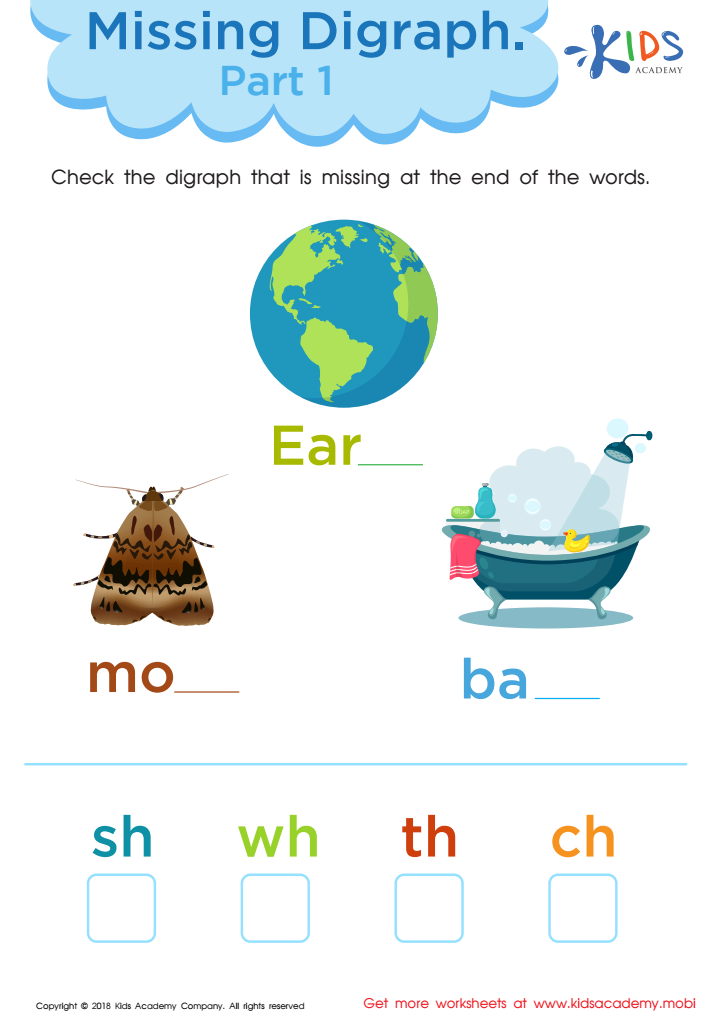
Missing Digraph: Part 1 Worksheet
Practice the 'th' digraph with this worksheet! Ask kids to say the words shown and sound out the letters below each image. Check the box with the correct digraph to complete. Examples include 'earth', 'bath' and 'moth', all ending with the same two letters. Phonics teaches that digraphs are two letters that make one sound.
 Assign to My Students
Missing Digraph: Part 1 Worksheet
Worksheet
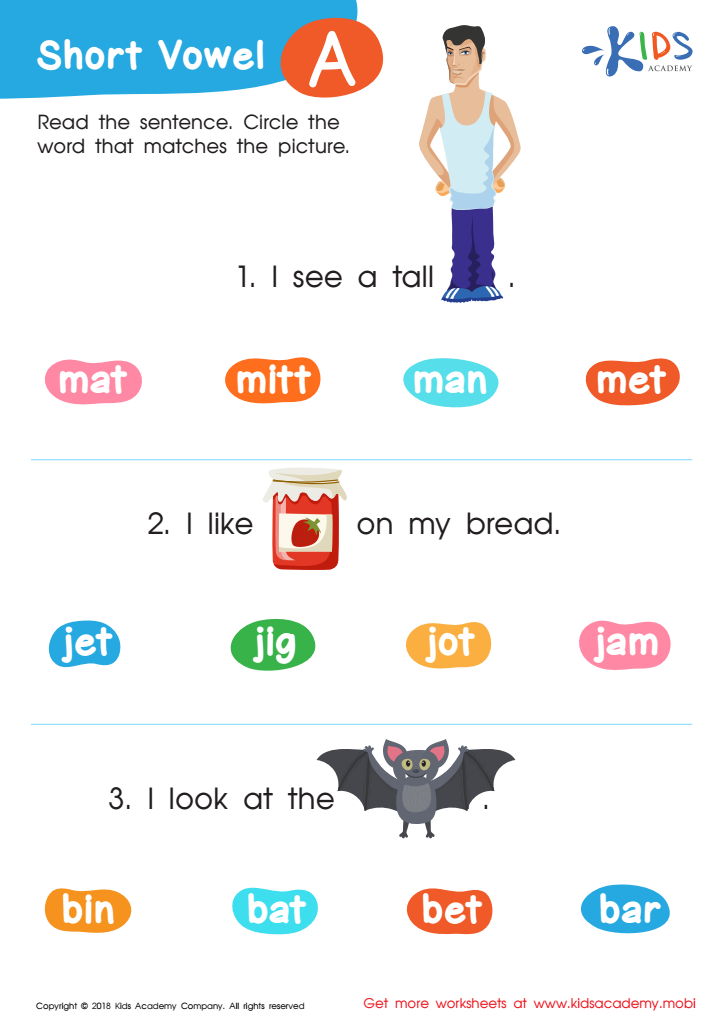
Short Vowel /a/ Worksheet
This free PDF helps new readers use sight words and pictures to read basic sentences. Then, they use accompanying word choices to find the correct word with the short a vowel sound. A key early reading skill, discriminating between short vowel sounds can be tricky in monosyllabic words, so use this PDF to help your reader reinforce it.
Short Vowel /a/ Worksheet
Worksheet
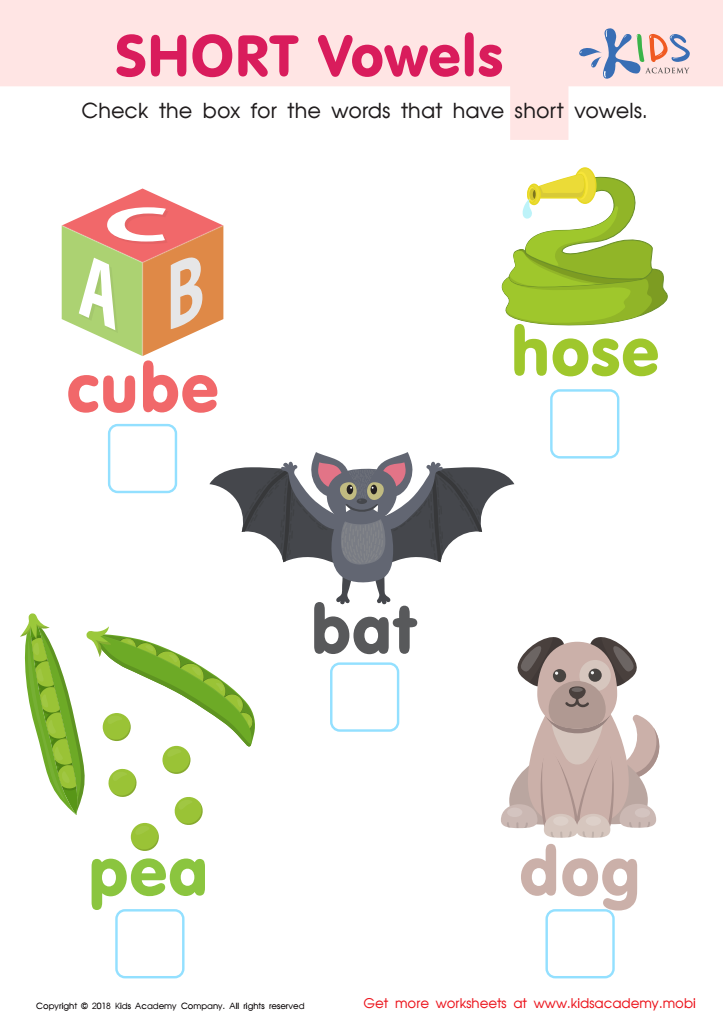
short vowels Worksheet
Say "dog" and notice how long it takes to pronounce the vowel. Is it short or long? Compare it to "pea" and use this worksheet to quickly assess your child's mastery. Have them name each picture and listen for the vowel sounds. Only check the boxes for words with short vowel sounds.
short vowels Worksheet
Worksheet
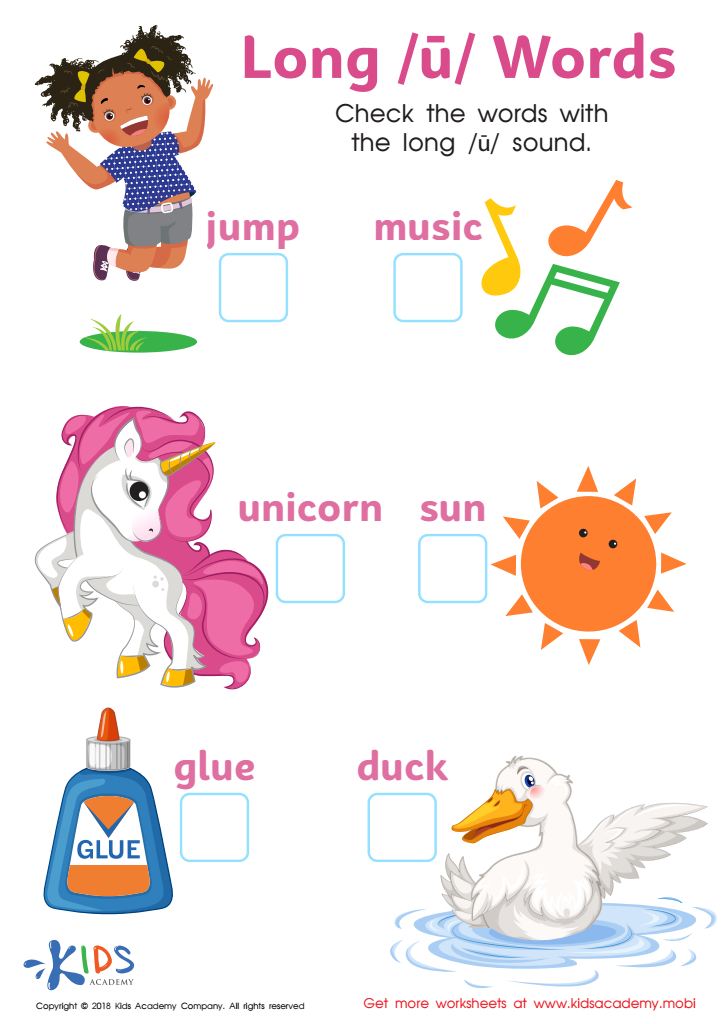
Long U Words Reading Worksheet
Emerging readers will love this free worksheet! It's a great way to practice distinguising between long and short vowel sounds, while identifying high-frequency words. They'll also get to develop fine motor skills and gain confidence in decoding and reading skills.
Long U Words Reading Worksheet
Worksheet
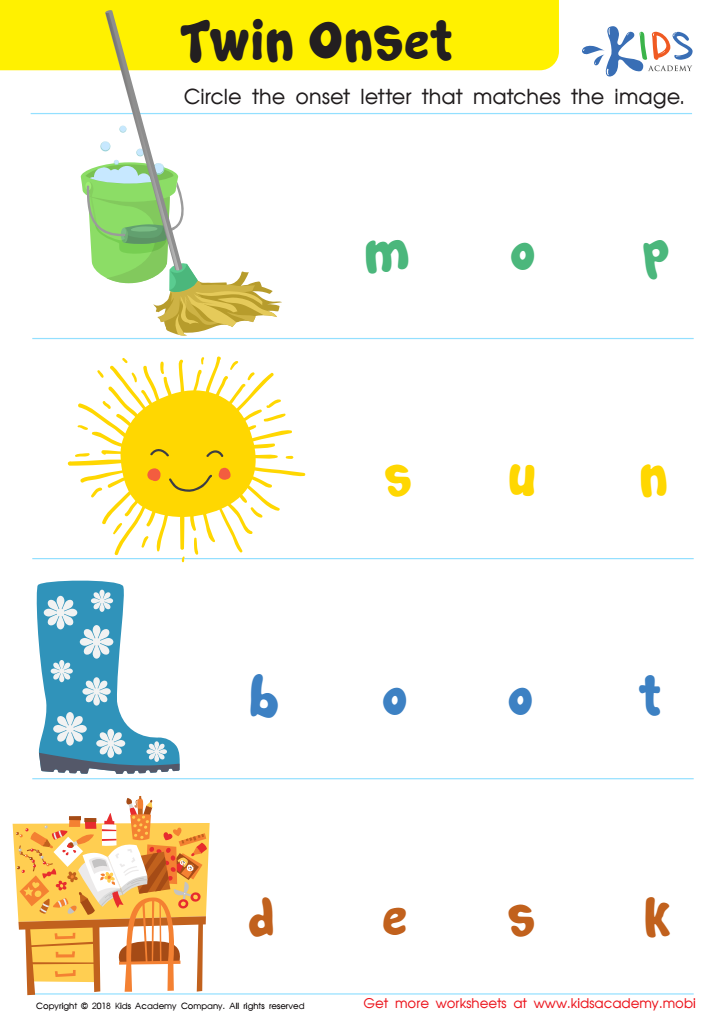
Twin Onset Worksheet
Children's phonological skills and reading/spelling strategies are strengthened by isolating initial consonants. This fun PDF worksheet encourages kids to trace the correct onset letter and hone fine motor skills. It's a great way to introduce early reading and spelling.
Twin Onset Worksheet
Worksheet
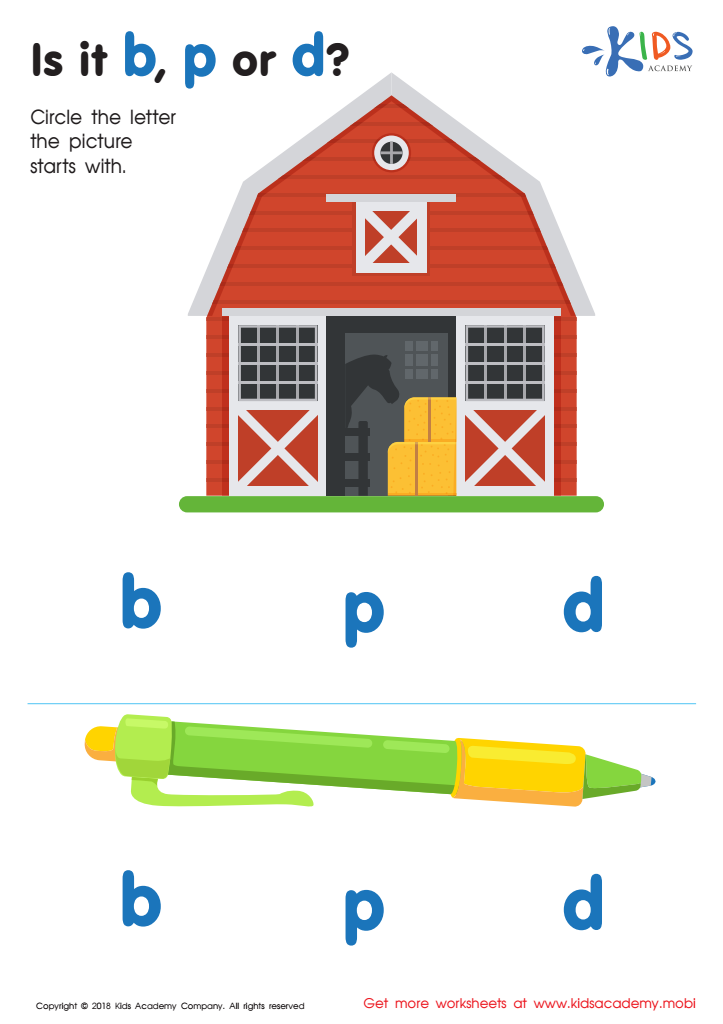
Is it b, p or d? Worksheet
Test your child's identification skills with this worksheet. They must identify the image and then circle the letter it begins with: 'b', 'p', or 'd' (e.g. an image of the sun would mean they circle 's').
Is it b, p or d? Worksheet
Worksheet
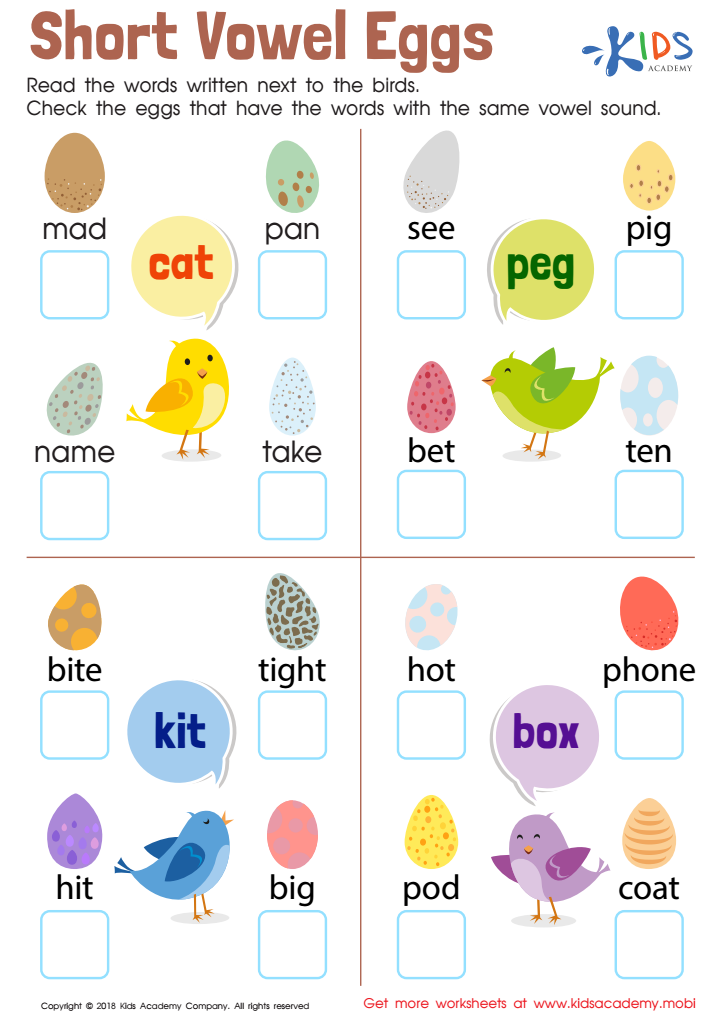
Short Vowel Eggs Worksheet
Your students will love helping these birdies pick the short vowel eggs! Have them read the words in the thought bubbles, then check off the boxes with the same short vowel sounds. The bright colors of this free Worksheet will draw them in and get them practicing their vowels!
Short Vowel Eggs Worksheet
Worksheet
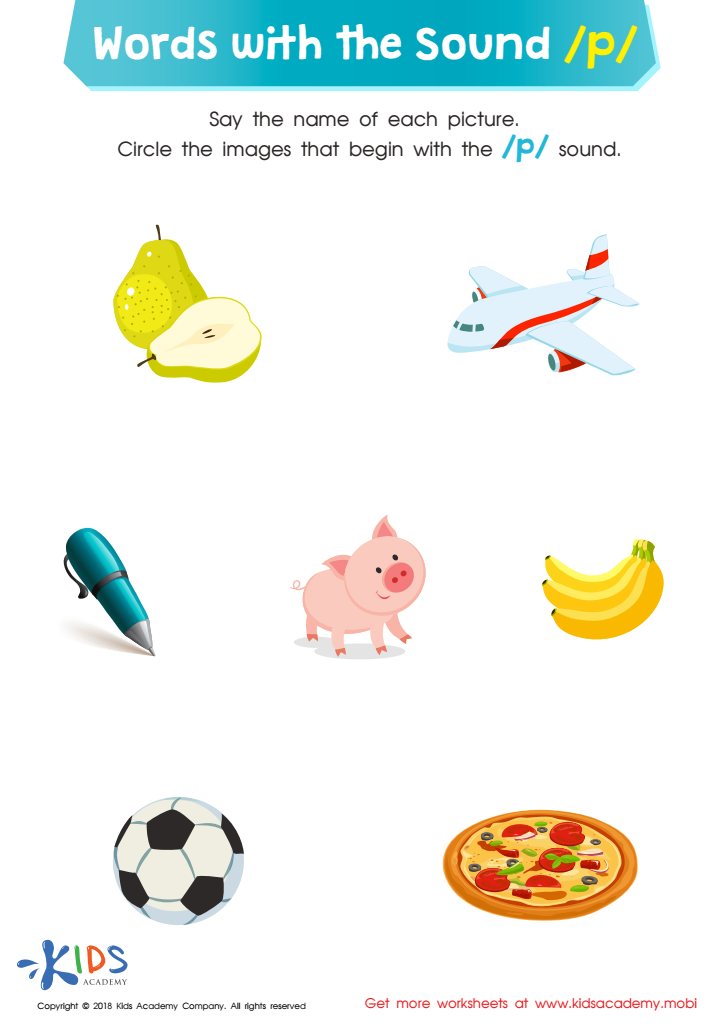
Words with sound p Reading Worksheet
Working on this fun worksheet? Name each picture aloud and listen carefully before circling those that start with the letter «p»! Pizza, pig, plane, or banana - practice phonics to help your child recognize the letter «p» sound for successful early reading and decoding!
Words with sound p Reading Worksheet
Worksheet
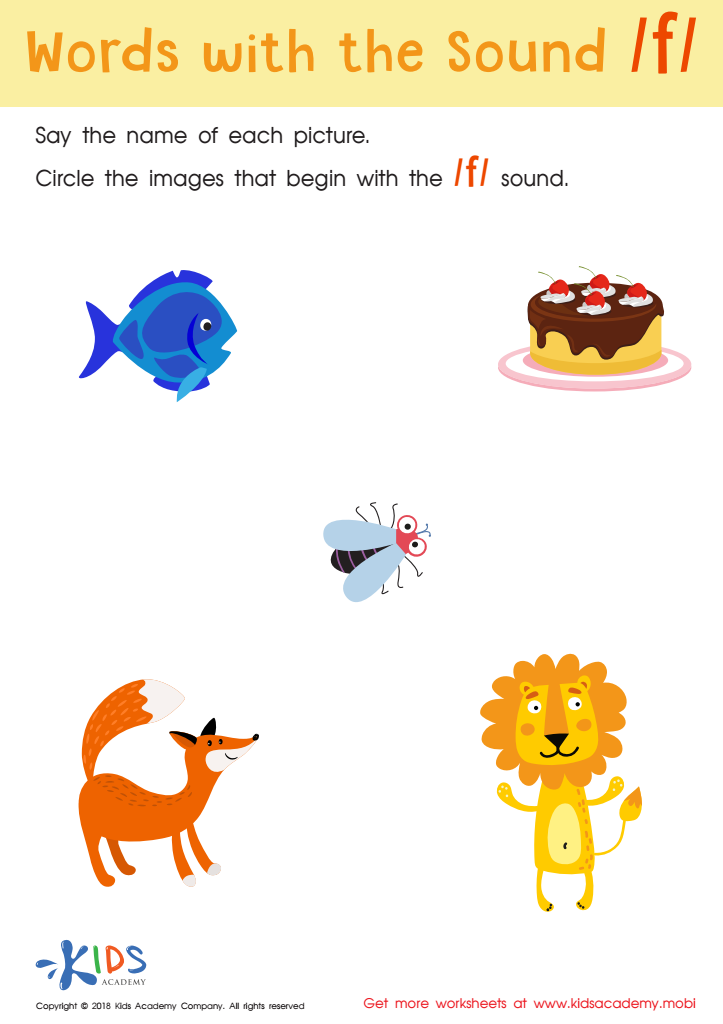
Words with sound f Reading Worksheet
This illustrated phonics worksheet is ideal for preschool or kindergarten. It helps boost learners' literacy skills with a focus on the letter "f". Ask your child to name all the pictures, listening for that sound. Examples are fish, fox, lion, bug. When they can identify which words start with "f", have them circle the images. Congratulate them on a job well done!
Words with sound f Reading Worksheet
Worksheet
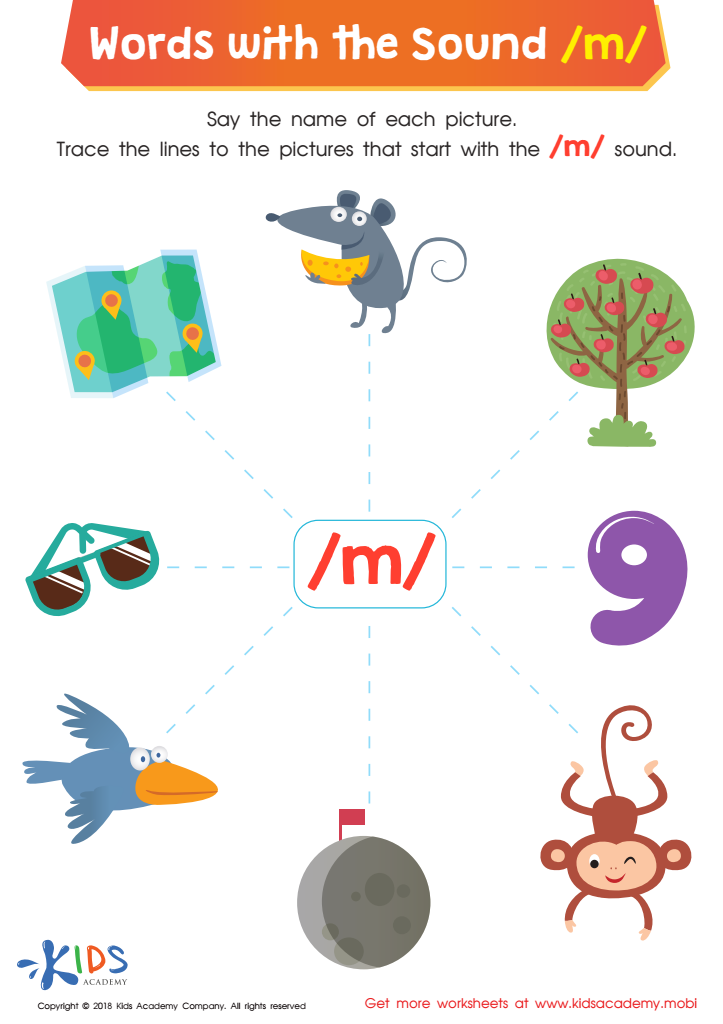
Words with Sound M Reading Worksheet
Emerging readers will use this traceable worksheet to name and trace pictures with the letter sound «m». Bright, engaging pictures make this fun and build confidence while strengthening fine motor skills. They won't even know they're also working on reading skills!
Words with Sound M Reading Worksheet
Worksheet
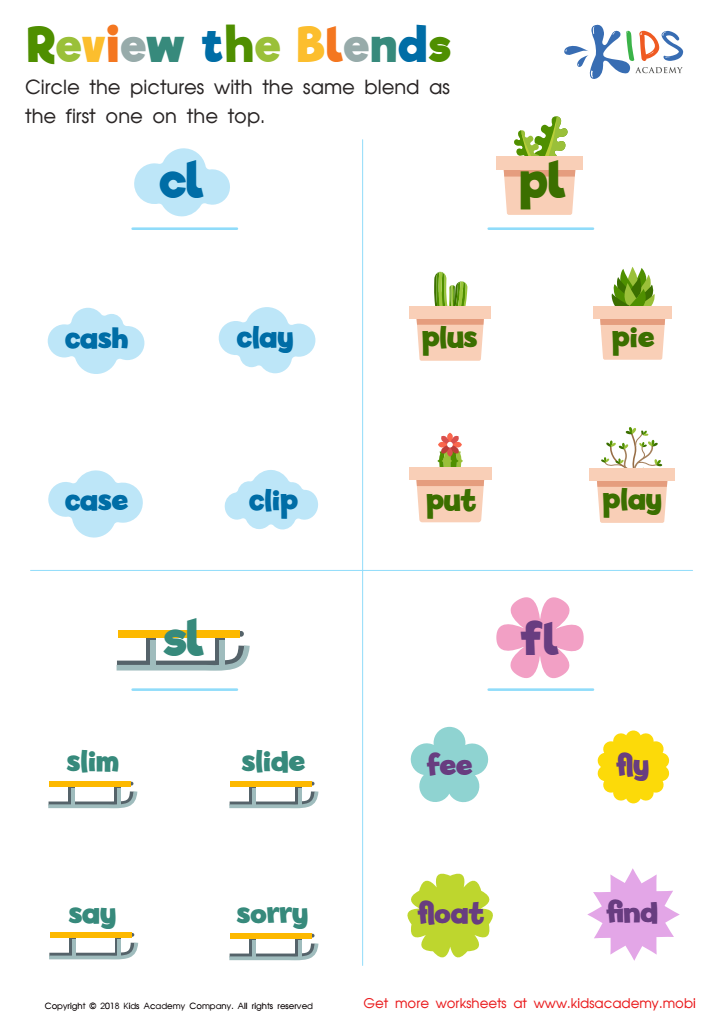
Review the Blends Worksheet
Consonant blends are two or three consonants that make a sound when pronounced together. L-blends like cl, bl, sl, fl and 3-letter blends like str, slp are common. This phonics worksheet helps early readers identify words containing two letter L-blends. Students must circle the words then read them aloud.
Review the Blends Worksheet
Worksheet
Join Kids Academy for Free
Who is primarily going to use this learning content?








Phonics practice is fundamental for young learners aged 5-6, as it lays the building blocks for reading and writing skills. At this crucial developmental stage, children are typically introduced to learning how to read, making phonics instruction invaluable. Phonics helps children understand the relationship between letters and sounds, which is essential for decoding words. This skill not only enriches their reading ability but also boosts their writing skills, as knowing how to spell words begins with understanding how they sound.
Engaging in regular phonics practice enables children to read with fluency, accuracy, and comprehension. For parents and teachers, emphasizing phonics helps identify early on if a child is struggling, allowing for timely intervention. This early support can prevent future academic challenges and nurture a love for reading, an important factor in overall academic success.
Furthermore, a strong phonics foundation supports confident, independent learning across subjects, enhancing children's ability to acquire and retain information. Encouraging phonics practice instills lifelong literacy skills, opens doors to varied learning opportunities, and fosters self-esteem in young learners. Thus, parents and teachers play a critical role in ensuring consistent and effective phonics practice, paving the way for academic achievement and a lifelong love of learning.







