
Spelling Skills Normal Phonics Worksheets for Ages 5-6
5 filtered results
Difficulty Level
Grade
Age
-
From - To
Subject
Activity
Standards
Enhance your child's spelling skills with our engaging Normal Phonics Worksheets designed for ages 5-6. These worksheets are tailored to support early literacy development, helping young learners grasp essential phonics concepts through fun and interactive activities. Each worksheet focuses on key sound-letter associations, blending techniques, and spelling practice, ensuring your child builds a strong foundation in literacy. With colorful illustrations and age-appropriate exercises, children will stay motivated while improving their reading and writing abilities. Perfect for home or classroom use, our Spelling Skills Worksheets provide a delightful way for kids to explore the world of phonics and spelling! Download and start learning today!
Favorites
With answer key
Interactive
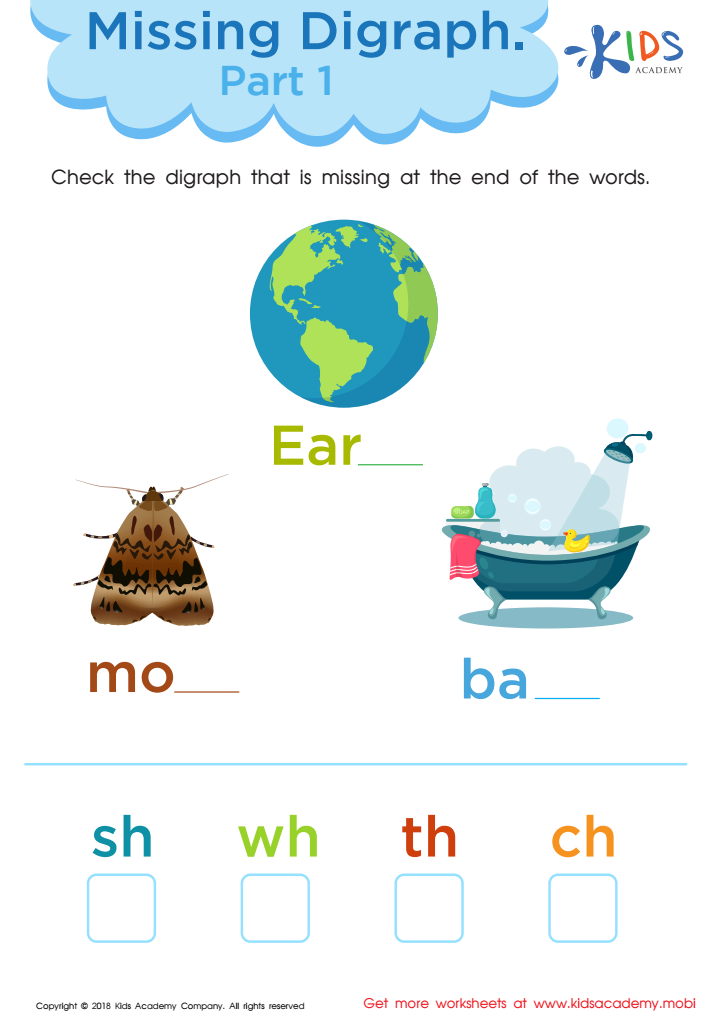
Missing Digraph: Part 1 Worksheet
Practice the 'th' digraph with this worksheet! Ask kids to say the words shown and sound out the letters below each image. Check the box with the correct digraph to complete. Examples include 'earth', 'bath' and 'moth', all ending with the same two letters. Phonics teaches that digraphs are two letters that make one sound.
Missing Digraph: Part 1 Worksheet
Worksheet
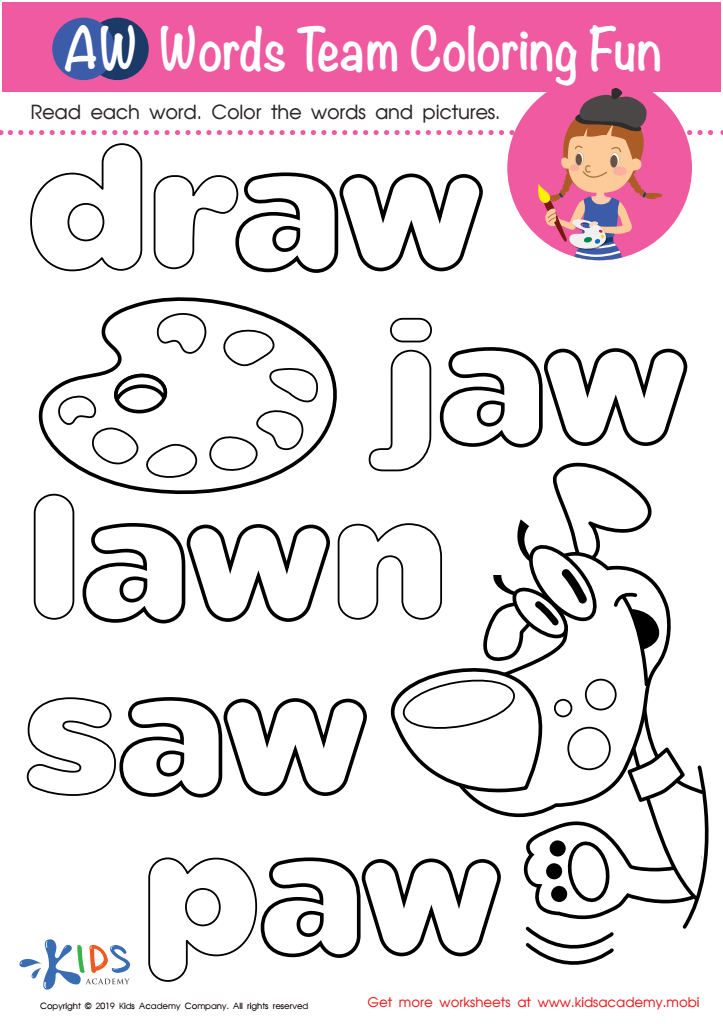
AW Words Team Coloring Fun Worksheet
Coloring words they can read is a blast for little learners! This worksheet offers emerging readers the chance to practice and gain confidence in reading words from the -aw family, while also improving fine-motor and creativity skills. Without knowing it, they'll learn about phonetic teams along the way!
Download (PDF)
 Assign to My Students
Assign to My Students
AW Words Team Coloring Fun Worksheet
Worksheet
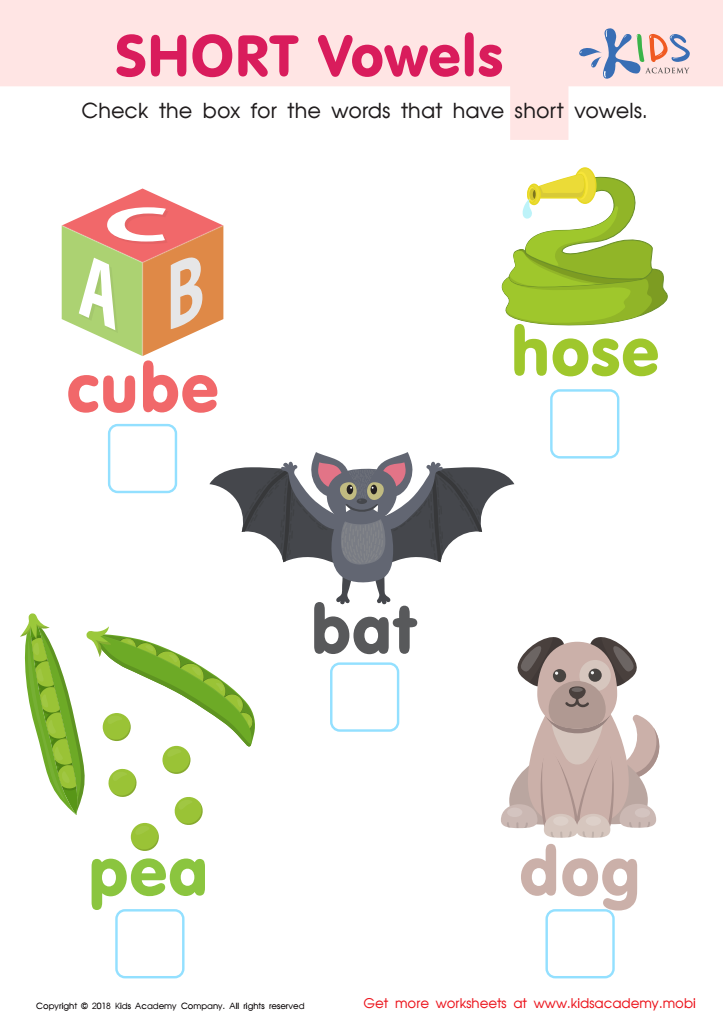
short vowels Worksheet
Say "dog" and notice how long it takes to pronounce the vowel. Is it short or long? Compare it to "pea" and use this worksheet to quickly assess your child's mastery. Have them name each picture and listen for the vowel sounds. Only check the boxes for words with short vowel sounds.
short vowels Worksheet
Worksheet
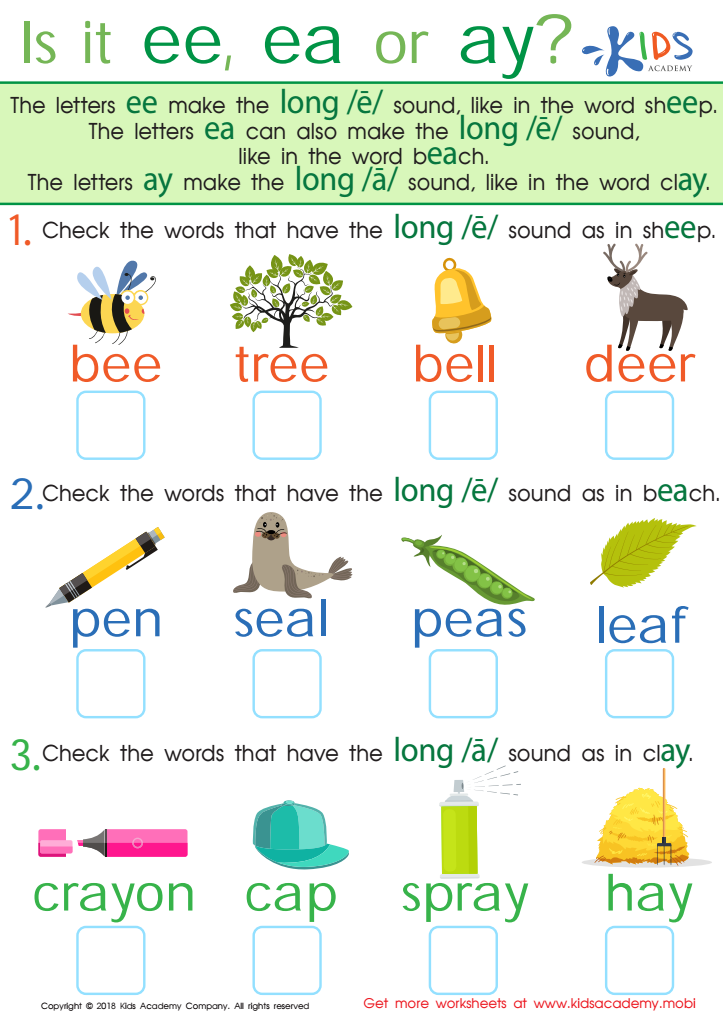
Is It EE, EA, or AY? Worksheet
When 'ee', 'ea' and 'ay' are in words, they usually make the long /e/ and /a/ sounds. Examples of words with 'ee' are "sheep", 'beach' and 'seat' with 'ea', and 'clay' and 'play' with 'ay'. Check this colourful worksheet with your kids; help them find the words that make the long /e/ sound like 'sheep'.
Is It EE, EA, or AY? Worksheet
Worksheet
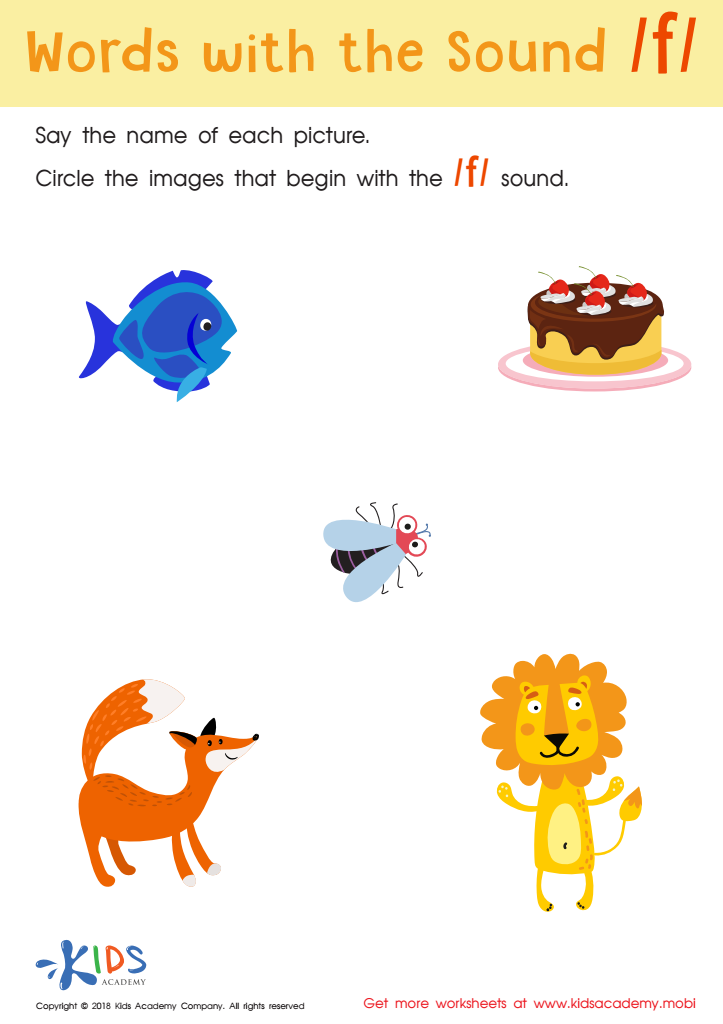
Words with sound f Reading Worksheet
This illustrated phonics worksheet is ideal for preschool or kindergarten. It helps boost learners' literacy skills with a focus on the letter "f". Ask your child to name all the pictures, listening for that sound. Examples are fish, fox, lion, bug. When they can identify which words start with "f", have them circle the images. Congratulate them on a job well done!
Words with sound f Reading Worksheet
Worksheet
Join Kids Academy for Free
Who is primarily going to use this learning content?








Spelling skills and phonics are foundational elements in early childhood education, particularly for children ages 5-6. Understanding phonics helps children decode words—a critical ability for reading and writing. When children develop solid phonetic awareness, they begin to connect sounds with letters, allowing them to sound out words independently. This skill-reinforcement not only boosts their reading abilities but also enhances their confidence in language use.
For parents and teachers, investing time in teaching phonics can lead to significant long-term academic benefits. Children who grasp spelling skills early often show improved comprehension skills, enabling them to engage with texts more deeply. Moreover, literacy is closely tied to overall academic success; students with strong reading skills perform better across all subjects, including math and science.
Concern for spelling skills isn’t merely about literacy; it fosters critical thinking, creativity, and communication skills. Parents and teachers should advocate for phonics education to create a solid literacy foundation that prepares children for lifelong learning. As a collector of education tools, Normal Phonics provides structured, age-appropriate materials that can engage young learners, making the spelling process enjoyable. Ultimately, a robust understanding of phonics makes children competent and confident readers, setting the stage for their future success.







