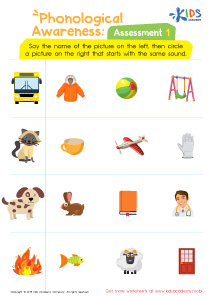
Vocabulary enhancement Normal Rhyming Worksheets for Ages 5-6
6 filtered results
-
From - To
Discover our engaging Vocabulary Enhancement Normal Rhyming Worksheets designed for children ages 5-6! These interactive worksheets are perfect for nurturing your child's language skills through fun and effective rhyming activities. Each worksheet aims to enhance vocabulary, improve phonemic awareness, and bolster reading comprehension. Kids will practice recognizing and generating rhyming words, helping to build a strong foundation for literacy. Bright, colorful illustrations make learning enjoyable, encouraging creativity and self-expression. These worksheets are ideal for use at home or in the classroom, supporting early education and development. Download your free copies today and watch your child's vocabulary skills blossom!
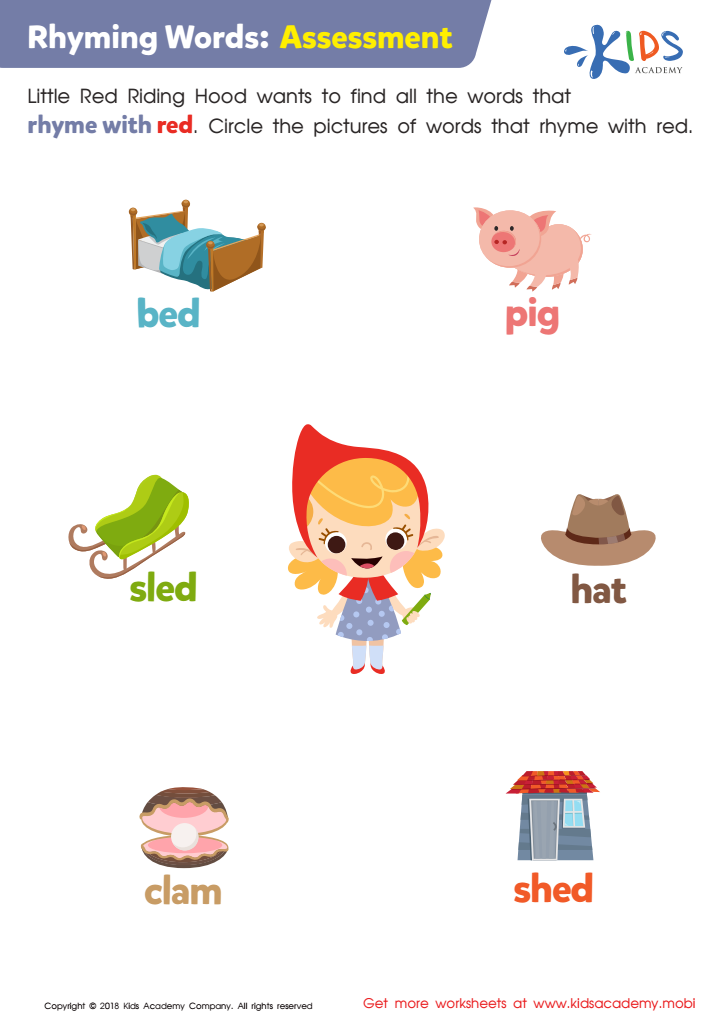
Rhyming Words: Assessment Worksheet
 Assign to My Students
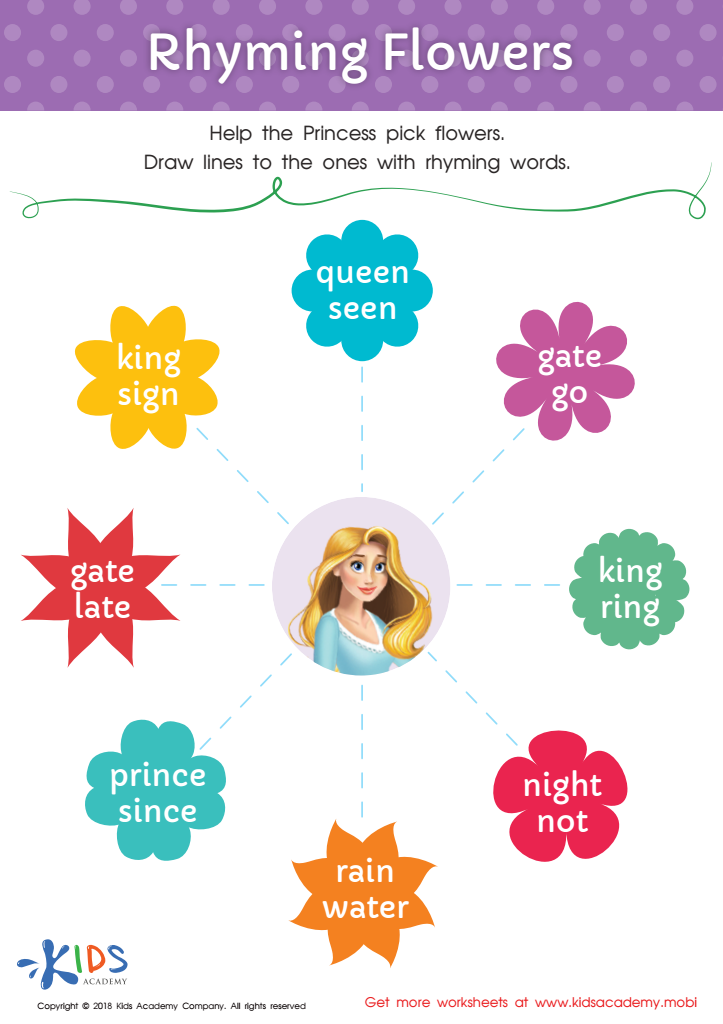
Rhyming Flowers Worksheet
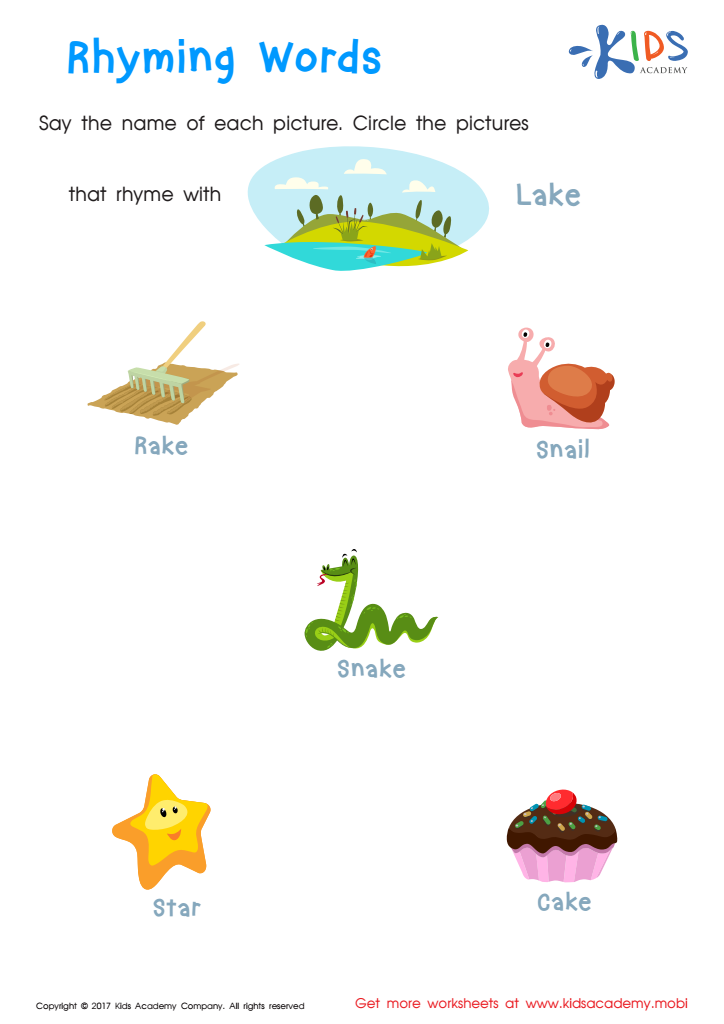
Rhyming Words Rhyming Worksheet
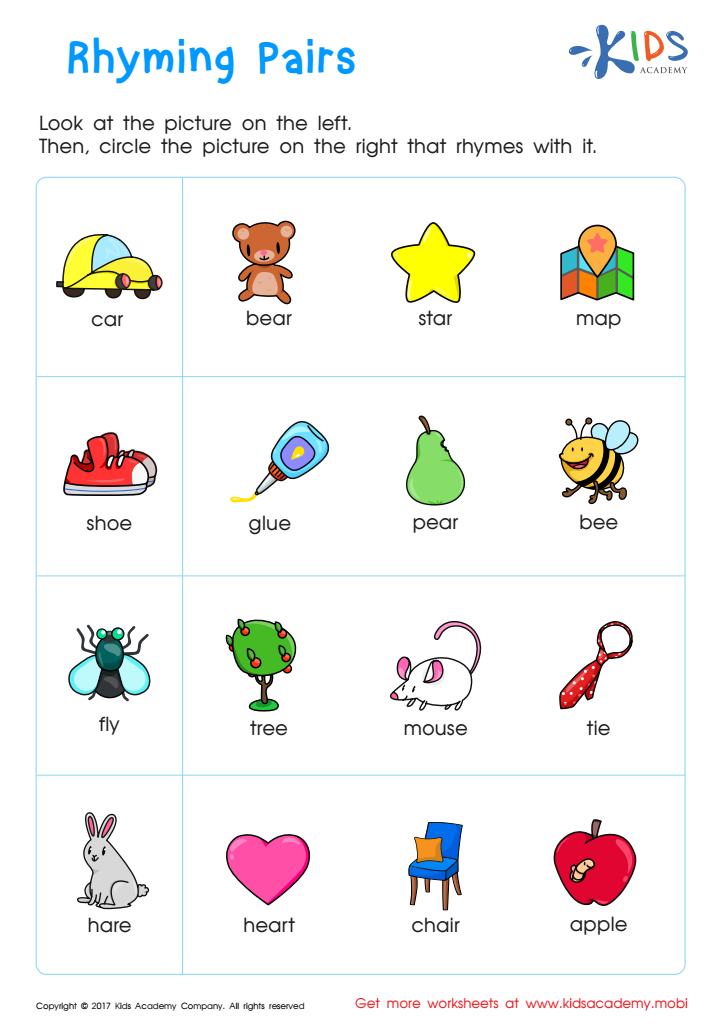
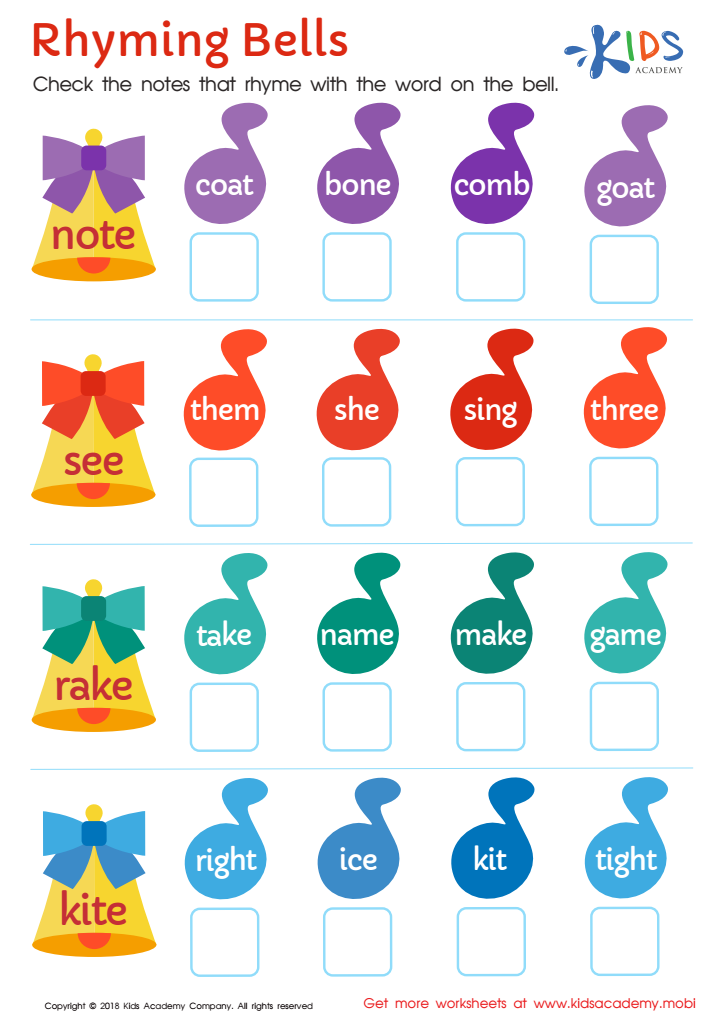
Rhyming Bells Worksheet
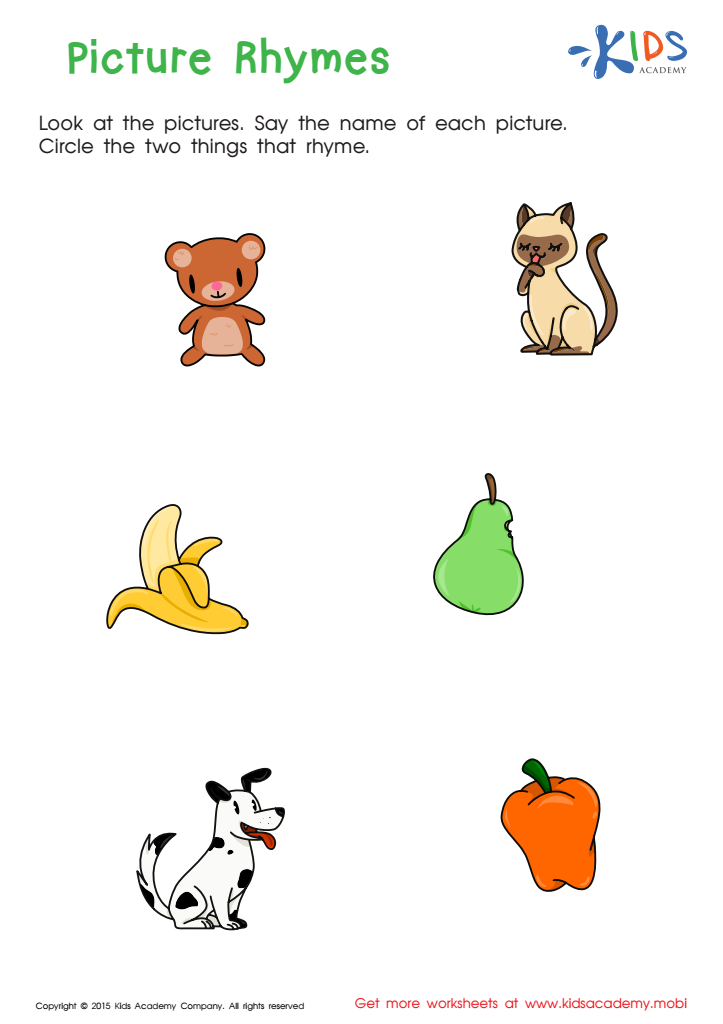
First Words: Picture Rhymes Worksheet







Parents and teachers should prioritize vocabulary enhancement through normal rhyming for children aged 5-6 because it significantly supports language development. At this age, children are rapidly expanding their vocabulary, and rhyming activities make learning fun and engaging. Rhyming helps children recognize sounds and patterns in language, which enhances their phonemic awareness—a critical skill for reading success. When children can identify and produce rhymes, they become more confident in their language abilities.
Furthermore, rhyming expands vocabulary by introducing new words in an enjoyable context. Songs, poems, and rhyming games encourage kids to explore language creatively, making them more likely to remember and use new words in conversations. This playful approach also fosters a love for reading, as children are drawn to stories with rhythm and rhyme.
Additionally, engaging in rhyming activities nurtures listening skills and cognitive development. As children begin to connect words and meanings, they strengthen their comprehension abilities and critical thinking. Overall, by focusing on normal rhyming, parents and teachers provide foundational skills that not only enhance vocabulary but also set the stage for lifelong learning and communication. Investing time in rhyming activities is a powerful way to promote literacy and foster a love of language in early learners.