Phonics Skills Normal Short Vowels Worksheets for Ages 5-6
5 filtered results
-
From - To
Discover engaging Phonics Skills Normal Short Vowels Worksheets designed specifically for ages 5-6. These fun and educational printable worksheets from Kids Academy focus on mastering short vowel sounds essential for early reading development. Each activity simplifies learning through interactive exercises, building fundamental phonics skills and boosting confidence. Perfect for classroom and home use, these worksheets are thoughtfully crafted to provide a solid foundation for young readers. Support your child's phonics journey with tools that make learning enjoyable and effective. Explore our collection today and watch as your child grows into a skilled and enthusiastic reader!
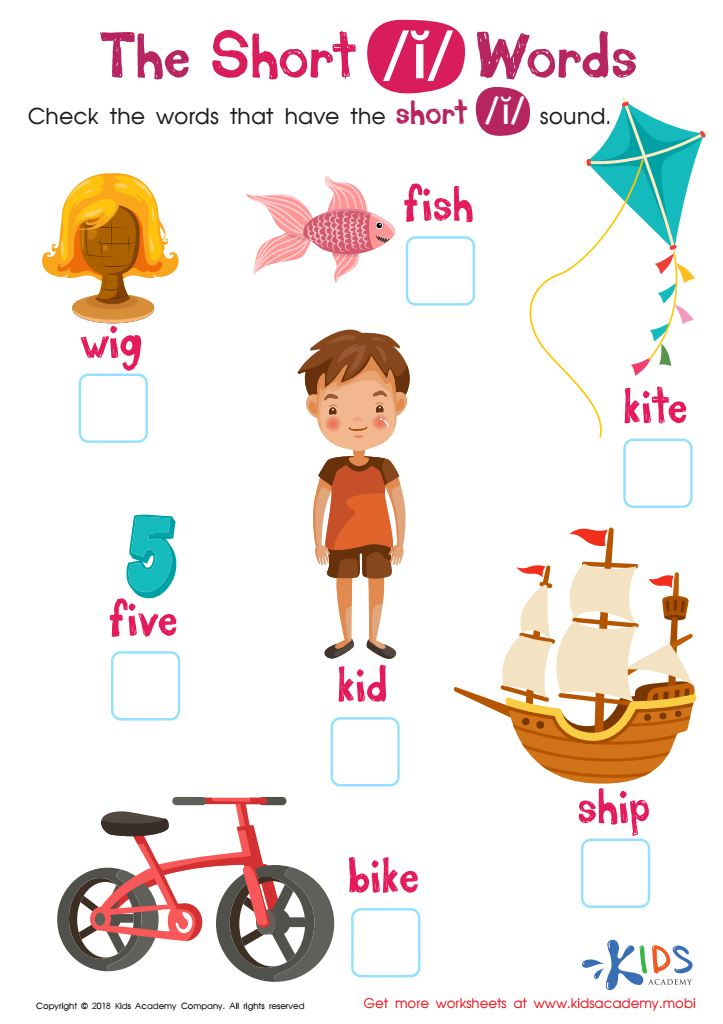
The Short I Words Reading Worksheet
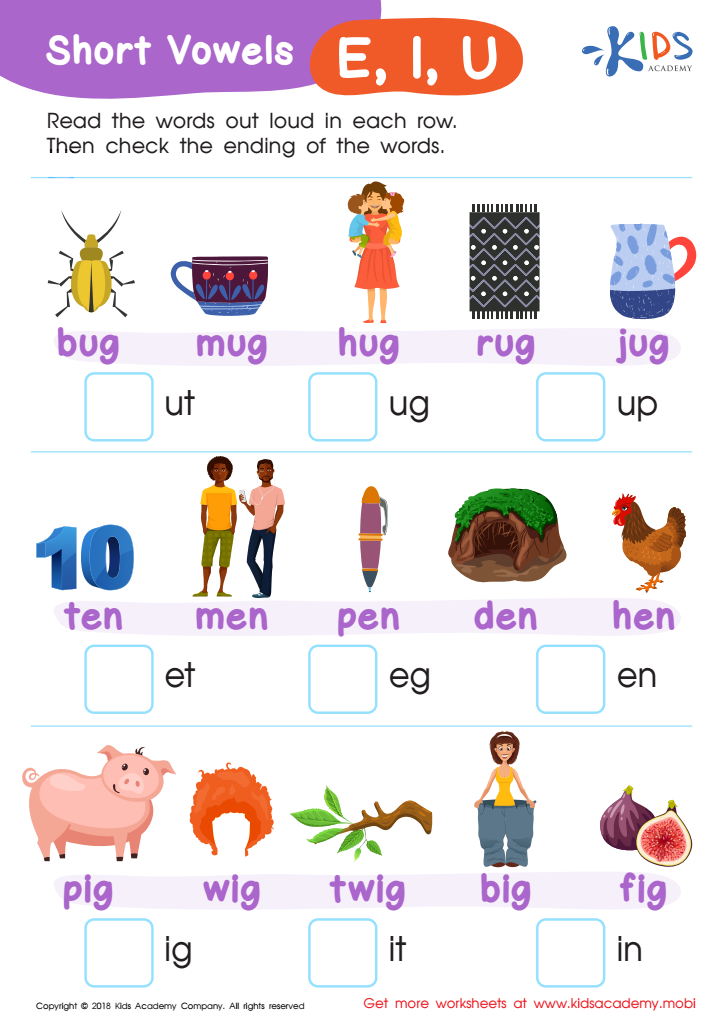
Short Vowels /e/, /i/, and /u/ Worksheet
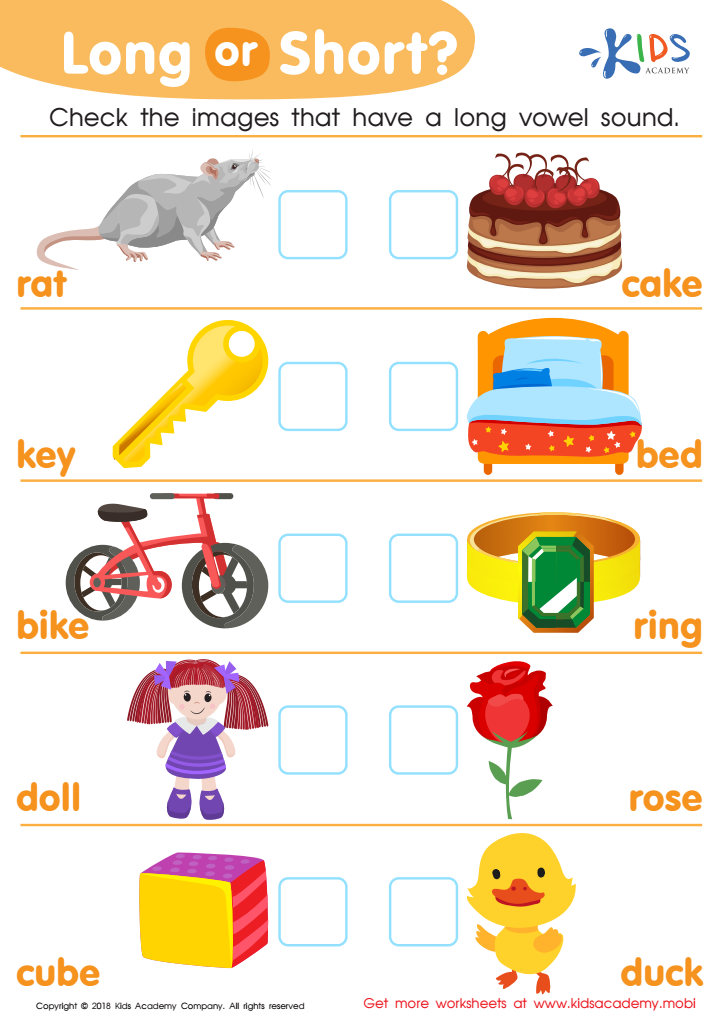
Long or Short Reading Worksheet
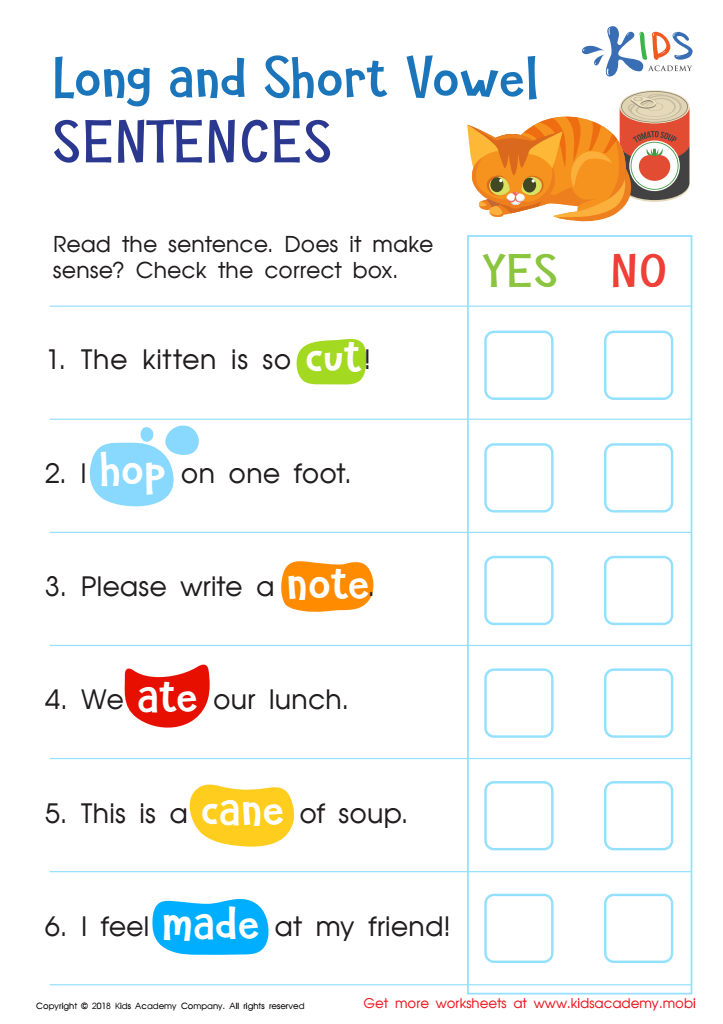
Long and Short Vowel Sentences: Assessment Worksheet

Long and Short E Worksheet
 Assign to My Students



Phonics skills, particularly focusing on normal short vowels, are foundational for young learners, typically ages 5-6. Mastery of short vowels (a, e, i, o, u) is essential for developing proficient reading and writing abilities. These vowels are building blocks of the English language, appearing in many simple, common words that children first encounter in texts.
Understanding the sounds that each short vowel represents helps in decoding words, making the process of reading more fluid and less frustrating. This phonemic awareness is crucial for sounding out words, an important skill that supports early literacy and enhances comprehension. Literacy at this age sets the stage for future academic success, instilling confidence and a positive attitude towards learning.
Furthermore, early mastery of phonics enables children to tackle spelling more effectively. It equips them to recognize patterns in language, a critical step towards spelling words correctly and independently. Kids who excel in phonics can transition smoothly to more complex reading skills, like fluency and interpretation.
Therefore, by instilling robust phonics skills, particularly with short vowels, parents and teachers provide young learners with the tools they need to build a strong literacy foundation. This, in turn, supports overall educational achievement and fosters a lifelong love of reading.