Reading comprehension Normal Short Vowels Worksheets for Ages 5-6
5 filtered results
-
From - To
Unlock the potential of young learners with our Reading Comprehension Normal Short Vowels Worksheets designed for ages 5-6. These engaging, printable worksheets focus on enhancing students' understanding of short vowel sounds, fostering essential reading skills such as word recognition, phonemic awareness, and sentence structure. Perfect for early readers, these activities provide a fun and effective way to grasp vowel concepts through interactive exercises and colorful illustrations. Ideal for classroom or home use, these worksheets will help children develop strong literacy foundations while they enjoy the process of learning to read.
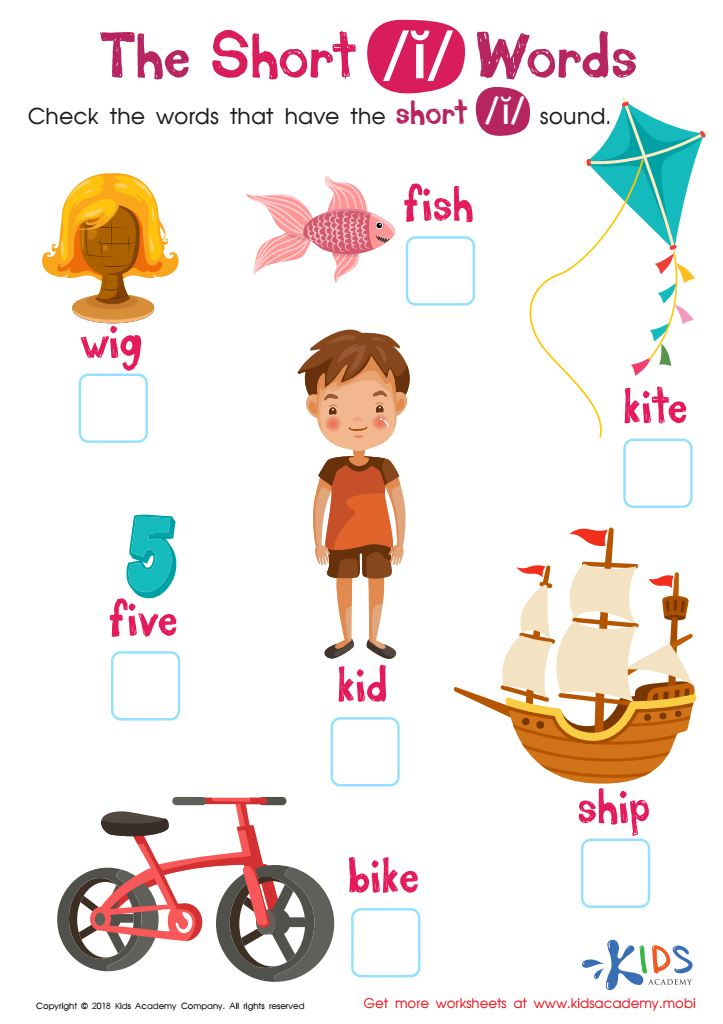
The Short I Words Reading Worksheet
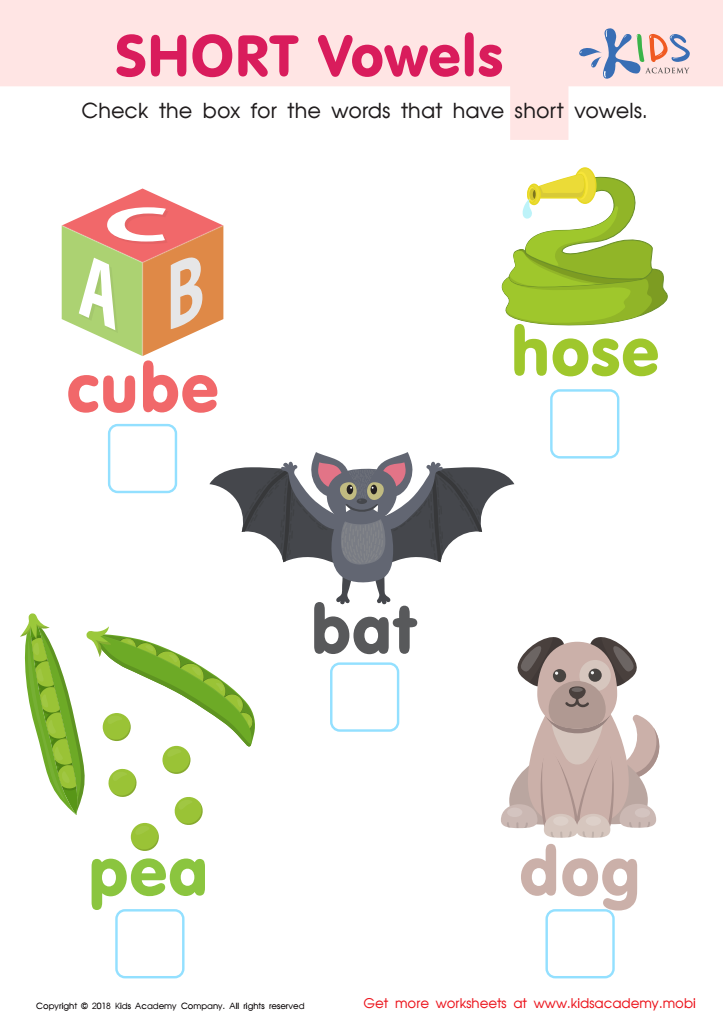
short vowels Worksheet
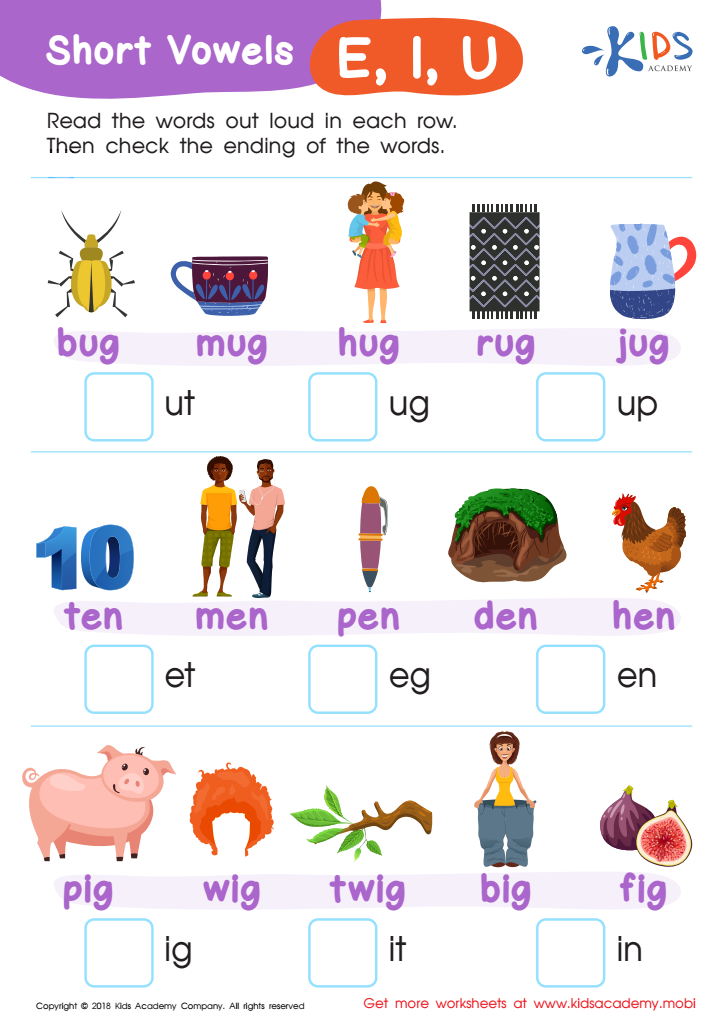
Short Vowels /e/, /i/, and /u/ Worksheet
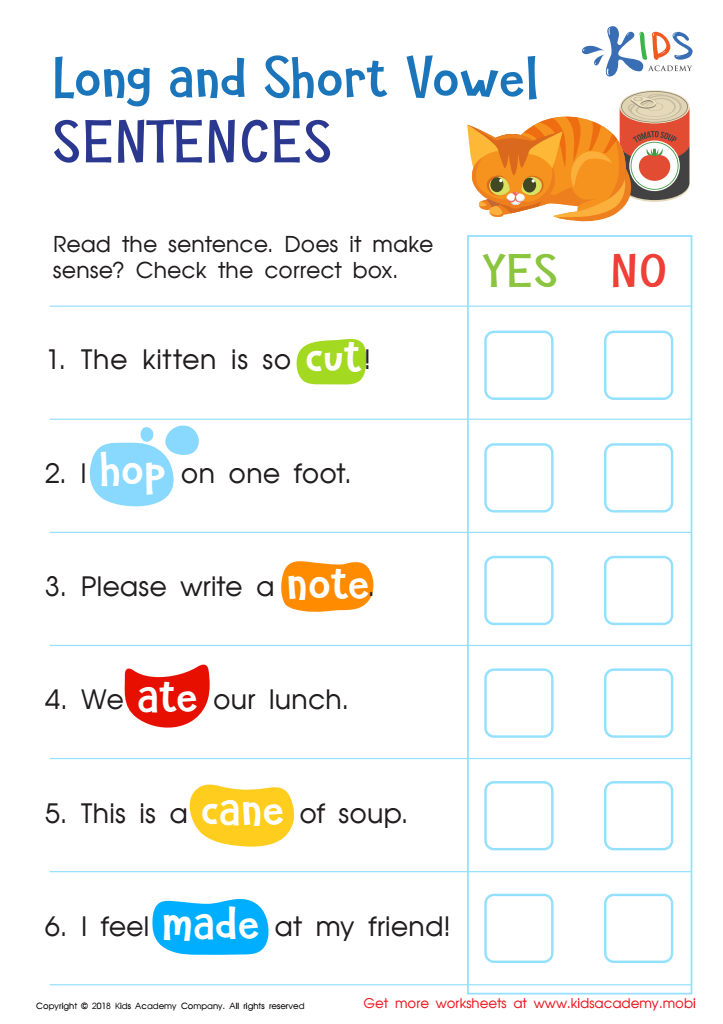
Long and Short Vowel Sentences: Assessment Worksheet
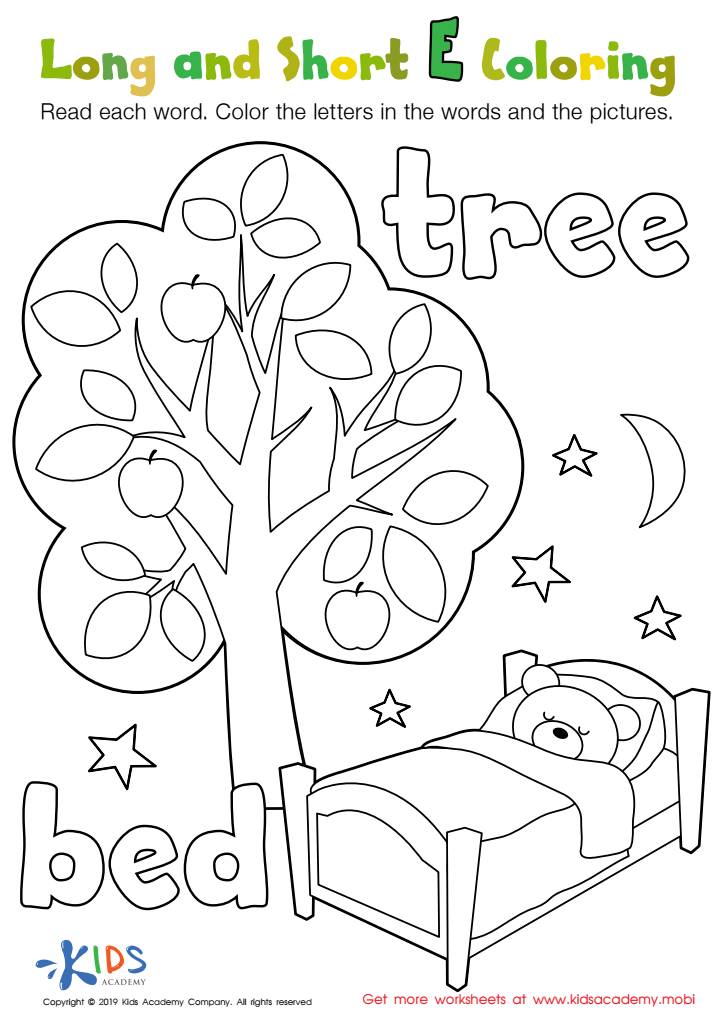
Long and Short E Worksheet
 Assign to My Students



Reading comprehension with a focus on normal short vowels is crucial for children aged 5-6, as it forms the foundation for their emerging literacy skills. At this developmental stage, kids are transitioning from recognizing letters to decoding simple words, which is where short vowels become essential. Short vowels, found in words like "cat," "bed," "sit," "top," and "sun," are some of the first phonemic patterns that children learn to read and write.
Parents and teachers should prioritize this because mastery of short vowels enables children to decode a variety of simple words, boosting their reading fluency. When a child can effortlessly sound out words, they can focus on comprehension rather than struggling with word recognition. This early success fosters confidence and a love for reading, setting a positive trajectory for lifelong literacy.
Furthermore, understanding short vowels improves spelling skills, an integral part of written communication. As children frequently encounter and practice short vowel sounds, they make fewer spelling errors, making their writing more readable and meaningful. Early proficiency in reading short vowel sounds aligns with educational benchmarks, preparing children not only for more complex phonics but also for general academic success. Therefore, by investing in activities and lessons that emphasize these skills, parents and teachers lay a vital groundwork for their children's future learning.