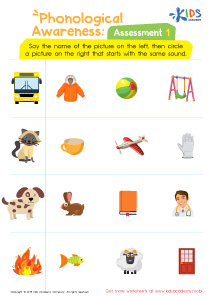
Vowel Recognition Normal Vowels and Consonants Worksheets for Ages 5-6
6 filtered results
-
From - To
Enhance your child's literacy skills with our "Vowel Recognition Normal Vowels and Consonants Worksheets" designed for ages 5-6! These engaging worksheets focus on helping young learners identify and distinguish between vowels and consonants, providing a solid foundation for reading and writing. Each activity is crafted to foster recognition through fun exercises that include coloring, matching, and sorting, making learning enjoyable. Additionally, the worksheets promote fine motor skills as children interact with letters. Perfect for at-home practice or classroom use, these resources ensure your little one develops confidence in their alphabet knowledge while building essential early literacy skills.
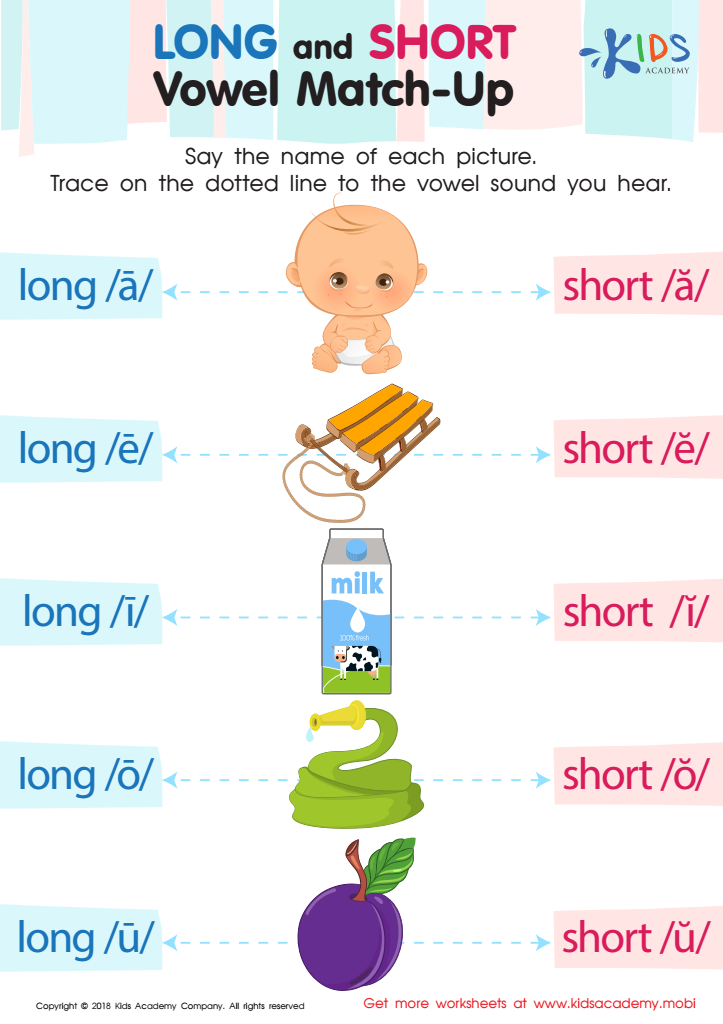
Long and Short Vowel Match up Reading Worksheet
 Assign to My Students
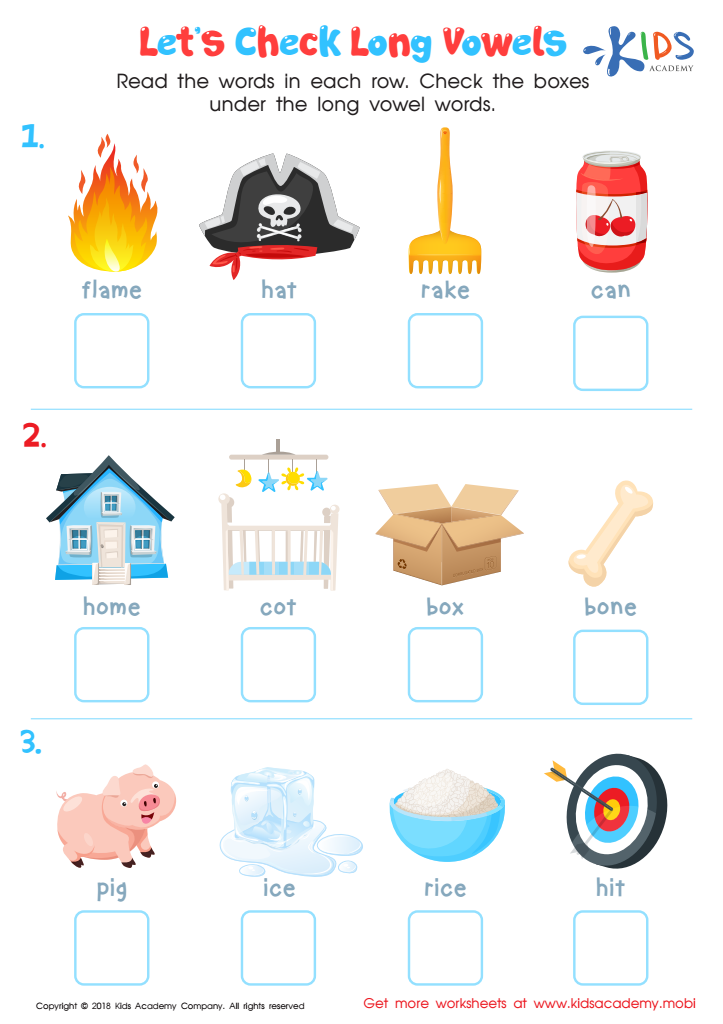
Let's Check Long Vowels: Assessment Worksheet
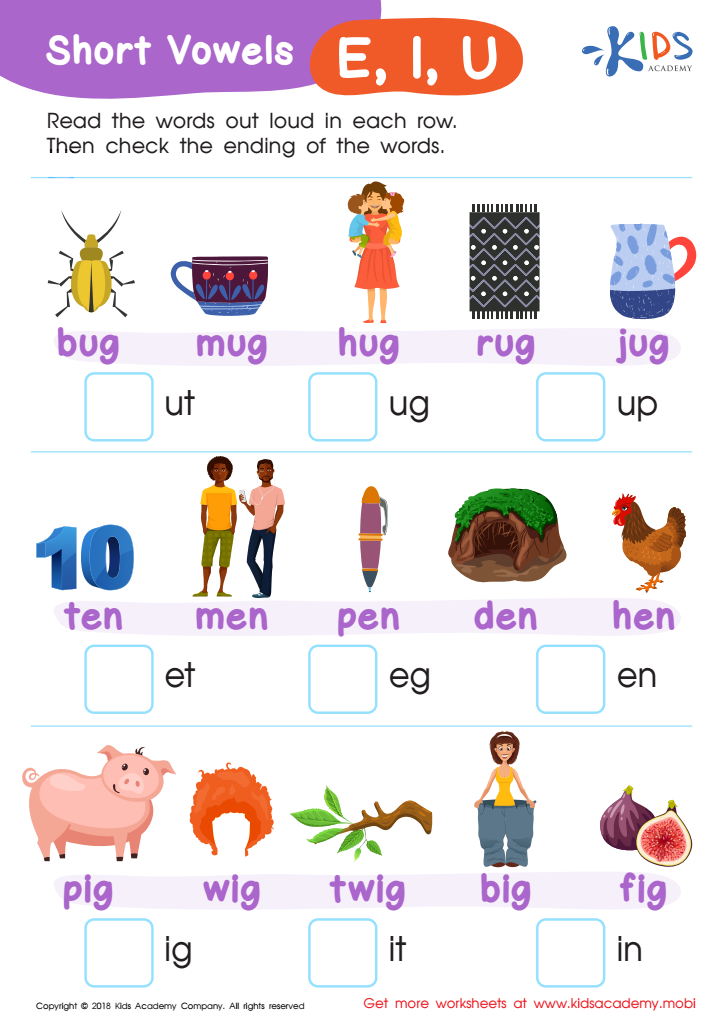
Short Vowels /e/, /i/, and /u/ Worksheet
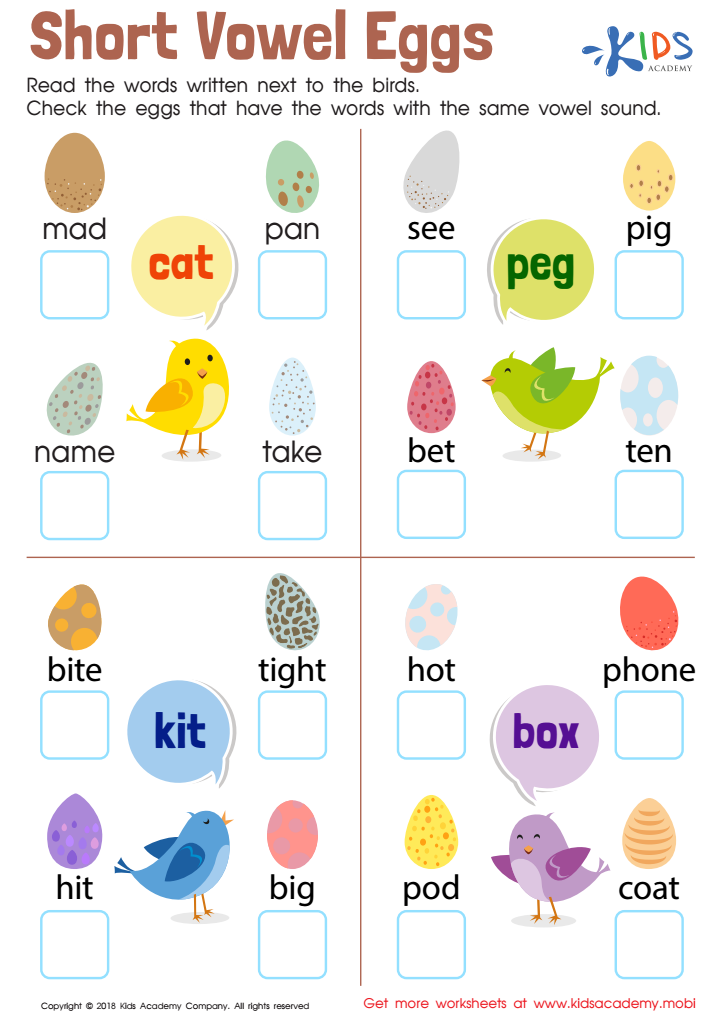
Short Vowel Eggs Worksheet
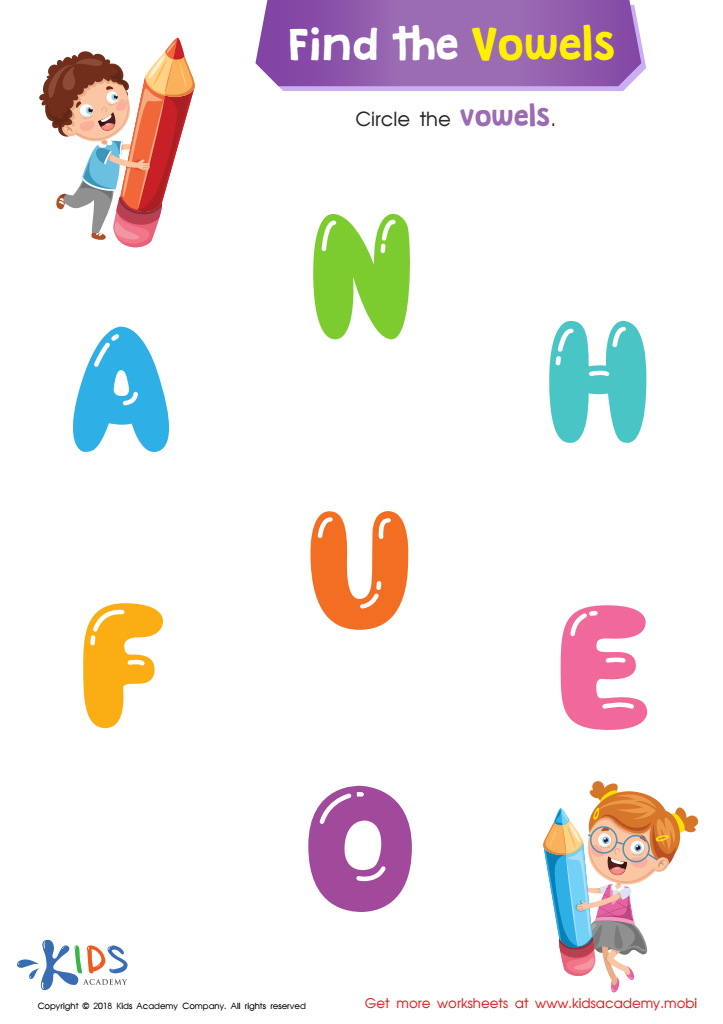
Find the Vowels Reading Worksheet
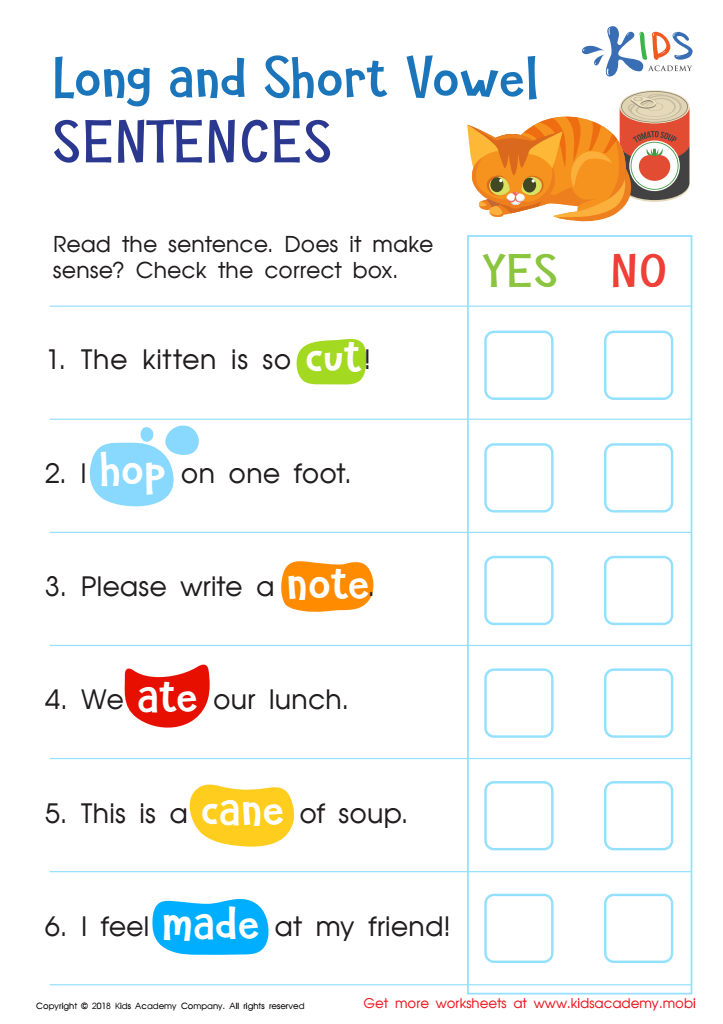
Long and Short Vowel Sentences: Assessment Worksheet



Vowel recognition, particularly understanding normal vowels and consonants, is a crucial aspect of early literacy development for children aged 5-6. At this age, children begin to build the foundational skills necessary for reading, writing, and effective communication. Vowels (A, E, I, O, U) and consonants form the building blocks of words, and recognizing them enhances a child's phonemic awareness—a key predictor of later reading success.
Parents and teachers should prioritize vowel recognition because it facilitates decoding skills, helping children to sound out words independently. When children can identify and distinguish between vowels and consonants, they can better grasp spelling patterns and word formation. This skill supports their ability to read simple texts and express themselves through writing.
Additionally, recognizing vowels and consonants aids in children's confidence in their literacy abilities. As they develop these skills, they are more likely to engage in reading activities and develop a love for books. Promoting vowel and consonant recognition also encourages collaboration between parents and educators, creating a supportive environment conducive to learning. Ultimately, focusing on these foundational literacy skills will pave the way for children's academic success and foster effective communication throughout their lives.